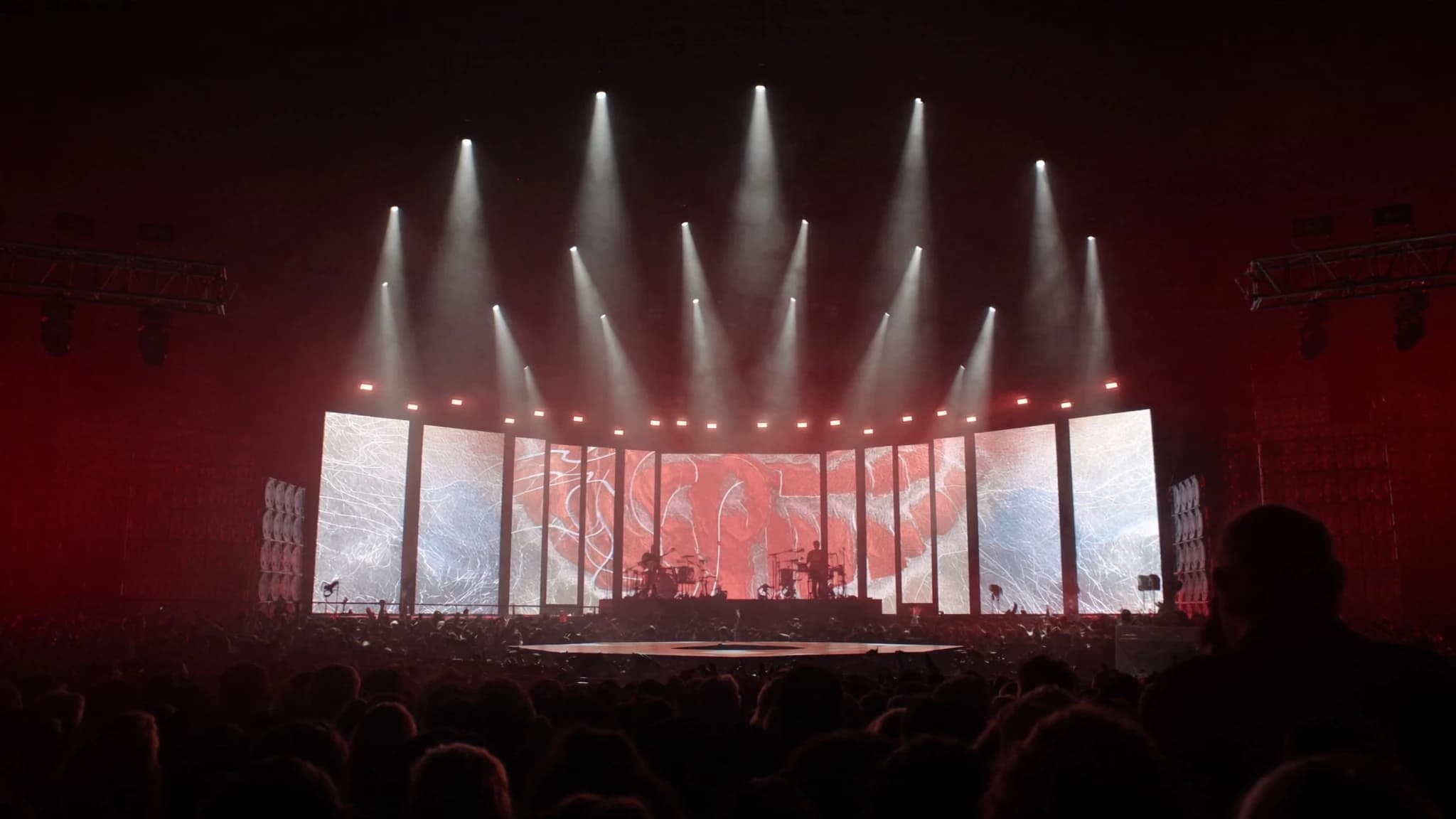
How SSOUNDS Speakers Are Used in Live Productions

From festival main stages to corporate ballrooms, SSOUNDS loudspeaker systems deliver consistent, high-fidelity sound across a wide range of live productions. This guide explores how SSOUNDS line arrays, subwoofers, point-source speakers, stage monitors, amplifiers, and DSP are deployed in touring, festivals, worship, and corporate events — covering FOH, monitors, delay rings, and integration with consoles and AVL rigs.
Key takeaways
- SSOUNDS line arrays and subwoofers provide consistent, high-SPL coverage for main FOH in touring and festivals.
- Point-source speakers and delay rings fill coverage gaps, time-aligned via integrated DSP.
- Stage monitors offer high output with low feedback, integrating with analog or digital consoles.
- SSOUNDS amplifiers with onboard DSP simplify system tuning and remote monitoring.
- Systems integrate seamlessly with lighting, video, and show control for cohesive AVL productions.
- Deployments range from intimate corporate events to large-scale festival main stages.
Main FOH Systems: Line Arrays and Subwoofers
For large-scale touring and festival main stages, SSOUNDS line arrays provide the backbone of the front-of-house system. Engineered for consistent coverage and high SPL with low distortion, these arrays are flown or ground-stacked depending on venue geometry. The vertical curvature and inter-element angles are calculated using SSOUNDS’ proprietary prediction software, ensuring even sound distribution from front row to back.
Complementing the line arrays, SSOUNDS subwoofers deliver the low-frequency foundation. Typically deployed in cardioid or end-fire configurations, they minimize rearward energy and keep the stage clean. For festivals with multiple stages, subwoofer arrays are tuned to avoid bleed between adjacent performance areas, a challenge SSOUNDS engineers solve with precise time alignment and polarity adjustments.
Point-Source Speakers for Fill and Delay
In complex venues — such as arenas with balconies or outdoor festivals with long throw distances — SSOUNDS point-source speakers serve as front-fill, side-fill, and delay rings. These compact yet powerful enclosures are positioned to cover shadowed areas that the main line array cannot reach. Their rotatable horns allow horizontal or vertical orientation, adapting to unique sightline constraints.
Delay rings are time-aligned to the main system using the integrated DSP, ensuring that audiences at the rear hear a coherent soundfield without echo or phase cancellation. SSOUNDS’ DSP presets include specific delay configurations that simplify setup, allowing engineers to focus on creative mixing rather than system tuning.
Stage Monitoring: Wedges, Side-Fills, and IEM Integration
For live productions, accurate stage monitoring is critical. SSOUNDS stage monitors are designed for high output with minimal feedback, featuring coaxial drivers that provide a coherent point-source image. They are used as wedge monitors for vocalists and instrumentalists, and as drum fills for rhythm sections.
In larger productions, side-fill loudspeakers extend coverage across wide stages, while SSOUNDS subwoofers on stage add low-end punch for performers. The systems integrate seamlessly with digital mixing consoles via analog or Dante/AES67 connections, and the DSP allows for quick EQ adjustments to tame room modes or feedback frequencies. For in-ear monitor (IEM) users, SSOUNDS amplifiers provide clean, low-latency feeds to the monitor console.
Amplification and DSP: The Brains of the System
SSOUNDS amplifiers are purpose-built to power the loudspeaker range, delivering high efficiency and thermal stability for long-duration events. Each amplifier module contains onboard DSP with factory-tuned presets for every SSOUNDS enclosure, ensuring optimal crossover, EQ, limiting, and protection. Engineers can also create custom presets for unique venue acoustics.
Network control via Dante or AES67 allows remote monitoring of amplifier status, load, and temperature — essential for large-scale productions with multiple amplifier racks. The DSP also handles delay, polarity, and gain structuring, reducing the need for external processing. This integration simplifies system setup and ensures consistent performance night after night.
Integration with the Wider AVL Rig
In modern live productions, the audio system must work in harmony with lighting, video, and staging. SSOUNDS loudspeakers are designed with rigging points that comply with common truss and ground-support standards, allowing seamless integration with lighting and video structures. The compact form factor of many enclosures reduces visual obstruction, a priority for broadcast and corporate events.
For corporate productions, SSOUNDS point-source speakers and compact line arrays are often deployed in flown arrays that blend with architectural aesthetics. The DSP’s ability to store multiple venue presets means the same system can be reconfigured quickly between ballroom, breakout room, and outdoor settings. Integration with show control systems (e.g., via MIDI or OSC) allows automated scene changes for multi-act festivals or theatrical performances.
Case Study: Festival Main Stage Deployment
Consider a typical festival main stage with a 50-meter throw. The FOH system comprises left-right flown line arrays of 12 enclosures each, with a ground-stacked subwoofer array of 16 units in a cardioid configuration. Front-fill point-source speakers cover the first 10 meters, while delay towers at 30 meters and 45 meters extend coverage to the rear. All amplifiers are networked via Dante, with a single laptop providing system control and monitoring.
The monitor system includes 8 wedge monitors across the stage, 2 drum fills, and 4 side-fills, all powered by SSOUNDS amplifiers. The monitor engineer uses the DSP to create separate mixes for each performer, with individual EQ and limiting. The system is tuned in under two hours using SSOUNDS’ prediction software and real-time analyzer (RTA) measurements, achieving uniform coverage and high intelligibility even at extreme SPL.
Frequently asked
How are SSOUNDS line arrays configured for different venue sizes?
SSOUNDS line arrays are modular; the number of enclosures per side and the splay angles are calculated using prediction software to match the venue's coverage requirements. Smaller venues may use 6-8 boxes per side, while large festivals can use 12-16 or more, with additional delay rings for extended throw.
Can SSOUNDS speakers be used with third-party amplifiers?
While SSOUNDS amplifiers are optimized for the loudspeakers, the enclosures can be driven by any professional amplifier with appropriate power and DSP. However, using SSOUNDS amplifiers ensures factory-tuned presets and network monitoring capabilities.
What networking protocols do SSOUNDS systems support?
SSOUNDS amplifiers support Dante and AES67 for audio transport and control, allowing integration with digital consoles and networked audio systems.
How do SSOUNDS monitors handle feedback in live settings?
SSOUNDS monitors use coaxial driver designs that provide a coherent point-source, reducing off-axis coloration and feedback. The DSP includes notch filters and parametric EQ to further tame problematic frequencies.
Are SSOUNDS systems suitable for outdoor festivals?
Yes, SSOUNDS enclosures are built with weather-resistant materials and can be deployed in outdoor environments. The DSP allows for temperature and humidity compensation to maintain consistent performance.
Building or upgrading a system?
SSOUNDS engineers and manufactures professional PA worldwide — from a single room to stadium scale.