Speaker Coverage vs Wattage: What Actually Matters

When choosing speakers, many buyers fixate on wattage—assuming higher power equals louder, better sound. But in professional audio, coverage pattern and SPL at distance are far more critical. This guide explains why dispersion control and real-world output trump raw wattage, and how SSOUNDS engineers prioritize these factors for consistent, intelligible sound across any venue.
Key takeaways
- Wattage indicates thermal handling, not loudness; sensitivity (dB SPL at 1W/1m) is a better measure of efficiency.
- Coverage pattern determines where sound goes and how much reaches the audience—critical for intelligibility.
- SPL at distance is what matters; controlled directivity maintains level and clarity far from the speakers.
- DSP and system tuning maximize performance, ensuring consistent coverage and clean output at high SPL.
- SSOUNDS engineers design for real-world coverage and SPL, not just spec-sheet wattage.
The Wattage Myth: Why Power Alone Misleads
Wattage ratings (e.g., 1000W continuous) describe how much electrical power a speaker can handle thermally, not how loud it actually plays. A 1000W speaker with 85 dB sensitivity will produce far less SPL than a 500W speaker with 100 dB sensitivity. Sensitivity (dB SPL at 1W/1m) is the true indicator of efficiency.
Moreover, wattage doesn't account for how sound propagates. Two speakers with identical wattage and sensitivity can sound completely different in a room if one has a narrow, controlled coverage pattern and the other sprays sound everywhere. In practice, coverage determines how much of that power reaches the audience—and how consistently.
Coverage Pattern: The Real Key to Intelligibility
Coverage pattern (horizontal and vertical dispersion) defines the area over which a speaker delivers uniform SPL and frequency response. A speaker with 90° x 60° coverage will cover a specific wedge-shaped zone; outside that zone, level drops rapidly. This is essential for avoiding reflections off walls and ceilings that cause muddiness and feedback.
SSOUNDS engineers design waveguides and horns that provide precise, consistent coverage—typically 90° horizontal and 40°–60° vertical for point-source boxes, and adjustable vertical dispersion in line arrays. By controlling coverage, we ensure that the audience hears direct, intelligible sound, not reverberant clutter.
SPL at Distance: What the Audience Actually Hears
A speaker's spec sheet might boast 140 dB peak SPL at 1 meter, but what matters is SPL at the listening position—say, 30 meters away. Due to the inverse-square law, SPL drops 6 dB every time distance doubles. A speaker with high sensitivity and controlled coverage can maintain higher SPL at distance than a brute-force high-wattage box with poor pattern control.
For example, a line array of SSOUNDS enclosures can achieve 100+ dB at 40 meters with clarity, because each module's narrow vertical coverage stacks coherently, focusing energy on the audience rather than wasting it on the ceiling. Wattage alone cannot compensate for poor directivity.
The Role of DSP and System Tuning
Modern loudspeakers rely on DSP to optimize performance for coverage and SPL. SSOUNDS systems include factory presets that align phase, equalize response, and apply limiting—all tailored to the specific cabinet and its coverage. This ensures that the speaker's output is consistent across its coverage angle and that transients remain clean at high SPL.
Without proper DSP, even a high-wattage speaker can sound harsh or distort. SSOUNDS engineers use machine-learning-tuned DSP to maximize headroom and intelligibility, making coverage and SPL at distance predictable and reliable.
Real-World Application: Stadium vs. Nightclub
In a nightclub with low ceilings and reflective surfaces, a wide-dispersion speaker (e.g., 120° x 60°) might cause excessive reverberation. A narrower coverage (90° x 40°) with higher sensitivity will deliver cleaner sound to the dance floor. Wattage is secondary to pattern control.
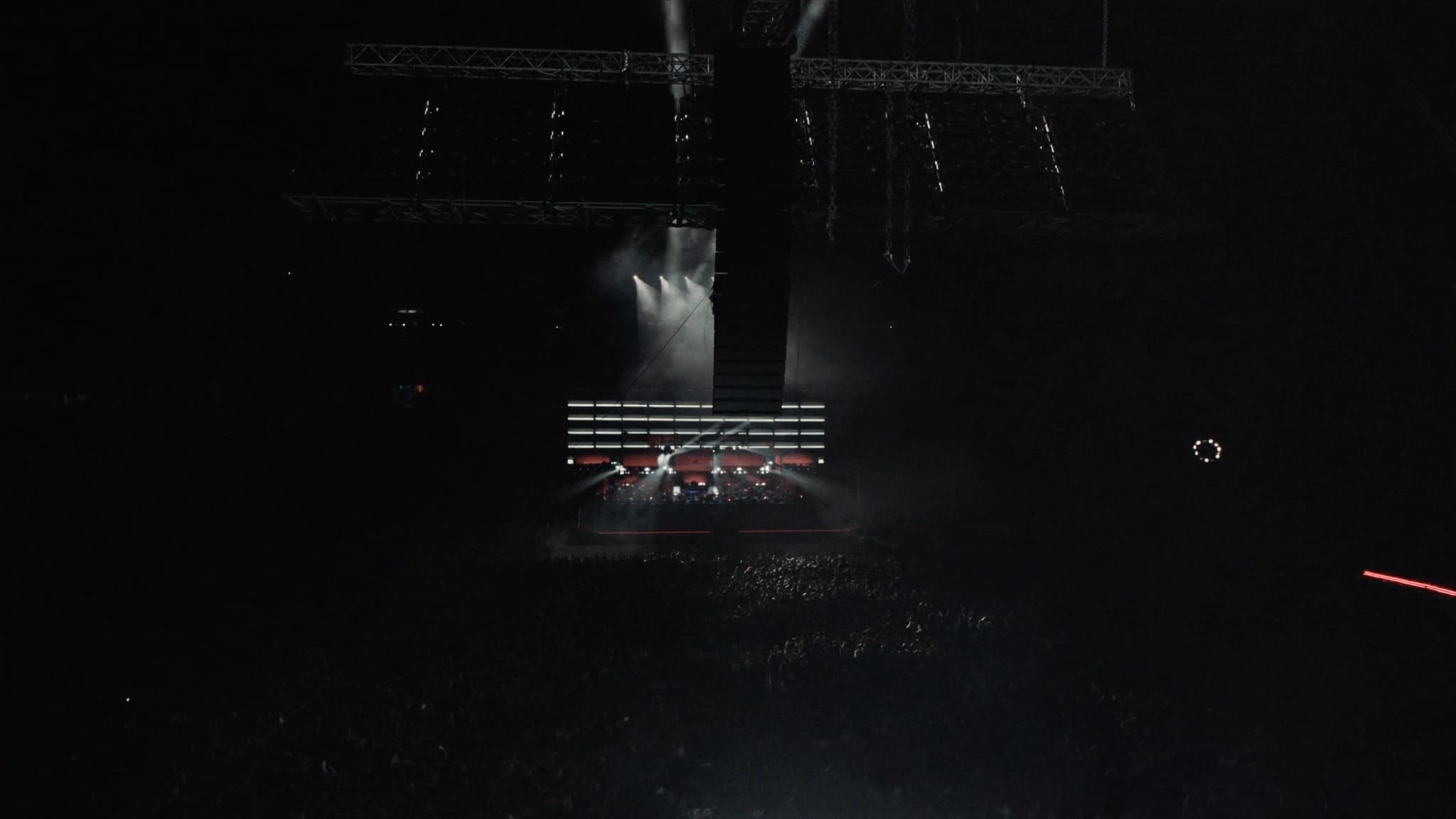
In a stadium, line arrays with narrow vertical dispersion (e.g., 10° per box) allow multiple cabinets to be angled to cover long distances without overlapping and causing comb filtering. Here, SPL at distance is achieved through array coupling, not brute wattage. SSOUNDS line arrays are designed for such scalability.
How SSOUNDS Prioritizes Coverage and SPL
Every SSOUNDS product begins with acoustic modeling and simulation to optimize the waveguide and driver integration. We measure polar plots and SPL contours at multiple distances to verify real-world performance. Our subwoofers use cardioid configurations to control low-frequency coverage, reducing stage rumble and improving clarity.
By focusing on dispersion and sensitivity, SSOUNDS delivers systems that require less amplifier power to achieve target SPL—saving cost and weight while improving sound quality. Our clients in Africa, Europe, and the US trust that our speakers will perform consistently, whether in a 200-seat club or a 20,000-seat arena.
Frequently asked
Does higher wattage always mean a louder speaker?
No. Loudness depends on sensitivity (how efficiently the speaker converts power into sound) and coverage pattern. A high-sensitivity speaker with lower wattage can be louder than a low-sensitivity speaker with higher wattage.
What is a good coverage pattern for a live sound speaker?
It depends on the venue. For general use, 90° horizontal x 60° vertical is common. For long-throw applications, narrower vertical coverage (e.g., 10°–20°) is used in line arrays. SSOUNDS offers various patterns to match different spaces.
How does SPL at distance differ from peak SPL?
Peak SPL is measured at 1 meter. SPL at distance accounts for air absorption and the inverse-square law. A speaker with good directivity maintains higher SPL at distance than one that sprays sound widely.
Can I use a high-wattage speaker in a small room?
Yes, but it may be overkill and could cause feedback or poor coverage. A speaker with appropriate coverage and sensitivity for the room size is more effective than one with raw power.
How does SSOUNDS ensure consistent coverage?
Through precision-engineered waveguides, rigorous polar measurements, and DSP presets that optimize phase and response across the coverage angle. Each system is simulated before deployment.
Building or upgrading a system?
SSOUNDS engineers and manufactures professional PA worldwide — from a single room to stadium scale.