How SSOUNDS Speakers Are Used in Live Productions
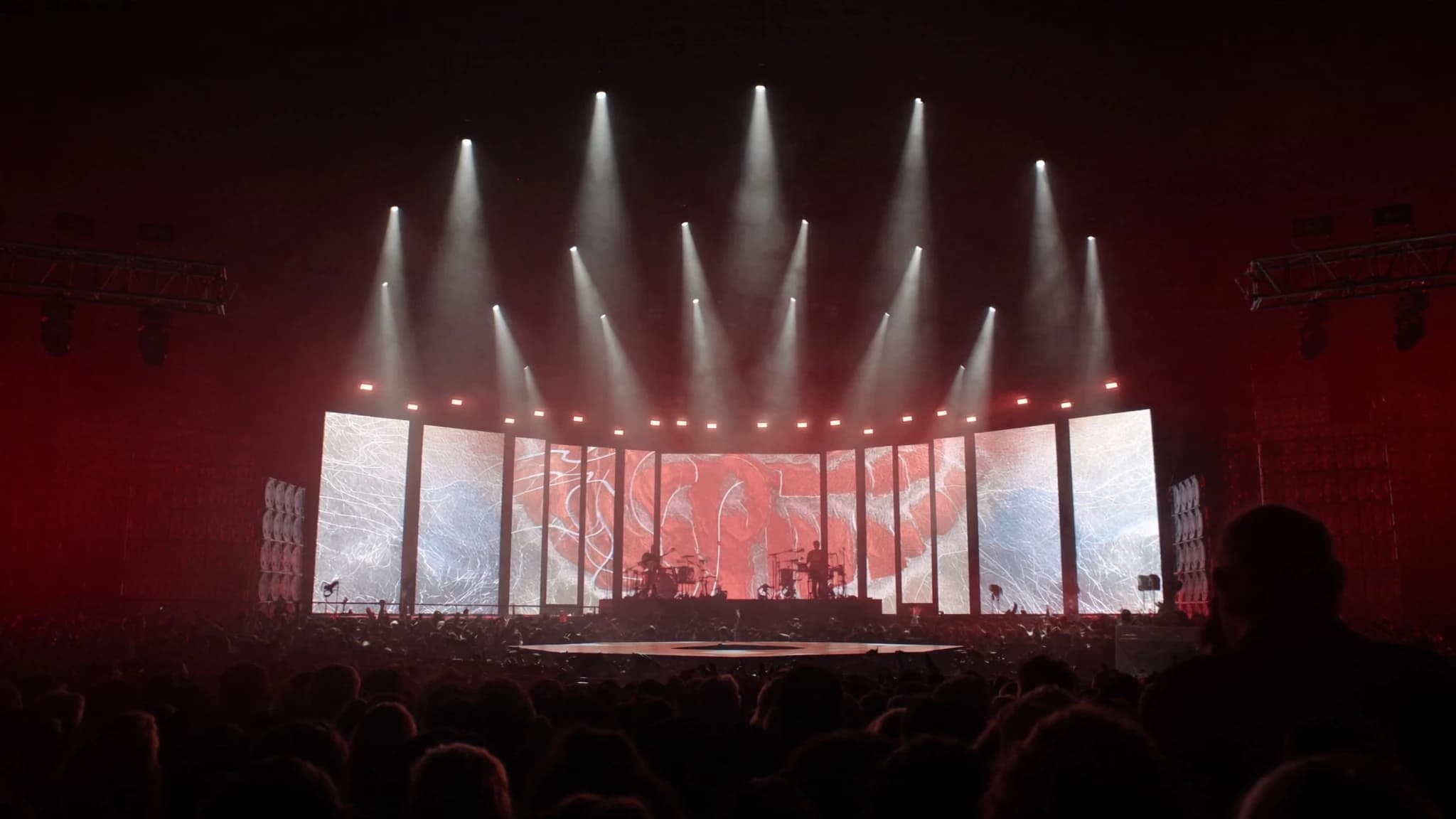
From festival main stages to corporate keynote halls, SSOUNDS loudspeaker systems are engineered to deliver consistent, high-fidelity sound across the most demanding live production environments. This guide explores how SSOUNDS line arrays, subwoofers, point-source cabinets, stage monitors, amplifiers, and DSP are deployed in touring, festivals, worship, and corporate productions, covering FOH, monitors, delay rings, and integration with the wider AVL ecosystem.
Key takeaways
- SSOUNDS line arrays provide consistent coverage and high SPL for festival main stages and large touring productions.
- Subwoofers are deployed in cardioid or end-fire arrays for controlled low-end impact and reduced stage rumble.
- Point-source speakers offer flexibility for front-fill, side-fill, and delay applications in both large and small venues.
- Stage monitors deliver high SPL and low distortion for clear performer monitoring in touring and festival environments.
- Amplifiers and DSP are integrated with networking protocols (Dante, AES67) for remote control and seamless console integration.
- SSOUNDS systems scale from corporate boardrooms to festival main stages, with DSP presets optimized for each deployment.
Line Arrays: The Backbone of Large-Scale Coverage
SSOUNDS line array systems are designed for touring and festival main stages where consistent coverage and high SPL are critical. Their modular rigging and optimized waveguide geometry allow fast deployment and predictable pattern control, even in challenging outdoor environments. Engineers can fly arrays of varying lengths depending on throw distance and audience geometry, with inter-array angles adjusted per venue to minimize interference and ensure uniform frequency response from front to back.
In practice, a typical festival main stage might use left-right arrays of 12 to 16 cabinets per side, complemented by side hangs or out-fills for extreme width. SSOUNDS line arrays are also used as delay rings in large festival fields, where time-aligned clusters maintain intelligibility for audiences far from the stage. The system’s DSP presets, tuned specifically for each array configuration, ensure phase coherence and consistent tonal balance across all coverage zones.
Subwoofers: Delivering Impact and Extension
SSOUNDS subwoofers are engineered to provide clean, powerful low-frequency extension without sacrificing speed or articulation. In live productions, they are typically deployed in cardioid or end-fire arrays to control rearward energy and reduce stage rumble, which is especially important for broadcast and festival environments where neighboring stages can cause interference.
For touring productions, SSOUNDS subs can be ground-stacked in front of the stage or flown alongside line arrays for more even low-end distribution. The DSP includes dedicated subwoofer presets that optimize crossover points and phase alignment with the main arrays, ensuring seamless integration. In corporate events, where low-frequency impact must be controlled, SSOUNDS subs can be configured in distributed clusters to avoid overwhelming the room while still providing a solid foundation.
Point-Source Speakers: Flexibility for Fill and Front-Fill
SSOUNDS point-source speakers are used for front-fill, side-fill, and delay applications where a compact, high-output cabinet is needed. Their rotatable horns and multiple rigging options allow them to be placed on stands, flown, or mounted under stages. In festival settings, point-source cabinets often serve as near-field fills to cover the first few rows where the line array’s vertical pattern may not reach.
For corporate productions, point-source speakers are frequently deployed as main PA in smaller rooms or as delays in larger ballrooms. Their consistent polar response and high maximum SPL make them suitable for speech reinforcement, while their low-profile design blends into scenic elements. SSOUNDS point-source cabinets are also used as drum fills or side-fills on festival stages, providing additional coverage for musicians and front-of-house positions.
Stage Monitors: Precision for Performers
SSOUNDS stage monitors are built to deliver high SPL with low distortion, giving performers a clear and accurate reference of their mix. Their wedge shape and multiple rigging points allow them to be placed at various angles, and the DSP includes monitor-specific presets that optimize phase and frequency response for close-field listening.
In touring productions, SSOUNDS monitors are often used in a stereo or mono wedge configuration, with separate mixes for lead vocals, instruments, and backing tracks. For festival stages where space is tight, compact monitor cabinets can be positioned without obstructing sightlines. The monitors’ robust construction and protective grilles withstand the rigors of touring, and their consistent performance across multiple shows reduces the need for re-tuning.
Amplifiers and DSP: The Intelligent Power Behind the Sound
SSOUNDS amplifiers are purpose-built to drive the loudspeaker systems with high efficiency and low distortion. Each amplifier channel is paired with dedicated DSP that handles crossover, EQ, limiting, and delay, all pre-configured for the specific cabinet model and array configuration. This ensures that every SSOUNDS system behaves predictably, regardless of the venue or operator.
The DSP also includes advanced protection algorithms that monitor temperature, current, and voltage to prevent damage while maximizing output. In large productions, multiple amplifiers are networked via a control protocol (such as AES67 or Dante) for remote monitoring and control. Engineers can adjust levels, mute channels, and view system status from a tablet or laptop, streamlining setup and troubleshooting. The amplifiers’ lightweight, rack-mountable design makes them ideal for touring racks.
Integration with the Wider AVL Ecosystem
SSOUNDS systems are designed to integrate seamlessly with industry-standard consoles, processing gear, and networking protocols. In FOH and monitor positions, the DSP can accept analog, AES3, or Dante inputs, allowing direct connection to digital mixing consoles. This eliminates the need for external converters and reduces latency.
For large-scale productions, SSOUNDS systems can be part of a larger AVL network that includes lighting, video, and automation. The DSP’s delay and alignment tools enable precise time alignment with video walls or distributed audio zones, ensuring that sound and picture remain synchronized. In corporate events, SSOUNDS systems are often integrated with room control systems for automated level adjustment and source switching. The flexibility of the DSP also allows engineers to create custom presets for different show scenarios, such as speech-only, music playback, or full concert mode.
Deployment Examples Across Production Types
In touring, SSOUNDS systems are typically flown from motorized truss or ground-supported towers, with arrays configured per venue using prediction software. Festival main stages often use a combination of line arrays, subs, and front-fills, with delay towers placed at intervals for large crowds. For worship productions, SSOUNDS systems are often installed permanently or semi-permanently, with line arrays flown in the sanctuary and point-source speakers used for under-balcony or overflow areas.
Corporate productions benefit from SSOUNDS’ scalability: a single point-source pair can cover a boardroom, while a full line array system handles a keynote hall. The DSP’s ability to store multiple presets allows quick changeovers between different event types. In all cases, SSOUNDS engineers work with production teams to design systems that meet coverage, SPL, and aesthetic requirements, ensuring that the sound reinforces the experience without drawing attention to itself.
Frequently asked
How are SSOUNDS line arrays configured for different venue sizes?
Array length and splay angles are calculated using prediction software based on venue dimensions, audience coverage, and desired SPL. Engineers adjust the number of cabinets per side and the inter-cabinet angles to ensure uniform coverage and avoid interference.
Can SSOUNDS subwoofers be flown with line arrays?
Yes, SSOUNDS subwoofers can be flown alongside line arrays for more even low-frequency distribution, especially in venues where ground space is limited. The DSP includes presets for flown sub configurations to maintain phase coherence.
What networking protocols do SSOUNDS amplifiers support?
SSOUNDS amplifiers support Dante and AES67 for audio transport, as well as a proprietary control network for remote monitoring and configuration. This allows integration with digital consoles and AVL networks.
Are SSOUNDS monitors suitable for silent stage setups?
Yes, SSOUNDS monitors can be used in silent stage setups where in-ear monitors are primary, but they also provide a high-quality wedge option for performers who prefer floor monitors. Their DSP presets optimize them for close-field listening.
How does SSOUNDS ensure system consistency across multiple shows?
Each SSOUNDS cabinet is factory-calibrated, and DSP presets are locked to specific configurations. This ensures that the same rigging and settings produce identical results show after show, reducing setup time and variability.
Building or upgrading a system?
SSOUNDS engineers and manufactures professional PA worldwide, from a single room to stadium scale.