Skip to content

AI Crowd Management and Safety at Events

AI Crowd Management and Safety at Events

As events grow larger and more complex, ensuring crowd safety has become a top priority for organisers worldwide. AI-assisted crowd monitoring now offers powerful tools—density analysis, flow prediction, and incident detection—that augment human safety teams without replacing them. This guide explores how AI enhances situational awareness and decision-making, and how SSOUNDS integrates these technologies into professional audio systems for safer, smarter events.

Key takeaways

  • AI crowd management enhances human safety teams by providing real-time density analysis, flow prediction, and incident detection.
  • Density analysis helps audio engineers optimise loudspeaker placement and coverage for high-risk zones.
  • Flow prediction enables proactive crowd control and dynamic audio adjustments for clear communication.
  • Incident detection reduces response time by alerting operators to anomalies within seconds.
  • Human-AI collaboration is essential: AI provides data, humans provide context and empathy.
  • Privacy and ethics must guide deployment—anonymisation and transparency are key.

The Evolution of Crowd Management

Traditional crowd management relies on manual observation, barriers, and radio communication among stewards. While effective, these methods have limits: human attention wanes, sightlines are obstructed, and real-time data is scarce. Large festivals, stadium concerts, and political rallies can see tens of thousands of people in a single space, making it nearly impossible for even the best teams to monitor every zone continuously.

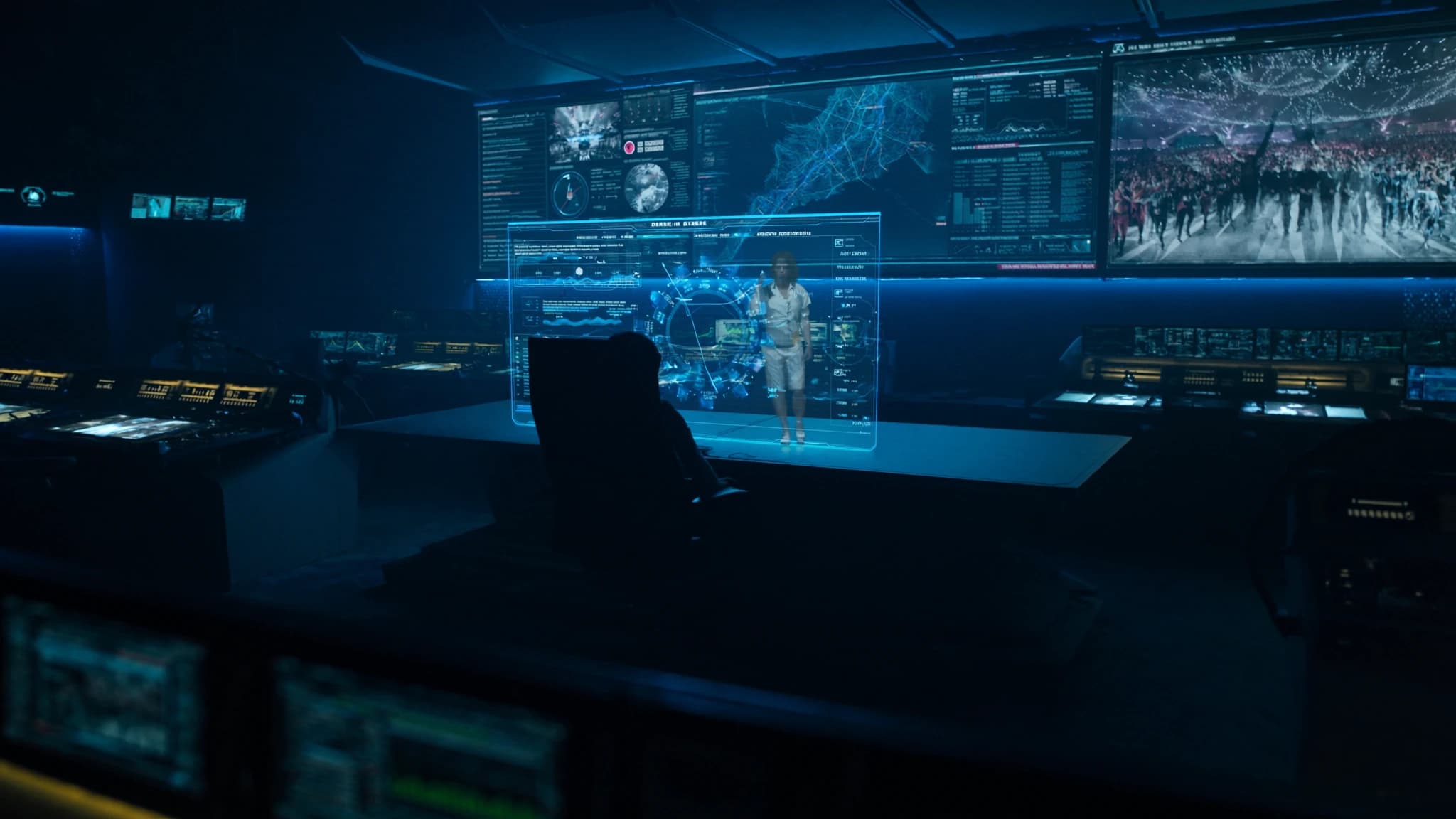
AI-powered systems address these gaps by processing video feeds from existing CCTV cameras, drones, or dedicated sensors. Machine learning algorithms analyse crowd density, movement patterns, and anomalies in real time, providing actionable insights to control rooms. This isn't about replacing human judgment—it's about giving safety teams a second pair of eyes that never blink.

Density Analysis: Knowing Where the Crowd Is

One of the most critical metrics in crowd safety is density—how many people are in a given area per square metre. High density (typically above 4-5 people/m²) increases risk of crushing, heat stress, and restricted movement. AI systems can calculate density from camera feeds with high accuracy, even in low light or partial occlusion, by counting individuals or using thermal imaging.

SSOUNDS integrates density data into its system design process. By mapping predicted crowd densities from AI models onto venue layouts, engineers can optimise loudspeaker placement and coverage zones. For example, areas expected to have high density may require distributed delay systems to maintain even sound pressure without excessive volume, reducing the risk of panic or discomfort. This proactive approach ensures audio quality supports safety rather than compromising it.

Flow Prediction: Anticipating Movement

Crowd flow prediction uses historical data and real-time inputs to forecast where people will move next. AI models trained on past events can identify patterns—such as post-performance exodus, queue formation, or bottleneck emergence—and alert teams minutes before problems arise. This allows proactive measures like opening additional exits, adjusting barrier configurations, or deploying staff to critical points.

For audio engineers, flow prediction is invaluable for timing announcements and adjusting sound levels. If AI predicts a surge toward a particular exit, the PA system can automatically increase intelligibility in that zone, delivering clear evacuation instructions. SSOUNDS DSP platforms support such dynamic routing, enabling voice alarms and music to adapt to changing crowd conditions without manual intervention.

Incident Detection: Spotting Trouble Early

AI excels at detecting anomalies that humans might miss: a person falling, a sudden crowd surge, a fight breaking out, or an unattended bag. Computer vision models can recognise these events in seconds and trigger alerts to the control room, complete with location and video feed. This reduces response time from minutes to seconds, potentially saving lives.

Importantly, AI incident detection works in conjunction with audio systems. When an alert is triggered, the system can automatically mute music in the affected zone, switch to a live microphone for security personnel, or broadcast a pre-recorded safety message. SSOUNDS systems are designed with fail-safe integration, ensuring that AI-driven actions never override human authority—operators always have the final say.

Human-AI Collaboration: The Best of Both Worlds

The most effective safety operations combine AI's speed and data processing with human experience and empathy. AI provides the 'what' and 'where'; humans provide the 'why' and 'how'. For example, an AI might detect a density spike near a stage, but a human steward knows that the crowd is cheering for an encore—no action needed. Conversely, AI might miss a subtle social cue that a human would catch.

SSOUNDS advocates for a collaborative approach where AI tools are integrated into existing workflows. Our systems are designed to feed data into common control platforms (e.g., grandMA, Q-SYS), allowing safety teams to see crowd metrics alongside audio and lighting status. This unified view empowers informed decisions without overwhelming operators with raw data.

Ethical Considerations and Privacy

AI crowd monitoring raises valid privacy concerns. Systems must comply with local regulations (e.g., GDPR in Europe, NDPR in Nigeria) and be transparent about data collection. Anonymisation techniques, such as blurring faces or using skeleton tracking instead of facial recognition, can mitigate risks. SSOUNDS recommends that event organisers conduct privacy impact assessments and clearly communicate monitoring policies to attendees.

Moreover, AI should never be used for discriminatory profiling or punitive measures. Its purpose is safety, not surveillance. By focusing on density and flow rather than individual identification, AI can enhance security while respecting civil liberties. Responsible deployment builds trust among attendees and regulators alike.

Future Trends: AI and the Smart Venue

The next frontier is fully integrated smart venues where AI crowd management, audio, lighting, and HVAC systems communicate seamlessly. Imagine a system that detects a crowd surge, automatically increases ventilation in that zone, adjusts lighting to guide people, and broadcasts calm, clear instructions—all coordinated by AI but overseen by a human operator.

SSOUNDS is actively developing AI-enhanced audio solutions that adapt in real time to crowd behaviour. From self-tuning line arrays that maintain coverage as people move, to voice assistants that answer attendee queries via PA, the possibilities are vast. As AI matures, its role will shift from reactive to predictive, making events safer and more enjoyable for everyone.

Frequently asked

Does AI crowd monitoring replace security staff?

No, AI augments human teams by providing real-time data and alerts, but humans retain decision-making authority. AI handles repetitive monitoring, freeing staff to focus on complex interventions.

What kind of cameras are needed for AI crowd analysis?

Existing CCTV cameras are often sufficient, though dedicated thermal or high-resolution cameras can improve accuracy in low light or dense crowds. Systems can also integrate with drone feeds.

How does SSOUNDS integrate with AI crowd management systems?

SSOUNDS DSP platforms can receive data from AI systems via network protocols (e.g., Dante, AES67) to automatically adjust audio levels, routing, and messaging based on crowd conditions.

Is AI crowd monitoring legal in all countries?

Regulations vary. In the EU, GDPR applies; in Nigeria, NDPR. Organisers must ensure compliance, conduct privacy impact assessments, and inform attendees. Anonymised data is generally less restricted.

Can AI predict crowd crushes?

AI can identify precursors to crushes, such as rapid density increases or flow stagnation, and alert teams to intervene before a dangerous situation develops. It is a powerful preventive tool.

Building or upgrading a system?

SSOUNDS engineers and manufactures professional PA worldwide — from a single room to stadium scale.

Talk to an engineer
Chat on WhatsApp