Skip to content

Indoor vs Outdoor LED Screens: A Complete Guide

Indoor vs Outdoor LED Screens: A Complete Guide

Choosing between indoor and outdoor LED screens is a critical decision that affects visibility, durability, and total cost of ownership. This guide breaks down the key technical differences—brightness, weatherproofing, pixel pitch, and cabinet design—so you can select the right screen for your application, whether it's a permanent stadium installation or a temporary event stage.

Key takeaways

  • Outdoor screens need 5,000–10,000+ nits; indoor screens typically 600–1,500 nits.
  • Outdoor screens require IP65 or higher; indoor screens are IP20–IP30.
  • Pixel pitch should match viewing distance: finer for close-up indoor, coarser for distant outdoor.
  • Outdoor cabinets are heavier, sealed, and often front-serviceable; indoor cabinets are lighter and more modular.
  • Power and redundancy: outdoor screens demand robust power supplies and backup systems.
  • Select the screen type based on environment, viewing distance, and installation constraints.

Brightness and Nits: Why Outdoor Screens Need More Punch

Brightness is measured in nits (candelas per square meter). Indoor LED screens typically operate between 600 and 1,500 nits, which is sufficient for controlled lighting environments like conference halls, retail stores, or broadcast studios. Outdoor screens, however, must compete with direct sunlight, requiring 5,000 to 10,000 nits or more. A screen that's too dim outdoors will wash out, losing contrast and readability.

High-brightness outdoor panels generate more heat and consume more power. Modern outdoor LED cabinets use advanced thermal management—such as passive heat sinks or active fans—to maintain performance without overheating. Always consider the ambient light conditions at the installation site: a shaded outdoor area may need only 4,000 nits, while a sun-exposed facade may require 8,000+ nits.

IP Weatherproof Rating: Protecting Against the Elements

The Ingress Protection (IP) rating defines a screen's resistance to dust and water. Indoor LED screens typically have an IP20 or IP30 rating, offering protection against solid objects larger than 12.5mm and limited dust ingress. They are not designed to handle moisture or rain.

Outdoor LED screens require a minimum IP65 rating for the front and IP54 or higher for the rear. IP65 means the cabinet is dust-tight and protected against water jets from any direction. For extreme environments—coastal areas with salt spray or tropical monsoon climates—IP66 or even IP67 (temporary immersion) may be specified. Always verify the IP rating for both front and rear, as some outdoor screens have asymmetric protection.

Pixel Pitch and Viewing Distance: Resolution vs. Scale

Pixel pitch (the distance between LED pixels, measured in millimeters) determines resolution and optimal viewing distance. Indoor screens often use finer pitches (P1.2 to P4) because viewers are close—sometimes just a few meters away. A P2.5 indoor screen can look sharp at 2.5 meters.

Outdoor screens typically have larger pitches (P4 to P16 or more) because viewing distances are greater—from 10 meters to hundreds of meters. A P10 outdoor screen is perfectly legible from 10 meters away. Using an ultra-fine pitch outdoors is wasteful: the human eye cannot resolve the extra detail at typical distances, and the cost and complexity increase dramatically. Always calculate the minimum viewing distance: divide the pixel pitch (in mm) by 0.3 to get the distance in meters where individual pixels become indistinguishable.

Cabinet Design: Structural Integrity and Serviceability

Indoor cabinets are often lighter, thinner, and made of aluminum or sheet metal. They may be designed for quick front or rear service, with magnetic modules that snap in and out. Weight is less of a concern because they are mounted on walls, trusses, or floors with adequate support.

Outdoor cabinets are built like tanks. They use die-cast aluminum or steel with robust gaskets and sealed connectors to prevent water ingress. Many outdoor screens are designed for front service only, allowing maintenance without accessing the rear—critical for wall-mounted or pole-mounted installations. The cabinets must also withstand wind loads, vibration, and thermal expansion. For rental and staging applications, outdoor cabinets often have quick-locking mechanisms for fast assembly and disassembly.

Power and Signal Redundancy: Keeping the Show Running

Reliability is paramount for outdoor installations. Outdoor LED screens often feature dual power supplies and redundant signal paths, so a single component failure doesn't take the entire screen dark. Indoor screens may have less redundancy, but mission-critical indoor applications (e.g., broadcast studios) also demand backup systems.

Power consumption differs significantly: outdoor screens require more power per square meter due to higher brightness and cooling needs. Always calculate total power draw and ensure the electrical infrastructure can handle it. For large outdoor displays, consider power factor correction and surge protection. Signal distribution over long distances (e.g., from a control room to a stadium screen) may require fiber optic cabling or extenders.

When to Choose Indoor vs. Outdoor: Practical Scenarios

Choose indoor LED screens for: retail window displays, corporate lobbies, control rooms, broadcast studios, house of worship, and indoor events where the environment is climate-controlled and lighting is predictable. Indoor screens offer higher resolution at a lower cost per pixel and are easier to maintain.

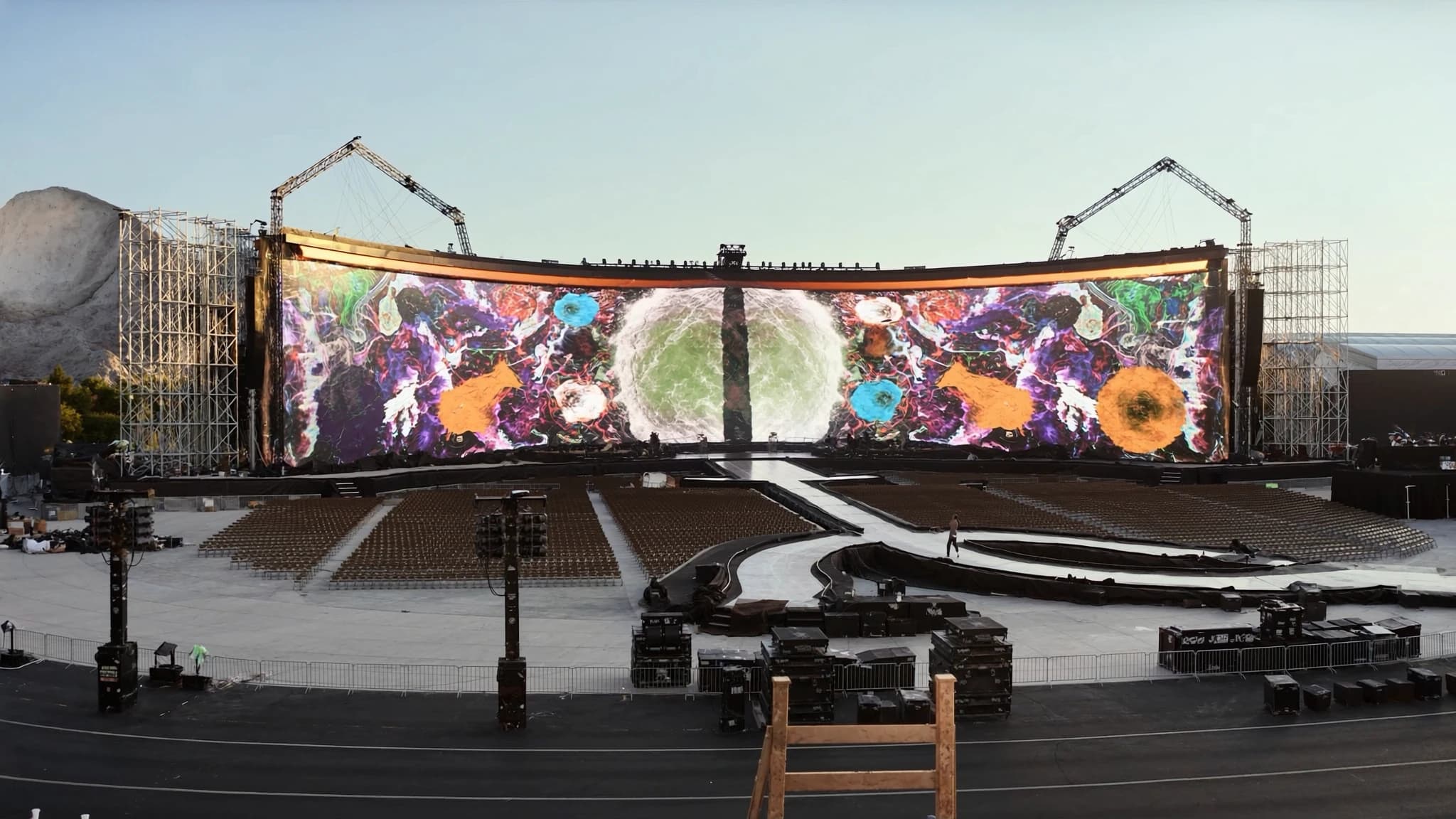
Choose outdoor LED screens for: stadium scoreboards, building facades, outdoor concerts and festivals, digital billboards, transportation hubs (bus stops, train stations), and any application exposed to rain, dust, direct sunlight, or extreme temperatures. Outdoor screens are built to last 7–10 years in harsh conditions, but they require proper ventilation and routine inspection of seals and gaskets.

Frequently asked

Can I use an indoor LED screen outdoors if I protect it from rain?

No. Indoor screens lack the necessary weather sealing (IP rating), UV-resistant coatings, and high-brightness LEDs. Even with a temporary cover, condensation and humidity can cause corrosion and electrical failure. Always use a properly rated outdoor screen.

What is the typical lifespan of an outdoor LED screen?

With proper maintenance, outdoor LED screens can last 7–10 years. Factors include operating environment (temperature, humidity, salt air), brightness levels used, and quality of the LEDs and power supplies. Many manufacturers offer warranties of 3–5 years.

How do I calculate the right pixel pitch for my viewing distance?

A common rule: minimum viewing distance (in meters) ≈ pixel pitch (in mm) × 1,000 / 300. For example, a P10 screen is legible from about 33 meters. For critical viewing (e.g., text), use a pitch half that distance. For video, the rule is more forgiving.

Do outdoor LED screens require special cooling?

Yes. High brightness generates heat. Most outdoor screens use passive cooling (heat sinks) or active fans. In hot climates, screens may incorporate air conditioning or liquid cooling. Always check the operating temperature range and ensure adequate airflow around the cabinet.

Are indoor LED screens cheaper than outdoor ones?

Generally, yes. Indoor screens have lower brightness, simpler cabinets, and no weatherproofing, so they cost less per square meter. However, fine-pitch indoor screens can be expensive due to high pixel density. For the same resolution, outdoor screens are significantly more expensive due to rugged construction and higher brightness.

Building or upgrading a system?

SSOUNDS engineers and manufactures professional PA worldwide — from a single room to stadium scale.

Talk to an engineer
Chat on WhatsApp