Off-Grid- und Solarenergie für Live-Events und AV
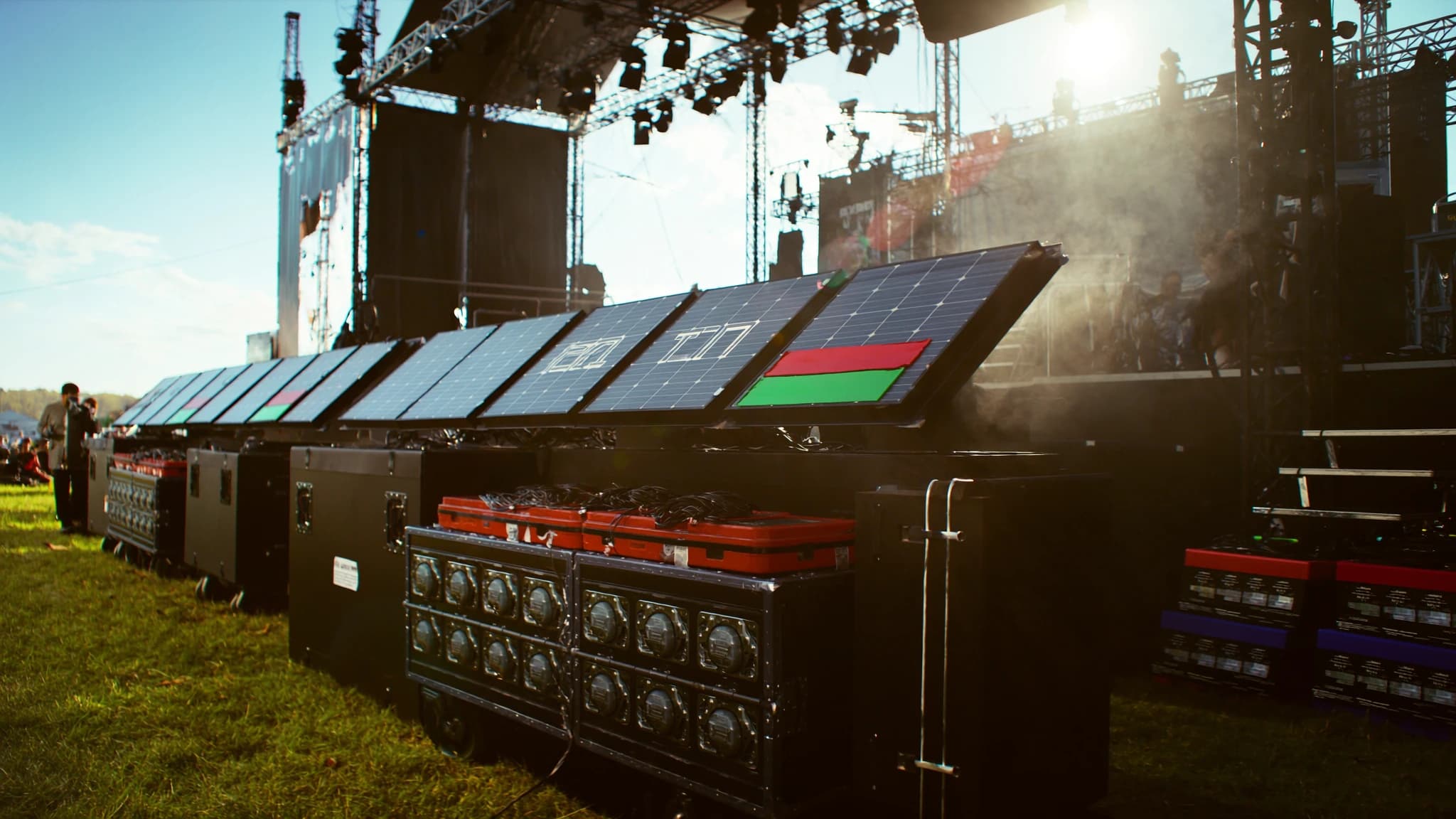
Off-Grid-Stromversorgung verändert Live-Events, ermöglicht Produktionen an abgelegenen Orten und reduziert den CO2-Fußabdruck. Für AV-Fachleute ist das Verständnis von Solaranlagen, Batteriespeichern und Hybrid-Generator-Setups unerlässlich, besonders für stromhungrige Audiosysteme. Dieser Leitfaden behandelt die Realitäten der Stromversorgung einer Bühne mit Solar, einschließlich Lastauslegung, Einschaltströmen und Anforderungen an sauberen Strom, und erklärt, wie SSOUNDS-Lautsprecher über eine geeignete Batterie- und Wechselrichterversorgung mit Solar betrieben werden können.
Wichtigste Punkte
- Solar-Batterie-Systeme können kleine bis mittlere Audiobühnen betreiben, aber große Events erfordern typischerweise Hybrid-Generator-Backup.
- Audiolasten haben niedrige Daueraufnahme, aber hohe Spitzen- und Einschaltstromanforderungen; dimensionieren Sie Wechselrichter und Batterie für Spitzen, nicht nur für den Durchschnitt.
- Reinsinus-Wechselrichter sind für sauberen Endstufenstrom zwingend erforderlich; modifizierte Sinuswellen können Rauschen und Schäden verursachen.
- SSOUNDS-Lautsprecher und -Endstufen funktionieren mit Solar, wenn sie mit richtig dimensionierten Batterie- und Wechselrichtersystemen kombiniert werden.
- Verwenden Sie ein Leistungsmessgerät, um die reale Aufnahme Ihres spezifischen Rigs zu messen; Angaben sind oft irreführend.
- Lithium-Eisenphosphat-Batterien (LiFePO4) sind die beste Wahl für Zyklenlebensdauer, Gewicht und Entladetiefe.
Die Komponenten der Off-Grid-Stromversorgung verstehen
Off-Grid-Event-Stromversorgung kombiniert typischerweise drei Elemente: Solarmodule (PV-Anlagen), Batterie-Energiespeichersysteme (BESS) und einen Wechselrichter/Ladegerät. Solarmodule wandeln Sonnenlicht in Gleichstrom um, der die Batterien lädt. Der Wechselrichter wandelt Gleichstrom in sauberen Wechselstrom für Audio-Geräte um. Bei Events ist ein Hybrid-Setup aus Generator und Batterie üblich: Batterien übernehmen Grundlasten und Spitzen, während ein Generator Batterien nachlädt oder Perioden mit hohem Bedarf ergänzt.
Die Batterietechnologie hat sich schnell weiterentwickelt: Lithium-Eisenphosphat (LiFePO4) ist heute Standard wegen seiner hohen Zyklenlebensdauer, Sicherheit und Entladetiefe (bis zu 95 %). Blei-Säure bleibt günstiger, ist aber schwerer und weniger effizient. Für Live-Sound muss der Wechselrichter eine reine Sinuswelle erzeugen; modifizierte Sinuswellen können Brummen, Verzerrungen oder Schäden an Endstufen und DSP verursachen.
Dimensionierung für Audiolasten: Dauer- vs. Spitzenleistung
Audiolasten sind trügerisch: Die Dauerleistungsaufnahme eines Lautsprechersystems ist viel niedriger als seine Spitzen- oder Programmbelastbarkeit. Beispielsweise könnte ein großes Line-Array-Gehäuse mit 2000 W Spitzenleistung im Normalbetrieb nur 200-400 W Dauerleistung aufnehmen. Transiente Spitzen (Bassschläge, Snare-Cracks) können jedoch für Millisekunden das 2- bis 3-Fache des Dauerstroms erfordern. Endstufen haben außerdem Einschaltströme, oft das 2- bis 5-Fache des Betriebsstroms für einige Zyklen.
Um ein Solar-Batterie-System zu dimensionieren, beginnen Sie mit der gesamten Dauerleistungsaufnahme aller Audio-Geräte (Endstufen, DSP, Monitore usw.) und fügen 20-30 % Reserve hinzu. Multiplizieren Sie dann mit der Veranstaltungsdauer, um die Batteriekapazität in kWh zu erhalten. Für Spitzenlasten muss der Wechselrichter kurze Stöße bewältigen können; ein 10-kW-Wechselrichter kann oft 20-kW-Spitzen für einige Sekunden handhaben. SSOUNDS-Ingenieure empfehlen, ein Leistungsmessgerät (z. B. ein P3 Kill A Watt) an Ihrem tatsächlichen Rig zu verwenden, um die reale Leistungsaufnahme zu messen.
Kann Solar realistisch eine Bühne betreiben?
Ja, aber mit Einschränkungen. Eine typische kleine Bühne (2-4 Lautsprecher, Subs, Monitore, Mischpult, Licht) könnte 1-3 kW Dauerleistung ziehen. Um 8 Stunden allein mit Solar zu betreiben, benötigen Sie 8-24 kWh Batteriespeicher und genügend Solarmodule zum Nachladen während des Tages. Unter sonnigen Bedingungen kann eine 5-kW-Solaranlage 20-30 kWh pro Tag erzeugen, genug für eine kleine bis mittlere Veranstaltung. Wolken, Regen oder Abendveranstaltungen erfordern jedoch größere Batteriebänke oder einen Generator als Backup.
Für Großveranstaltungen mit mehreren Line Arrays und Subwoofern (z. B. 20-40 kW Dauerleistung) wird Solar allein ohne massive Anlagen (50-100 kW+) und Megawattstunden-Batterien unpraktisch. In diesen Fällen ist ein Hybrid-Ansatz am besten: Solar und Batterie für Grundlasten und ein Generator für Spitzenbedarf oder Nachladen. SSOUNDS hat Events unterstützt, bei denen Solar 60-80 % der Gesamtenergie lieferte, mit einem Dieselgenerator als Backup.
Sauberer Strom und Einschaltstrom: Was Endstufen brauchen
Endstufen sind empfindlich gegenüber Stromqualität. Spannungseinbrüche, Frequenzverschiebungen oder harmonische Verzerrungen können fehlerhaftes Verhalten, reduzierte Ausgangsleistung oder Schäden verursachen. Ein Reinsinus-Wechselrichter ist nicht verhandelbar. Darüber hinaus haben Endstufen beim Einschalten hohe Einschaltströme, besonders große Class-D-Endstufen mit großen Kondensatoren. Um das Auslösen von Schutzschaltern zu vermeiden, werden Soft-Start-Schaltungen oder sequenzielles Einschalten (Verzögerung jeder Endstufe um 1-2 Sekunden) empfohlen.
SSOUNDS-Endstufen sind mit robusten Netzteilen ausgestattet, die moderate Spannungsschwankungen (±10 %) tolerieren und eine Einschaltstrombegrenzung enthalten. Für Off-Grid-Setups empfehlen wir jedoch, den Wechselrichter um 25-50 % zu überdimensionieren, um transiente Spitzen zu bewältigen. Ein 15-kVA-Wechselrichter ist oft ausreichend für eine 10-kW-Dauerlast im Audiobereich. Auch die Batteriespannung muss stabil sein; Lithium-Batterien halten die Spannung unter Last besser als Blei-Säure.
SSOUNDS-Lautsprecher mit Solar: Praxistauglichkeit
Ja, SSOUNDS-Lautsprecher können mit Solar betrieben werden; sie unterscheiden sich in dieser Hinsicht nicht von jedem professionellen Audiosystem. Entscheidend sind eine richtig dimensionierte Batterie und ein passender Wechselrichter. Beispielsweise könnte ein kleines SSOUNDS-Point-Source-System (zwei Tops, zwei Subs, eine Endstufe) 500 W Dauerleistung ziehen. Eine 2-kWh-LiFePO4-Batterie und ein 1,5-kW-Reinsinus-Wechselrichter können es 3-4 Stunden betreiben, nachgeladen durch 400 W Solarmodule in 5-6 Stunden Sonne.
Für größere SSOUNDS-Line-Array-Systeme gelten dieselben Prinzipien: Gesamte Dauerleistungsaufnahme berechnen, Reserve hinzufügen und Batterien sowie Solar entsprechend dimensionieren. Die effiziente Class-D-Verstärkung von SSOUNDS trägt dazu bei, den Stromverbrauch niedriger zu halten als bei älteren Designs. Wir haben SSOUNDS-Systeme bei Open-Air-Festivals erfolgreich mit einer 10-kW-Solaranlage und einer 40-kWh-Batteriebank betrieben, ergänzt durch einen kleinen Generator für bewölkte Tage.
Praktische Tipps für Off-Grid-AV-Stromversorgung
1) Führen Sie ein Stromaudit durch: Messen Sie die Aufnahme jedes Geräts mit einem Wattmeter während einer Probe. 2) Investieren Sie in einen hochwertigen Wechselrichter mit niedrigem THD (<3 %) und Surge-Rating. 3) Trennen Sie Audio- und Lichtstromkreise, um Störgeräusche von Dimmern zu vermeiden. 4) Verwenden Sie Batteriemanagementsysteme (BMS), um Tiefentladung zu verhindern. 5) Halten Sie einen Backup-Generator für kritische Events bereit; Solar ist variabel. 6) Erwägen Sie tragbare Solar-Generatoren (z. B. EcoFlow, Goal Zero) für kleine Setups, aber für größere Systeme sind maßgefertigte Racks kosteneffizienter.
SSOUNDS bietet technischen Support für Off-Grid-Setups, einschließlich Lastberechnungen und Wechselrichter-Empfehlungen. Unsere Systeme sind auf Zuverlässigkeit in anspruchsvollen Umgebungen ausgelegt, von abgelegenen afrikanischen Dörfern bis zu europäischen Festivals. Mit der richtigen Planung ist solarbetriebenes Audio nicht nur möglich, sondern zunehmend praktikabel.
Häufige Fragen
Kann ich ein komplettes PA-System allein mit Solarmodulen betreiben?
Ja, für kleine bis mittlere Systeme (bis ca. 3 kW Dauerleistung) mit ausreichender Batteriespeicherung und Solaranlage. Für große Line Arrays ist ein Hybrid-Setup aus Generator und Batterie realistischer.
Welche Wechselrichtergröße brauche ich für ein typisches Live-Sound-Rig?
Berechnen Sie die gesamte Dauerleistungsaufnahme (z. B. 2 kW) und multiplizieren Sie sie mit 1,5 bis 2 für die Spitzenreserve. Ein 4-5-kVA-Reinsinus-Wechselrichter ist für kleine Bühnen üblich; 10-20 kVA für größere Systeme.
Haben SSOUNDS-Endstufen besondere Stromanforderungen?
Nein, sie arbeiten mit Standard-Wechselstrom (110-240 V, 50/60 Hz) mit einer Toleranz von ±10 %. Sie enthalten Einschaltstrombegrenzung, aber wir empfehlen das sequenzielle Einschalten bei mehreren Endstufen.
Wie viel Solarmodulleistung brauche ich für eine ganztägige Veranstaltung?
Als Faustregel erzeugt 1 kW Solarmodulleistung bei guter Sonneneinstrahlung 4-6 kWh pro Tag. Für eine Dauerlast von 2 kW über 8 Stunden (16 kWh) bräuchten Sie mindestens 3-4 kW Module und einen 20-kWh-Batteriespeicher.
Kann ich eine Autobatterie zum Betrieb meiner PA verwenden?
Nicht empfohlen. Autobatterien sind für kurze Hochstromstöße ausgelegt, nicht für Tiefentladung. Verwenden Sie für die Solarspeicherung ausgelegte Deep-Cycle-Lithium- oder Blei-Säure-Batterien.
System aufbauen oder aufrüsten?
SSOUNDS entwickelt und fertigt professionelle PA weltweit, vom einzelnen Raum bis zur Stadiongröße.