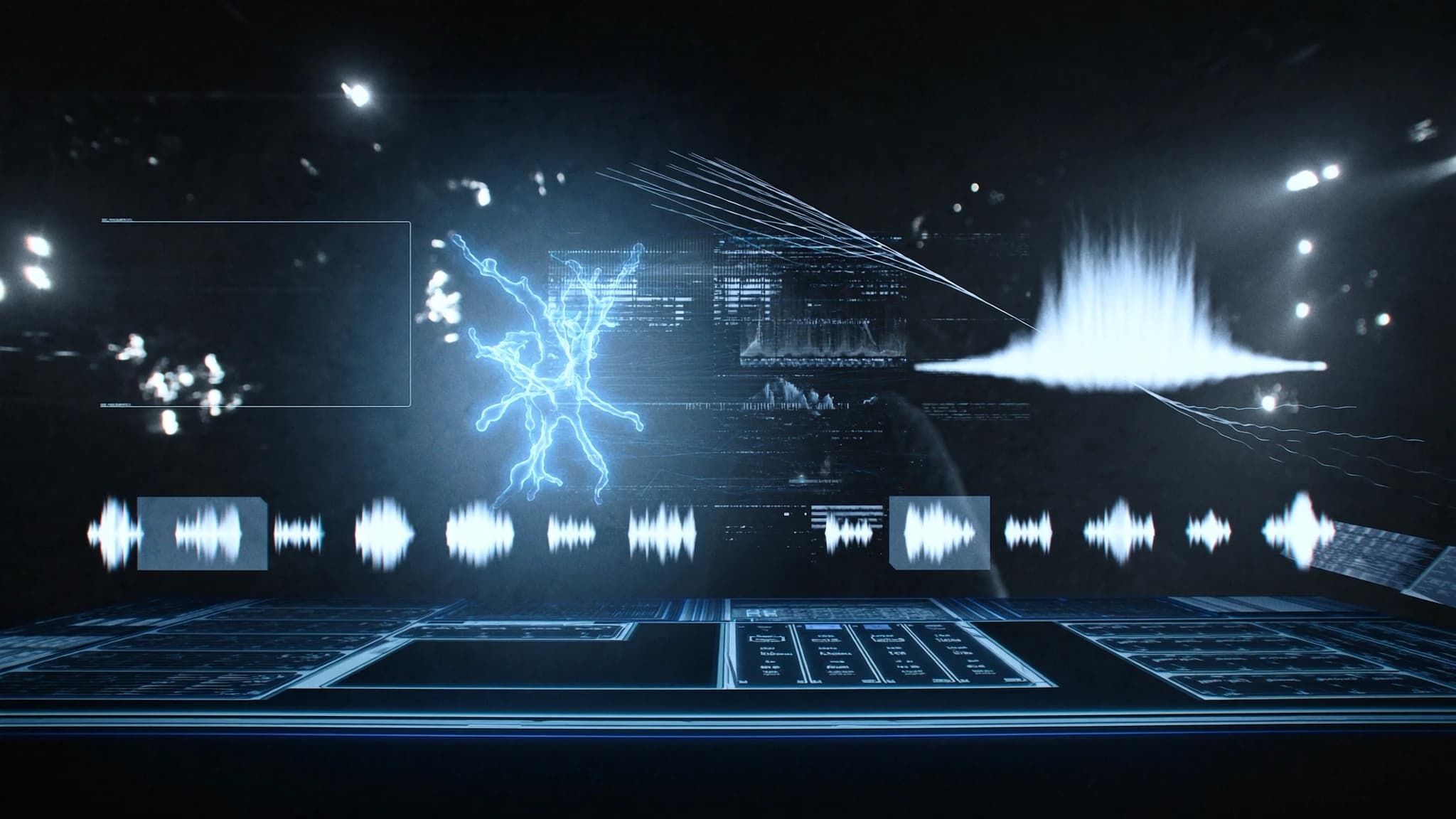
AI-Assisted Live Mixing: The Future of Front of House

Artificial intelligence is rapidly transforming live sound reinforcement, offering engineers powerful tools for automatic gain staging, dynamic EQ, and intelligent level balancing. But amid the hype, it's crucial to separate what's genuinely useful today from what remains aspirational. This guide explores how AI acts as a co-pilot at FOH, augmenting human expertise rather than replacing it, and what the near future holds for live mixing.
Key takeaways
- AI-assisted mixing is a practical reality for automatic gain staging, dynamic EQ, and level balancing, but it functions as a co-pilot, not a replacement.
- Current AI excels at repetitive, data-driven tasks, improving consistency and reducing engineer fatigue during complex shows.
- Intelligent frequency management can identify and attenuate resonances in real time, but creative EQ decisions remain the engineer's domain.
- The hype around AI replacing engineers is overstated; human judgment is essential for artistic decisions and handling unexpected events.
- Future AI integration will likely include predictive mixing and deeper system tuning, but robust training and careful implementation are critical.
- SSOUNDS systems are designed to complement AI workflows, providing predictable acoustics that enhance the effectiveness of intelligent mixing tools.
The Reality of AI in Live Sound Today
AI-assisted mixing is not science fiction. Major digital console manufacturers now include features like automatic feedback suppression, intelligent gain sharing, and real-time dynamic EQ that adapts to input signals. These tools leverage machine learning models trained on thousands of hours of live audio to predict and adjust parameters faster than any human could. For instance, automatic gain staging can maintain consistent levels across multiple inputs, reducing the need for constant manual trim adjustments during a show.
However, current AI implementations are best understood as smart assistants. They handle repetitive, low-level tasks—like taming resonant frequencies or balancing background vocals—freeing the engineer to focus on creative decisions and overall mix balance. The technology is reliable for predictable scenarios but can still struggle with extreme acoustic environments or unconventional performances.
Automatic Gain Staging: From Fader Riding to Intelligent Leveling
One of the most practical AI applications is automatic gain staging. Traditional gain staging requires the engineer to set input trims and fader levels manually, often chasing changes in source volume. AI-driven systems can continuously monitor input signals and adjust gain in real time, maintaining optimal headroom and preventing distortion. This is especially valuable for shows with multiple vocalists or instruments that vary in dynamic range.
SSOUNDS engineers have integrated adaptive gain algorithms into our DSP platforms, allowing seamless integration with consoles that support AI-assisted workflows. The result is a more consistent mix with fewer surprises, particularly during festival setups where soundchecks are rushed.
Dynamic EQ and Intelligent Frequency Management
Dynamic EQ has long been a manual tool for controlling problematic frequencies that only appear at certain levels. AI takes this further by automatically identifying and attenuating resonances in real time, adapting to changing stage conditions. For example, a vocal microphone that starts feeding back at a specific frequency can be tamed instantly without affecting the overall tone.
Machine learning models can also predict frequency masking between instruments, suggesting EQ adjustments that preserve clarity. While no AI can replace a trained ear for creative tonal shaping, it excels at technical cleanup—ensuring the mix stays clean and intelligible even in challenging acoustic spaces.
Intelligent Level Balancing: The Co-Pilot for Complex Shows
In large-scale productions with dozens of inputs, maintaining a balanced mix across all sources is a monumental task. AI-assisted level balancing can analyze the mix in real time and make subtle fader adjustments to keep vocals prominent, instruments defined, and effects levels appropriate. This is not about automating the entire mix; rather, it's about handling the 'housekeeping' so the engineer can focus on the big picture.
SSOUNDS line array systems are designed to work in concert with these AI tools, providing predictable coverage and consistent tonal response that reduces the variables the AI must compensate for. When the PA system is well-behaved, AI mixing becomes more effective.
What's Real Now vs. Hype: Separating Fact from Fiction
The hype around AI often suggests it will replace human engineers entirely. This is not true for the foreseeable future. Current AI lacks the contextual understanding to make artistic decisions—like choosing the right reverb for a ballad or balancing a snare drum's attack for a specific genre. It also cannot adapt to unexpected events like a broken microphone or a performer moving off-mic without human intervention.
What is real: AI excels at repetitive, data-driven tasks. It can monitor thousands of parameters simultaneously, detect anomalies, and apply corrective actions faster than any human. It is a powerful tool for consistency and efficiency, but it remains a co-pilot. The best results come from engineers who understand the technology's strengths and limitations, using it to enhance their workflow rather than abdicate control.
The Future: AI as an Integrated Partner
As AI models become more sophisticated, we can expect deeper integration with console workflows, including predictive mixing that anticipates changes based on setlists or rehearsal data. Imagine an AI that learns a band's typical mix preferences and adjusts automatically for each song. This is on the horizon, but it requires robust training data and careful implementation to avoid errors.
SSOUNDS is actively researching how AI can optimize system tuning and coverage prediction, ensuring that the PA itself becomes an intelligent part of the mixing ecosystem. The future of FOH is not a choice between human and machine, but a partnership where each plays to its strengths.
Frequently asked
Can AI completely automate a live mix?
No, current AI cannot fully automate a live mix. It handles repetitive tasks like gain staging and feedback suppression, but artistic decisions and adaptation to unforeseen events still require a human engineer.
Do I need special equipment to use AI mixing tools?
Many modern digital consoles include built-in AI-assisted features. For advanced integration, you may need compatible DSP or software. SSOUNDS systems are designed to work seamlessly with these tools.
Is AI mixing reliable in challenging acoustic environments?
AI tools are generally reliable but can struggle in extreme acoustics or with unconventional performances. They work best when the PA system is well-tuned, as with SSOUNDS line arrays, which provide consistent coverage.
Will AI replace live sound engineers?
No, AI is a tool to augment engineers, not replace them. Human expertise is essential for creative mixing, troubleshooting, and adapting to live performance dynamics.
How does SSOUNDS support AI-assisted mixing?
SSOUNDS designs its loudspeakers and DSP with predictable, linear response and advanced processing capabilities, creating an ideal foundation for AI mixing tools to operate effectively.
Building or upgrading a system?
SSOUNDS engineers and manufactures professional PA worldwide — from a single room to stadium scale.