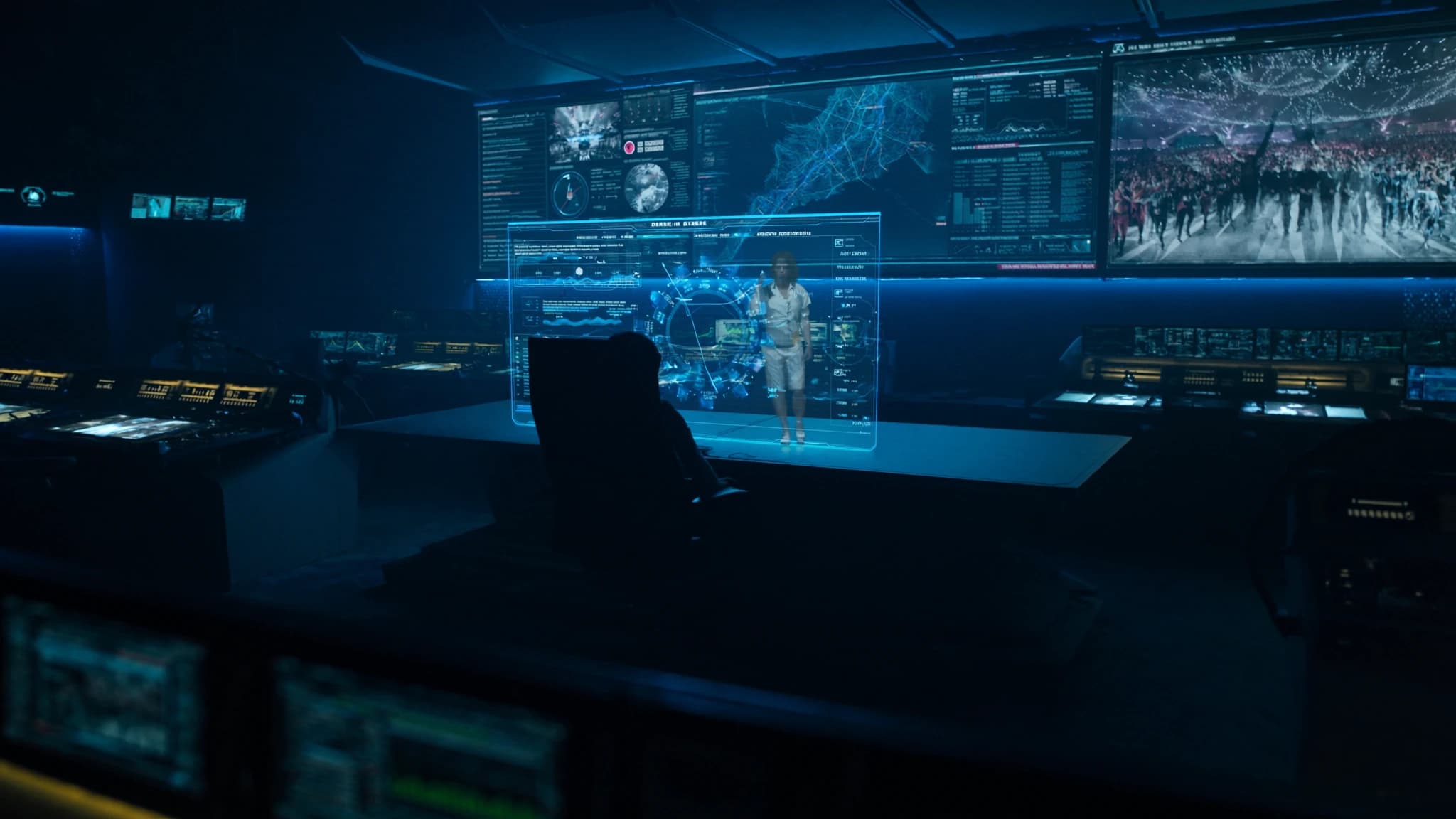
AI Crowd Management and Safety at Events

As live events scale in size and complexity, ensuring crowd safety has become a top priority for organisers and production teams. Artificial intelligence is now transforming how we monitor and manage crowds, offering real-time density analysis, flow prediction, and incident detection that complement — rather than replace — human safety personnel. In this guide, we explore how AI-assisted crowd management works and how it integrates with professional audio and event systems to create safer, more responsive environments.
Key takeaways
- AI crowd monitoring enhances safety by providing real-time density analysis, flow prediction, and incident detection.
- AI supports human teams by handling continuous monitoring of multiple zones, reducing cognitive load and enabling proactive response.
- Integration with PA systems allows automated alerts and zone-specific announcements during incidents.
- Privacy and ethical considerations are addressed through anonymised data processing and transparent policies.
- Future developments include predictive simulation and deeper integration with event infrastructure.
- Professional audio systems like those from SSOUNDS are designed to integrate seamlessly with AI platforms for enhanced safety.
The Evolution of Crowd Management
Traditional crowd management relies on manual observation, CCTV feeds, and radio communication among security teams. While effective, these methods have limitations: human monitors can miss subtle shifts in crowd density, and response times can be delayed when incidents escalate. The integration of AI brings a new layer of intelligence — processing video feeds and sensor data in real time to detect patterns that indicate potential hazards.
AI systems can analyse crowd density, movement velocity, and directional flow, flagging areas where density exceeds safe thresholds or where flow patterns suggest bottlenecks. This allows safety teams to intervene proactively, before a situation becomes critical.
How AI Monitors Crowd Density and Flow
AI-powered crowd monitoring uses computer vision algorithms trained on thousands of hours of event footage. Cameras positioned at entry points, concourses, and near stages feed data into a central AI engine that estimates the number of people in a given zone, their average speed, and the direction of movement. This data is overlaid on a digital map of the venue, updated every few seconds.
For example, if the AI detects that a particular walkway is approaching 80% capacity while the main stage area is still sparse, it can alert security to redirect incoming attendees. Flow prediction models also forecast where crowds are likely to move next, based on historical data and real-time triggers such as a performance ending or a sudden weather change.
Incident Detection and Response
Beyond density and flow, AI can identify specific incidents: a person falling, a sudden surge in one direction, or an unattended object. These events are flagged with a confidence score and sent to a central command centre, where human operators verify and decide on the appropriate response. The AI does not make decisions — it provides actionable intelligence.
Integration with PA systems is critical here. When an incident is detected, the AI can trigger pre-recorded or live announcements through the venue’s sound system, directing crowds away from danger or instructing staff. SSOUNDS systems, for instance, can be configured to receive alerts from AI platforms and automatically adjust zone routing or volume levels to ensure clear communication.
Supporting, Not Replacing, Human Teams
A common concern is that AI will replace human safety personnel. In practice, AI serves as a force multiplier — handling the continuous, data-intensive task of monitoring multiple camera feeds simultaneously, while humans focus on nuanced decision-making and direct intervention. The AI can monitor hundreds of zones at once, something no human team can do, but it lacks the contextual understanding and empathy that human responders bring.
Successful implementations use AI to reduce cognitive load on security staff, allowing them to concentrate on high-priority areas. For example, if the AI detects a potential crush at a barrier, it alerts the nearest steward, who can then assess and act. This partnership improves overall safety without diminishing the role of trained professionals.
Technical Integration with Event Infrastructure
Deploying AI crowd management requires careful integration with existing event infrastructure. Cameras must be positioned to cover all critical zones, and the AI software needs to be connected to the venue’s network, ideally with low-latency processing. Many systems now run on edge devices, reducing reliance on cloud connectivity and ensuring operation even if internet access is limited.
For audio systems, integration can be achieved through standard protocols like Dante or AES67. An AI platform can send trigger signals to a DSP (digital signal processor) that controls the PA, enabling automated announcements or zone-specific messaging. SSOUNDS engineers design systems with these integrations in mind, ensuring that safety alerts are delivered with the clarity and coverage required for effective crowd management.
Privacy and Ethical Considerations
AI crowd monitoring raises important privacy questions. Most systems use anonymised data — counting people without identifying individuals — and comply with local regulations such as GDPR. Organisers should be transparent about the use of AI, post signage, and ensure that data is not stored longer than necessary.
Ethical deployment also means avoiding bias in AI algorithms. Training data should represent diverse crowd types and lighting conditions to ensure accurate detection across all demographics. Regular audits and human oversight help maintain fairness and trust.
The Future of AI in Event Safety
As AI technology matures, we can expect even deeper integration with event production systems. Predictive analytics will become more accurate, allowing organisers to simulate crowd behaviour before the event and adjust layouts accordingly. AI may also integrate with wearable devices for staff, providing real-time alerts on smartwatches or earpieces.
For professional audio manufacturers like SSOUNDS, the focus is on building systems that are ready for this future — with open APIs, flexible DSP, and reliable networking that can interface with AI platforms. The goal is not just to deliver great sound, but to contribute to a safer, more enjoyable experience for every attendee.
Frequently asked
Does AI crowd monitoring replace security guards?
No, AI is designed to support human teams by providing real-time data and alerts. It handles continuous monitoring of multiple camera feeds, allowing security personnel to focus on decision-making and direct intervention.
How accurate is AI in detecting crowd density?
Modern AI systems achieve high accuracy, often above 90%, when properly trained and calibrated. Accuracy depends on camera placement, lighting, and the diversity of training data. Regular updates and testing ensure consistent performance.
Can AI integrate with existing PA systems?
Yes, many AI platforms can send triggers via standard protocols like Dante or AES67 to DSP-controlled PA systems. This allows automated announcements or zone-specific messaging during incidents.
What privacy measures are in place?
Reputable AI systems use anonymised data — counting individuals without storing facial recognition data. They comply with regulations like GDPR and often include features like data encryption and automatic deletion after events.
Is AI crowd management suitable for outdoor events?
Yes, AI can be adapted for outdoor use with weatherproof cameras and edge processing. However, challenges like changing light and weather may require additional calibration. Many systems are designed to handle these conditions.
Building or upgrading a system?
SSOUNDS engineers and manufactures professional PA worldwide — from a single room to stadium scale.