AI in LED Video and Real-Time Content

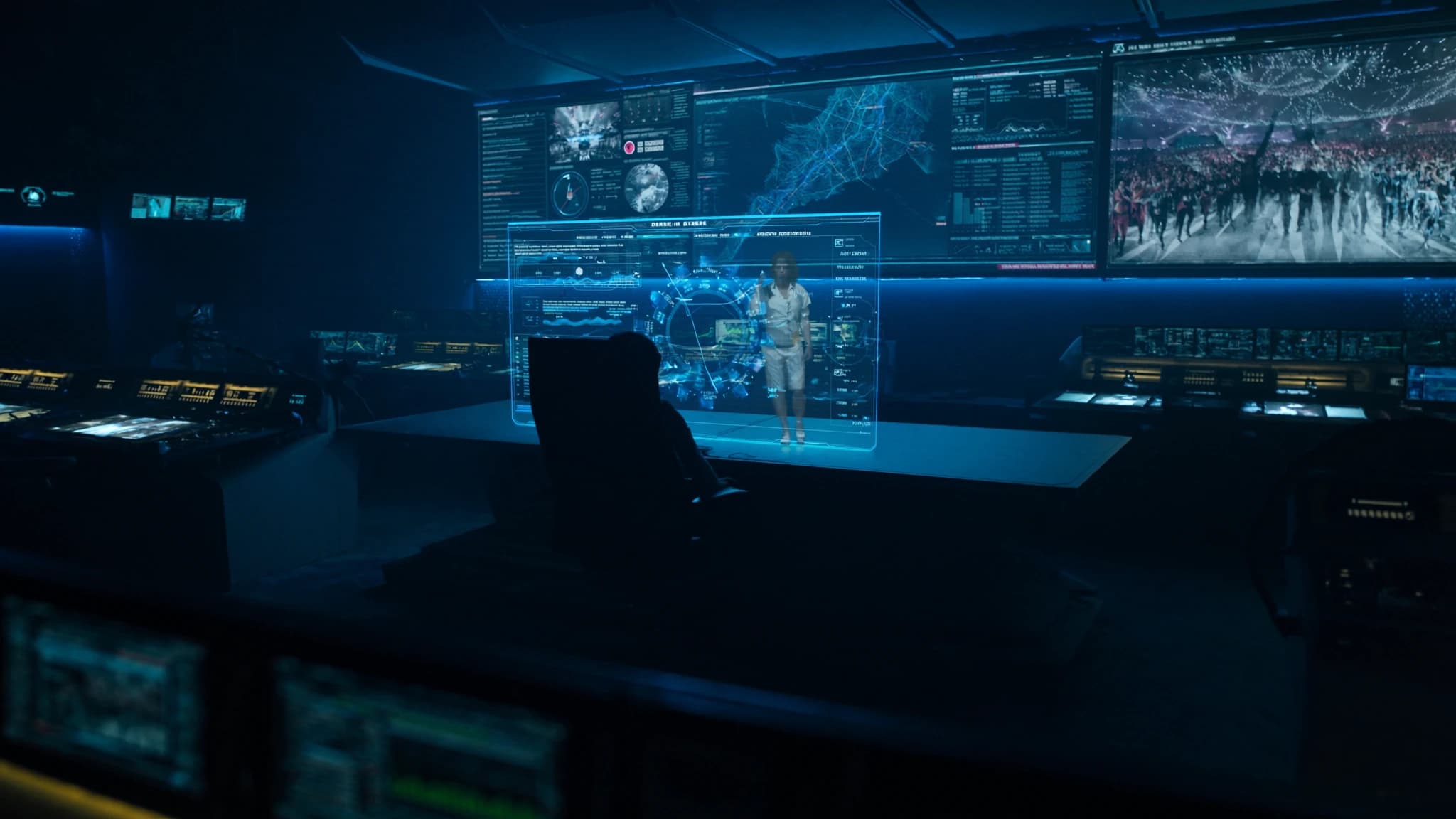
Artificial intelligence is transforming the way content is created and delivered for LED walls, enabling real-time generative visuals, audio-reactive graphics, and intelligent upscaling that adapts to any venue. For live events, broadcast, and permanent installations, AI-driven tools are unlocking new creative possibilities while reducing production time and bandwidth demands. SSOUNDS, as a leader in professional audio and visual system integration, explores how AI is reshaping the landscape of LED video content.
Key takeaways
- AI enables real-time generative visuals that adapt to music, motion, or data, creating unique LED wall content for each performance.
- Audio-reactive graphics powered by AI produce more nuanced and expressive visual responses, especially when fed high-quality audio from professional systems.
- AI upscaling allows lower-resolution sources to look native on high-resolution LED walls, reducing production costs and bandwidth.
- Personalization and adaptive displays use AI to tailor content to audience demographics or environmental cues, enhancing engagement.
- AI-assisted workflows automate repetitive tasks in content creation, speeding up production and enabling smaller teams to achieve high-end results.
- Challenges include latency, hardware requirements, consistency, and copyright; careful planning and fallback strategies are essential.
Real-Time Generative Visuals for LED Walls
AI-powered generative models can now create unique, high-resolution visuals on the fly, responding to inputs like music, motion, or environmental data. For LED walls in concerts, festivals, or immersive experiences, this means every show can have a custom visual identity without hours of pre-rendering. Tools like Stable Diffusion and GANs are being optimized for real-time inference, allowing artists and VJs to feed prompts or parameters that generate textures, patterns, or abstract animations that scale seamlessly across large LED arrays.
SSOUNDS integrates these systems with its own audio and video control platforms, ensuring that generative visuals are synchronized with sound and lighting. The key challenge is latency: AI models must produce frames at 30-60 fps to match video standards. Recent advances in model quantization and edge computing have made this feasible, even for 4K and 8K LED walls. By leveraging GPU clusters or dedicated AI accelerators, production teams can run multiple generative streams simultaneously, creating a dynamic canvas that evolves with the performance.
Audio-Reactive Graphics: Bridging Sound and Vision
One of the most compelling applications of AI in LED content is audio-reactive graphics — visuals that change in real time based on audio input. Traditional methods rely on FFT analysis and pre-mapped parameters, but AI takes this further by learning complex relationships between sound features and visual styles. For example, a neural network can be trained to generate particle effects that pulse with bass frequencies or color shifts that follow melodic contours.
SSOUNDS' expertise in professional audio systems gives us a unique perspective: the quality of the audio signal feeding the AI matters. Clean, high-resolution audio from SSOUNDS line arrays and subwoofers ensures that the AI receives accurate spectral data, resulting in more precise and expressive visual reactions. In live settings, this creates a cohesive sensory experience where the LED wall becomes an extension of the sound, enhancing immersion for audiences. AI also enables adaptive graphics that adjust to different genres or dynamic range, from intimate acoustic sets to high-energy EDM.
AI-Powered Upscaling for Large LED Screens
LED walls often demand resolutions far beyond standard video sources — a 4K source on a 12K wall requires upscaling. Traditional upscaling methods (bilinear, bicubic) can introduce blur or artifacts, especially on large pixel pitches. AI-driven super-resolution models, such as ESRGAN or Real-ESRGAN, can upscale content with remarkable fidelity, adding detail that wasn't originally there. These models are trained on millions of images to reconstruct high-frequency textures, making low-resolution footage appear native on high-resolution LED panels.
For live events, real-time AI upscaling is a game-changer. Instead of rendering all content at 8K or 16K, production teams can work in 1080p or 4K and let AI upscale to the wall's native resolution. This reduces rendering time, storage, and bandwidth. SSOUNDS recommends integrating AI upscaling into the video processing chain, either via dedicated hardware or software plugins, ensuring that the final output is sharp and artifact-free. The technology also works for legacy content, breathing new life into older video libraries for permanent installations.
Content Personalization and Adaptive Displays
AI enables LED walls to adapt content based on audience demographics, time of day, or environmental conditions. For digital signage, computer vision can analyze foot traffic and adjust messaging accordingly. In live events, AI can generate personalized overlays for VIP sections or change color schemes based on crowd mood (detected via audio analysis or social media sentiment). This level of personalization was previously impossible without manual intervention.
SSOUNDS' integrated control systems can interface with AI models that take real-time data from cameras, microphones, or sensors. For example, an AI could detect that the audience is predominantly young and energetic, and shift the visual palette to brighter, faster-paced graphics. The challenge is ensuring that personalization does not compromise the overall artistic vision. By setting guardrails and using AI as a creative assistant rather than a replacement, designers can achieve a balance between automation and intentionality.
Workflow Automation and AI-Assisted Content Creation
Beyond real-time generation, AI streamlines the entire content creation pipeline for LED walls. From automated color grading and keying to intelligent asset tagging and sorting, AI reduces the manual labor involved in preparing content for large-scale displays. For instance, AI can analyze a video file and automatically split it into segments suitable for different LED panels in a multi-screen setup, or generate cue points that align with music beats for audio-reactive shows.
SSOUNDS' approach to system design includes recommending AI tools that integrate with popular media servers like Disguise, Resolume, or Watchout. These tools can pre-visualize AI-generated content on virtual LED walls, allowing designers to test looks before the actual event. The result is a faster turnaround from concept to execution, with fewer technical hiccups. As AI models become more accessible, even smaller production teams can achieve high-end visual effects that were once reserved for major tours.
Challenges and Considerations for AI-Driven LED Content
While AI offers immense potential, there are practical challenges: latency, consistency, and hardware requirements. Real-time AI inference demands powerful GPUs or specialized AI chips, which can add cost and complexity. Additionally, generative models can produce unpredictable results — a risk in live settings where reliability is paramount. SSOUNDS advises thorough testing and fallback content for critical moments. Another consideration is copyright: AI-generated content may raise questions about ownership, especially when using models trained on copyrighted material.
Bandwidth and synchronization are also critical. AI-generated frames must be delivered to the LED wall in sync with audio and lighting. SSOUNDS' network infrastructure solutions, including Dante and AES67 for audio, can be extended to video with protocols like NDI or SMPTE ST 2110, ensuring low-latency transport. By building a robust ecosystem that handles both audio and video, SSOUNDS helps clients deploy AI-driven content with confidence.
Frequently asked
Can AI generate LED content in real time at 4K resolution?
Yes, with modern GPU accelerators and optimized models, real-time 4K generation is possible, though it requires significant processing power. Many systems use lower-resolution generation with AI upscaling to achieve 4K output.
How does AI audio-reactive graphics differ from traditional FFT-based methods?
AI learns complex relationships between audio features and visual styles, allowing for more organic and varied reactions. Traditional FFT methods rely on predefined mappings, which can feel mechanical. AI can also adapt to different genres and dynamic ranges.
What hardware do I need for AI-driven LED content?
You'll need a powerful GPU (e.g., NVIDIA RTX 6000 or A-series) or dedicated AI accelerators (like Intel Movidius or Google Edge TPU) for inference. SSOUNDS recommends integrating these into a media server or dedicated processing unit with low-latency video output.
Is AI-generated content reliable for live events?
It can be, but reliability depends on the model's consistency and fallback systems. SSOUNDS advises using AI for non-critical moments or having pre-rendered backups. Testing in rehearsal is crucial to identify potential glitches.
Can AI upscaling improve the quality of old video footage on LED walls?
Absolutely. AI super-resolution models can add detail and reduce artifacts in low-resolution footage, making it suitable for high-resolution LED displays. This is especially useful for archival content or historical footage in permanent installations.
Building or upgrading a system?
SSOUNDS engineers and manufactures professional PA worldwide — from a single room to stadium scale.