イベント構造物用のカウンターウェイトとバラスト
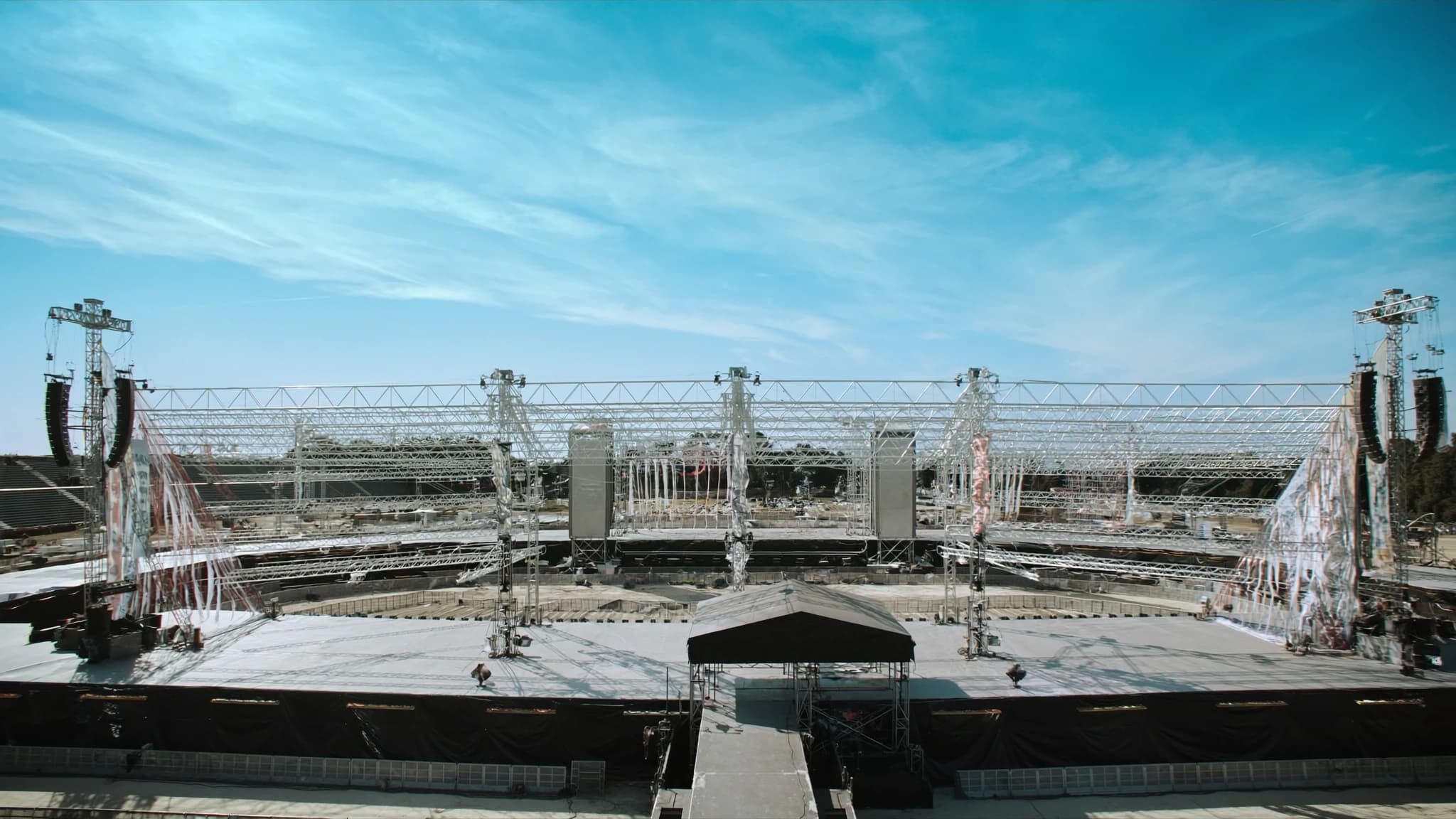
カウンターウェイトとバラストは安全なイベント構造物の縁の下の力持ちであり、風荷重に抵抗し、転倒を防ぎ、ステージ、タワー、屋外設置物を安定させます。このガイドでは、3つの主要なバラストタイプ(水、コンクリート、鋼)とそれぞれの使用場面、風荷重計算の背後にある工学、アンカリングとバラストの安全な実践方法について説明します。
主なポイント
- バラストは、風荷重に対する安定モーメントを増やすために質量を追加することで転倒に抵抗します。
- 水バラストは携帯可能で安価ですが安定性が低い。コンクリートブロックは設置面積あたりの質量が大きく、鋼製ウェイトはコンパクトで精密です。
- アンカリングは軟らかい地面用、バラストは硬い表面や地面への貫入が禁止されている場所用です。
- 常に認定された構造計算を使用し、バラスト要件を決して推測しないでください。
- バラストは低く風上側に配置してレバーアームを最大化し、ずれを防ぐために固定してください。
- バラストを定期的に検査し、安全とコンプライアンスのために設置を記録してください。
バラストが重要な理由:転倒と風荷重
PAタワーからステージルーフまで、すべての屋外構造物は風に対して脆弱です。主なリスクは転倒です。構造物の表面にかかる風圧が、構造物の自重とバラストによる安定モーメントを超えるモーメント(トルク)を生み出すときに発生します。バラストは質量を追加して安定モーメントを増やし、構造物の転倒を防ぎます。
風荷重は式 F = 0.5 × ρ × v² × Cd × A を用いて計算されます。ここでρは空気密度、vは風速、Cdは抗力係数、Aは投影面積です。イベント構造物の場合、設計風速は通常20~40 m/s(45~90 mph)の範囲で、地域の基準やイベント期間によって異なります。得られた力にレバーアーム(構造物の圧力中心の高さ)を掛けて転倒モーメントを求めます。
BS EN 13814やIBCなどの基準で要求される安全率は通常1.5~2.0です。これは、安定モーメント(構造物の重量とバラストによる)が転倒モーメントの少なくとも1.5倍でなければならないことを意味します。バラストは、恒久的な基礎が実現できない仮設構造物にとって、その余裕を追加する最も実用的な方法です。
水バラスト:軽量で携帯可能
水バラストは、空の状態で輸送し現場で充填するのが容易なため、仮設の屋外イベントで人気があります。典型的な水バラスト容器は、500~1000リットル(約500~1000 kg)を保持する頑丈なプラスチックタンクまたはブラダーです。ステージの脚、照明タワー、PAサブウーファースタックによく使用されます。
利点:輸送コストが低く(空の状態)、重量物を持ち上げる必要がなく、イベント後に簡単に排水できます。水は無料で広く入手可能です。ただし、水バラストには欠点があります。寒冷気候では凍結し(膨張して容器を損傷する可能性がある)、漏れやすく、コンクリートや鋼と比較して設置面積あたりの質量が少なくなります。また、水の揺れが動的な力を生み出し、有効な安定性を低下させる可能性があるため、水バラストは低~中程度の風条件と広い基部を持つ構造物に最適です。
使用場面:短期間のイベント(1~3日)、重量機器のアクセスが限られた現場、重量を迅速に除去する必要がある用途。25 m/s(56 mph)を超える風速では、コンクリートまたは鋼で補強することを検討してください。
コンクリートブロック:高密度で安定
コンクリートブロック(しばしば「ケントレッジ」と呼ばれる)は、イベントバラストの主力です。標準サイズ(例:1m x 1m x 1mで約2.3トン)で提供され、ベースプレートまたは構造物の脚に直接積み重ねられます。コンクリートは高密度(2.3~2.5 g/cm³)で、密封されていれば非多孔性であり、揺れたり凍結したりしません。
利点:設置面積あたりの質量が大きく、優れた安定性と予測可能な性能。コンクリートブロックは、ずれを防ぐためにストラップやピンで固定できます。多くのイベントで再利用可能です。欠点:輸送が重い(平床トラックとフォークリフトが必要)、軟らかい地面を損傷する可能性がある(スプレッダープレートを使用)。また、一度設置すると恒久的で、イベント中に簡単に取り外せません。
使用場面:複数日フェスティバル、強風地域、転倒モーメントが大きい構造物(例:大型PAタワー、ルーフトラス)。コンクリートはプロの屋外ステージとディレイタワーの標準です。
鋼製ウェイト:コンパクトで精密
鋼製バラスト(例:鋳鉄ブロックや鋼板)は、最高密度(7.8 g/cm³)を提供し、コンクリートの約3倍です。これにより、はるかに小さな設置面積で同じ安定モーメントを達成できます。鋼は、構造物の基部に直接ボルトで固定するモジュラー式バラストシステムによく使用されます。
利点:非常にコンパクトで、正確な重量(湿ったコンクリートのようなばらつきがない)、ボルトやピンで簡単に固定できます。鋼は非吸収性で耐久性もあります。欠点:高コスト、盗難のリスク(スクラップ価値)、怪我を避けるための慎重な取り扱いが必要。コーティングしないと錆びる可能性があります。
使用場面:スペースが限られた用途(例:ウィングが狭いステージ)、高荷重のポイント固有のバラスト、精密さが重要な恒久または半恒久設置。ビデオウォールのような風に敏感な構造物にも使用されます。
アンカリングとバラスト:それぞれの使用場面
アンカリングは、ペグ、スクリューアンカー、またはグラウンドロッドを地面に打ち込み、浮き上がりと転倒に抵抗します。これはテント、マーキー、軟らかい地面の小さなステージで一般的です。アンカーは荷重を土壌に伝え、土壌条件が良好な場合(例:締め固めた粘土や砂利)に非常に効果的です。ただし、アンカリングが常に可能とは限りません。アスファルト、コンクリート、岩場ではアンカーを打ち込めません。
バラストは質量のみに依存して転倒に抵抗します。硬い表面(駐車場、舗装)や地面への貫入が禁止されている場所(例:歴史的遺跡)では、頼りになる方法です。バラストはまた、広く変動する土壌強度に依存しないため、より予測可能です。欠点は、バラストが輸送および設置しなければならないかなりの重量を追加することです。
安全な実践:軟らかい地面の仮設構造物では、アンカリングとバラストの組み合わせがよく使用されます。アンカーは浮き上がりに抵抗し、バラストは転倒抵抗を追加します。特定の構造物と場所の風荷重計算に基づいて必要なバラストを決定するために、常に構造エンジニアに相談してください。
安全な実践:バラストの計算と設置
黄金律:バラスト要件を決して推測しないでください。構造物の形状、風露出カテゴリ、地域の風速を考慮した認定構造計算を使用してください。計算により必要な安定モーメントが得られ、それをバラスト質量と設置に変換します。
設置場所が重要:バラストはできるだけ低く、ピボットポイント(通常は風上側の端)からできるだけ遠くに配置して、レバーアームを最大化する必要があります。4本の脚を持つタワーの場合、バラストは通常風上側の脚に配置されます。バラストは常に固定してずれを防ぎ、ストラップ、チェーン、またはインターロッキングシステムを使用します。ベースプレートの定格容量を超えてバラストを積み重ねないでください。
イベント中は、特に突風後にバラストを定期的に検査してください。水バラストのレベルは漏れがないか確認する必要があります。コンクリートブロックについては、ひび割れやずれがないことを確認してください。保険とコンプライアンスのために、すべてのバラスト設置を写真で記録してください。そして、特定の構造物のメーカーガイドラインに常に従ってください。SSOUNDSは、PAタワーとサブウーファーアレイに対して詳細なバラスト推奨事項を提供しています。
よくある間違いとその回避方法
よくある間違いの1つは、風荷重を過小評価することです。現場が定期的に30 m/sの突風を受けるのに、20 m/sの設計風速を使用することです。イベント期間に対して常に信頼できる最高の風速を使用してください。もう1つの間違いは、バラストの設置が不適切であることです。すべての重量を風下側に置く(転倒防止には何の役にも立たない)か、バラストを高く積みすぎる(二次的な転倒リスクを生み出す)ことです。
もう1つの誤りは、凍結条件下で不凍液や断熱材なしに水バラストを使用することです。氷の膨張が容器を破裂させる可能性があります。また、エンジニアの承認なしにバラストタイプを混合しないでください。異なる密度と形状は不均一な荷重につながる可能性があります。最後に、ガイラインやブレースも必要とする構造物でバラストだけに頼らないでください。バラストは垂直安定性のためのものであり、横揺れのためのものではありません。
安全を保つために:資格のある構造エンジニアと協力し、認定されたバラストシステムを使用し、イベント前の風荷重評価を実施してください。SSOUNDSでは、バラスト計算をシステム設計ソフトウェアに統合し、すべてのPAタワーとステージが条件に適したカウンターウェイトを持つことを保証しています。
よくある質問
10メートルのPAタワーにはどのくらいのバラストが必要ですか?
必要なバラストはタワーの重量、風速、露出状況によって決まります。25 m/sの風を受ける典型的な10mタワーでは、脚1本あたり500~1000 kgが必要になる場合があります。必ずエンジニアによる構造計算を受けるか、メーカー提供の表を使用してください。
凍結温度で水バラストを使用できますか?
対策なしでは使用できません。水は凍結すると膨張し、容器が破裂する可能性があります。不凍液添加剤を使用するか、氷点下の条件ではコンクリートまたは鋼製バラストに切り替えてください。
芝生のステージはアンカリングとバラストのどちらが良いですか?
軟らかい芝生では、アンカリング(例:スクリューアンカー)の方がしばしば効果的で軽量です。ただし、地面が不均一であったり、十分な深さまで貫入できない場合は、スプレッダープレートを使ったバラストの方が安全です。併用が最善です。
ステージルーフの風荷重はどのように計算しますか?
式 F = 0.5 × ρ × v² × Cd × A を使用します。典型的なステージルーフでは、形状に応じてCdは約1.2~2.0です。得られた力にルーフの圧力中心の高さを掛けて転倒モーメントを求めます。次に、バラストがそのモーメントの少なくとも1.5倍を提供することを確認します。
バラスト用のコンクリートブロックを積み重ねる最も安全な方法は何ですか?
ベースプレートの真上に積み重ね、可能であれば互いに噛み合わせます。エンジニアの承認なしに3段を超えて積み重ねないでください。滑りや転倒を防ぐため、ブロック同士を、また構造物にストラップまたはチェーンで固定してください。
システムの構築やアップグレードをお考えですか?
SSOUNDSは、単一の部屋からスタジアム規模まで、プロ用PAを世界中で設計・製造しています。