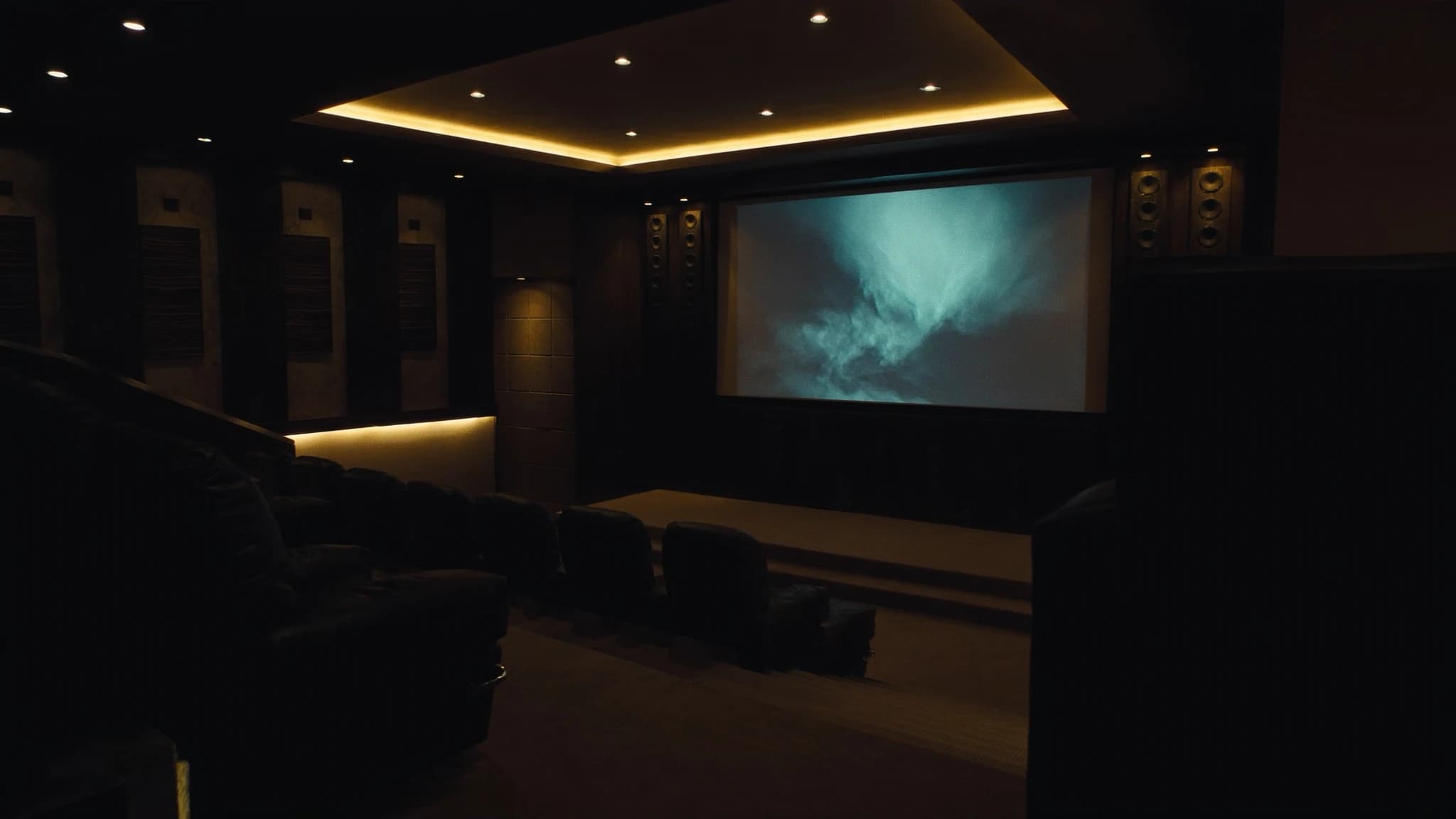
Soundbar vs AV Receiver: Which Is Right for Your Home Cinema?

Choosing between a soundbar and a full AV receiver (AVR) setup is one of the most debated decisions in home cinema. While soundbars offer simplicity and space-saving design, an AVR with separate speakers delivers unmatched immersion and audio fidelity. This guide breaks down the honest trade-offs in sound quality, immersion, cost, space, and ease of use to help you decide which path suits your home theatre needs.
Key takeaways
- Soundbars offer simplicity and space savings but compromise on soundstage, dynamics, and true immersion.
- AVR systems with separate speakers deliver superior sound quality, precise localisation, and scalability.
- Cost: Soundbars are cheaper upfront; AVR systems provide better long-term value and upgradeability.
- Immersion: Only a discrete multi-speaker setup can fully realise Dolby Atmos and DTS:X.
- Ease of use: Soundbars are plug-and-play; AVRs require more setup but offer greater control.
- For serious home cinema enthusiasts, an AVR system is the only choice; soundbars are best for casual or space-constrained users.
Sound Quality: Detail, Dynamics, and Depth
A traditional AVR system with dedicated speakers—including a centre channel, floorstanding or bookshelf speakers, surrounds, and a subwoofer—provides superior sound quality. The physical separation of drivers allows for better stereo imaging, wider soundstage, and precise localisation of effects. With a high-quality AVR, you get clean amplification, advanced room correction (e.g., Audyssey, Dirac), and the ability to drive demanding speakers with ample headroom. This translates to dynamic range that can handle everything from whispered dialogue to explosive action sequences without distortion.
Soundbars, even premium multi-piece systems like those with separate subwoofers and satellite speakers, are limited by their compact enclosures and smaller drivers. While the best soundbars (including 2026 models with upward-firing drivers for Atmos) can produce convincing virtual surround, they cannot match the physical separation and air movement of a full speaker array. Dialogue clarity is generally good, but bass extension and overall impact are compromised compared to a dedicated subwoofer. For critical listeners and home cinema enthusiasts, the AVR route remains the gold standard.
Immersion: Dolby Atmos and Surround Sound
Immersive audio formats like Dolby Atmos, DTS:X, and Auro-3D rely on precise speaker placement to create a three-dimensional sound bubble. An AVR system with ceiling-mounted or upward-firing Atmos speakers delivers true object-based audio, with sounds moving seamlessly around and above you. The number of channels (e.g., 5.1.2, 7.1.4) directly correlates to the level of immersion. With a capable AVR, you can build a system that rivals commercial cinemas.
Soundbars use psychoacoustic tricks and virtual processing to simulate height and surround effects. While some high-end models (like those with dedicated rear speakers and upfiring drivers) can be surprisingly effective, they cannot replicate the precise localisation and envelopment of a discrete speaker layout. The soundstage is narrower, and the ‘bubble’ effect is less convincing. For casual viewers, a soundbar’s Atmos performance may be sufficient, but for true immersion, a multi-speaker AVR setup is unmatched.
Cost: Upfront Investment and Long-Term Value
Soundbars offer a lower entry price—from under $200 for basic models to around $1,500 for premium multi-piece systems. This includes everything in one box: amplification, processing, and speakers. Installation is simple, and there are no additional cables or speaker stands to buy. For budget-conscious buyers or those in apartments, this is a compelling value proposition.
An AVR system requires a larger upfront investment. A decent AVR starts at $400, and a set of quality speakers (including subwoofer) can easily exceed $1,000. Cables, stands, and possibly in-wall installation add to the cost. However, AVR systems are modular and upgradable—you can start with a 5.1 setup and add channels later. Over time, the AVR system offers better long-term value because components can be replaced individually, and the sound quality scales with investment. For those serious about home cinema, the higher initial cost is justified by performance and flexibility.
Space and Aesthetics: Clutter vs. Clean Lines
Soundbars win on space and simplicity. A single bar (plus optional subwoofer) sits neatly under your TV, with minimal wiring. This is ideal for small rooms, rental spaces, or anyone who prioritises a clean, minimalist look. Many soundbars also support wall-mounting, further reducing footprint.
An AVR system requires multiple speakers placed around the room, speaker wire runs, and a central rack or cabinet for the receiver. This can be visually intrusive, especially if you have a dedicated home theatre room with acoustic treatments. However, with careful planning (in-wall speakers, hidden wiring, and furniture integration), an AVR system can be made nearly invisible. The trade-off is effort and cost. For those who value performance over aesthetics, the visual impact is a worthy compromise.
Ease of Use: Setup, Operation, and Future-Proofing
Soundbars are plug-and-play. Most connect via HDMI ARC/eARC, optical, or Bluetooth, and many include built-in streaming services and voice assistants. Setup takes minutes, and the remote or app is intuitive. This makes soundbars ideal for non-technical users or as a secondary TV in a bedroom or kitchen.
AVR systems have a steeper learning curve. You must connect multiple speakers, configure the receiver’s speaker settings, run room correction, and manage input switching. Modern AVRs have simplified this with on-screen setup wizards and auto-calibration, but it still takes time. However, once configured, an AVR offers superior control: multiple HDMI inputs, support for the latest formats (HDMI 2.1, 8K, VRR), and the ability to integrate with smart home systems. For enthusiasts, the extra effort is rewarded with a system that can be tailored exactly to their room and preferences.
Which One Should You Choose?
Choose a soundbar if: you have a small to medium room, a limited budget, value simplicity and aesthetics, or are not an audiophile. The best soundbars (like those from Sonos, Samsung, or Sony) provide excellent all-in-one solutions for casual movie and TV watching.
Choose an AVR system if: you are building a dedicated home cinema, demand the highest sound quality and immersion, want to future-proof with modular upgrades, or enjoy tweaking and optimising your setup. An AVR with quality speakers is the only way to achieve true cinematic sound at home. For the ultimate experience, consider professional-grade solutions like SSOUNDS’ custom home cinema systems, which bring concert-level engineering to residential spaces.
Frequently asked
Can a soundbar really replace a 5.1 speaker system?
No, not in terms of true surround immersion. While premium soundbars with rear speakers can simulate surround effects, they cannot match the physical separation and air movement of dedicated speakers. For casual listening, a soundbar is fine, but for a cinematic experience, a 5.1 system is superior.
Do I need an expensive AVR for good sound?
Not necessarily. Entry-level AVRs from brands like Denon, Yamaha, or Onkyo provide excellent sound quality and features. The key is pairing the AVR with speakers that match your room and budget. A $500 AVR with $500 speakers will outperform a $1,000 soundbar in most aspects.
Is Dolby Atmos effective on a soundbar?
It can be, but with limitations. Soundbars use virtual processing and upward-firing drivers to create height effects. The result is a diffuse sense of overhead sound rather than precise object placement. For a convincing Atmos experience, ceiling speakers or dedicated upfiring modules are recommended.
Can I use a soundbar with an existing AVR?
Yes, but it's unusual. You could connect a soundbar to your TV's audio output while the AVR handles other sources, but this complicates switching. Most users choose one or the other. If you have an AVR, stick with speakers for consistency.
How long do soundbars and AVRs typically last?
Soundbars have a lifespan of 5–8 years, often limited by software updates or HDMI standard changes. AVRs can last 10–15 years, especially if they support the latest HDMI standards. Speakers can last decades, making AVR systems more sustainable.
Building or upgrading a system?
SSOUNDS engineers and manufactures professional PA worldwide — from a single room to stadium scale.