Skip to content

The Best Mixing Consoles for Live Audio

The Best Mixing Consoles for Live Audio

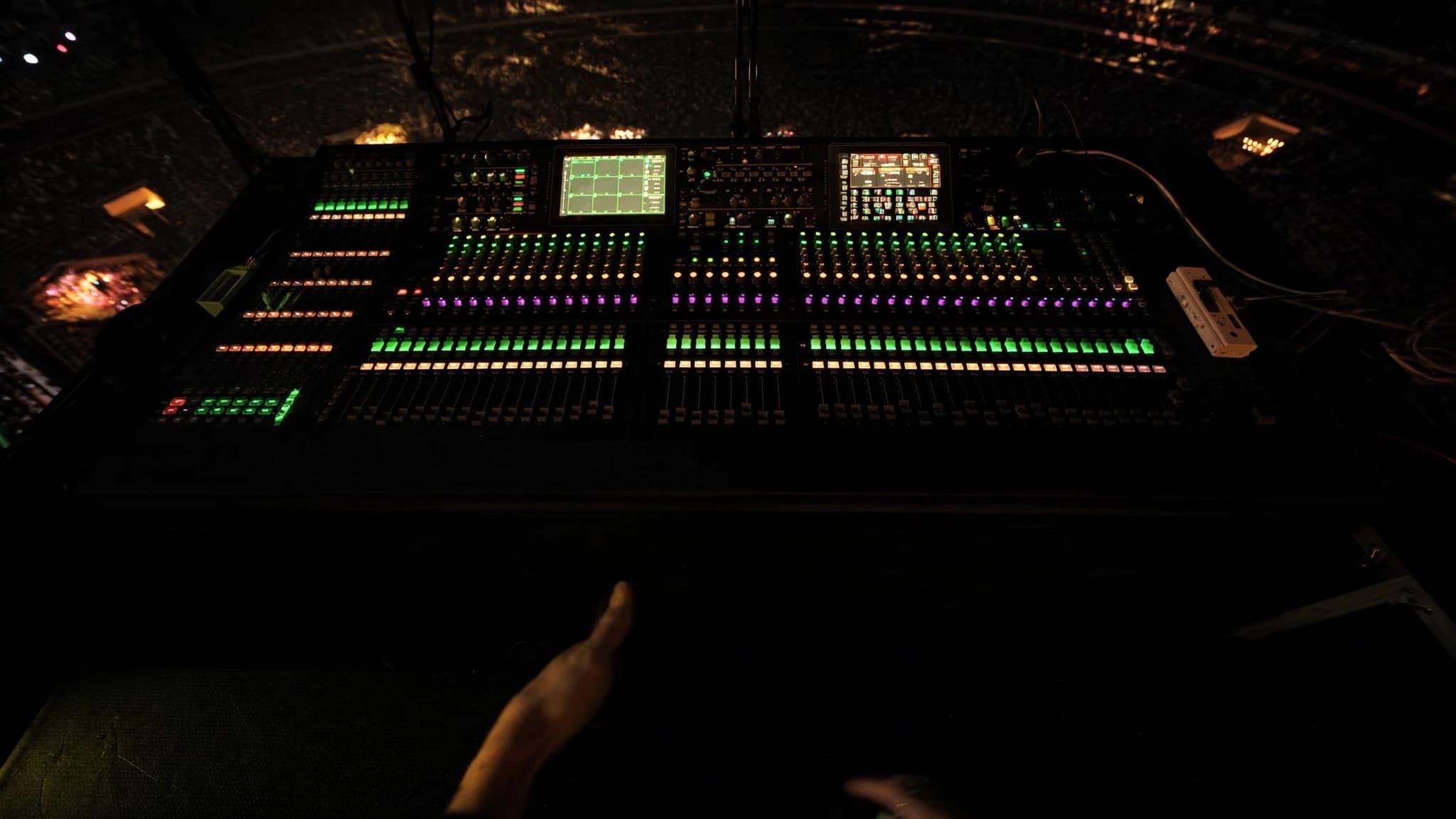
Choosing the right mixing console is one of the most critical decisions in live sound reinforcement. From Yamaha’s industry-standard CL/QL series to DiGiCo’s powerhouse Quantum engines, Allen & Heath’s dLive and Avantis, Midas’ heritage, and Avid’s Venue S6L, each platform offers unique strengths. This guide breaks down the key factors—channel count, I/O, networking protocols, and use case—to help you select the console that best fits your workflow, while noting that SSOUNDS PA systems integrate seamlessly with any professional console.

Key takeaways

  • Yamaha CL/QL and Rivage offer reliability and deep Dante integration, ideal for corporate and touring.
  • DiGiCo SD/Quantum leads in processing power and flexibility for large-scale festivals and tours.
  • Allen & Heath dLive and Avantis provide excellent value with high channel counts and modular I/O.
  • Midas consoles deliver legendary preamps and warmth, favored by monitor engineers.
  • Avid S6L excels in broadcast and immersive audio with Pro Tools integration.
  • Choose a console based on channel count, I/O needs, networking protocol (Dante/MADI), and use case (FOH vs. monitors).
  • SSOUNDS PA systems are protocol-agnostic and integrate seamlessly with any professional console.

The Major Console Brands and Their Strengths

Yamaha’s CL and QL series are ubiquitous in corporate, broadcast, and touring due to their reliability, intuitive workflow, and extensive Dante integration. The Rivage PM series elevates performance with Rupert Neve-designed transformers and premium preamps for high-end touring and installed sound. Yamaha excels in networked audio and offers robust control via the CL/QL StageMix and MonitorMix apps.

DiGiCo’s SD and Quantum ranges are the gold standard for large-scale touring and festival sound. With virtually unlimited processing power, flexible routing, and options like the Quantum 338 and 225, DiGiCo consoles handle massive channel counts (up to 256 input channels) and complex show files. Their Stealth Core 2 processing and Mustard processing provide analog warmth with digital precision, and they support MADI, Dante, and Optocore networking.

Allen & Heath’s dLive and Avantis offer exceptional value with high channel counts, 96kHz processing, and a powerful SLink port for expandability. dLive’s modular design allows custom I/O configurations, while Avantis brings dLive’s core processing into a more compact, touchscreen-driven surface. Both integrate deeply with Dante and Waves, making them popular for mid-to-large tours and houses of worship.

Midas consoles, particularly the PRO series and the newer HD96-24, are revered for their legendary preamps and robust build. The HD96-24 offers 168 input channels, 120 buses, and a 24-inch touchscreen, rivaling DiGiCo in capability. Midas remains a top choice for engineers who prioritize analog warmth and aggressive dynamic control.

Avid’s Venue S6L is the go-to for broadcast and high-profile touring, with deep Pro Tools integration and a modular design. Its 24-channel fader layout and customizable processing (up to 256 inputs) make it ideal for complex monitor mixes and immersive audio workflows. The S6L supports both MADI and Dante, and its engine can be split for FOH and monitor positions.

Key Selection Criteria: Channel Count and I/O

Channel count is the primary differentiator. For small clubs and corporate events, 16-32 input consoles like the Yamaha QL1 or Allen & Heath SQ series suffice. Mid-size venues and regional tours typically require 48-64 inputs, where the Yamaha CL5, Allen & Heath dLive S7000, or Midas M32R excel. Large festivals and arena tours demand 96+ inputs, pushing you toward DiGiCo Quantum, Yamaha Rivage PM7/PM10, or Avid S6L.

I/O flexibility is equally important. Consoles with built-in Dante (Yamaha, Allen & Heath) simplify digital splits and multi-track recording. MADI remains essential for large-format digital snakes and legacy systems. Look for consoles with ample local I/O (analog and AES) and expansion slots for cards like Dante, MADI, Waves, or Optocore. SSOUNDS PA systems support all standard audio protocols, so your console choice is never limited by loudspeaker compatibility.

Networking and Digital Audio Protocols

Dante has become the de facto standard for live sound networking due to its low latency, scalability, and ease of use. Yamaha, Allen & Heath, and Avid offer native Dante connectivity, while DiGiCo and Midas support Dante via optional cards. MADI remains prevalent for large channel counts over coax or fiber, especially in DiGiCo and Midas ecosystems. Optocore is used for high-redundancy fiber networks in DiGiCo and Yamaha Rivage systems.

When choosing a console, consider your existing infrastructure and future expansion. A Dante-native console simplifies integration with digital stage boxes, wireless systems, and recording interfaces. SSOUNDS loudspeakers and amplifiers are equipped with Dante and AES67, ensuring plug-and-play compatibility with any console that outputs Dante. For MADI-based systems, SSOUNDS offers converters and network bridges to maintain signal integrity.

Use Case Considerations: FOH vs. Monitors

Front-of-house engineers prioritize workflow, processing depth, and recallability. Consoles like the DiGiCo Quantum 338 and Yamaha Rivage PM10 offer extensive processing per channel (EQ, dynamics, effects) and flexible bus structures for complex mixes. Touchscreen interfaces and customizable layouts (like Avantis’ dual 12-inch screens) speed up navigation.

Monitor engineers need fast access to multiple mixes, robust aux sends, and reliable talkback. The Allen & Heath dLive with its S7000 surface provides 28 faders per layer and dedicated sends-on-faders. DiGiCo’s SD12 and Midas HD96-24 offer extensive bus counts (up to 120) for large monitor setups. Many consoles now support immersive monitoring workflows (e.g., L-ISA, d&b Soundscape), which require additional processing and object-based mixing.

Integration with PA Systems

A professional mixing console must pair seamlessly with the PA system. SSOUNDS line arrays and subwoofers are designed to work with any console brand, thanks to universal analog and digital inputs (XLR, AES3, Dante, AES67). The SSOUNDS system controller allows engineers to apply EQ, delay, and limiting from the console or via the network, ensuring consistent coverage regardless of the desk.

For advanced system optimization, SSOUNDS provides FIR filters and predictive modeling that can be tuned from the console’s output. Whether you’re using a Yamaha CL5 for a corporate event or a DiGiCo Quantum for a festival, SSOUNDS PA delivers the clarity and headroom needed to translate the console’s mix accurately to the audience.

Budget and Support Considerations

Console prices range from under $5,000 for compact digital desks (e.g., Allen & Heath SQ-5) to over $100,000 for flagship systems like the DiGiCo Quantum 338 with full I/O. Factor in the cost of stage boxes, networking cards, and redundant power supplies. Rental availability and local support are crucial—Yamaha and Allen & Heath have extensive service networks worldwide, while DiGiCo and Avid offer dedicated touring support.

SSOUNDS PA systems are backed by a global support network with offices in the UK, Nigeria, and the US, ensuring that your console-to-PA chain remains reliable. We recommend demoing consoles with your SSOUNDS system to evaluate latency, noise floor, and tonal balance before committing.

Frequently asked

Can I use a Yamaha CL5 with SSOUNDS PA?

Absolutely. The CL5 outputs Dante, which connects directly to SSOUNDS amplifiers with Dante inputs. Analog and AES connections are also supported.

What is the best console for a 48-channel festival setup?

The Allen & Heath dLive S7000 or Yamaha CL5 are excellent choices. Both offer 48+ channels, robust processing, and Dante networking for easy integration with SSOUNDS systems.

Do I need a specific console for immersive audio like L-ISA?

Immersive audio requires a console that can output object-based mixes (e.g., DiGiCo Quantum, Avid S6L, or Yamaha Rivage with appropriate software). SSOUNDS PA supports immersive formats via Dante and AES67.

How many channels do I need for a typical rock concert?

For a rock band with drums, bass, guitars, keys, and vocals, plan for 32-48 input channels. Larger productions with backing tracks or orchestras may require 64+ channels.

Is MADI still relevant for new systems?

Yes, MADI remains common for large-format digital snakes and legacy equipment. Many consoles (DiGiCo, Midas) use MADI natively, and SSOUNDS offers MADI-to-Dante converters for interoperability.

Building or upgrading a system?

SSOUNDS engineers and manufactures professional PA worldwide — from a single room to stadium scale.

Talk to an engineer
Chat on WhatsApp