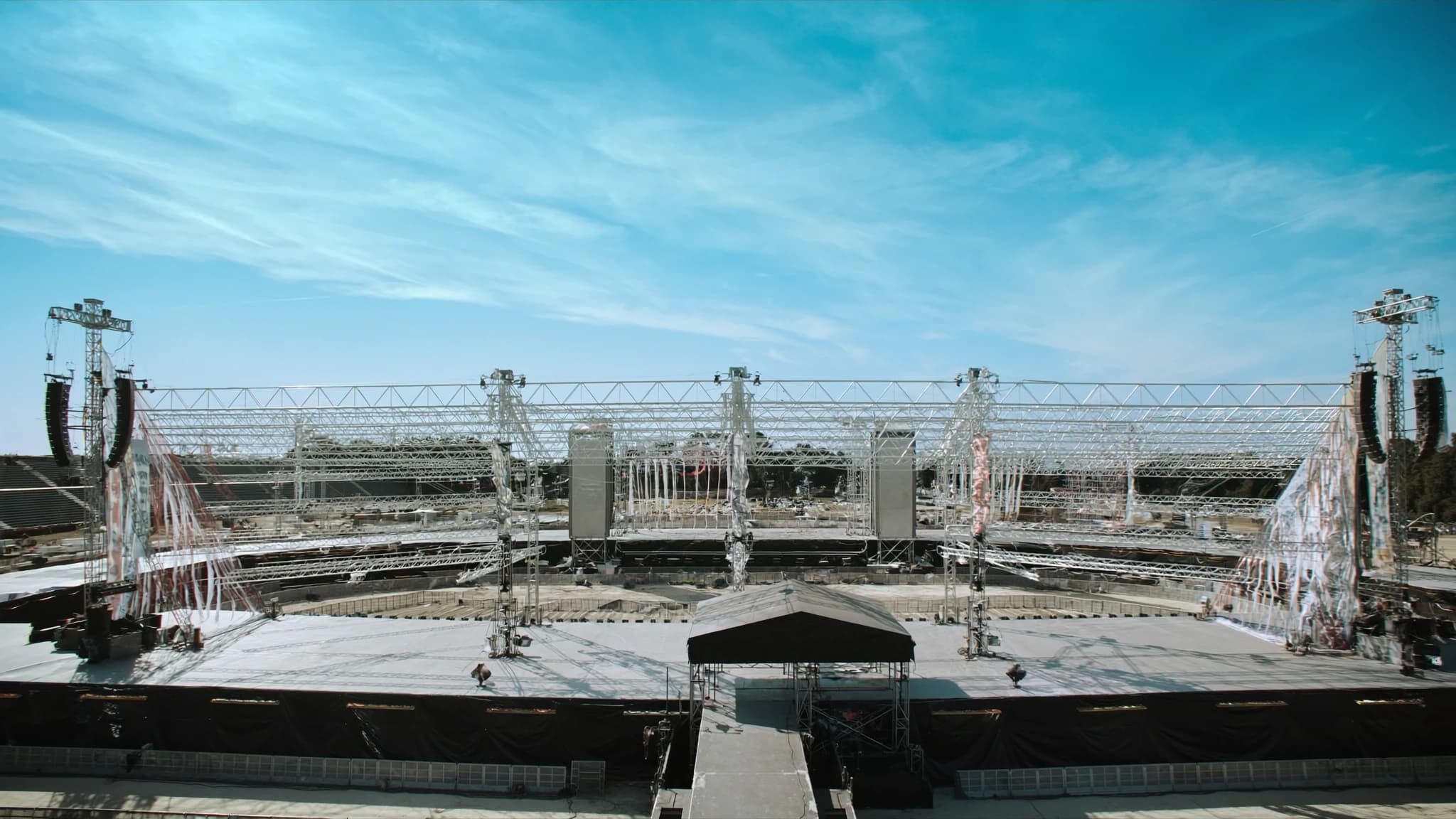
Truss and Layher Systems for Stage Structures

Trussing and modular event structures form the backbone of any large-scale live event, from concert stages and festival roofs to grandstands and temporary arenas. Understanding the differences between box and triangular truss, connection methods like spigot vs bolt, and the engineering behind span and loading tables is essential for safe, efficient rigging. SSOUNDS integrates these structural principles into our system designs, ensuring that every PA deployment is both acoustically and mechanically sound.
Key takeaways
- Box truss is preferred for high torsional rigidity and long spans; triangular truss is lighter for shorter runs.
- Bolt connections offer superior strength for heavy loads; spigot connections are faster for touring.
- Always adhere to manufacturer span and loading tables, applying a 4:1 safety factor.
- Ground support systems are simpler but occupy stage space; flown systems require venue structural verification.
- Layher modular systems enable rapid, safe construction of stages, roofs, and grandstands with high load capacity.
- Proper engineering, assembly sequence, and load testing are essential for structural integrity.
Box vs Triangular Truss: Structural Profiles and Applications
Box truss, with its square cross-section, offers high torsional rigidity and is ideal for long-span applications like main PA hangs, roof structures, and heavy lighting grids. Its four-chord design distributes loads evenly, making it the go-to for flown arrays and ground-supported towers where lateral stability is critical.
Triangular truss, lighter and more aerodynamic, is commonly used for horizontal runs, catwalks, and smaller spans where weight savings matter. Its three-chord geometry provides excellent strength-to-weight ratio but less torsional resistance than box truss. For SSOUNDS line array deployments, we typically specify box truss for main hangs and triangular truss for delay towers or side fills, balancing load capacity and rigging speed.
Connection Methods: Spigot vs Bolt Systems
Spigot connections (also called cone or pin connections) use tapered pins and quick-release mechanisms, enabling fast assembly and disassembly—critical for touring and festival setups. They are common in triangular truss and some box truss systems, but require precise alignment and can be less rigid under heavy dynamic loads.
Bolt connections, using grade 8.8 or 10.9 bolts through flanged joints, offer superior strength and fatigue resistance. They are standard in heavy-duty box truss and Layher-style modular structures where long-term stability and high load ratings are required. SSOUNDS recommends bolted connections for flown arrays exceeding 12m span or any structure supporting more than 500kg point loads, as they eliminate the micro-movement that can cause fretting over extended events.
Span and Loading Tables: Engineering the Safe Working Load
Every truss system must be used within its published span and loading tables, which specify maximum uniform and point loads for given spans. These tables are derived from structural analysis considering material (typically 6082-T6 aluminium), chord diameter, wall thickness, and bracing pattern. For example, a 12m box truss with 50mm chords may support a uniform load of 800kg, but only 300kg point load at mid-span.
SSOUNDS engineers use these tables to design PA rigging grids, ensuring that the combined weight of loudspeakers, cables, and any additional equipment stays within a 4:1 safety factor (or local code requirement). We also account for dynamic loading from wind, crowd movement, and vibration—especially in outdoor festival settings. Always consult the manufacturer's current load charts; never exceed the rated capacity, and factor in the weight of the truss itself.
Ground Support vs Flown Systems: Structural Considerations
Ground-supported structures (goalpost towers, ground support roofs) rely on base plates, outriggers, and ballast to resist overturning. They are simpler to install and do not require building tie-offs, making them ideal for outdoor events without existing rigging points. However, they occupy stage footprint and limit sightlines.
Flown systems, suspended from a venue's roof or dedicated truss grids, offer unobstructed stage areas and better sightlines but demand rigorous engineering of the hanging points, steelwork, and fall protection. SSOUNDS often designs hybrid solutions: ground-supported delay towers for front-of-house and flown arrays for main PA, optimising coverage while maintaining structural integrity. For flown systems, we always verify the venue's load capacity and use certified rigging hardware.
Layher-Style Modular Systems: Stages, Roofs, and Grandstands
Layher-style modular scaffolding systems, with their wedge-lock connections and standardised components (verticals, horizontals, diagonals), have become the industry standard for temporary stages, roofs, and grandstands. The all-round system allows rapid assembly without tools, and its high load capacity (up to 45kN per leg in some configurations) supports large audiences.
For stage decks, Layher decks (e.g., 1.5m x 1.5m or 2m x 1m) are laid on a grid of transoms and bearers, with adjustable base jacks for uneven ground. Roof structures use truss-like girders or lattice beams to span up to 30m, often with a fabric or solid roof covering. Grandstands are built using stepped frames and handrails, with load capacities designed for seated or standing audiences. SSOUNDS works with certified structural engineers to integrate PA hang points into these systems, ensuring that loudspeaker loads are transmitted directly to the main vertical supports.
How Structures Are Engineered and Built: From Design to Load Test
The engineering process begins with a site survey and structural analysis using software like Autodesk Robot or Dlubal RFEM. Load cases include dead loads (truss, speakers, lighting), live loads (wind, rain, crowd), and dynamic loads (wind gusts, crowd sway). Connections are modelled as pinned or rigid, and deflection limits (typically L/200 for truss) are checked.
Assembly follows a strict sequence: base plates and outriggers first, then vertical towers, then horizontal trusses, with diagonal bracing installed progressively. All bolts are torqued to spec, and spigot pins are secured with split pins or clips. After assembly, a load test may be performed using water bags or calibrated weights to verify the structure's capacity. SSOUNDS recommends that all rigging be supervised by a qualified rigger or structural engineer, and that a full inspection log is maintained for every event.
Frequently asked
What is the difference between box truss and triangular truss?
Box truss has a square cross-section with four chords, offering high torsional rigidity for long spans and heavy loads. Triangular truss has three chords, is lighter, and is used for shorter spans where weight savings matter. Box truss is typical for main PA hangs and roofs; triangular truss for catwalks and delay towers.
When should I use spigot vs bolt connections?
Spigot connections are faster for assembly and disassembly, ideal for touring and quick setups. Bolt connections provide greater strength and rigidity, recommended for heavy loads, long spans, or permanent installations. For flown arrays over 12m or point loads above 500kg, use bolted connections.
How do I read a truss loading table?
Loading tables specify the maximum uniform load (distributed evenly) and point load (at a single point) for a given span. For example, a 10m box truss may support 1000kg uniform or 400kg point load. Always use the lower of the two values and factor in the weight of the truss itself. Never exceed the rated capacity.
Can I hang SSOUNDS line arrays from any truss?
Only if the truss is rated for the combined load and the connection points are engineered to handle the dynamic forces. SSOUNDS provides rigging frames and load specifications for each system. Always verify the truss capacity and use certified rigging hardware. We recommend consulting a structural engineer for custom installations.
What is a Layher system and why is it popular for events?
Layher is a modular scaffolding system using wedge-lock connections and standardised components. It allows rapid, tool-free assembly and disassembly, high load capacity, and flexibility to build stages, roofs, and grandstands. Its all-round design makes it the industry standard for temporary event structures.
Building or upgrading a system?
SSOUNDS engineers and manufactures professional PA worldwide — from a single room to stadium scale.