Skip to content

Wall Speakers vs Ceiling Speakers: Which Should You Choose?

Wall Speakers vs Ceiling Speakers: Which Should You Choose?

Choosing between wall-mounted and ceiling-mounted speakers can significantly impact your listening experience, whether for a dedicated home cinema, a multi-room audio system, or a commercial installation. This guide breaks down the key differences in directionality, imaging, coverage, aesthetics, and installation to help you decide which option suits your needs best.

Key takeaways

  • Wall speakers provide superior stereo imaging and directionality, making them best for home theater and critical listening.
  • Ceiling speakers offer even, diffuse coverage ideal for background music, paging, and large open spaces.
  • Aesthetics and installation complexity differ: ceiling speakers are more discreet but harder to retrofit; wall speakers offer placement flexibility.
  • For immersive audio (e.g., Dolby Atmos), a hybrid approach using both wall and ceiling speakers is recommended.
  • Choose wall speakers when sound quality and sweet spot are priorities; choose ceiling speakers for uniform fill and unobtrusive design.
  • Professional-grade options from SSOUNDS ensure high performance in both form factors, with engineered dispersion for clarity and coverage.

Directionality and Imaging: The Stereo Experience

Wall speakers are designed to project sound forward, creating a clear stereo image with precise left-right separation. This makes them ideal for critical listening environments like home theaters or dedicated music rooms, where the listener is positioned in a specific 'sweet spot'. The direct radiation pattern allows for accurate localization of instruments and dialogue, enhancing immersion.

Ceiling speakers, by contrast, radiate sound downward and outward, providing a more diffuse, even coverage. While they can be used for stereo, the imaging is less precise because the sound arrives from above rather than from the front. This makes ceiling speakers better suited for background music, paging systems, or distributed audio where uniform fill is more important than pinpoint imaging.

Coverage and Fill: Even Sound vs. Focused Sweet Spot

In large open spaces or rooms with multiple listening zones, ceiling speakers excel at delivering consistent sound levels across the area. Their wide dispersion pattern minimizes dead spots and ensures that every corner of the room receives adequate volume. This is why they are commonly used in retail stores, restaurants, offices, and corridors.

Wall speakers, especially when placed at ear height, create a more focused listening zone. The sound pressure level drops off more quickly as you move away from the axis, so they are best when listeners are seated in a defined area. For home cinema, wall-mounted front and surround speakers provide the directional cues needed for an enveloping experience.

Aesthetics and Space Considerations

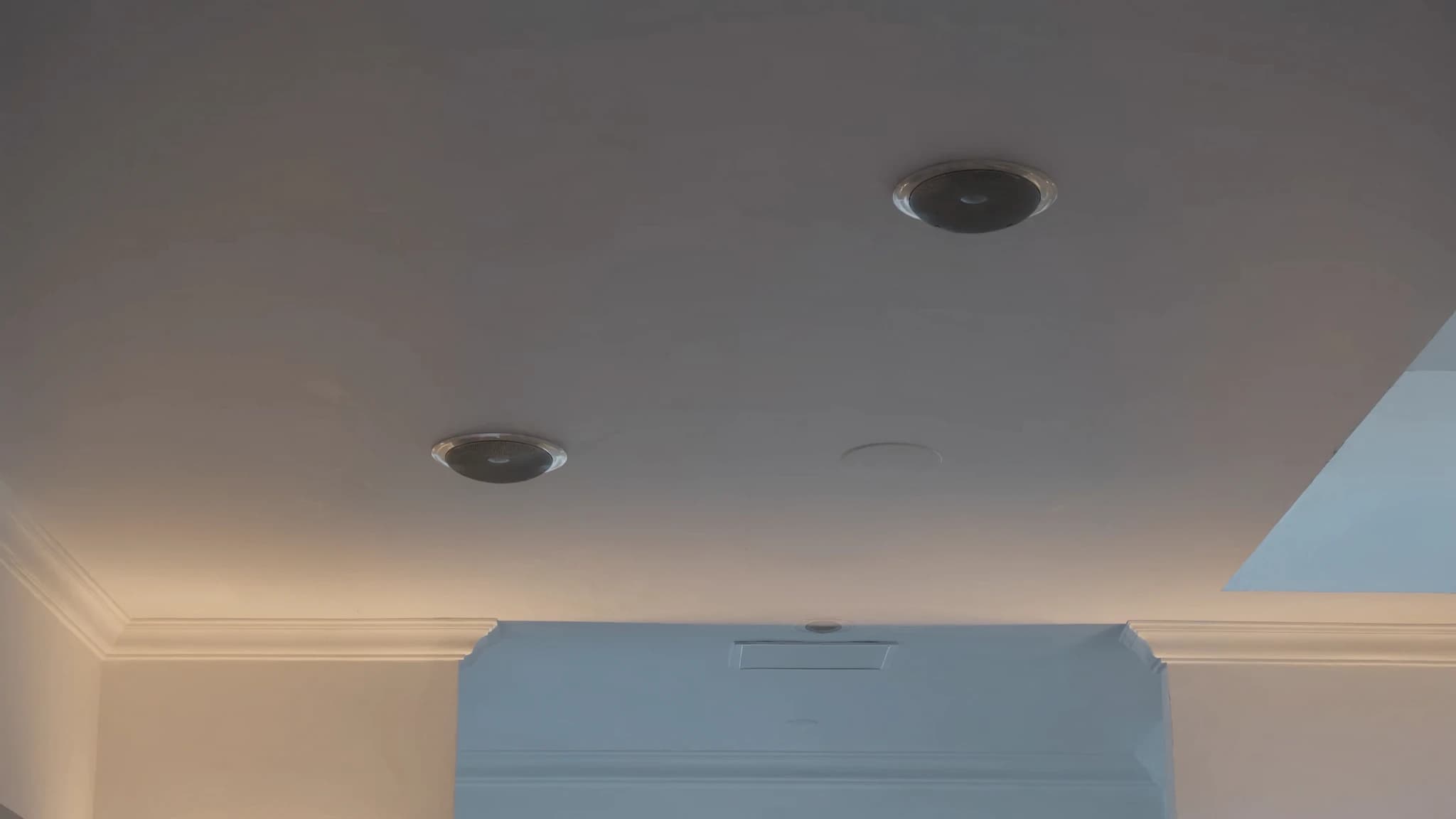
Ceiling speakers are often the preferred choice when a clean, unobtrusive look is desired. They can be flush-mounted and painted to match the ceiling, virtually disappearing into the architecture. This makes them popular in modern interiors, open-plan living spaces, and commercial environments where visual clutter must be minimized.

Wall speakers, whether on-wall or in-wall, are more visible but can be designed to complement the room's decor. In-wall models offer a flush finish similar to ceiling speakers, but they require wall cavities and may limit placement flexibility. On-wall speakers are easier to install but protrude into the room, which can be a consideration in tight spaces.

Installation Complexity and Flexibility

Installing ceiling speakers is generally straightforward, especially in new construction where access to the ceiling void is easy. Retrofitting can be more challenging, as it requires running cables through ceilings and cutting holes. However, many ceiling speakers come with dog-leg clamps for quick, tool-free installation in existing drywall.

Wall speakers offer more flexibility in placement: they can be positioned at ideal listening height and adjusted for toe-in to optimize the stereo image. In-wall installations require cutting into walls and routing cables, which can be more labor-intensive. On-wall speakers are simpler to mount but may require brackets and visible cabling if not pre-wired.

When to Choose Wall Speakers

Wall speakers are the clear winner for any application where sound quality and imaging are paramount. This includes home theater systems (front LCR and surrounds), dedicated stereo listening rooms, and any setup where listeners will be seated in a fixed position. They also work well in spaces where you want to direct sound to a specific area, such as a bar or a gaming zone.

For commercial installations, wall speakers are often used in conference rooms, lecture halls, and houses of worship where speech intelligibility is critical. Their directional nature helps reduce reverberation and feedback, ensuring clear communication.

When to Choose Ceiling Speakers

Ceiling speakers are ideal for background music, paging, and distributed audio in large, open areas. They are the go-to choice for retail stores, restaurants, hotel lobbies, offices, and public spaces where even coverage is more important than pinpoint imaging. They also work well in multi-room audio systems where you want music to follow you without obvious hot spots.

In home environments, ceiling speakers are perfect for kitchen, bathroom, hallway, or outdoor covered patios where wall space is limited or where you want a minimalist look. They can also be used for height channels in Dolby Atmos setups, adding overhead effects without taking up floor or wall space.

Hybrid Approaches: Getting the Best of Both Worlds

Many high-end installations combine wall and ceiling speakers to achieve both precise imaging and ambient fill. For example, a home theater might use wall-mounted front and surround speakers for the main action, with ceiling speakers for Atmos height channels. In a commercial setting, wall speakers can cover seating areas while ceiling speakers handle background music in walkways.

SSOUNDS offers a range of professional-grade loudspeakers for both wall and ceiling applications, engineered to deliver consistent performance across any environment. Our in-wall and in-ceiling models feature advanced waveguide designs for controlled dispersion, ensuring that whether you choose wall or ceiling, you get the clarity and coverage your project demands.

Frequently asked

Can ceiling speakers be used for a home theater system?

Yes, but they are best suited for height channels (e.g., Dolby Atmos) or surround effects. For primary front and surround channels, wall speakers provide better imaging and dialogue clarity.

Are in-wall speakers better than on-wall speakers?

In-wall speakers offer a flush, built-in look and can be painted to match the wall, but installation is more involved. On-wall speakers are easier to install and can be repositioned, but they protrude into the room.

Do ceiling speakers sound worse than wall speakers?

Not necessarily—they sound different. Ceiling speakers are designed for wide, even coverage, which can sacrifice pinpoint imaging. For background music, they sound excellent; for critical listening, wall speakers are preferred.

What is the best placement for wall speakers?

For stereo, place them at ear height (seated) and equidistant from the listening position. For home theater, follow the 5.1/7.1 layout guidelines with front LCR at ear height and surrounds slightly above.

Can I mix wall and ceiling speakers in the same room?

Absolutely. Many systems use wall speakers for main channels and ceiling speakers for height or rear surround effects. Just ensure consistent tonal balance and proper crossover settings.

Building or upgrading a system?

SSOUNDS engineers and manufactures professional PA worldwide — from a single room to stadium scale.

Talk to an engineer
Chat on WhatsApp