Plafondluidsprekerplaatsing: De Complete Gids
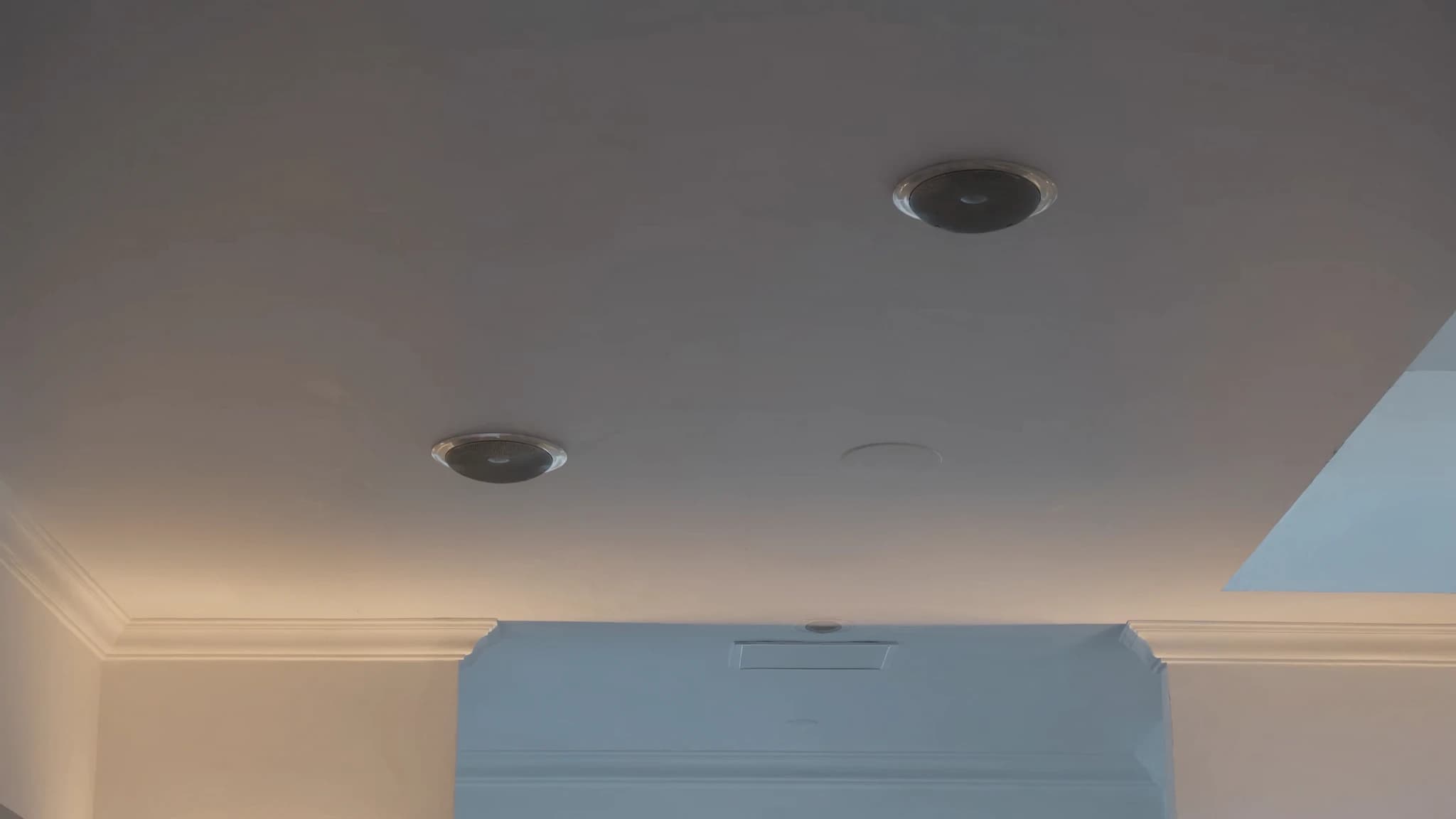
Correcte plaatsing van plafondluidsprekers is het verschil tussen heldere, gelijkmatige dekking en frustrerende dode zones of harde hotspots. Deze gids behandelt de essentiële afstandsregels, overwegingen voor luisterhoogte, 70/100V-dekkingsberekeningen, overlapstrategieën, randafstanden en praktische tips om veelvoorkomende valkuilen te vermijden, zodat uw installatie elke keer professioneel geluid levert.
Belangrijkste punten
- Dekkingsdiameter op oorhoogte = 2 × (montagehoogte – luisterhoogte) × tan(dekkingshoek/2).
- Plaats luidsprekers op 1× tot 1,5× de dekkingsdiameter voor uniform geluid; nauwere afstand vermindert niveauvariatie.
- In 70V/100V-systemen telt u luidspreker-taps op om onder versterkervermogen te blijven; gebruik SPL-berekeningen om geschikte tap-instellingen te kiezen.
- Randafstand = de helft van de afstand tussen luidsprekers; vermijd hotspots door niet minder dan de helft van de dekkingsdiameter te plaatsen.
- Test altijd met een geluidsniveaumeter en roze ruis na installatie; pas taps of posities aan indien nodig.
- Voor grote ruimtes gebruikt u DSP-delays om aankomsttijden uit te lijnen en echo te voorkomen.
Inzicht in dekkingspatronen en luisterhoogte
Plafondluidsprekers stralen geluid uit in een kegelvormig patroon, typisch met een nominale dekkingshoek van 90° tot 120° (vaak 100° voor veel modellen). Het dekkingsgebied op oorhoogte hangt af van de hoogte van de luidspreker boven het luistervlak. Bijvoorbeeld, een luidspreker die 8 ft boven de vloer is gemonteerd met een 100°-kegel dekt een cirkel van ongeveer 19 ft diameter op oorhoogte (uitgaande van 5 ft luisterhoogte). De formule is eenvoudig: dekkingsdiameter = 2 × (montagehoogte – luisterhoogte) × tan(dekkingshoek/2).
Bepaal altijd de primaire luisterhoogte, meestal 4–6 ft voor zittend publiek, 5–6 ft voor staand. Trek dit af van de plafondhoogte om de effectieve worpafstand te krijgen. Deze afstand bepaalt direct de afstandsberekeningen. In commerciële ruimtes met hoge plafonds (bijv. 20 ft) wordt de dekking per luidspreker veel groter, maar u moet ook rekening houden met verhoogd SPL-verlies over afstand.
Afstandsregels: overlap en gelijkmatigheid
De gouden regel voor de afstand tussen plafondluidsprekers is om 50–100% overlap van dekkingspatronen op oorhoogte te bereiken. Voor gelijkmatige dekking plaatst u luidsprekers zodat de -6 dB-punten van aangrenzende kegels elkaar snijden op het luistervlak. Een veelvoorkomend uitgangspunt is een afstand gelijk aan de dekkingsdiameter op oorhoogte. Bijvoorbeeld, als elke luidspreker een cirkel van 12 ft dekt, plaats ze dan 12 ft uit elkaar hart-op-hart. Dit geeft ongeveer 3–6 dB variatie over het gebied.
Nauwere afstand (bijv. 8–10 ft voor een dekkingscirkel van 12 ft) vermindert niveauvariatie tot minder dan 3 dB, maar verhoogt de kosten. Wijdere afstand (bijv. 14 ft) kan merkbare dips veroorzaken. Voor omroep en achtergrondmuziek is 6–10 dB variatie acceptabel; voor voorgrondmuziek of kritieke spraak streeft u naar 3 dB of minder. Modelleer altijd uw lay-out met voorspellingssoftware of handmatige berekeningen.
70V/100V-systemen: tapping en vermogensberekeningen
In gedistribueerde audiosystemen zijn 70V (VS) of 100V (internationaal) constant-voltage lijnen standaard. Elke luidspreker heeft een transformator-tap (bijv. 1W, 2W, 4W, 8W, 16W) die het vermogen en de SPL bepaalt. De totale belasting op de versterker mag het nominale vermogen niet overschrijden. Bijvoorbeeld, 10 luidsprekers op 8W elk = 80W totaal, dus gebruik een versterker van 100W of groter.
Dekkingsberekeningen: SPL op luisterhoogte hangt af van luidsprekergevoeligheid (bijv. 88 dB 1W/1m) en de vermogenstap. Verdubbeling van vermogen voegt 3 dB toe. Bij 8W levert een luidspreker met 88 dB gevoeligheid ongeveer 97 dB op 1 m. Op 12 ft (3,7 m) afstand vermindert de inverse-kwadraatwet de SPL met ~11 dB, wat ~86 dB op oorhoogte geeft. Pas taps aan om de vereiste SPL te halen. Voor spraak is 80–85 dB typisch; voor muziek 85–95 dB.
Randafstand en het vermijden van hotspots
Randafstand, de afstand van de dichtstbijzijnde luidspreker tot de muur, moet de helft zijn van de afstand tussen luidsprekers. Als de afstand 12 ft is, plaats luidsprekers dan 6 ft van muren. Dit zorgt ervoor dat het dekkingspatroon zich tot de muur uitstrekt zonder overmatige overlap in het midden. Voor hoeken handhaaft u dezelfde halve afstand tot beide muren.
Hotspots ontstaan wanneer luidsprekers te dicht bij elkaar staan ten opzichte van de luisterhoogte, wat constructieve interferentie en overmatige SPL in bepaalde gebieden veroorzaakt. Om hotspots te vermijden, plaats luidsprekers nooit dichter dan de helft van hun dekkingsdiameter op oorhoogte. Vermijd ook het plaatsen van luidsprekers direct boven stoelen in kritieke luisterzones; offset ze licht om direct-on-axis intensiteit te verminderen.
Praktische installatietips
Maak voordat u boort een schaalplattegrond en markeer luidsprekerposities met behulp van de afstandsregels. Gebruik een laserdistancemeter voor nauwkeurigheid. Voor verlaagde plafonds, zorg ervoor dat luidsprekers stevig aan het raster of de constructie zijn gemonteerd; vertrouw nooit alleen op plafondtegels. Leid bedrading in plenum-rated kabel waar vereist.
Test na installatie de dekking met een geluidsniveaumeter op meerdere luisterposities. Loop door de ruimte terwijl u roze ruis afspeelt; luister naar dode plekken of te luide gebieden. Pas taps aan of verplaats luidsprekers indien nodig. Voor grote locaties kunt u een DSP met delay en EQ overwegen om de dekking fijn af te stemmen.
Geavanceerde overwegingen: meerdere zones en delays
In grote open ruimtes hebt u mogelijk meerdere zones met aparte versterkers en delay-verwerking nodig. Geluid reist met ~1 ft/ms; als luidsprekers meer dan 50 ft uit elkaar staan, kunnen luisteraars echo waarnemen. Gebruik een DSP om de dichterbij zijnde luidsprekers te vertragen zodat geluid gelijktijdig van alle bronnen aankomt. Dit is cruciaal in gebedshuizen, conferentiecentra en grote retailruimtes.
Overweeg ook het plafondmateriaal en de akoestiek van de ruimte. Harde oppervlakken (glas, beton) veroorzaken reflecties die de dekking kunnen vertroebelen. Zachte oppervlakken (akoestische tegels, tapijt) absorberen hoge frequenties, wat mogelijk hogere tap-instellingen of nauwere afstand vereist. Houd altijd rekening met omgevingsgeluid (HVAC, menigte) bij het instellen van SPL-doelen.
Veelgestelde vragen
Wat is de ideale afstand tussen plafondluidsprekers in een typisch kantoor?
Voor een plafond van 8 ft en een luisterhoogte van 5 ft dekt een luidspreker met 100° dekking ongeveer 10 ft diameter. Plaats ze 10–12 ft uit elkaar voor gelijkmatige dekking. Pas aan op basis van omgevingsgeluid en vereiste SPL.
Hoe bereken ik de totale vermogensbelasting op een 70V-versterker?
Tel de tap-instellingen van alle luidsprekers op de lijn op. Bijvoorbeeld, 12 luidsprekers op 8W elk = 96W. Gebruik een versterker met een vermogen van ten minste 1,25× de totale belasting (bijv. 120W) voor headroom.
Wat is de minimale afstand tot een muur voor plafondluidsprekers?
Plaats luidsprekers op de helft van de afstand tot de muren. Als de afstand 12 ft is, installeer luidsprekers dan 6 ft van de dichtstbijzijnde muur om ervoor te zorgen dat de dekking tot de rand reikt.
Hoe voorkom ik hotspots in een plafondluidsprekersysteem?
Vermijd het plaatsen van luidsprekers dichter dan de helft van de dekkingsdiameter op oorhoogte. Offset luidsprekers ook van directe overheadposities in kritieke luistergebieden.
Kan ik verschillende tap-instellingen op dezelfde 70V-lijn mengen?
Ja, zolang de totale belasting het nominale vermogen van de versterker niet overschrijdt. Verschillende taps stellen u in staat om SPL per zone aan te passen, maar zorg voor consistente dekking.
Een systeem bouwen of upgraden?
SSOUNDS ontwerpt en produceert professionele PA wereldwijd, van een enkele ruimte tot stadionformaat.