Contragewichten en ballast voor evenementconstructies
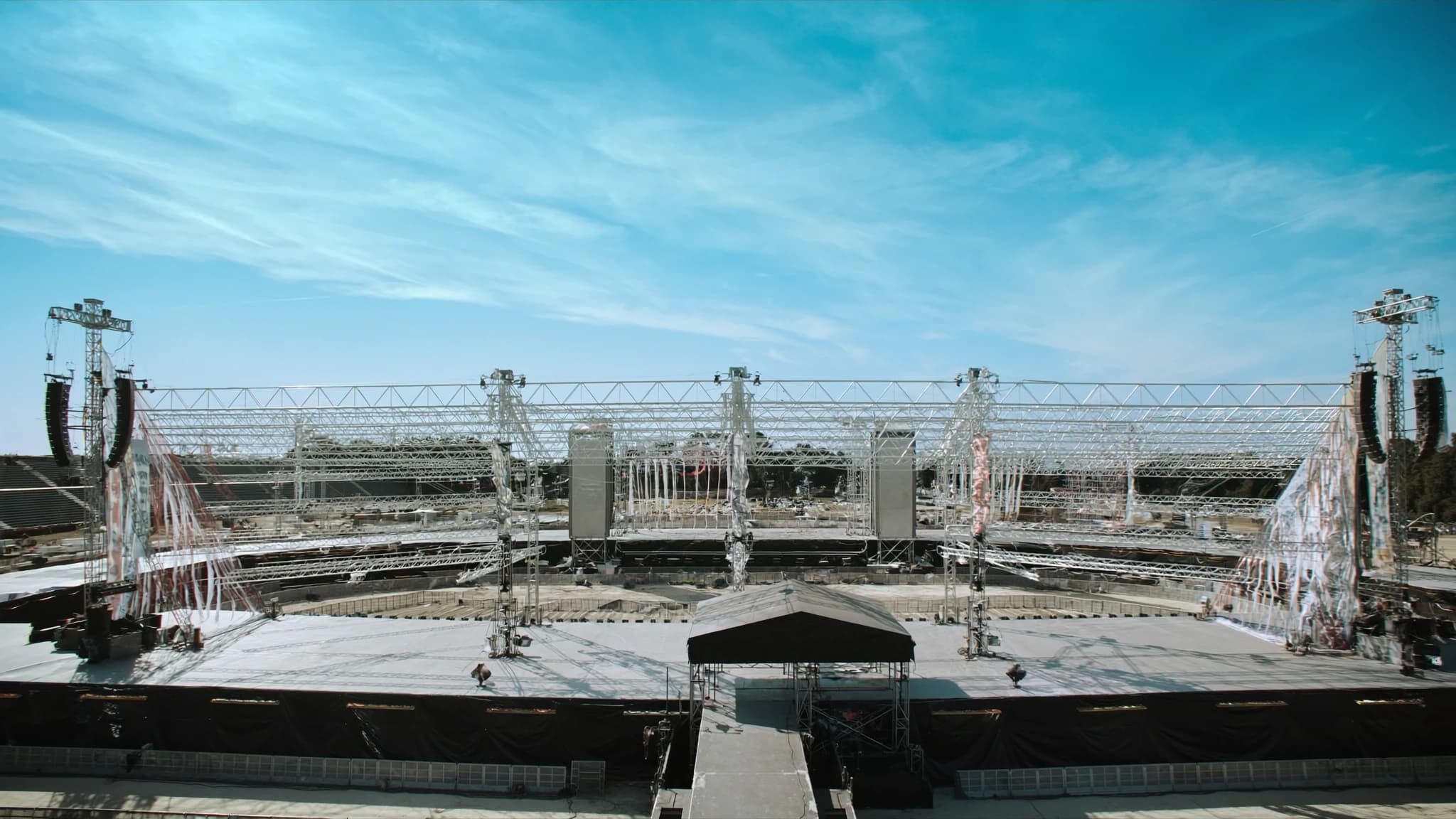
Contragewichten en ballast zijn de onbezongen helden van veilige evenementconstructies. Ze weerstaan windbelasting, voorkomen kantelen en houden podia, torens en buiteninstallaties stabiel. Deze gids behandelt de drie belangrijkste ballasttypen (water, beton, staal), wanneer je welke gebruikt, de techniek achter windbelastingberekeningen en veilige praktijken voor verankeren versus ballasten.
Belangrijkste punten
- Ballast weerstaat kantelen door massa toe te voegen om het stabiliserende moment tegen windbelasting te vergroten.
- Waterballast is draagbaar en goedkoop maar minder stabiel; betonblokken bieden hoge massa per oppervlak; staalgewichten zijn compact en precies.
- Verankeren is voor zachte grond; ballasten is voor harde oppervlakken of waar grondpenetratie verboden is.
- Gebruik altijd gecertificeerde constructieberekeningen, gok nooit met ballastvereisten.
- Plaats ballast laag en aan de loefzijde om de hefboomarm te maximaliseren; zet het vast om verschuiven te voorkomen.
- Inspecteer ballast regelmatig en documenteer plaatsingen voor veiligheid en naleving.
Waarom ballast belangrijk is: kantelen en windbelasting
Elke buitenconstructie, van een PA-toren tot een podiumdak, is kwetsbaar voor wind. Het grootste risico is kantelen: wanneer winddruk op de oppervlakken van de constructie een moment (koppel) creëert dat groter is dan het stabiliserende moment van het gewicht van de constructie en de ballast. Ballast voegt massa toe om het stabiliserende moment te vergroten en te voorkomen dat de constructie kantelt.
Windbelasting wordt berekend met de formule F = 0,5 × ρ × v² × Cd × A, waarbij ρ de luchtdichtheid is, v de windsnelheid, Cd de weerstandscoëfficiënt en A het geprojecteerde oppervlak. Voor evenementconstructies liggen de ontwerpwindsnelheden doorgaans tussen 20–40 m/s (45–90 mph), afhankelijk van lokale voorschriften en de duur van het evenement. De resulterende kracht wordt vervolgens vermenigvuldigd met de hefboomarm (hoogte van het drukpunt van de constructie) om het kantelmoment te krijgen.
De veiligheidsfactor die door normen zoals BS EN 13814 of IBC wordt vereist, is meestal 1,5–2,0. Dit betekent dat het stabiliserende moment (van constructiegewicht plus ballast) ten minste 1,5 keer het kantelmoment moet zijn. Ballast is de meest praktische manier om die marge toe te voegen, vooral voor tijdelijke constructies waar permanente funderingen niet haalbaar zijn.
Waterballast: lichtgewicht en draagbaar
Waterballast is populair voor tijdelijke buitenevenementen omdat het leeg gemakkelijk te transporteren is en ter plaatse kan worden gevuld. Typische waterballastcontainers zijn zware plastic tanks of bladders met een inhoud van 500–1000 liter (ongeveer 500–1000 kg). Ze worden vaak gebruikt voor podiumpoten, lichtmasten en PA-subwooferstapels.
Voordelen: lage transportkosten (leeg), geen zwaar tillen en gemakkelijk leeg te laten lopen na het evenement. Water is ook gratis en wijdverbreid beschikbaar. Waterballast heeft echter nadelen: het kan bevriezen in koude klimaten (uitzetten en containers beschadigen), het is gevoelig voor lekken en het biedt minder massa per oppervlak in vergelijking met beton of staal. Ook kan het klotsen van water dynamische krachten creëren die de effectieve stabiliteit verminderen, dus waterballast is het beste voor lage tot matige windomstandigheden en constructies met brede bases.
Wanneer te gebruiken: evenementen van korte duur (1–3 dagen), locaties met beperkte toegang voor zwaar materieel en toepassingen waarbij gewicht snel moet worden verwijderd. Overweeg voor windsnelheden boven 25 m/s (56 mph) aanvulling met beton of staal.
Betonblokken: dicht en stabiel
Betonblokken (vaak 'kentledge' genoemd) zijn het werkpaard van evenementballast. Ze zijn verkrijgbaar in standaardmaten (bijvoorbeeld 1 m x 1 m x 1 m met een gewicht van ~2,3 ton) en worden gestapeld op bodemplaten of direct op de voeten van de constructie. Beton is dicht (2,3–2,5 g/cm³), niet-poreus wanneer afgedicht en klotst of bevriest niet.
Voordelen: hoge massa per oppervlak, uitstekende stabiliteit en voorspelbare prestaties. Betonblokken kunnen worden vastgezet met banden of pinnen om verschuiven te voorkomen. Ze zijn herbruikbaar voor vele evenementen. Nadelen: zwaar te transporteren (vereist een platte wagen en vorkheftruck) en ze kunnen zachte grond beschadigen (gebruik spreidplaten). Ook zijn ze permanent zodra ze zijn geplaatst; je kunt ze niet gemakkelijk midden in een evenement verwijderen.
Wanneer te gebruiken: meerdaagse festivals, winderige gebieden en constructies met hoge kantelmomenten (bijvoorbeeld grote PA-torens, dakspanten). Beton is de standaard voor professionele buitenpodia en delay-torens.
Staalgewichten: compact en precies
Stalen ballast (bijvoorbeeld gietijzeren blokken of stalen platen) biedt de hoogste dichtheid (7,8 g/cm³), ongeveer drie keer die van beton. Dit betekent dat je hetzelfde stabiliserende moment kunt bereiken met een veel kleiner oppervlak. Staal wordt vaak gebruikt in modulaire ballastsystemen die direct op constructiebases worden gebout.
Voordelen: uiterst compact, precies gewicht (geen variatie zoals nat beton) en gemakkelijk vast te zetten met bouten of pinnen. Staal is ook niet-absorberend en duurzaam. Nadelen: hoge kosten, risico op diefstal (schrootwaarde) en vereist zorgvuldige hantering om letsel te voorkomen. Staal kan ook roesten als het niet gecoat is.
Wanneer te gebruiken: toepassingen waar ruimte beperkt is (bijvoorbeeld op podia met krappe zijvleugels), voor puntbelasting met hoge belasting en voor permanente of semi-permanente installaties waar precisie cruciaal is. Ook gebruikt in windgevoelige constructies zoals videowalls.
Verankeren versus ballasten: wanneer gebruik je wat
Verankeren houdt in dat je staken, schroefankers of grondpennen in de aarde drijft om opwaartse kracht en kantelen te weerstaan. Dit is gebruikelijk voor tenten, marquees en kleine podia op zachte grond. Ankers dragen de belasting over naar de bodem, wat zeer effectief kan zijn als de bodemgesteldheid goed is (bijvoorbeeld verdichte klei of grind). Verankeren is echter niet altijd mogelijk; op asfalt, beton of rotsachtige grond kun je geen ankers drijven.
Ballasten vertrouwt uitsluitend op massa om kantelen te weerstaan. Het is de aangewezen methode op harde oppervlakken (parkeerplaatsen, bestrating) of waar grondpenetratie verboden is (bijvoorbeeld historische locaties). Ballasten is ook voorspelbaarder omdat het niet afhankelijk is van bodemsterkte, die sterk kan variëren. Het nadeel is dat ballast aanzienlijk gewicht toevoegt dat moet worden getransporteerd en geplaatst.
Veilige praktijk: voor tijdelijke constructies op zachte grond wordt vaak een combinatie van verankeren en ballasten gebruikt; ankers weerstaan opwaartse kracht, terwijl ballast kantelweerstand toevoegt. Raadpleeg altijd een constructie-ingenieur om de benodigde ballast te bepalen op basis van windbelastingberekeningen voor jouw specifieke constructie en locatie.
Veilige praktijk: ballast berekenen en plaatsen
De gouden regel: nooit gokken met ballastvereisten. Gebruik een gecertificeerde constructieberekening die rekening houdt met de geometrie van de constructie, de windblootstellingscategorie en de lokale windsnelheid. De berekening geeft je het vereiste stabiliserende moment, dat je vervolgens omzet in ballastmassa en plaatsing.
Plaatsing is belangrijk: ballast moet zo laag mogelijk en zo ver mogelijk van het kantelpunt (meestal de loefzijde) worden geplaatst om de hefboomarm te maximaliseren. Voor een toren met vier poten wordt ballast doorgaans op de loefpoten geplaatst. Zet ballast altijd vast om verschuiven te voorkomen; gebruik banden, kettingen of in elkaar grijpende systemen. Stapel ballast nooit hoger dan de nominale capaciteit van de bodemplaat.
Inspecteer ballast regelmatig tijdens het evenement, vooral na windstoten. Waterballastniveaus moeten worden gecontroleerd op lekken. Controleer bij betonblokken of ze niet zijn gebarsten of verschoven. Documenteer alle ballastplaatsingen met foto's voor verzekering en naleving. En volg altijd de richtlijnen van de fabrikant voor jouw specifieke constructie. SSOUNDS levert gedetailleerde ballastaanbevelingen voor zijn PA-torens en subwooferarrays.
Veelgemaakte fouten en hoe ze te vermijden
Een veelgemaakte fout is het onderschatten van windbelasting, bijvoorbeeld een ontwerpwindsnelheid van 20 m/s gebruiken terwijl de locatie regelmatig windstoten van 30 m/s kent. Gebruik altijd de hoogst geloofwaardige windsnelheid voor de duur van het evenement. Een andere fout is het verkeerd plaatsen van ballast: al het gewicht aan de lijzijde plaatsen (wat niets doet om kantelen te voorkomen) of ballast te hoog stapelen (wat een secundair kantelrisico creëert).
Een andere fout is het gebruik van waterballast bij vriestemperaturen zonder antivries of isolatie; ijsuitzetting kan containers doen barsten. Vermijd ook het mengen van ballasttypen zonder goedkeuring van een ingenieur; verschillende dichtheden en vormen kunnen leiden tot ongelijkmatige belasting. Vertrouw ten slotte nooit alleen op ballast voor constructies die ook scheerlijnen of schoren vereisen; ballast is voor verticale stabiliteit, niet voor zijdelingse zwaai.
Om veilig te blijven: werk samen met een gekwalificeerde constructie-ingenieur, gebruik gecertificeerde ballastsystemen en voer een windbelastingbeoordeling voorafgaand aan het evenement uit. Bij SSOUNDS integreren we ballastberekeningen in onze systeemontwerpsoftware, zodat elke PA-toren en elk podium het juiste contragewicht heeft voor de omstandigheden.
Veelgestelde vragen
Hoeveel ballast heb ik nodig voor een PA-toren van 10 meter?
De benodigde ballast hangt af van het gewicht van de toren, de windsnelheid en de blootstelling. Een typische toren van 10 m bij 25 m/s wind kan 500–1000 kg per poot nodig hebben. Vraag altijd een constructieberekening aan een ingenieur of gebruik de tabellen van de fabrikant.
Kan ik waterballast gebruiken bij vriestemperaturen?
Niet zonder voorzorgsmaatregelen. Water zet uit wanneer het bevriest, wat containers kan doen barsten. Gebruik antivriesadditieven of schakel over op beton of stalen ballast bij temperaturen onder nul.
Is het beter om een podium op gras te verankeren of te ballasten?
Op zachte grasgrond is verankering (bijvoorbeeld met schroefankers) vaak effectiever en lichter dan ballasten. Als de grond echter ongelijk is of je niet diep genoeg kunt penetreren, is ballasten met spreidplaten veiliger. Een combinatie is het beste.
Hoe bereken ik de windbelasting voor een podiumdak?
Gebruik de formule F = 0,5 × ρ × v² × Cd × A. Voor een typisch podiumdak is Cd ongeveer 1,2–2,0 afhankelijk van de vorm. Vermenigvuldig de kracht met de hoogte van het drukpunt van het dak om het kantelmoment te krijgen. Zorg er vervolgens voor dat de ballast ten minste 1,5 keer dat moment levert.
Wat is de veiligste manier om betonblokken voor ballast te stapelen?
Stapel ze direct boven de bodemplaat, indien mogelijk in elkaar grijpend. Stapel nooit meer dan drie blokken hoog zonder goedkeuring van een ingenieur. Zet de blokken vast met banden of kettingen en verbind ze met de constructie om verschuiven of omvallen te voorkomen.
Een systeem bouwen of upgraden?
SSOUNDS ontwerpt en produceert professionele PA wereldwijd, van een enkele ruimte tot stadionformaat.