Off-grid en zonne-energie voor live-evenementen en AV
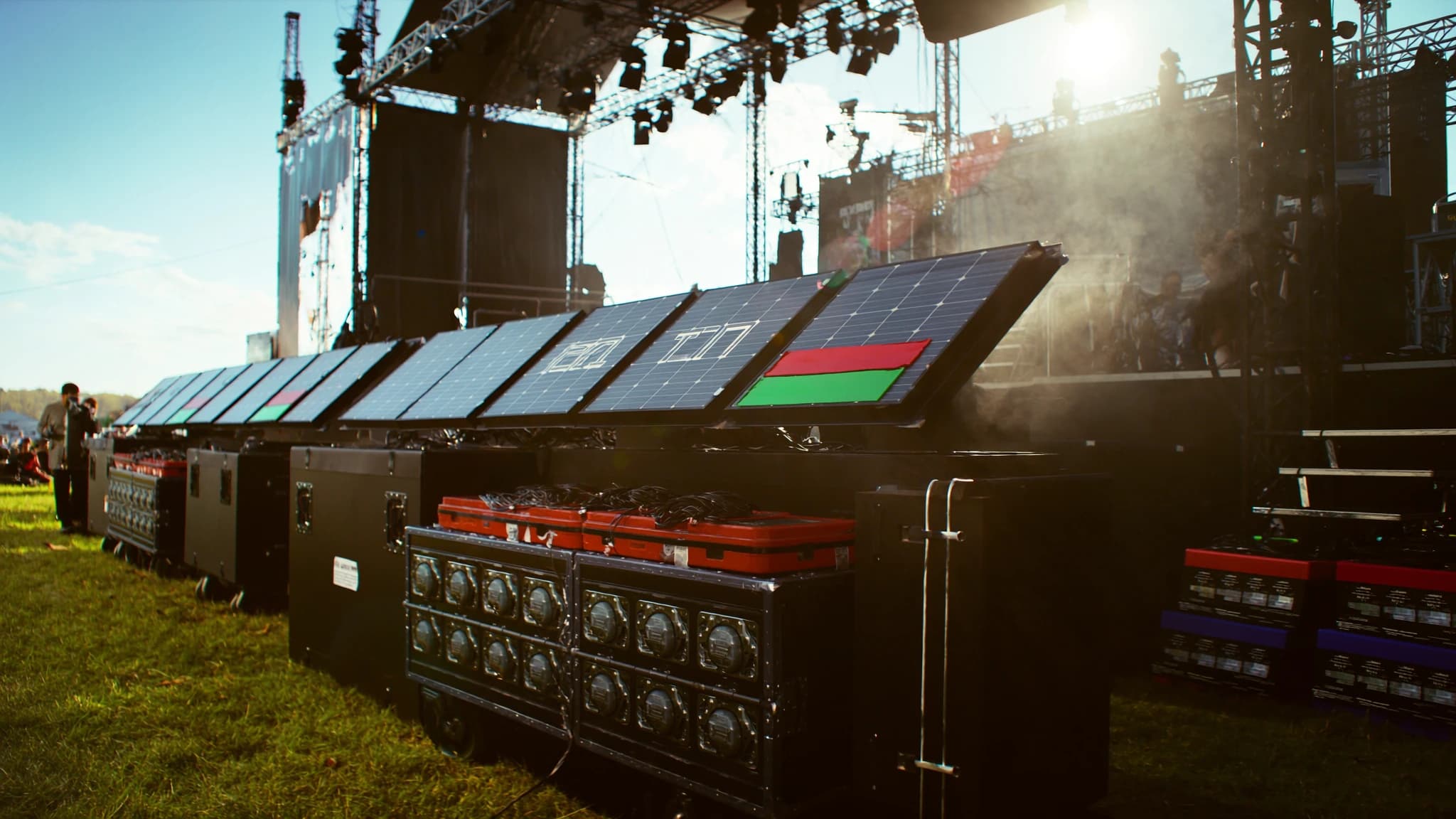
Off-grid stroomvoorziening transformeert live-evenementen, maakt producties op afgelegen locaties mogelijk en vermindert de CO2-voetafdruk. Voor AV-professionals is het essentieel om zonnepaneelarrays, batterijopslag en hybride generatoropstellingen te begrijpen, vooral voor stroomhongerige audiosystemen. Deze gids behandelt de realiteit van het voeden van een podium met zonne-energie, inclusief belastingsberekening, inschakelstromen en eisen aan schone voeding, en legt uit hoe SSOUNDS-luidsprekers op zonne-energie kunnen draaien via een correcte batterij- en omvormervoorziening.
Belangrijkste punten
- Solar+batterij-systemen kunnen kleine tot middelgrote audiopodia van stroom voorzien, maar grote evenementen vereisen doorgaans hybride generatorback-up.
- Audiolasten hebben een laag continu verbruik maar hoge piek- en inschakelvragen; dimensioner omvormer en batterij op pieken, niet alleen op gemiddelden.
- Zuivere sinusomvormers zijn verplicht voor schone versterkerstroom; gemodificeerde sinusgolf kan ruis en schade veroorzaken.
- SSOUNDS-luidsprekers en -versterkers werken op zonne-energie in combinatie met correct gedimensioneerde batterij- en omvormersystemen.
- Gebruik een energiemeter om het werkelijke verbruik van je specifieke rig te meten; specificaties zijn vaak misleidend.
- Lithium-ijzerfosfaat (LiFePO4) batterijen zijn de beste keuze voor cycluslevensduur, gewicht en ontladingsdiepte.
Begrip van off-grid stroomcomponenten
Off-grid stroom voor evenementen combineert doorgaans drie elementen: zonnepanelen (PV-arrays), batterij-energieopslagsystemen (BESS) en een omvormer/lader. Zonnepanelen zetten zonlicht om in DC-elektriciteit, die de batterijen oplaadt. De omvormer zet DC om in schone AC-stroom voor audioapparatuur. Voor evenementen is een hybride generator+batterij-opstelling gebruikelijk: batterijen dekken basislasten en pieken, terwijl een generator batterijen oplaadt of bijspringt tijdens perioden met hoge vraag.
Batterijtechnologie heeft zich snel ontwikkeld: lithium-ijzerfosfaat (LiFePO4) is nu standaard vanwege de hoge cycluslevensduur, veiligheid en ontladingsdiepte (tot 95%). Loodaccu's blijven goedkoper maar zijn zwaarder en minder efficiënt. Voor live sound moet de omvormer een zuivere sinusgolf produceren; een gemodificeerde sinusgolf kan brom, vervorming of schade aan versterkers en DSP veroorzaken.
Dimensionering voor audiolasten: continu versus piekverbruik
Audiolasten zijn misleidend: het continue stroomverbruik van een luidsprekersysteem is veel lager dan het piek- of programmavemogen. Een grote line array-kast met een piekvermogen van 2000W kan bijvoorbeeld slechts 200-400W continu verbruiken tijdens normaal gebruik. Transiënte pieken (basdreunen, snare-klappen) kunnen echter gedurende milliseconden 2-3x de continue stroom vragen. Versterkers hebben ook inschakelstroom bij het aanzetten, vaak 2-5x de bedrijfsstroom gedurende enkele cycli.
Om een solar+batterij-systeem te dimensioneren, begin je met het totale continue verbruik van alle audioapparatuur (versterkers, DSP, monitors, enz.) en voeg je 20-30% reserve toe. Vermenigvuldig dit vervolgens met de duur van het evenement om de batterijcapaciteit in kWh te krijgen. Voor pieklasten moet de omvormer korte uitbarstingen aankunnen; een omvormer van 10kW kan vaak pieken van 20kW gedurende enkele seconden aan. SSOUNDS-engineers raden aan een energiemeter (bijvoorbeeld een P3 Kill A Watt) op je daadwerkelijke rig te gebruiken om het werkelijke verbruik te meten.
Kan zonne-energie een podium realistisch van stroom voorzien?
Ja, maar met kanttekeningen. Een typisch klein podium (2-4 luidsprekers, subs, monitors, mixer, verlichting) kan 1-3kW continu verbruiken. Om 8 uur op zonne-energie alleen te draaien, heb je 8-24kWh batterijopslag nodig en voldoende zonnepanelen om overdag bij te laden. Onder zonnige omstandigheden kan een zonnepaneelarray van 5kW 20-30kWh per dag genereren, genoeg voor een klein tot middelgroot evenement. Bewolking, regen of avondshows vereisen echter grotere accubanken of een generator als back-up.
Voor grootschalige evenementen met meerdere line arrays en subwoofers (bijvoorbeeld 20-40kW continu) wordt alleen zonne-energie onpraktisch zonder enorme arrays (50-100kW+) en megawattuur-batterijen. In die gevallen is een hybride aanpak het beste: solar+batterij voor basislasten en een generator voor piekvragen of bijladen. SSOUNDS heeft evenementen ondersteund waar zonne-energie 60-80% van de totale energie leverde, met een dieselgenerator als back-up.
Schone voeding en inschakelstroom: wat versterkers nodig hebben
Versterkers zijn gevoelig voor stroomkwaliteit. Spanningsdalingen, frequentieverschuivingen of harmonische vervorming kunnen leiden tot onregelmatig gedrag, verminderde output of schade. Een zuivere sinusomvormer is niet onderhandelbaar. Bovendien hebben versterkers een hoge inschakelstroom bij het aanzetten, vooral grote klasse-D versterkers met grote condensatoren. Om zekeringen te voorkomen, worden soft-start circuits of sequentiële inschakeling (elke versterker 1-2 seconden vertragen) aanbevolen.
SSOUNDS-versterkers zijn ontworpen met robuuste voedingen die matige spanningsfluctuaties (±10%) tolereren en inschakelstroombegrenzing bevatten. Voor off-grid opstellingen raden we echter aan de omvormer 25-50% te overdimensioneren om transiënte pieken aan te kunnen. Een omvormer van 15kVA is vaak voldoende voor een continu audiolast van 10kW. De batterijspanning moet ook stabiel zijn; lithiumbatterijen houden de spanning beter vast dan loodaccu's onder belasting.
SSOUNDS-luidsprekers op zonne-energie: haalbaarheid in de praktijk
Ja, SSOUNDS-luidsprekers kunnen op zonne-energie draaien; ze verschillen in dit opzicht niet van elk professioneel audiosysteem. Het belangrijkste is een correct gedimensioneerde batterij en omvormer. Een klein SSOUNDS point-source systeem (twee tops, twee subs, één versterker) kan bijvoorbeeld 500W continu verbruiken. Een LiFePO4-batterij van 2kWh en een zuivere sinusomvormer van 1,5kW kunnen dit 3-4 uur laten draaien, opgeladen door 400W aan zonnepanelen in 5-6 uur zon.
Voor grotere SSOUNDS line array-systemen gelden dezelfde principes: bereken het totale continue verbruik, voeg reserve toe en dimensioner batterijen en zonne-energie dienovereenkomstig. De efficiënte klasse-D versterking van SSOUNDS helpt het stroomverbruik lager te houden dan bij oudere ontwerpen. We hebben SSOUNDS-systemen met succes op buitenfestivals van stroom voorzien met een zonnepaneelarray van 10kW en een accubank van 40kWh, aangevuld met een kleine generator voor bewolkte dagen.
Praktische tips voor off-grid AV-stroom
1) Gebruik een stroomaudit: meet het verbruik van elk apparaat met een wattmeter tijdens een repetitie. 2) Investeer in een kwaliteitsomvormer met lage THD (<3%) en piekbelastingsvermogen. 3) Scheid audio- en verlichtingscircuits om ruis van dimmers te voorkomen. 4) Gebruik batterijbeheersystemen (BMS) om overontlading te voorkomen. 5) Zorg voor een back-upgenerator voor kritieke evenementen; zonne-energie is variabel. 6) Overweeg draagbare zonne-generatoren (bijvoorbeeld EcoFlow, Goal Zero) voor kleine opstellingen, maar voor grotere systemen zijn zelfgebouwde racks kosteneffectiever.
SSOUNDS biedt technische ondersteuning voor off-grid opstellingen, inclusief belastingsberekeningen en omvormeradvies. Onze systemen zijn ontworpen voor betrouwbaarheid in uitdagende omgevingen, van afgelegen Afrikaanse dorpen tot Europese festivals. Met goede planning is solar-aangedreven audio niet alleen mogelijk, maar steeds praktischer.
Veelgestelde vragen
Kan ik een volledig PA-systeem alleen op zonnepanelen laten draaien?
Ja, voor kleine tot middelgrote systemen (tot ongeveer 3kW continu) met voldoende batterijopslag en zonnepaneelarray. Voor grote line arrays is een hybride generator+batterij-opstelling realistischer.
Welke omvormer heb ik nodig voor een typische live sound rig?
Bereken het totale continue verbruik (bijvoorbeeld 2kW) en vermenigvuldig met 1,5-2 voor piekreserve. Een 4-5kVA zuivere sinusomvormer is gebruikelijk voor kleine podia; 10-20kVA voor grotere systemen.
Hebben SSOUNDS-versterkers speciale stroomvereisten?
Nee, ze werken op standaard AC-voeding (110-240V, 50/60Hz) met een tolerantie van ±10%. Ze hebben inschakelstroombegrenzing, maar we raden sequentiële inschakeling aan voor meerdere versterkers.
Hoeveel zonnepaneelcapaciteit heb ik nodig voor een evenement van een hele dag?
Als vuistregel geldt: 1kW aan zonnepanelen genereert 4-6kWh per dag bij goede zon. Voor een continu verbruik van 2kW gedurende 8 uur (16kWh) heb je minstens 3-4kW aan panelen en een accubank van 20kWh nodig.
Kan ik een auto-accu gebruiken om mijn PA van stroom te voorzien?
Niet aanbevolen. Auto-accu's zijn ontworpen voor korte piekstromen, niet voor diepe ontlading. Gebruik deep-cycle lithium- of loodaccu's die zijn ontworpen voor zonne-opslag.
Een systeem bouwen of upgraden?
SSOUNDS ontwerpt en produceert professionele PA wereldwijd, van een enkele ruimte tot stadionformaat.