Driefasige voeding voor live-evenementen
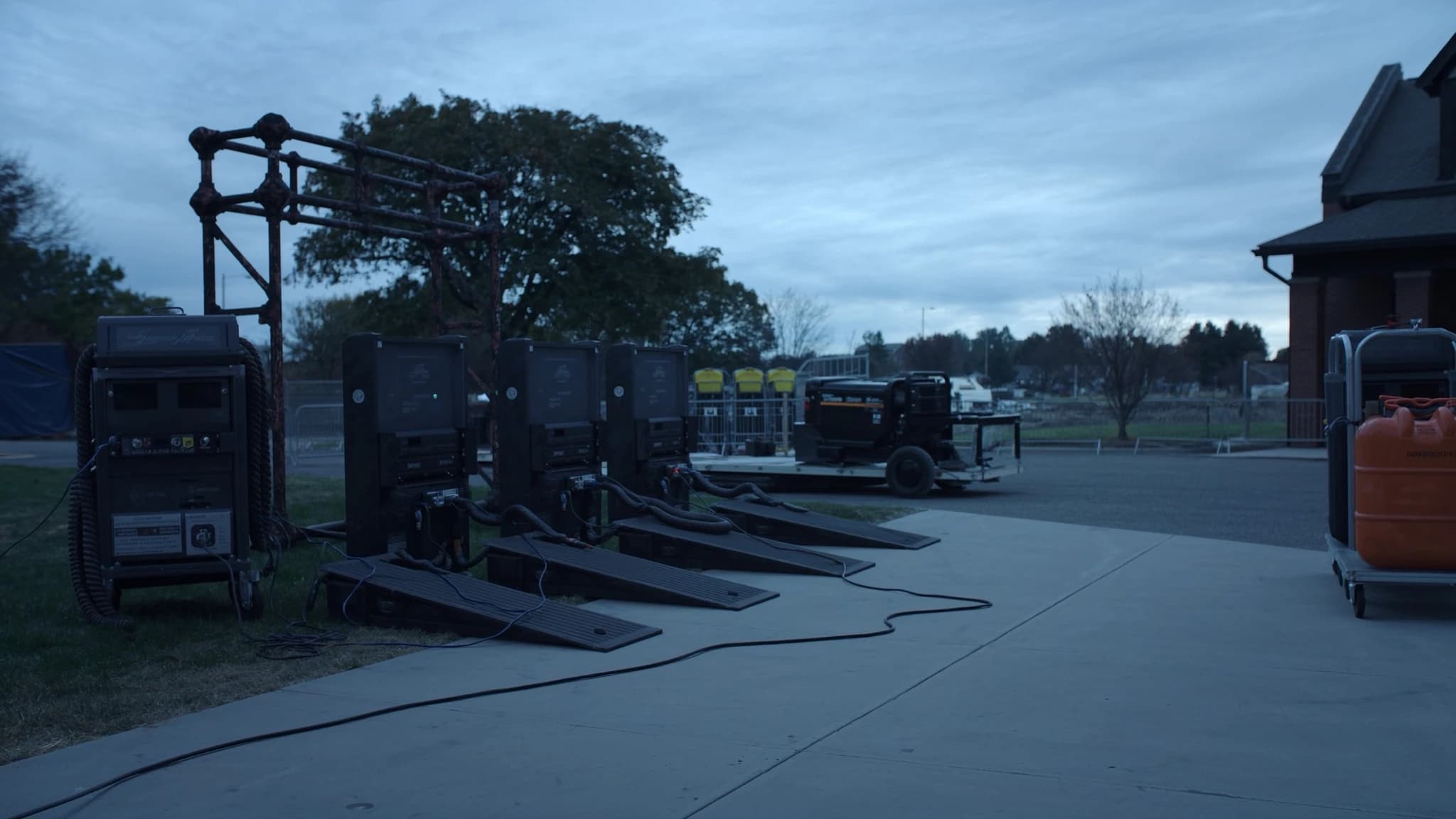
Driefasige voeding is de ruggengraat van grootschalige live-evenementen en biedt de capaciteit en betrouwbaarheid die nodig zijn om audio-, licht- en videosystemen tegelijkertijd te laten werken. Begrijpen hoe je veilig en efficiënt met driefasige voeding werkt, is essentieel voor elke geluidstechnicus of evenemententechnicus. Deze gids behandelt de basisprincipes, van spanning tot load balancing en distributie.
Belangrijkste punten
- Driefasige voeding biedt hogere capaciteit en efficiëntie dan enkelfasige voor grote evenementen.
- Begrijp het verschil tussen lijnspanning (fase-naar-fase) en fasespanning (fase-naar-nulleider) om schade aan apparatuur te voorkomen.
- Balanceer belastingen over alle drie fasen om oververhitting en het uitschakelen van stroomonderbrekers te voorkomen.
- Gebruik geschikte distros, bekabeling en connectoren (CEE tot 125A, Powerlock voor hogere stromen).
- Bereken de totale stroomvraag met een veiligheidsmarge van 20-30% voor audio, licht en video.
- Geef altijd prioriteit aan veiligheid: verifieer aarding, gebruik RCD's en train crewleden in procedures.
Enkelfasige versus driefasige voeding
Enkelfasige voeding is gebruikelijk in residentiële en kleine commerciële omgevingen en levert stroom via twee draden (fase en nulleider) bij een typische spanning van 120V of 230V. Het is voldoende voor kleine PA-systemen en lichtinstallaties, maar wordt al snel ontoereikend voor grotere evenementen waar de totale stroomvraag 10-15 kW overschrijdt.
Driefasige voeding gebruikt drie wisselstromen die 120 graden uit fase zijn, geleverd via drie fasdraden (L1, L2, L3) en optioneel een nulleider. Deze configuratie zorgt voor een constantere stroomlevering, hogere efficiëntie en de mogelijkheid om belastingen tot honderden kilowatts te verwerken. Voor live-evenementen is driefasig de standaard voor stroomdistributie buiten een basisopstelling.
Lijnspanning versus fasespanning
In een driefasig systeem zijn er twee belangrijke spanningsmetingen: fasespanning (Vph) en lijnspanning (Vline). Fasespanning is de spanning tussen een fase en de nulleider. Lijnspanning is de spanning tussen twee fasen. Voor een wye (ster) configuratie geldt: Vline = √3 × Vph. Bij een fasespanning van 230V is de lijnspanning bijvoorbeeld ongeveer 400V.
De meeste audio- en lichtapparatuur werkt op enkelfasige voeding (fase naar nulleider), terwijl grotere belastingen zoals motoren of bepaalde distro-ingangen lijnspanning gebruiken. Dit onderscheid begrijpen is cruciaal bij het dimensioneren van kabels en het selecteren van connectoren. SSOUNDS-engineers verifiëren altijd de voedingsconfiguratie voordat ze apparatuur aansluiten om schade te voorkomen.
Belastingen over fasen balanceren
Het balanceren van de belasting over alle drie fasen is cruciaal voor systeemstabiliteit en efficiëntie. Een ongebalanceerde belasting kan spanningsfluctuaties, oververhitting van nulleiders en het uitschakelen van stroomonderbrekers veroorzaken. Idealiter is de stroomafname op elke fase zo gelijk mogelijk.
Praktische tips: Verdeel audioracks, lichtdimmers en videoprocessors gelijkmatig over de fasen. Gebruik een stroomanalysator om de stroom op elke fase tijdens de opbouw te meten. SSOUNDS raadt aan om alle circuits per fase te labelen en een spreadsheet voor belastingberekening te gebruiken om de distributie te plannen. Als bijvoorbeeld één fase subwoofers van stroom voorziet (hoge stroom) en een andere alleen monitoren, verplaats dan enkele subwoofers om te balanceren.
Distributie (distro) en bekabeling
Een stroomverdeelkast (distro) neemt de inkomende driefasige voeding en splitst deze op in meerdere enkelfasige circuits. Distros zijn er in verschillende maten, van kleine 63A-eenheden tot grote 400A+ systemen voor festivals. Ze bevatten hoofdstroomonderbrekers, vertakkingsonderbrekers en vaak metering per fase.
Bekabeling moet geschikt zijn voor de verwachte stroom en spanning. Voor driefasige runs gebruik je 5-aderige kabel (3 fasen, nulleider, aarding) met de juiste doorsnede. Gangbare maten: 16mm² voor 63A, 35mm² voor 125A. Gebruik altijd kleurgecodeerde kabel of tape: bruin/zwart/grijs voor fasen, blauw voor nulleider, groen/geel voor aarding. SSOUNDS-engineers inspecteren altijd de kabelisolatie en connectoren op schade voor elk evenement.
Connectoren: CEE en Powerlock
CEE (IEC 60309) connectoren zijn het meest gebruikelijk voor tijdelijke stroomdistributie. Ze zijn kleurgecodeerd op spanning en frequentie: blauw voor 230V enkelfasig, rood voor 400V driefasig. Maten variëren van 16A tot 125A. Deze connectoren zijn spatwaterdicht en vergrendelbaar, waardoor ze ideaal zijn voor buitenevenementen.
Powerlock (of cam-lock) connectoren worden gebruikt voor toepassingen met hoge stroom (125A en hoger). Ze bestaan uit afzonderlijke kleurgecodeerde stekkers die in een paneel passen. Ze zijn sneller aan en af te koppelen dan CEE, maar vereisen meer zorg om de juiste fase-uitlijning te garanderen. SSOUNDS gebruikt Powerlock voor hoofdleidingen en CEE voor subdistributie naar racks.
Voeding dimensioneren voor audio, licht en video
Om de voeding te dimensioneren, bereken je de totale stroomvraag van alle apparatuur, inclusief audioversterkers, lichtarmaturen, videoprojectoren en ondersteunende apparatuur. Voeg een veiligheidsmarge van 20-30% toe voor pieken en toekomstige uitbreiding. Een middelgroot concert kan bijvoorbeeld 100A driefasig vereisen (ongeveer 69 kW bij 400V).
Audiosystemen zijn vaak het veeleisendst vanwege transiënte pieken. SSOUNDS line arrays en subwoofers zijn ontworpen voor hoge efficiëntie, maar vereisen nog steeds een zorgvuldige berekening. Verlichting (LED of moving heads) en video (LED-walls) kunnen aanzienlijke continue stroom trekken. Gebruik een spreadsheet voor het stroombudget en overleg met de elektricien van de locatie om de beschikbare capaciteit te bevestigen.
Veiligheid en beste praktijken
Controleer altijd of de voeding correct geaard is en of alle apparatuur is verbonden. Gebruik aardlekschakelaars (RCD's) voor persoonlijke bescherming. Overschrijd nooit de nominale capaciteit van kabels of connectoren. Label alle circuits duidelijk en houd een éénlijnsdiagram van het distributiesysteem bij.
Controleer voor het aansluiten met een multimeter de spanning tussen fasen en tussen fase en nulleider. Zorg ervoor dat de distro uitgeschakeld is wanneer je verbindingen maakt. Train alle crewleden in lockout/tagout-procedures. SSOUNDS verzorgt training voor zijn verhuurpartners over veilige stroompraktijken, waarbij wordt benadrukt dat een goed gepland stroomsysteem de basis is van een succesvol evenement.
Veelgestelde vragen
Kan ik een driefasige distro op een enkelfasige bron aansluiten?
Nee, een driefasige distro vereist een driefasige voeding. Als alleen enkelfasige voeding beschikbaar is, moet je een enkelfasige distro of een faseomvormer gebruiken, maar die laatste wordt zelden gebruikt bij live-evenementen. Controleer altijd de voeding van de locatie voordat je gaat plannen.
Wat gebeurt er als de fasen ongebalanceerd zijn?
Ongebalanceerde belastingen veroorzaken stroom in de nulleider, wat de nulleider kan oververhitten en spanningsvallen kan veroorzaken op zwaar belaste fasen. Dit kan leiden tot storingen aan apparatuur of het uitschakelen van stroomonderbrekers. Balanceer altijd zo nauwkeurig mogelijk.
Welke kabelmaat heb ik nodig voor een driefasige voeding van 125A?
Voor een driefasige voeding van 125A gebruik je 35mm² 5-aderige kabel (of 4-aderig plus aparte aarding). De exacte maat hangt af van de kabellengte en de plaatselijke voorschriften. Raadpleeg altijd een gekwalificeerde elektricien.
Heb ik een nulleider nodig voor alle driefasige aansluitingen?
Voor wye (ster) systemen is een nulleider vereist voor enkelfasige belastingen. Voor delta systemen wordt geen nulleider geleverd. De meeste evenementendistros zijn wye met nulleider. Bevestig altijd het type voeding.
Hoe meet ik de stroom op elke fase?
Gebruik een stroomtang rond elke fasegeleider (L1, L2, L3) afzonderlijk. Klem niet rond meerdere geleiders tegelijk. Meet bij de ingang van de distro of bij het hoofdpaneel. Noteer de waarden en pas de belastingen aan om te balanceren.
Een systeem bouwen of upgraden?
SSOUNDS ontwerpt en produceert professionele PA wereldwijd, van een enkele ruimte tot stadionformaat.