Die besten Lautsprecher für Lagerhäuser und Industrieanlagen
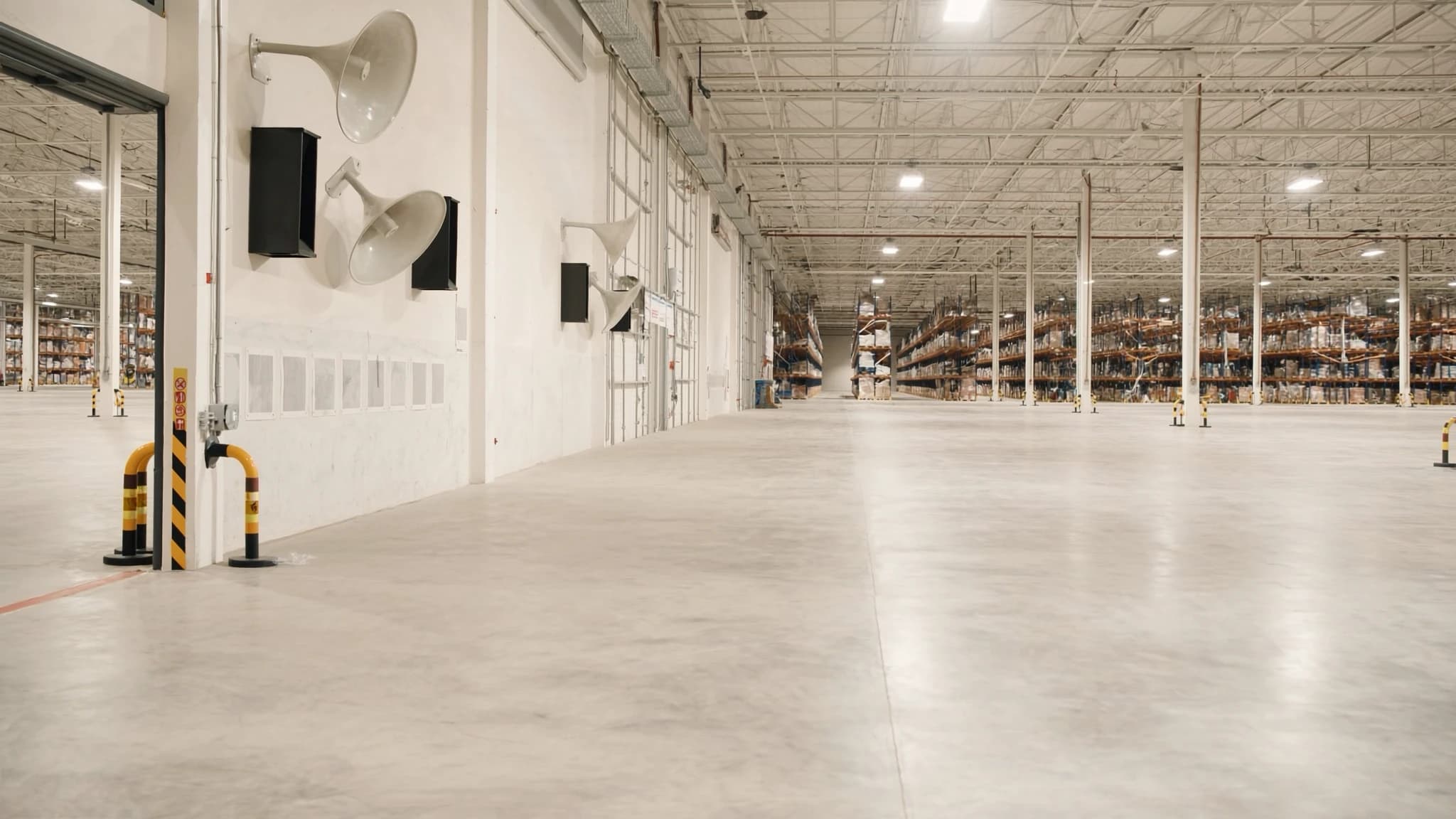
Die Wahl der richtigen Lautsprecher für Lagerhäuser und Industrieanlagen ist eine besondere Herausforderung: hohe Decken, ständige Hintergrundgeräusche von Maschinen und große offene Volumina erfordern einen völlig anderen Ansatz als ein typischer Veranstaltungsort. SSOUNDS-Ingenieure haben Systeme für diese Umgebungen entwickelt, mit Fokus auf leistungsstarke 100-V-Leitungslautsprecher, hornbelastete Pendel und IP-zertifizierte Hardware, die Staub und Feuchtigkeit standhält. Dieser Leitfaden behandelt die wichtigsten technischen Überlegungen, Verständlichkeit über Maschinenlärm, Abdeckungsstrategie für große Volumina und die Kompromisse zwischen Durchsagen und Musik, damit Sie ein zuverlässiges, klar klingendes PA-System einsetzen können, das den Lärm durchdringt.
Wichtigste Punkte
- Industrieräume mit hohen Decken und Lärm erfordern hornbelastete oder Pendel-100-V-Leitungslautsprecher für effizienten, verständlichen Klang.
- Priorisieren Sie die Sprachverständlichkeit (STI >0,5) vor der Musiktreue; verwenden Sie DSP, um tiefe Frequenzen zu reduzieren und die Präsenz anzuheben.
- Zonieren Sie den Raum basierend auf Lärmpegeln und Funktion; platzieren Sie Pendellautsprecher in Abständen, die der Montagehöhe entsprechen.
- Verwenden Sie Hardware mit IP54/IP66-Schutzart, um Staub, Feuchtigkeit und extremen Temperaturen standzuhalten.
- Entwerfen Sie für 90 dB SPL auf Ohrhöhe mit 6 dB Headroom; modellieren Sie die Abdeckung mit akustischer Simulationssoftware.
- Beziehen Sie immer die Konformität mit der Notfall-Sprachevakuierung und Batterie-Backup für die Lebenssicherheit ein.
Die Akustik von Industrieräumen verstehen
Lagerhäuser und Industrieanlagen sind akustisch feindlich: Betonböden, Metallwände und offene Träger erzeugen massiven Nachhall und Echo. Hohe Decken (oft 20–40 Fuß) bedeuten, dass der Schall weite Strecken zurücklegen muss, bevor er die Zuhörer erreicht, und Maschinenlärm (Ventilatoren, Förderbänder, Gabelstapler) kann leicht 85 dB SPL überschreiten. Das Hauptziel ist die Sprachverständlichkeit für Sicherheitsdurchsagen, Paging und Notfallwarnungen; Musikwiedergabe ist zweitrangig, aber dennoch wichtig für die Moral oder Hintergrundatmosphäre.
In solchen Umgebungen versagen herkömmliche Deckenlautsprecher oder kleine Punktquellen, weil ihnen die Richtwirkung und der Ausgangspegel fehlen, um den Nachhall zu überwinden. Die Lösung ist die Verwendung hocheffizienter, hornbelasteter Lautsprecher, die den Schall in einem schmalen Strahl bündeln, Reflexionen reduzieren und die Klarheit verbessern. SSOUNDS-Industriesysteme verwenden Konstantrichtungs-Hörner und 100-V-Leitungstransformatoren, um über lange Distanzen einen gleichmäßigen SPL ohne übermäßigen Leistungsverlust zu liefern.
Wichtige Lautsprechertypen für Lagerhäuser: Horn/Pendel und 100-V-Leitung
Die effektivsten Lautsprecher für Industrieräume mit hohen Decken sind hornbelastete Pendel und leistungsstarke 100-V-Leitungslautsprecher. Hornbelastete Pendel (oft 'Re-Entrant'- oder 'Projektor'-Hörner genannt) nutzen einen trichterförmigen Hals, um den Treiber effizient an die Luft anzukoppeln, und erzeugen hohen SPL mit minimaler Leistung. Sie werden typischerweise an einer Pendelhalterung von der Decke abgehängt und nach unten ausgerichtet, um Gänge und Arbeitsbereiche abzudecken. SSOUNDS-Pendelhornsysteme sind darauf ausgelegt, 120 dB Spitzen-SPL bei 1 Meter zu liefern, mit einem schmalen Abdeckungsmuster von 60° x 40°, das das Übersprechen in unbesetzte Bereiche minimiert.
100-V-Leitungslautsprecher (auch Konstantspannungssysteme genannt) sind Standard für verteiltes Audio in großen Räumen, da sie es ermöglichen, viele Lautsprecher parallel an einem einzigen Verstärkerkanal ohne komplexe Impedanzberechnungen zu betreiben. Jeder Lautsprecher hat einen Abwärtstransformator mit mehreren Anzapfungen (z. B. 1,25 W, 2,5 W, 5 W, 10 W), sodass Sie die Lautstärke pro Lautsprecher anpassen können. Für Lagerhäuser wählen Sie leistungsstarke Anzapfungen (10 W oder 20 W) für Hauptzonen und niedrigere Anzapfungen für Pausenräume oder Büros. SSOUNDS-100-V-Leitungspendel kombinieren die Effizienz der Hornbelastung mit dem Komfort der Konstantspannungsverteilung und sind damit ideal für lange Kabelwege in großen Anlagen.
Verständlichkeit vor Musik priorisieren: Paging und Sprachwarnungen
In industriellen Umgebungen ist die Hauptfunktion eines PA-Systems das Paging und die Notfall-Sprachevakuierung, nicht die Musikwiedergabe. Die Sprachverständlichkeit wird durch den Speech Transmission Index (STI) gemessen, und ein Wert über 0,5 gilt als akzeptabel; über 0,7 ist ausgezeichnet. Um dies zu erreichen, muss das System klare Mittenfrequenzen (500 Hz bis 4 kHz) liefern, in denen die Konsonantenlaute liegen, während übermäßiger Tieffrequenzanteil vermieden wird, der die Sprache in halligen Räumen verwischt.
SSOUNDS-Industrielautsprecher sind mit einem maßgeschneiderten Frequenzgang abgestimmt, der die Stimmklarheit betont, unter Verwendung von DSP-Presets, die Frequenzen unter 100 Hz absenken und eine sanfte Präsenzanhebung um 2-3 kHz anwenden. Für reine Paging-Zonen ist ein 100-V-Hornlautsprecher mit 5-W-Anzapfung oft ausreichend. Für Zonen, die auch Hintergrundmusik abspielen, kann ein Vollbereichspendel mit breiterem Frequenzband (80 Hz–16 kHz) verwendet werden, jedoch immer mit einem Hochpassfilter, um Tieffrequenzaufbau zu reduzieren. Der Verstärker sollte einen integrierten Durchsagemikrofoneingang mit Ducking enthalten (die Musiklautstärke wird bei Durchsagen automatisch abgesenkt).
Abdeckungsstrategie für große Volumina: Zonierung und Ausrichtung
Die Abdeckung eines großen Industrievolumens (z. B. 100.000 sq ft mit 30 ft hohen Decken) erfordert sorgfältige Zonierung und Lautsprecherplatzierung. Ein einzelner Lautsprecher kann nicht den gesamten Raum abdecken; Sie benötigen ein Raster von Pendeln mit einem Abstand von 20–40 Fuß, je nach Deckenhöhe und gewünschtem SPL. Die Faustregel: Bei Pendelhörnern entspricht der Abdeckungsdurchmesser auf Ohrhöhe (5 ft über dem Boden) ungefähr der Montagehöhe. Ein Lautsprecher in 30 ft Höhe deckt also einen Kreis mit 30 ft Durchmesser ab, was bedeutet, dass Sie für eine nahtlose Abdeckung alle 30 ft einen Lautsprecher in einem hexagonalen Muster benötigen.
SSOUNDS empfiehlt, den Raum nach Funktion in akustische Zonen aufzuteilen: Bereiche mit hohem Lärm (Laderampen, Werkstätten) benötigen höheren SPL und mehr Lautsprecher pro Quadratfuß; ruhigere Bereiche (Lager, Büros) benötigen weniger. Verwenden Sie einen 100-V-Leitungsverstärker mit mehreren Ausgangskanälen (z. B. 4 oder 8 Zonen), damit Sie Lautstärke und EQ pro Zone anpassen können. Für sehr hohe Decken (über 40 ft) sollten Sie ein Cluster aus zwei oder drei Hornpendeln in Betracht ziehen, die in verschiedene Winkel ausgerichtet sind, um einen größeren Bereich ohne Lücken abzudecken. Richten Sie Lautsprecher immer in einem Winkel von 45°–60° von der Vertikalen nach unten aus, um die Abdeckung zu maximieren und Reflexionen von der Decke zu minimieren.
IP-zertifizierte Hardware: Beständigkeit gegen Staub, Feuchtigkeit und Temperatur
Industrieumgebungen setzen Lautsprecher Staub, Feuchtigkeit, extremen Temperaturen und sogar chemischen Dämpfen aus. Standard-Verbraucher- oder kommerzielle Lautsprecher fallen schnell aus. SSOUNDS-Industrielautsprecher sind mit IP54- oder IP66-Schutzarten gebaut, was bedeutet, dass sie staubdicht und gegen Wasserstrahlen (IP66) oder Spritzwasser (IP54) geschützt sind. Die Gehäuse bestehen aus UV-stabilisiertem ABS oder Aluminium, mit Edelstahlbeschlägen und versiegelten Eingangsabdeckungen. Für Kühllager oder Gefrierlagerhäuser müssen Lautsprecher außerdem bis -20 °C betriebsfähig sein, was spezielle Schmierstoffe und Gummidichtungen erfordert, die nicht spröde werden.
Berücksichtigen Sie außerdem den Verstärkerstandort: Montieren Sie Verstärker in einem klimatisierten Technikraum oder einem NEMA-zertifizierten Gehäuse. SSOUNDS bietet Rack-montierbare 100-V-Verstärker mit integriertem DSP, Fernüberwachung und Fehlererkennung, entscheidend, um sicherzustellen, dass das System unter rauen Bedingungen betriebsbereit bleibt. Für Außenladerampen oder unüberdachte Bereiche verwenden Sie Lautsprecher mit IP66-Schutzart und einem wetterfesten Pendelkit, das das Eindringen von Wasser durch die Kabeleinführung verhindert.
Systemdesign und Installations-Best Practices
Beginnen Sie mit einer akustischen Standortbegehung: Messen Sie die Deckenhöhe, die Umgebungsgeräuschpegel (verwenden Sie ein Schallpegelmessgerät) und identifizieren Sie reflektierende Oberflächen. Verwenden Sie EASE oder ähnliche Software, um die Abdeckung zu modellieren und den STI vorherzusagen. Für ein typisches Lagerhaus streben Sie 90 dB SPL auf Ohrhöhe mit 6 dB Headroom für Paging an. Wählen Sie 100-V-Leitungslautsprecher mit Anzapfungen, die 90 dB bei 1 Meter mit 1 W liefern (Wirkungsgradbewertung). Zum Beispiel erzeugt ein Lautsprecher mit 95 dB 1W/1m Wirkungsgrad bei 10-W-Anzapfung 105 dB bei 1 m, genug, um 85 dB Umgebungsgeräusch mit 20 dB Headroom zu überwinden.
Kabelwege: Verwenden Sie 14 AWG oder dicker für Entfernungen über 200 ft, um Spannungsabfall zu minimieren. Verwenden Sie immer geschirmte Twisted-Pair-Kabel für Mikrofonleitungen, um Interferenzen durch Maschinen zu vermeiden. Installieren Sie ein Durchsagemikrofon mit Push-to-Talk-Taste und einem integrierten Gong oder Vorankündigungston, um Aufmerksamkeit zu erregen. Für die Notfall-Sprachevakuierung muss das System den örtlichen Brandschutzvorschriften entsprechen (z. B. UL 864, EN 54) und über Batterie-Backup verfügen. SSOUNDS kann ein komplettes Systemdesign einschließlich Lautsprecherlayout, Verstärkerdimensionierung und DSP-Programmierung bereitstellen; kontaktieren Sie unser Engineering-Team für eine Beratung.
Häufige Fragen
Was ist der Unterschied zwischen einem Hornlautsprecher und einem normalen Konuslautsprecher für Lagerhäuser?
Hornlautsprecher nutzen einen trichterförmigen Hals, um den Treiber an die Luft anzukoppeln, was zu einem deutlich höheren Wirkungsgrad (mehr SPL pro Watt) und einer engeren Richtwirkung als bei Konuslautsprechern führt. Dadurch sind sie ideal für Weitwurfanwendungen in Räumen mit hohen Decken, da sie den Schall in einem Strahl bündeln, der den Lärm durchdringt und den Nachhall reduziert.
Kann ich in einem Lagerhaus mit einem 100-V-Leitungssystem Standard-8-Ohm-Lautsprecher verwenden?
Nein, 8-Ohm-Lautsprecher sind nicht mit 100-V-Leitungssystemen kompatibel, es sei denn, Sie fügen einen Abwärtstransformator hinzu. 100-V-Leitungssysteme sind für verteilte Audioanwendungen mit vielen Lautsprechern an langen Kabelwegen ausgelegt; die Verwendung von 8-Ohm-Lautsprechern würde sehr dicke Kabel und eine sorgfältige Impedanzanpassung erfordern. Verwenden Sie spezielle 100-V-Leitungslautsprecher mit integrierten Transformatoren.
Wie viele Lautsprecher benötige ich für ein 50.000 sq ft großes Lagerhaus mit 25 ft hohen Decken?
Unter der Annahme von Pendel-Hornlautsprechern mit 95 dB 1W/1m Wirkungsgrad und einem Zielpegel von 90 dB auf Ohrhöhe benötigen Sie etwa einen Lautsprecher alle 25 ft (der Abdeckungsdurchmesser entspricht der Montagehöhe). Für 50.000 sq ft sind das etwa 80 Lautsprecher in einem hexagonalen Raster. Zonierung und Umgebungsgeräusche können die Anzahl jedoch anpassen; konsultieren Sie einen professionellen Planer.
Welche IP-Schutzart ist für ein staubiges Lagerhaus erforderlich?
Für staubige Umgebungen (nicht explosionsgefährdet) ist IP54 (staubgeschützt und spritzwassergeschützt) ausreichend. Für Bereiche mit Wasserschläuchen oder Außenbereiche verwenden Sie IP66 (staubdicht und gegen starke Wasserstrahlen geschützt). Für explosionsfähigen Staub (z. B. Getreidesilos) benötigen Sie Lautsprecher mit ATEX- oder IECEx-Zertifizierung.
Wie stelle ich sicher, dass Durchsagen über laute Maschinen hinweg gehört werden?
Verwenden Sie ein Durchsagemikrofon mit Ducking-Funktion, die die Hintergrundmusiklautstärke bei Durchsagen automatisch absenkt. Stellen Sie den Durchsagepegel mindestens 10 dB über dem Umgebungsgeräusch ein. Verwenden Sie außerdem einen Vorankündigungsgong oder -ton, um die Zuhörer zu warnen. Für sehr laute Bereiche (über 90 dB) sollten Sie visuelle Warnsignale (Blitzleuchten) als Backup in Betracht ziehen.
System aufbauen oder aufrüsten?
SSOUNDS entwickelt und fertigt professionelle PA weltweit, vom einzelnen Raum bis zur Stadiongröße.