AI Automatic Feedback Suppression Explained
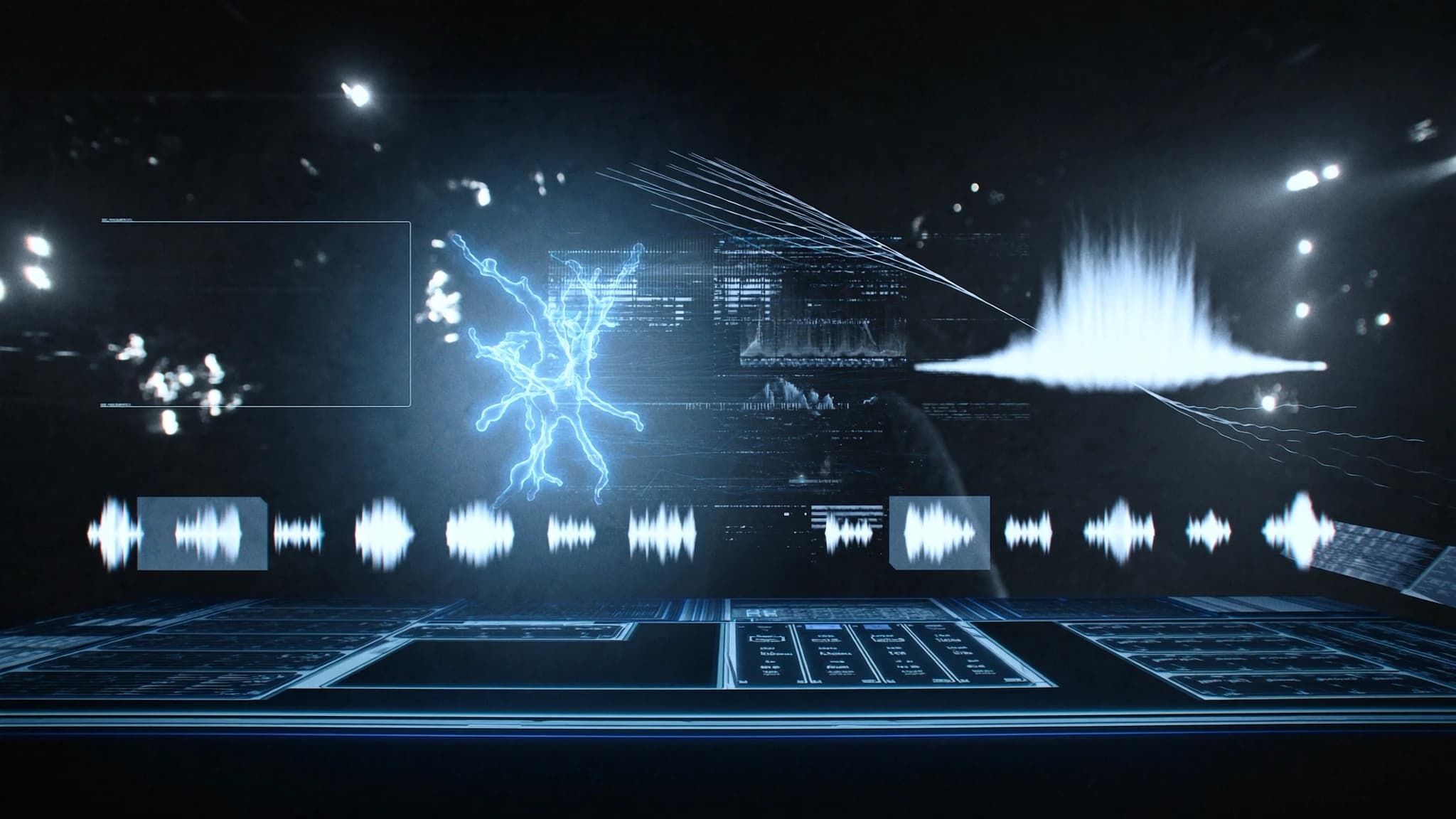
AI-driven feedback suppression is transforming live sound by using machine learning to detect and eliminate feedback before it becomes audible. Unlike traditional methods that react after feedback occurs, AI systems analyze spectral content in real time, predict resonant buildup, and apply adaptive notch filtering with surgical precision. SSOUNDS integrates advanced AI feedback suppression into its DSP ecosystem, offering engineers a powerful tool for clean, high-gain-before-feedback performance.
Key takeaways
- AI feedback suppression uses real-time spectral analysis and ML to detect feedback before it becomes audible.
- Adaptive notch filters adjust dynamically, preserving sound quality better than static EQ cuts.
- SSOUNDS' system learns room resonances during soundcheck for faster, more accurate suppression.
- AI suppression is a powerful tool but should complement proper system tuning and stagecraft.
- Continuous model training from live data improves performance over time.
- SSOUNDS integrates AI suppression across its entire product range for consistent, intelligent feedback control.
How Traditional Feedback Suppression Falls Short
Conventional feedback management relies on graphic equalizers or parametric filters set during soundcheck. These static notches are effective only for fixed resonant frequencies, but room acoustics, microphone placement, and performer movement cause feedback frequencies to shift dynamically. Engineers often resort to drastic EQ cuts that compromise sound quality.
Automatic feedback suppressors (AFS) have existed for decades, using fixed notch filters triggered by feedback detection. However, they typically react after feedback has already started, causing audible 'ringing' or 'howling' before the filter engages. They also lack the intelligence to distinguish feedback from musical content, leading to false positives that kill desired frequencies.
The AI Advantage: Real-Time Spectral Analysis
AI-driven feedback suppression begins with continuous spectral analysis of the audio signal. A neural network is trained on thousands of hours of live recordings to recognize the early signatures of feedback: narrow-band energy buildup, phase coherence, and exponential growth patterns. SSOUNDS' implementation uses a dedicated DSP core that runs FFT analysis at sub-millisecond intervals.
The AI model identifies potential feedback frequencies before they become audible, often detecting the onset of ringing 50–100 milliseconds faster than traditional methods. This pre-emptive capability allows the system to apply a gentle, adaptive notch filter that smoothly attenuates the problematic frequency without audible artifacts.
Adaptive Notch Filtering: Precision Without Compromise
Once a feedback frequency is identified, the AI triggers an adaptive notch filter. Unlike fixed notches, these filters are dynamic: their depth, width, and center frequency adjust in real time based on the severity and persistence of the feedback. SSOUNDS' filters use a proprietary algorithm that minimizes phase shift and group delay, preserving the natural sound of the mix.
The system also employs a 'learning' mode during soundcheck, where it maps the room's resonant modes and pre-sets a bank of potential filters. During the show, the AI cross-references real-time analysis with this learned map, reducing reaction time further. Filters are automatically released when the feedback risk subsides, ensuring no unnecessary EQ is applied.
Machine Learning Detection: Ringing Before It Builds
The core innovation is ML-based detection of 'ringing', the pre-feedback oscillation that occurs when a frequency begins to resonate. The AI analyzes the rate of energy increase in narrow bands and compares it to a model of stable musical content. If the growth curve exceeds a threshold that indicates feedback, the system acts.
SSOUNDS trains its models on diverse datasets including speech, vocals, acoustic instruments, and amplified sources to avoid false triggers. The result is a suppression system that works transparently even during complex musical passages, such as sustained guitar feedback or vocal vibrato, which can fool simpler algorithms.
Strengths and Limitations of AI Feedback Suppression
Strengths: AI suppression provides higher gain-before-feedback, cleaner sound with fewer EQ cuts, and adaptability to changing acoustics. It reduces engineer workload during shows and can salvage challenging room environments. SSOUNDS' system integrates seamlessly with its line arrays and DSP, offering a unified solution.
Limitations: AI suppression is not a substitute for proper system tuning, microphone technique, or stage layout. It can be fooled by extreme feedback events or unusual sound sources not represented in training data. Latency, though minimal, exists in the analysis chain. Best practice is to use AI suppression as a safety net, not a primary tool.
Best Practices for Using AI Feedback Suppression
1. Start with a well-tuned PA: Use SSOUNDS' system alignment tools to achieve flat response and proper coverage before engaging AI suppression. 2. Set conservative thresholds: Over-aggressive suppression can dull the mix. 3. Use the learning mode during soundcheck to map room resonances. 4. Monitor the system: Even AI can miss rare events; stay attentive. 5. Combine with physical best practices: Keep monitors off-axis from mics, use cardioid patterns, and manage stage volume.
SSOUNDS provides a user interface that allows engineers to adjust the AI's sensitivity, filter depth, and release time, giving them full control. The system also logs feedback events for post-show analysis, helping refine setup for future performances.
SSOUNDS' Approach to AI Feedback Suppression
SSOUNDS has integrated AI feedback suppression as a core feature of its DSP platform, available across its line arrays, point-source speakers, and stage monitors. The system is designed to work in concert with SSOUNDS' advanced FIR filtering and phase correction, ensuring that the suppression does not compromise the overall sonic coherence.
Engineers can enable AI suppression per output channel, allowing targeted control on monitor mixes or problematic zones. SSOUNDS continues to refine its ML models through field data from hundreds of productions, making the system smarter with each firmware update. This commitment to AI-driven innovation positions SSOUNDS at the forefront of intelligent live sound reinforcement.
Frequently asked
Can AI feedback suppression completely eliminate feedback?
No, but it can significantly reduce feedback events and increase gain-before-feedback. It works best as part of a comprehensive system approach including proper mic technique and PA tuning.
Does AI suppression affect sound quality?
When designed well, it has minimal impact. SSOUNDS' adaptive filters are designed to be transparent, with no audible artifacts during normal operation. Overly aggressive settings can dull the sound, so conservative thresholds are recommended.
How does SSOUNDS' AI suppression differ from standard automatic feedback suppressors?
Standard AFS units react after feedback starts and use fixed notches. SSOUNDS' AI predicts feedback before it occurs, uses adaptive filters that change in real time, and learns room acoustics for faster, more accurate response.
Is AI feedback suppression available on all SSOUNDS products?
It is integrated into the DSP platform that powers SSOUNDS' professional line arrays, point-source speakers, and stage monitors. Check product specifications for availability.
Do I still need a graphic equalizer if I use AI suppression?
Yes, for overall system tuning and tonal shaping. AI suppression is a feedback management tool, not a replacement for EQ. A well-tuned system will always sound better and be more stable.
Building or upgrading a system?
SSOUNDS engineers and manufactures professional PA worldwide, from a single room to stadium scale.