AI Room Tuning and System Optimisation
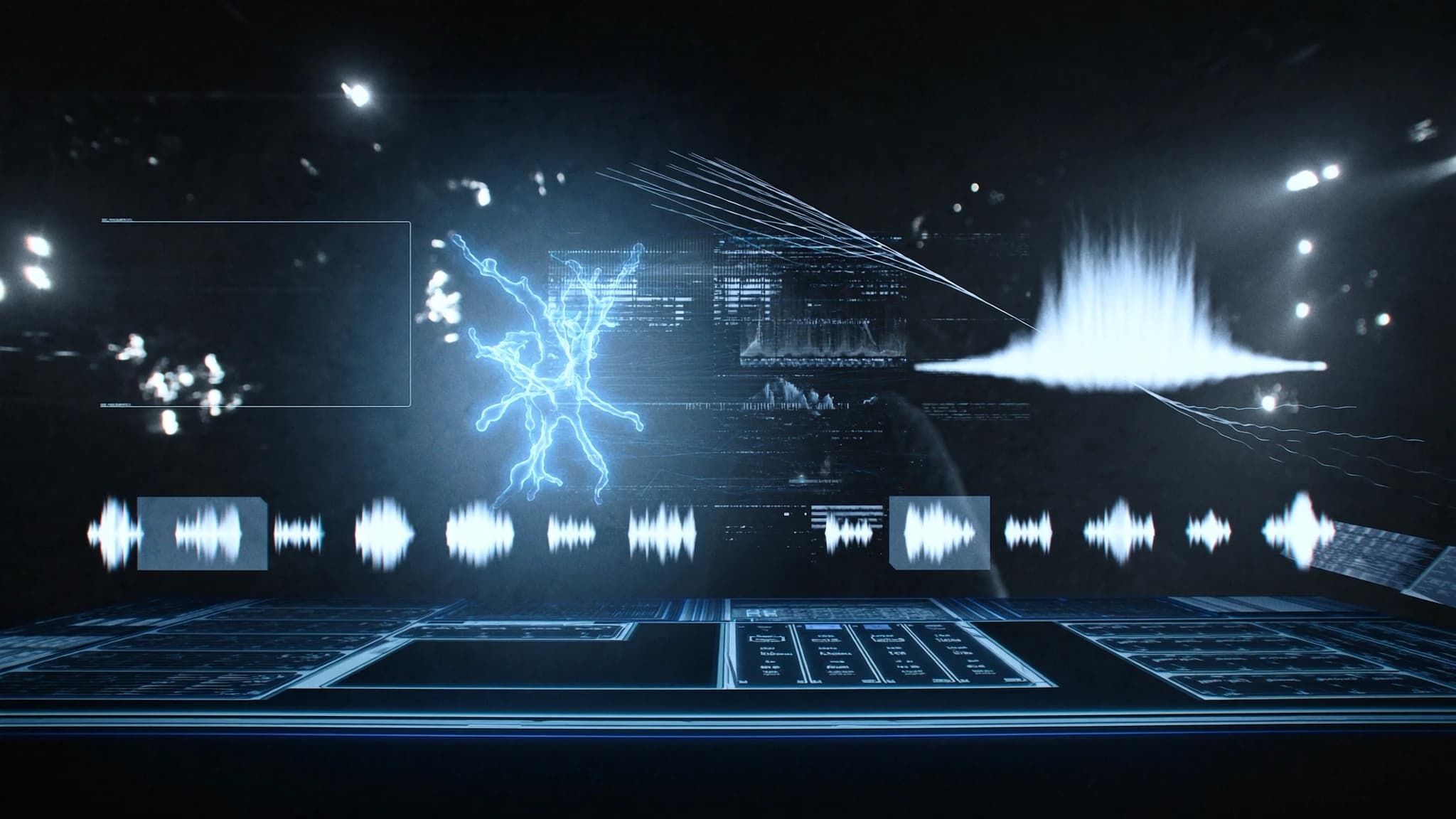
Modern live sound demands speed and precision. AI room tuning and system optimisation replace guesswork with automated measurement, EQ, delay alignment, and limiter setting, getting your PA show-ready faster and more consistently than manual methods alone.
Key takeaways
- AI room tuning automates EQ, delay alignment, and limiter setting, reducing setup time from hours to minutes.
- Accurate measurements (impulse response, SPL, phase) are essential for AI to produce reliable results.
- AI EQ applies parametric filters to achieve a natural target curve, not a flat response.
- Delay alignment using genetic algorithms ensures coherent low end and imaging across the coverage area.
- AI limiters protect drivers while maximising SPL by adapting to program material.
- Always combine AI optimisation with human listening for the best musical outcome.
Why AI Room Tuning Matters
Traditional system tuning relies on a skilled engineer’s ears, RTA measurements, and iterative adjustments. This process is time-consuming, variable, and prone to human error, especially in challenging acoustics. AI-driven optimisation automates the heavy lifting: it measures the room’s response, identifies problem frequencies, and applies precise EQ, delay, and limiter settings in minutes.
For touring and installed systems, consistency across venues is critical. AI tuning ensures that the same system sounds identical in a concrete hall, a tent, or an outdoor field, reducing setup time and eliminating night-to-night variations. SSOUNDS engineers have integrated AI-assisted workflows into our DSP ecosystem, allowing users to achieve near-perfect alignment with a single button press.
The Measurement Foundation: What AI Needs to Work
AI tuning begins with accurate, repeatable measurements. A reference microphone at a known listening position captures the system’s impulse response, frequency magnitude, and phase. Modern software uses pink noise or swept sine signals to gather data across the audible spectrum.
Key parameters include: SPL at multiple positions (to identify coverage gaps), time-of-flight for delay alignment between subs and tops, and cumulative spectral decay for ringing or resonance. SSOUNDS recommends taking at least three measurement points per zone (e.g., front, middle, rear) to give the AI a complete picture of the room’s acoustic signature.
Without clean measurements, even the best AI will produce flawed results. Ensure your measurement mic is calibrated, the system is at a consistent level, and ambient noise is minimised.
EQ Optimisation: From Flat to Musical
AI-driven EQ goes beyond simple graphic equalisation. It analyses the room’s transfer function and applies parametric filters to flatten the response at the listening position, while preserving the system’s native voicing. The goal is not a dead flat curve but a target curve that sounds natural and musical, typically a gentle downward slope from low to high frequencies.
Machine learning models can differentiate between room modes (which require narrow, deep cuts) and broad spectral imbalances (which need gentle shelving). SSOUNDS’ DSP presets include AI-tuned EQ templates that adapt to common room shapes, then allow fine-tuning via a user-friendly interface. The result: a system that sounds balanced without harshness or muddiness.
Delay Alignment: Time Is Everything
Misaligned arrival times between subwoofers and full-range cabinets cause phase cancellation and muddy low end. AI tools measure the impulse response of each subsystem and calculate the exact delay needed to align their acoustic centres at the listening plane.
For complex arrays, like cardioid subs or flown line arrays with delays. AI can optimise multiple delay taps simultaneously. It accounts for physical spacing, crossover slopes, and even temperature-induced speed-of-sound variations. SSOUNDS’ system optimisation software uses a genetic algorithm to find the delay set that minimises phase error across the coverage area, ensuring tight, punchy bass and coherent imaging.
Limiter Setting: Protect Without Compromising Performance
Setting limiters too conservatively robs the system of headroom; too aggressively risks driver damage. AI analyses the system’s thermal and mechanical limits, based on manufacturer data and real-time impedance monitoring, and sets thresholds that maximise SPL while staying within safe operating windows.
Modern AI limiters also adapt to program material: they can distinguish between a sustained bass note and a transient kick drum, applying different attack/release times accordingly. SSOUNDS’ DSP includes a “learn” mode that measures the system’s response to a test signal and automatically configures peak and RMS limiters for each amplifier channel, reducing the risk of blown drivers during high-energy shows.
Workflow Integration: From Measurement to Show-Ready
A typical AI tuning workflow: 1) Place measurement mic at FOH position. 2) Run automated measurement sweep (30 seconds). 3) AI analyses data and proposes EQ, delay, and limiter settings. 4) Engineer reviews and applies with one click. 5) Verify with a quick listening test or second measurement.
This process cuts setup time from 30–60 minutes to under 10. For multi-zone systems (e.g., main PA, front fills, delays), AI can optimise each zone independently while ensuring overall coherence. SSOUNDS’ cloud-based tuning platform allows settings to be saved, shared, and recalled across venues, ideal for touring engineers who need consistency night after night.
Limitations and the Human Touch
AI room tuning is a powerful tool, but it is not a substitute for a skilled engineer’s ears. The AI cannot judge musicality, artistic intent, or audience experience. It can get you 90% of the way, the final 10% requires human judgement: adjusting for vocal presence, balancing stage wash, or compensating for a difficult mix position.
Always listen critically after AI optimisation. Use the AI as a starting point, not an endpoint. SSOUNDS recommends that engineers learn the principles of system tuning alongside AI tools, so they can override or tweak settings when the room demands it.
Frequently asked
Do I need special hardware for AI room tuning?
Most AI tuning solutions work with a standard measurement microphone and audio interface. SSOUNDS DSP platforms include built-in measurement and optimisation tools that require no additional hardware beyond a USB mic.
Can AI tuning fix a bad-sounding room?
AI can compensate for many acoustic issues, but it cannot eliminate physical problems like flutter echo or excessive reverberation. It works best when combined with acoustic treatment or proper speaker placement.
How often should I re-run AI optimisation?
Re-run whenever the room changes (different venue, different audience density) or after moving the PA. For touring, many engineers run it at sound check each day.
Is AI tuning safe for my speakers?
Yes, when used correctly. AI limiters are designed to stay within manufacturer specs. Always verify that the AI has the correct driver data (power handling, impedance) for your specific cabinets.
Will AI tuning make my system sound the same as another engineer’s?
AI provides a consistent starting point, but final tonal balance depends on the target curve and human adjustments. Two engineers may still dial in different preferences.
Building or upgrading a system?
SSOUNDS engineers and manufactures professional PA worldwide, from a single room to stadium scale.