Machine Learning for Loudspeaker DSP and Presets
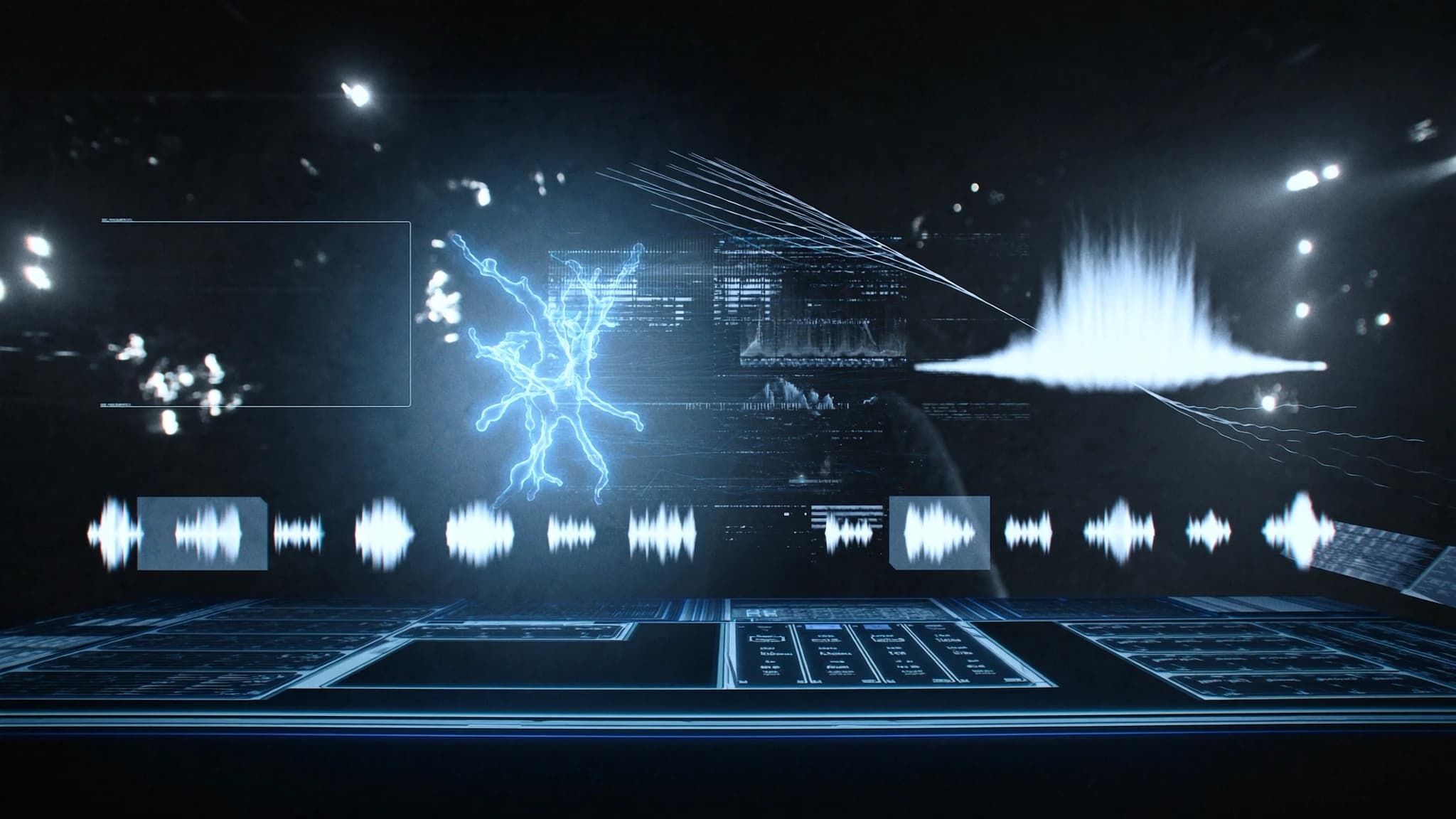
In the pursuit of sonic perfection, loudspeaker DSP and presets have evolved from static, manually tuned filters into dynamic, data-driven systems. Machine learning (ML) now plays a pivotal role in refining crossovers, limiters, and FIR presets, enabling cleaner, more consistent response across varied environments. SSOUNDS integrates these advanced ML methods into its engineering workflow, ensuring every system delivers predictable, high-fidelity performance.
Key takeaways
- Machine learning enables adaptive crossover tuning that minimizes phase cancellations and optimizes driver protection.
- Data-driven limiters balance dynamic preservation with safety, using reinforcement learning to anticipate peaks.
- FIR presets generated by neural networks adapt to driver variations and environmental conditions over time.
- Continuous field-data feedback loops allow SSOUNDS to refine DSP algorithms for consistent performance.
- ML integration represents a paradigm shift from static presets to intelligent, self-optimizing loudspeaker systems.
- SSOUNDS combines AI methods with decades of audio engineering heritage to deliver reliable, high-fidelity sound.
The Limitations of Traditional DSP Tuning
Traditional loudspeaker DSP relies on fixed filters derived from anechoic measurements and generic room models. While effective in controlled settings, this approach often fails to account for real-world variables like temperature, humidity, and audience absorption. The result is inconsistent frequency response, phase misalignment, and suboptimal limiter behavior that can compromise sound quality and system longevity.
SSOUNDS engineers recognized that static presets leave performance on the table. By moving to ML-driven tuning, we can adapt DSP parameters dynamically based on operational data, ensuring that every show sounds as intended regardless of venue or conditions.
Machine Learning for Crossover Optimization
Crossover networks determine how frequencies are distributed among drivers. Poorly tuned crossovers cause phase cancellations and uneven power handling. ML models trained on thousands of loudspeaker measurements can predict optimal crossover frequencies and slopes that minimize interference and maximize SPL.
SSOUNDS uses neural networks to analyze impedance curves, distortion profiles, and acoustic output at multiple drive levels. The result is a crossover that not only sounds seamless but also protects drivers from excessive excursion, extending component life while maintaining clarity.
Data-Driven Limiter Design
Limiters are essential for preventing driver damage, but overly aggressive limiting squashes dynamics and reduces perceived loudness. ML enables the creation of 'smart' limiters that adapt attack, release, and threshold based on real-time signal analysis and thermal modeling.
SSOUNDS employs reinforcement learning to train limiters that balance protection with musicality. By simulating thousands of usage scenarios, from speech to heavy bass music, the system learns to anticipate peaks and apply only the necessary gain reduction, preserving transient impact.
FIR Presets: From Static to Adaptive
Finite impulse response (FIR) filters offer precise phase and amplitude correction but are computationally expensive and traditionally fixed. ML can optimize FIR coefficients for specific use cases, such as reducing latency for live monitoring or extending low-frequency response for subwoofers.
At SSOUNDS, we use convolutional neural networks to generate FIR presets that account for driver variations and aging. The system continuously learns from field data, updating presets to maintain consistent performance over the product's lifetime. This adaptive approach ensures that a line array deployed in a stadium sounds as coherent as it did on day one.
Real-World Validation and Continuous Improvement
ML models are only as good as the data they're trained on. SSOUNDS collects operational data from thousands of deployed systems, including temperature, humidity, impedance, and acoustic measurements, to refine DSP algorithms continuously.
This feedback loop allows us to identify patterns that human engineers might miss, such as subtle thermal drift in amplifier output or frequency-dependent distortion. The result is a self-improving ecosystem where every new preset is smarter than the last.
SSOUNDS Engineering: Where AI Meets Audio Craft
SSOUNDS doesn't just adopt ML for the sake of technology; we integrate it into a holistic engineering philosophy. Our DSP engineers work alongside data scientists to ensure that every algorithm serves the ultimate goal: delivering world-class sound with unwavering reliability.
From the initial design of our line arrays to the final preset delivered to a festival in Lagos or a theater in London, ML ensures that SSOUNDS systems perform consistently at the highest level. This commitment to data-driven excellence is what sets us apart in the premium professional audio landscape.
Frequently asked
How does machine learning improve crossover design compared to traditional methods?
ML models analyze thousands of loudspeaker measurements to predict optimal crossover frequencies and slopes that minimize phase cancellations and distortion, resulting in smoother frequency response and better driver protection.
Can ML-based limiters really adapt in real time?
Yes. Using reinforcement learning, SSOUNDS' limiters are trained on countless signal scenarios and can adjust attack, release, and threshold dynamically, preserving dynamics while preventing damage.
Are FIR presets generated by ML more accurate than manually tuned ones?
ML-generated FIR presets account for driver variations and aging, offering more consistent phase and amplitude correction across units and over time, leading to superior coherence in large arrays.
Does SSOUNDS use ML in all its products?
ML is integral to our DSP design process for line arrays, point-source speakers, subwoofers, and amplifiers, ensuring every product benefits from data-driven optimization.
How does SSOUNDS collect data for ML training?
We gather operational data from deployed systems worldwide, including acoustic measurements, temperature, humidity, and impedance, creating a rich dataset for continuous algorithm improvement.
Building or upgrading a system?
SSOUNDS engineers and manufactures professional PA worldwide, from a single room to stadium scale.