Line Array vs Point Source: Which Should You Choose?
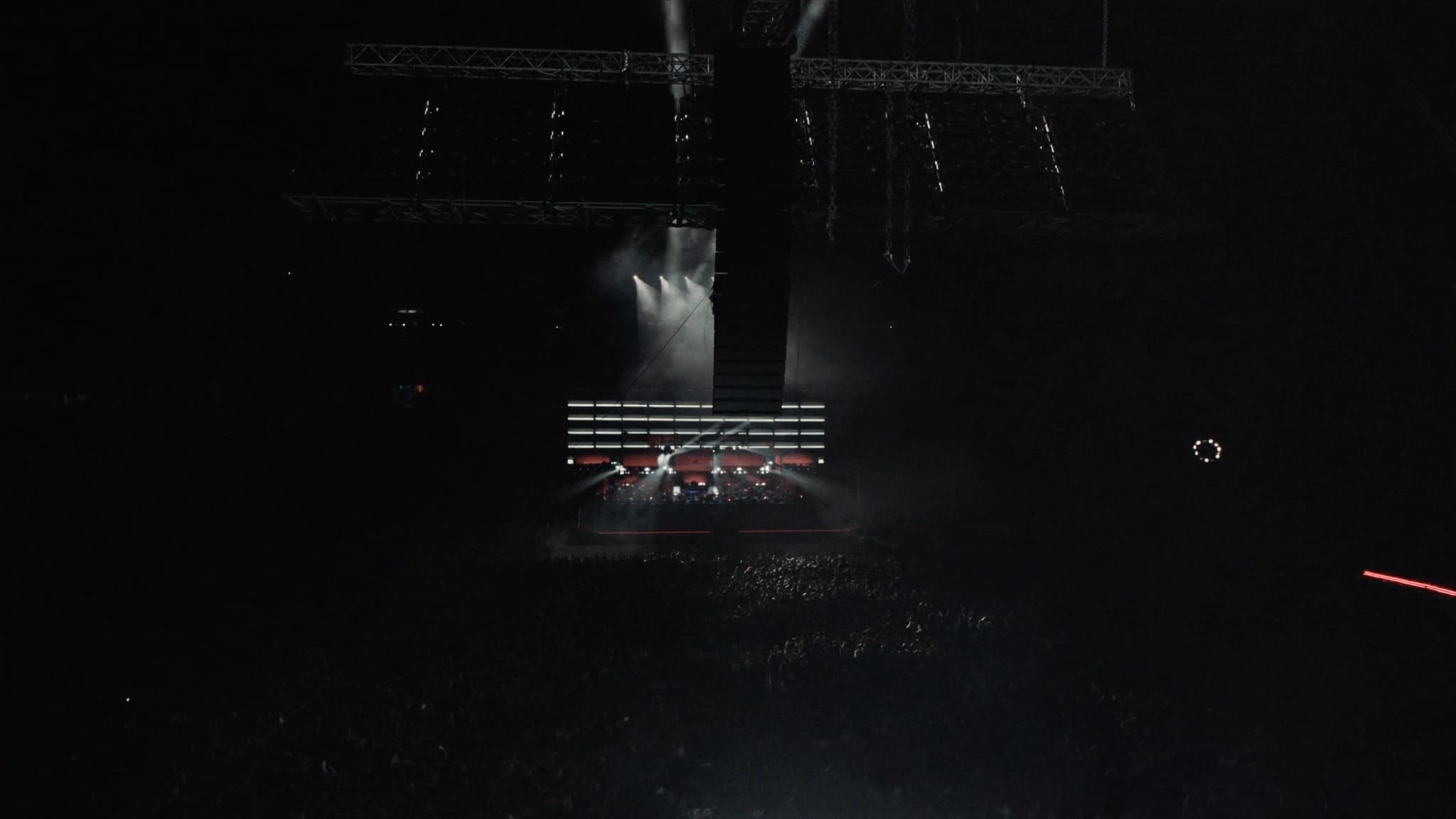
Choosing between a line array and a point-source loudspeaker system is one of the most critical decisions in sound reinforcement. Each topology has distinct strengths and trade-offs that affect coverage, SPL, intelligibility, and scalability. At SSOUNDS, our engineering team evaluates dozens of variables, venue geometry, audience distribution, budget, and application, before recommending a solution. This guide breaks down the technical differences, real-world performance characteristics, and decision-making criteria used by professional system designers, so you can make an informed choice for your next project.
Key takeaways
- Line arrays provide superior coverage consistency and SPL over long distances, making them ideal for large venues and outdoor events.
- Point sources offer simpler installation, lower cost, and excellent imaging for small to medium spaces with well-defined listening areas.
- SSOUNDS engineers use acoustic modelling to match the topology to the venue's geometry, audience distribution, and budget.
- Hybrid systems (point-source fills + line array mains) can optimize both coverage and cost in multi-purpose venues.
- Modern line arrays are modular and scalable, allowing systems to grow with your needs without replacing infrastructure.
- Never assume one topology is universally better, the right choice depends on the specific application and performance goals.
Understanding the Core Physics
A point-source loudspeaker radiates sound from a single cabinet, typically using a coaxial or horn-loaded driver arrangement. Its coverage pattern is fixed (e.g., 90° x 60°) and behaves like a spotlight: sound level drops predictably with distance (inverse square law). Point sources excel in small to medium venues where the listening area is compact and the system can be positioned close to the audience.
A line array, by contrast, consists of multiple vertically stacked cabinets that couple acoustically to create a cylindrical wavefront. This geometry causes sound to attenuate at only 3 dB per doubling of distance (instead of 6 dB), allowing far greater reach and even coverage from front to back. The vertical coverage can be electronically shaped (aimed) using DSP and mechanical splay angles, making line arrays ideal for large or irregularly shaped spaces.
Coverage and Consistency
For a seated theatre or small club, a well-placed point source can deliver excellent stereo imaging and a single arrival time (no comb filtering). However, as the audience area widens or deepens, point sources struggle to maintain uniform SPL and frequency response. Off-axis listeners experience high-frequency roll-off and reduced clarity.
Line arrays solve this by distributing sound evenly across a wide horizontal plane (typically 90° to 150°) while controlling vertical dispersion. Each cabinet covers a specific vertical slice, and the array's curvature is tuned to cover near and far listeners equally. SSOUNDS line array systems use proprietary waveguide technology to ensure seamless coupling between cabinets, minimizing interference and delivering consistent tonal balance from row 1 to row 100.
SPL and Headroom
When raw output is required, such as in large concert halls, festivals, or outdoor events, line arrays have a clear advantage. The combined acoustic output of multiple cabinets can exceed 140 dB SPL peak, with each driver working within its linear range. This reduces distortion and improves reliability at high levels.
Point sources can also achieve high SPL, but typically require larger, heavier cabinets with more powerful amplifiers. For a given weight and budget, a line array will almost always deliver higher maximum SPL and better dynamic range over a large area. SSOUNDS engineers often recommend line arrays for any venue exceeding 500 seats or where the listening distance exceeds 30 metres.
Scalability and Flexibility
One of the strongest arguments for line arrays is modularity. A system can start with as few as four boxes per side for a small theatre and scale to 24 or more for a stadium. The same amplifiers, DSP presets, and rigging hardware are used across the range, simplifying inventory and training.
Point-source systems are less scalable. Adding more cabinets to increase coverage often creates interference patterns and requires careful placement to avoid overlap. For multi-purpose venues that host both spoken word and loud music, a hybrid approach (point-source front fills with line array mains) is common. SSOUNDS designs both topologies to integrate seamlessly, allowing system designers to mix and match as needed.
Installation and Logistics
Point sources are generally simpler to install: fewer cabinets, less rigging, and lower weight. For fixed installations where the listening area is well-defined (e.g., a house of worship with a single seating bowl), a point source can be the most cost-effective and aesthetically pleasing choice.
Line arrays require more structural support, careful aiming, and often a dedicated DSP processor to manage the array's beamforming. However, modern line array systems from SSOUNDS include integrated flying hardware, pre-configured array templates, and remote monitoring, reducing setup time. For touring applications, the ability to fly a complete PA in under an hour is a major logistical win.
How SSOUNDS Engineers Decide
Our design process begins with acoustic modelling using EASE or proprietary simulation tools. We map the venue's geometry, define coverage targets, and calculate SPL requirements. If the venue has a deep, narrow seating area (e.g., a cathedral or concert hall), a line array is almost always chosen. For wide, shallow spaces (e.g., a conference room or small theatre), a point source or distributed system may be better.
Budget is also a factor. While line arrays offer superior performance, they come at a higher initial cost. However, the total cost of ownership can be lower for large venues because fewer amplifier channels and less labour are needed to achieve even coverage. SSOUNDS provides both options, and our application engineers work with clients to model the ROI of each approach.
Common Myths Debunked
Myth: Line arrays are always better. Reality: In small rooms, a line array's vertical coupling can cause excessive low-frequency buildup and poor imaging. A point source often sounds more natural.
Myth: Point sources can't sound good for large audiences. Reality: With proper deployment (e.g., delay towers, distributed subs), point-source systems can cover large areas, though they require more complex zoning and processing.
Myth: All line arrays are the same. Reality: Waveguide design, driver quality, and DSP algorithms vary enormously. SSOUNDS invests heavily in R&D to ensure our line arrays deliver consistent phase response and low distortion across the entire operating band.
Frequently asked
Can I use a point source for an outdoor festival?
Yes, but you will need multiple delay towers and careful zoning to maintain even coverage. A line array is generally more efficient and provides cleaner sound over a large area with fewer cabinets.
Are line arrays more expensive than point sources?
Initially, yes. But for large venues, the cost per seat or per square metre of coverage can be lower with a line array due to fewer cabinets and amplifiers required. Total cost of ownership should be evaluated.
How many cabinets do I need for a line array?
It depends on the venue size and desired SPL. A typical rule of thumb is 4-6 boxes for small theatres, 8-12 for medium concert halls, and 16-24+ for large festivals. SSOUNDS provides simulation tools to determine the exact count.
Can I mix line array and point source in the same system?
Absolutely. Many professional systems use line arrays for mains and point sources for front fills, out fills, or delays. SSOUNDS designs all products to work together seamlessly with consistent voicing.
Do line arrays sound better than point sources?
Not inherently. A well-designed point source in an appropriate venue can sound excellent. Line arrays excel at delivering consistent sound over large distances and wide areas. The 'better' choice depends on the application.
Building or upgrading a system?
SSOUNDS engineers and manufactures professional PA worldwide, from a single room to stadium scale.