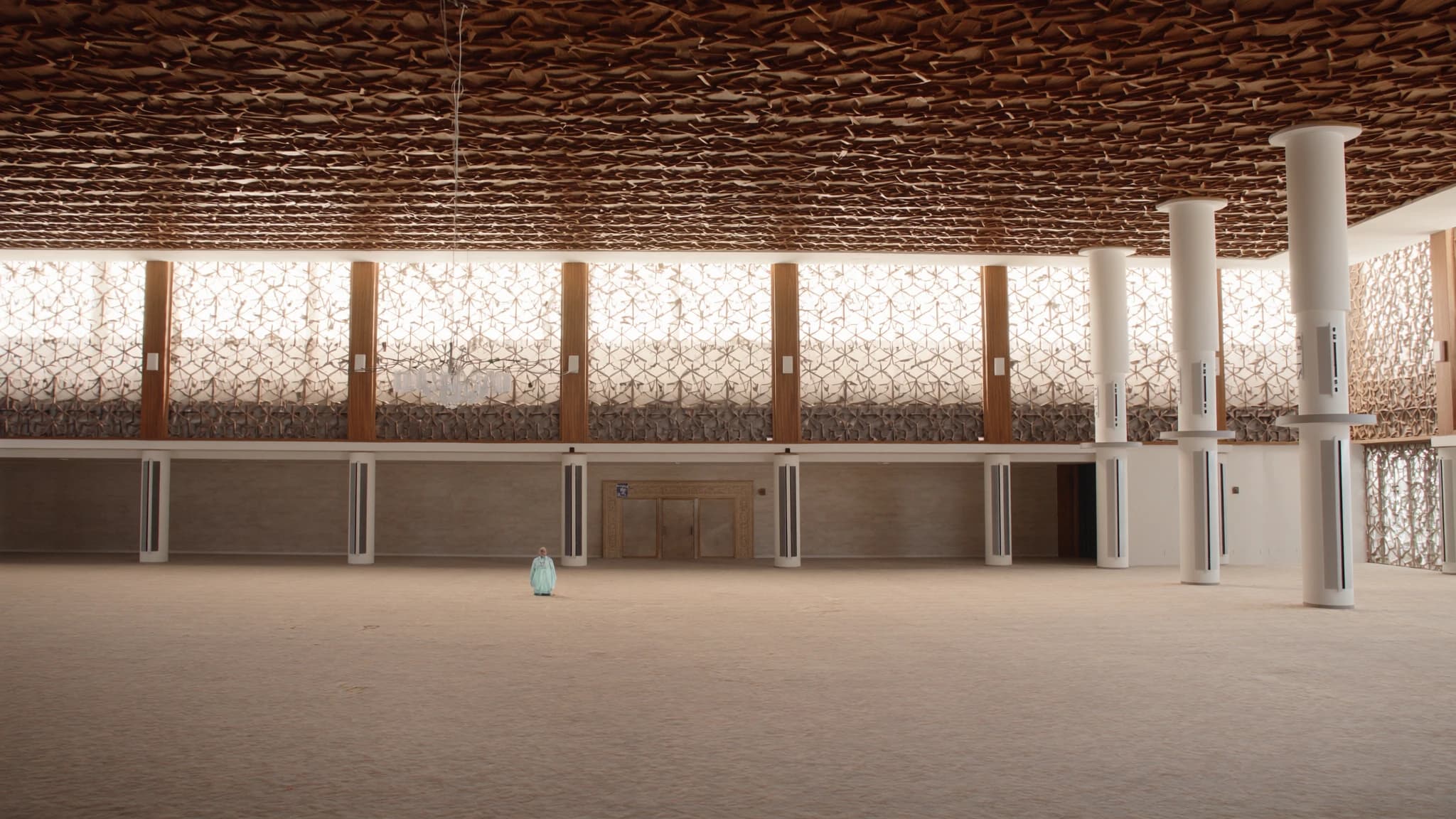
Mosque Sound System Design Guide

Designing a sound system for a mosque requires a unique blend of speech clarity, uniform coverage, and acoustic sensitivity to support prayer and sermons without distraction. This guide covers the key principles and practical steps to achieve a system that honors the space and serves the congregation effectively.
Key takeaways
- Conduct acoustic analysis to measure RT60 and identify problem areas before designing the system.
- Prioritize speech intelligibility (STI > 0.7) with loudspeakers optimized for vocal clarity.
- Choose distributed coverage for deep or irregular prayer halls to ensure uniform SPL and clarity.
- Respect the sacred space with visually discreet speakers and silent electronics.
- Use digital networking (Dante/AES67) for flexible zone control and simplified cabling.
- Commission with real-time measurements and provide training for ongoing support.
Understanding the Acoustic Environment
Mosques often feature hard surfaces like marble, tile, and glass, which create long reverberation times (RT60) that can blur speech. Domes and high ceilings further complicate sound distribution, causing echoes and uneven coverage. Before selecting any equipment, conduct an acoustic analysis—measure RT60 at multiple points and identify reflective zones. SSOUNDS engineers use AI-assisted modeling to predict how sound will behave in these challenging spaces, allowing us to design systems that compensate for reverberation with precise directivity and DSP tuning.
For existing mosques with high reverberation, consider adding acoustic treatment (e.g., absorptive panels on rear walls or under balconies) to reduce RT60 to 1.5–2.5 seconds for speech. If treatment isn't feasible, a distributed system with many low-volume speakers can improve clarity by keeping the direct-to-reverberant ratio high.
Prioritizing Speech Intelligibility
In a mosque, the primary goal is clear, natural reproduction of the human voice—whether for the imam's sermon, Quran recitation, or the adhan (call to prayer). Speech intelligibility is measured by the Speech Transmission Index (STI), which should exceed 0.5 for acceptable clarity and 0.7 for excellent clarity. To achieve this, choose loudspeakers with a wide frequency response optimized for vocal range (80 Hz–8 kHz) and a consistent dispersion pattern that avoids hot spots or dead zones.
SSOUNDS point-source loudspeakers and line arrays are engineered with advanced waveguide technology that provides uniform coverage across the listening area. Our DSP presets include dedicated speech modes that reduce low-frequency muddiness and enhance consonant articulation. For large prayer halls, a central cluster or distributed array can deliver even SPL with minimal comb filtering.
Distributed vs. Centralized Coverage
The choice between a centralized cluster (e.g., a single line array above the mihrab) and a distributed system (multiple small speakers along the ceiling or walls) depends on the mosque's geometry and acoustics. Centralized systems work well in wide, shallow halls with low ceilings, but in deep or irregularly shaped spaces, distributed coverage ensures every worshipper hears clearly, regardless of their position.
For long, narrow prayer halls, a distributed system with speakers spaced 6–10 meters apart along the ceiling can provide uniform coverage at lower volumes, reducing reverberation excitation. SSOUNDS offers compact, high-output loudspeakers that blend into architectural features, with optional color finishes to match interior design. Our system design software simulates coverage patterns to optimize placement and delay settings.
Respecting Acoustic and Cultural Sensitivity
Sound system design in a mosque must respect the sacred nature of the space. Loudspeakers should be visually unobtrusive—flush-mounted in ceilings, hidden behind grilles, or finished to match wood or stone. Avoid placing speakers directly in front of the mihrab or minbar where they could distract from the imam's presence. Additionally, the system should not produce audible hiss, hum, or distortion during quiet moments of prayer.
Wireless microphones for the imam and any speakers should be reliable and interference-free, with backup units available. SSOUNDS systems include redundant DSP and amplifier paths to ensure uninterrupted operation. For the adhan, a dedicated outdoor speaker system with weatherproof enclosures and time-synchronized playback (e.g., via GPS or NTP) can ensure the call is heard clearly across the neighborhood without excessive volume.
System Components and Integration
A typical mosque sound system includes: (1) a digital mixer or DSP with automatic microphone mixing to manage multiple inputs (imam mic, Quran player, wireless mics); (2) a network of amplifiers with remote monitoring; (3) loudspeakers selected for coverage and SPL; and (4) a control interface for volume and source selection. For larger mosques, consider Dante or AES67 digital audio networking to simplify cabling and enable zone control (e.g., separate volume for men's and women's sections).
SSOUNDS amplifiers and DSP are designed for 24/7 operation with thermal management and fault detection. Our systems can integrate with existing building management systems via API, allowing scheduled volume changes for prayer times. For multi-purpose halls, presets can switch between speech, music, and Quran modes with different EQ and delay settings.
Installation and Commissioning Best Practices
Proper installation is critical. Use rigid mounting brackets to avoid vibration, and ensure all speaker cables are properly terminated and shielded. After installation, commission the system with real-time measurements using an STI meter and SPL analyzer. Adjust delay times for distributed speakers to align arrival times at listening positions, and apply parametric EQ to tame room resonances.
SSOUNDS provides on-site commissioning support and training for local technicians. Our systems include a commissioning report that documents coverage maps, STI values, and system settings for future reference. Regular maintenance—cleaning grilles, checking connections, and updating firmware—ensures long-term reliability.
Frequently asked
What is the ideal RT60 for a mosque prayer hall?
For speech clarity, aim for an RT60 of 1.5–2.5 seconds. If the hall has longer reverb, use distributed speakers and acoustic treatment to improve intelligibility.
Can I use a single central speaker for a large mosque?
A single central cluster works for wide, shallow halls, but for deep or irregular spaces, distributed speakers provide more uniform coverage and better clarity.
How do I avoid feedback from microphones?
Use directional microphones, position them away from speakers, and apply automatic feedback suppression in the DSP. SSOUNDS DSP includes notch filters and gain structure optimization.
What type of loudspeaker is best for Quran recitation?
A full-range loudspeaker with a flat response from 80 Hz to 16 kHz, low distortion, and consistent dispersion. SSOUNDS point-source models are ideal for this application.
Do I need separate systems for indoor and outdoor calls?
Yes, outdoor adhan speakers should be weatherproof and time-synchronized. Indoor systems focus on speech clarity. Both can share the same DSP and source equipment.
Building or upgrading a system?
SSOUNDS engineers and manufactures professional PA worldwide — from a single room to stadium scale.