倉庫および産業空間に最適なスピーカー
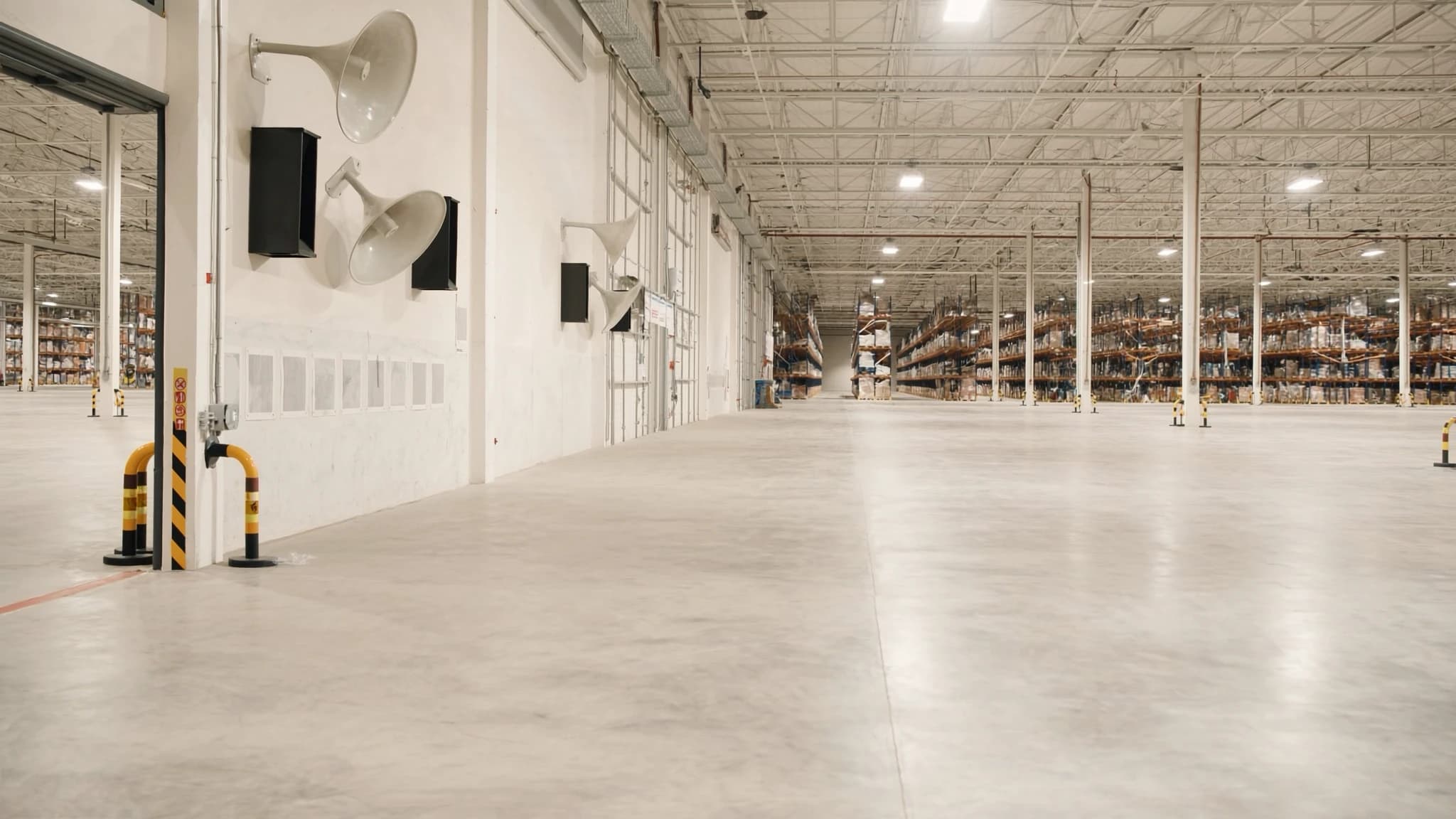
倉庫や産業空間に適したスピーカーを選ぶことは独特の課題です。高い天井、機械からの絶え間ない背景騒音、広い開放空間は、一般的な会場とはまったく異なるアプローチを要求します。SSOUNDSのエンジニアは、これらの環境向けにシステムを設計し、高出力100Vラインスピーカー、ホーンロードペンダント、粉塵や湿度に耐えるIP定格ハードウェアに焦点を当てています。このガイドでは、機械音を超える明瞭度、大きな空間のカバレッジ戦略、ページングと音楽のトレードオフなど、主要な技術的考慮事項を説明し、騒音を貫通する信頼性が高くクリアなサウンドのPAシステムを導入できるようにします。
主なポイント
- 高天井で騒がしい産業空間では、効率的で明瞭なサウンドのためにホーンロードまたはペンダント100Vラインスピーカーが必要です。
- 音楽の忠実度よりも音声明瞭度(STI >0.5)を優先し、DSPを使用して低周波をカットしプレゼンスをブーストします。
- 騒音レベルと機能に基づいて空間をゾーニングし、ペンダントスピーカーを取り付け高さに等しい間隔で配置します。
- 粉塵、湿度、極端な温度に耐えるためにIP54/IP66定格のハードウェアを使用します。
- 耳の高さで90 dB SPL、6 dBのヘッドルームを目標に設計し、音響シミュレーションソフトウェアでカバレッジをモデル化します。
- 生命安全のために常に緊急音声避難コンプライアンスとバッテリーバックアップを含めます。
産業空間の音響を理解する
倉庫や産業空間は音響的に過酷です。コンクリート床、金属壁、開放トラスが大規模な残響とエコーを生み出します。高い天井(多くの場合20〜40フィート)は、音がリスナーに届くまでに長距離を移動する必要があることを意味し、機械騒音(ファン、コンベア、フォークリフト)は容易に85 dB SPLを超える可能性があります。主な目標は、安全アナウンス、ページング、緊急警報のための音声明瞭度であり、音楽再生は二次的ですが、士気や背景雰囲気のために依然として重要です。
このような環境では、従来の天井スピーカーや小型ポイントソースボックスは、残響を克服する指向性と出力が不足しているため機能しません。解決策は、音を狭いビームに集中させ、反射を減らし明瞭度を向上させる高効率のホーンロードスピーカーを使用することです。SSOUNDSの産業グレードシステムは、定指向性ホーンと100Vライントランスを使用して、過度な電力損失なしに長距離で一貫したSPLを提供します。
倉庫向けの主要スピーカータイプ:ホーン/ペンダントと100Vライン
高天井産業空間に最も効果的なスピーカーは、ホーンロードペンダントと高出力100Vラインスピーカーです。ホーンロードペンダント(しばしば「リエントラント」または「プロジェクター」ホーンと呼ばれる)は、フレア状のスロートを使用してドライバーを空気と効率的に結合し、最小限の電力で高いSPLを生成します。通常、ペンダントマウントで天井から吊り下げられ、通路や作業ゾーンをカバーするために下向きに指向されます。SSOUNDSのペンダントホーンシステムは、1メートルで120 dBピークSPLを提供するように設計されており、狭い60°×40°のカバレッジパターンで未使用エリアへの音漏れを最小限に抑えます。
100Vラインスピーカー(定電圧システムとも呼ばれる)は、複雑なインピーダンス計算なしに単一のアンプチャンネルに多数のスピーカーを並列接続できるため、大空間での分散オーディオの標準です。各スピーカーには複数のタップ設定(例:1.25W、2.5W、5W、10W)を備えたステップダウントランスがあり、スピーカーごとに音量を調整できます。倉庫では、メインゾーンには高電力タップ(10Wまたは20W)を、休憩室やオフィスには低いタップを選択してください。SSOUNDSの100Vラインアレイペンダントは、ホーンロードの効率と定電圧分散の利便性を組み合わせ、大規模施設での長いケーブル配線に理想的です。
音楽よりも明瞭度を優先:ページングと音声警報
産業環境では、PAシステムの主な機能はページングと緊急音声避難であり、音楽再生ではありません。音声明瞭度は音声伝達指数(STI)で測定され、0.5以上が許容範囲、0.7以上が優秀とされます。これを達成するには、子音が存在する中域周波数(500 Hz〜4 kHz)を明確に届け、残響空間で音声を濁らせる過剰な低周波成分を避ける必要があります。
SSOUNDSの産業用スピーカーは、声の明瞭度を強調する調整された周波数特性を持ち、100 Hz以下の周波数をロールオフし、2〜3 kHz付近に穏やかなプレゼンスブーストを適用するDSPプリセットを使用しています。ページング専用ゾーンでは、5Wタップの100Vホーンスピーカーで十分なことが多いです。バックグラウンドミュージックも再生するゾーンでは、より広い帯域幅(80 Hz〜16 kHz)のフルレンジペンダントを使用できますが、低周波の蓄積を減らすために常にハイパスフィルターを使用してください。アンプには、ダッキング(ページング時に音楽音量が自動的に下がる)付きのページングマイク入力が内蔵されている必要があります。
大空間のカバレッジ戦略:ゾーニングと指向
大規模な産業空間(例:天井高30フィートで100,000平方フィート)をカバーするには、慎重なゾーニングとスピーカー配置が必要です。単一のスピーカーで空間全体をカバーすることはできません。天井高と目標SPLに応じて、20〜40フィート間隔でペンダントのグリッドが必要です。経験則:ペンダントホーンの場合、耳の高さ(床から5フィート)でのカバレッジ直径は、ほぼ取り付け高さに等しくなります。したがって、30フィートのスピーカーは直径30フィートの円をカバーし、シームレスなカバレッジのために六角形パターンで30フィートごとにスピーカーが必要です。
SSOUNDSは、機能に基づいて空間を音響ゾーンに分割することを推奨します。高騒音エリア(荷積みドック、機械工場)はより高いSPLと平方フィートあたりより多くのスピーカーが必要で、静かなエリア(保管、オフィス)はより少なくて済みます。複数の出力チャンネル(例:4または8ゾーン)を備えた100Vラインアンプを使用して、ゾーンごとに音量とEQを調整できるようにします。非常に高い天井(40フィート以上)の場合、異なる角度に向けた2〜3台のホーンペンダントのクラスターを使用して、隙間なく広いエリアをカバーすることを検討してください。常にスピーカーを垂直から45°〜60°下向きに指向させ、カバレッジを最大化し天井からの反射を最小限に抑えます。
IP定格ハードウェア:粉塵、湿度、温度耐性
産業環境では、スピーカーが粉塵、湿気、極端な温度、さらには化学蒸気に曝されます。標準的な消費者向けまたは商業用スピーカーはすぐに故障します。SSOUNDSの産業用スピーカーはIP54またはIP66定格で製造されており、防塵および水流(IP66)または飛沫(IP54)に対する保護を意味します。エンクロージャーはUV安定化ABSまたはアルミニウム製で、ステンレス鋼のハードウェアと密閉された入力カバーを備えています。冷蔵または冷凍倉庫の場合、スピーカーは-20°Cまで動作する必要があり、脆くならない特殊な潤滑剤とゴムガスケットが必要です。
さらに、アンプの配置を考慮してください。アンプは温度管理された機器室またはNEMA定格エンクロージャーに設置します。SSOUNDSは、DSP内蔵、遠隔監視、障害検出機能を備えたラックマウント100Vアンプを提供しており、過酷な条件下でシステムが動作し続けるために重要です。屋外荷積みドックや覆いのないエリアでは、IP66定格のスピーカーと、ケーブル入口からの水の浸入を防ぐ耐候性ペンダントキットを使用してください。
システム設計と設置のベストプラクティス
音響サイト調査から始めます。天井高、環境騒音レベル(騒音計を使用)、反射面を特定します。EASEまたは同様のソフトウェアを使用してカバレッジをモデル化し、STIを予測します。一般的な倉庫では、耳の高さで90 dB SPLを目標とし、ページング用に6 dBのヘッドルームを確保します。1Wで1メートルで90 dBを提供するタップ設定の100Vラインスピーカーを選択します(効率定格)。たとえば、95 dB 1W/1mの効率を持つスピーカーを10Wタップで使用すると、1mで105 dBを生成し、85 dBの環境騒音を20 dBのヘッドルームで克服するのに十分です。
ケーブル配線:200フィートを超える距離では、電圧降下を最小限に抑えるために14 AWG以上を使用してください。マイクラインには常にシールドツイストペアを使用して、機械からの干渉を避けます。プッシュトゥトークボタンと内蔵チャイムまたは事前アナウンストーンを備えたページングマイクを設置して注意を引きます。緊急音声避難の場合、システムは地域の消防法規(例:UL 864、EN 54)に準拠し、バッテリーバックアップを備えている必要があります。SSOUNDSは、スピーカーレイアウト、アンプサイジング、DSPプログラミングを含む完全なシステム設計を提供できます。相談については当社のエンジニアリングチームにお問い合わせください。
よくある質問
倉庫用のホーンスピーカーと通常のコーンスピーカーの違いは何ですか?
ホーンスピーカーはフレア状のスロートを使用してドライバーを空気と結合させ、コーンスピーカーよりもはるかに高い効率(ワットあたりのSPLが大きい)と狭い指向性を実現します。これにより、高天井空間での長距離投射アプリケーションに最適です。音をビーム状に集中させて騒音を貫通し、残響を低減します。
100Vラインシステムの倉庫で標準的な8オームスピーカーを使用できますか?
いいえ、8オームスピーカーはステップダウントランスを追加しない限り100Vラインシステムと互換性がありません。100Vラインシステムは、長いケーブル上に多数のスピーカーを分散配置する分散オーディオ用に設計されています。8オームスピーカーを使用すると、非常に太いケーブルと慎重なインピーダンス整合が必要になります。トランス内蔵の専用100Vラインスピーカーを使用してください。
天井高25フィートの50,000平方フィートの倉庫には何台のスピーカーが必要ですか?
95 dB 1W/1mの効率を持つペンダントホーンスピーカーと、耳の高さで90 dBの目標を仮定すると、約25フィート(7.6m)ごとに1台のスピーカーが必要です(カバレッジ直径は取り付け高さに等しい)。50,000平方フィートの場合、六角形グリッドで約80台のスピーカーが必要です。ただし、ゾーニングと環境騒音により数が調整される可能性があるため、専門の設計者に相談してください。
粉塵の多い倉庫に必要なIP定格は何ですか?
粉塵環境(非危険区域)では、IP54(防塵および防沫)で十分です。水ホースや屋外曝露がある区域では、IP66(防塵および強力な水流に対する保護)を使用してください。爆発性粉塵(例:穀物サイロ)には、ATEXまたはIECEx認定スピーカーが必要です。
騒音の大きい機械の上でページングを聞こえるようにするにはどうすればよいですか?
ページング時にバックグラウンドミュージックの音量を自動的に下げるダッキング機能付きのページングマイクを使用してください。ページングレベルは環境騒音より少なくとも10 dB高く設定します。また、注意を促すために事前アナウンスチャイムまたはトーンを使用してください。非常に騒がしいゾーン(90 dB以上)では、バックアップとして視覚的警報(ストロボ)を検討してください。
システムの構築やアップグレードをお考えですか?
SSOUNDSは、単一の部屋からスタジアム規模まで、プロ用PAを世界中で設計・製造しています。