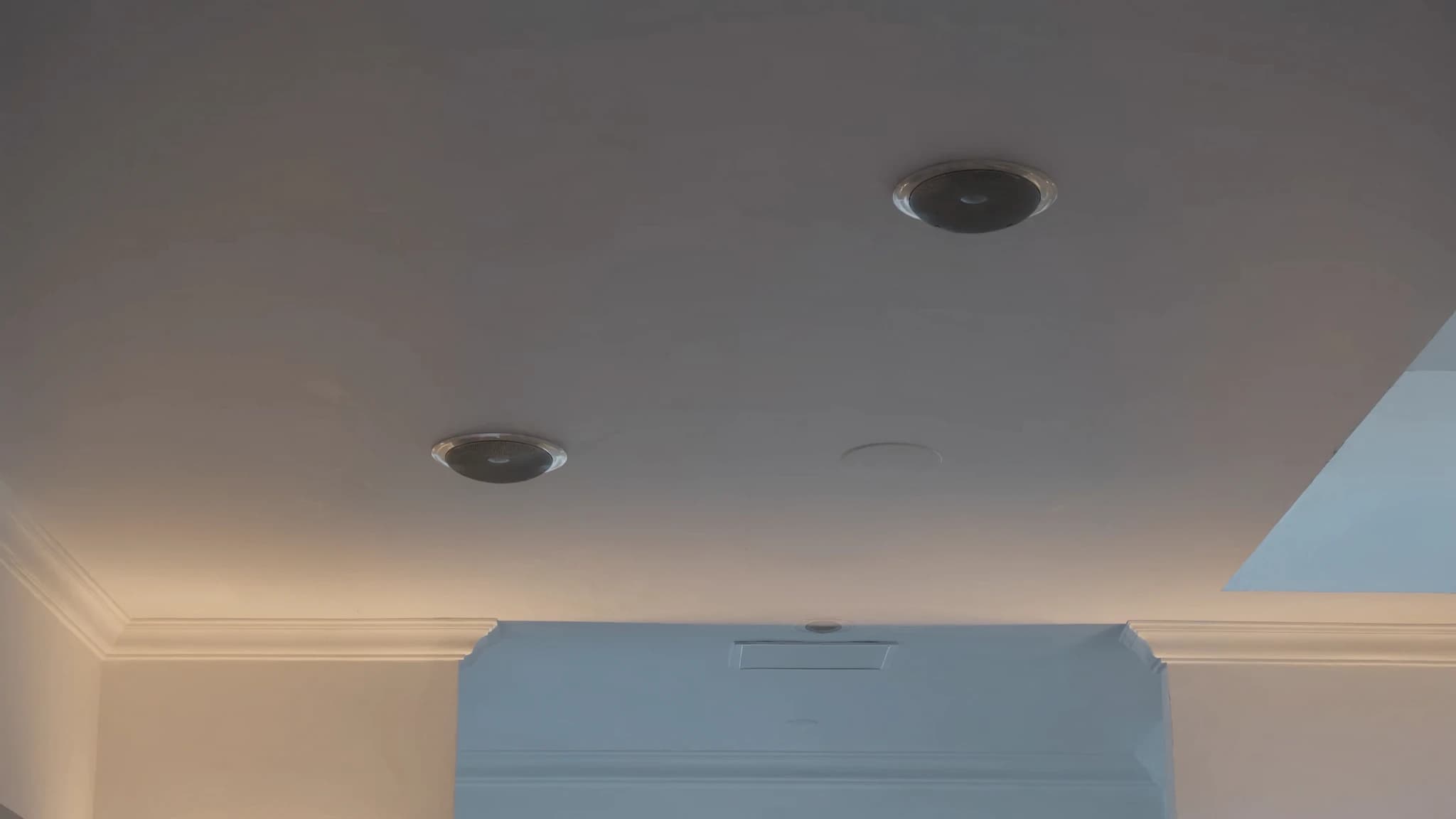
Wall Speakers vs Ceiling Speakers: Which Should You Choose?

Choosing between wall-mounted and ceiling-mounted speakers is a critical decision that affects sound quality, coverage, and aesthetics. This guide breaks down the technical and practical differences—directionality, imaging, coverage patterns, and installation—to help you decide which is best for your space.
Key takeaways
- Wall speakers deliver superior stereo imaging and direct sound, ideal for home cinema and critical listening.
- Ceiling speakers provide even, unobtrusive coverage perfect for background music and distributed audio.
- Aesthetics favor ceiling speakers for minimal visibility; wall speakers can be hidden with in-wall models.
- Installation complexity is similar for in-wall and in-ceiling; surface-mount wall speakers are easier to retrofit.
- Hybrid systems using both types can optimize performance for multi-purpose spaces.
- SSOUNDS offers engineered solutions for both form factors with advanced DSP and waveguide design.
Directionality and Imaging: The Stereo vs. Background Trade-off
Wall speakers are designed for direct, forward-facing sound. They create a clear stereo image with precise left-right localization, making them ideal for critical listening—home cinema, stereo music, or any application where the listener is positioned in a defined sweet spot. The drivers are typically aimed at ear level, and the cabinet or baffle provides controlled dispersion, often with a wider horizontal pattern and narrower vertical pattern to reduce floor and ceiling reflections.
Ceiling speakers, by contrast, fire downward or at a wide angle, producing a diffuse sound field. They are excellent for background music, paging, or even fill in large spaces, but they struggle to create a convincing stereo image because the sound arrives from above rather than from the front. For multi-channel home theatre, ceiling speakers are best used for overhead effects (Atmos) rather than main channels.
Coverage and Evenness: Filling the Room
Ceiling speakers excel at providing even, unobtrusive coverage across a wide area. Because they are placed overhead, the distance from the listener varies less than with wall-mounted speakers, resulting in more uniform SPL throughout the room. This makes them a top choice for commercial spaces like retail stores, offices, restaurants, and corridors where consistent background sound is needed.
Wall speakers, especially when placed at ear height, create a more localized sound field. The volume drops off more quickly as you move away from the speaker, and off-axis listeners may experience tonal shifts. However, for a dedicated listening room or home theatre where seating is fixed, this is less of an issue. Wall speakers also allow for toe-in adjustment to optimize the sweet spot.
Aesthetics and Installation: Visible vs. Hidden
Ceiling speakers are the ultimate in low-visibility audio. They can be flush-mounted and painted to match the ceiling, virtually disappearing into the architecture. This is a major advantage in spaces where clean lines are paramount—modern homes, galleries, or minimalist offices. Installation requires cutting holes and running cables through the ceiling void, which is easier in new construction or when there is accessible attic space.
Wall speakers are more visible, but they can be designed as architectural elements or hidden behind acoustically transparent fabric. In-wall models (flush-mounted) offer a similar stealthy look to ceiling speakers but on the wall. Installation is more invasive—cutting into drywall and fishing cables—but the result can be very clean. Surface-mount wall speakers are simpler to retrofit but protrude into the room.
When Wall Speakers Win: Critical Listening and Home Cinema
For any application where sound quality and imaging are paramount, wall speakers (or in-wall speakers) are the right choice. Home cinema systems rely on precise left-center-right placement for dialogue and effects. Stereo music listening benefits from the direct sound and phantom center imaging that only front-facing speakers can deliver. Even in commercial settings like lecture halls or houses of worship, wall-mounted line arrays or point-source speakers provide the intelligibility needed for speech.
SSOUNDS engineers design wall-mount and in-wall loudspeakers with advanced waveguide technology to control dispersion and minimize reflections, ensuring that the direct sound reaches the listener with clarity. Our systems are used in high-end cinemas and performance venues where every seat is a sweet spot.
When Ceiling Speakers Win: Background Music and Distributed Audio
Ceiling speakers are the go-to for distributed audio systems—background music in retail, paging in airports, or ambient sound in hotel lobbies. They provide even coverage without taking up floor or wall space. In open-plan offices, ceiling speakers can deliver music and announcements without cluttering workstations. For home multi-room audio, ceiling speakers offer a discreet way to fill every room with sound.
Modern ceiling speakers, like those from SSOUNDS, feature pivoting tweeters or coaxial drivers that allow you to aim the high frequencies toward listening areas, improving clarity without sacrificing the discreet look. Our DSP presets optimize the response for ceiling-mount applications, compensating for boundary loading and ensuring consistent tonal balance.
Hybrid Approaches: Getting the Best of Both
Many high-end installations combine wall and ceiling speakers. For example, a home theatre might use wall-mounted or in-wall speakers for the front channels and ceiling speakers for Atmos height effects. In a commercial space, wall speakers can cover the main listening zone while ceiling speakers provide fill in adjacent areas. SSOUNDS offers complete system design support, including acoustic simulation, to help integrators choose the right mix for any space.
Frequently asked
Can ceiling speakers be used for home theatre front channels?
Technically yes, but they will not provide the same stereo imaging or dialogue clarity as wall-mounted speakers. For best results, use ceiling speakers only for overhead effects (Atmos) and keep front channels at ear level.
Are in-wall speakers better than surface-mount wall speakers?
In-wall speakers offer a cleaner look and can be flush-mounted, but they require cutting into drywall. Surface-mount speakers are easier to install and often have better bass response due to the cabinet volume. SSOUNDS offers both types with optimized performance.
How do I choose between ceiling and wall speakers for a restaurant?
For background music with even coverage, ceiling speakers are usually best. If you have a stage or live performance area, wall-mounted speakers or line arrays will provide better clarity and projection for the performance zone.
Do ceiling speakers sound worse than wall speakers?
Not necessarily—they are designed for a different purpose. Ceiling speakers prioritize even coverage and discretion, while wall speakers prioritize direct sound and imaging. With proper placement and DSP, ceiling speakers can sound excellent for their intended use.
Can I mix wall and ceiling speakers from different brands?
It's possible, but matching timbre is important for seamless sound. SSOUNDS recommends using speakers from the same manufacturer and series to ensure consistent voicing and phase response across all channels.
Building or upgrading a system?
SSOUNDS engineers and manufactures professional PA worldwide — from a single room to stadium scale.