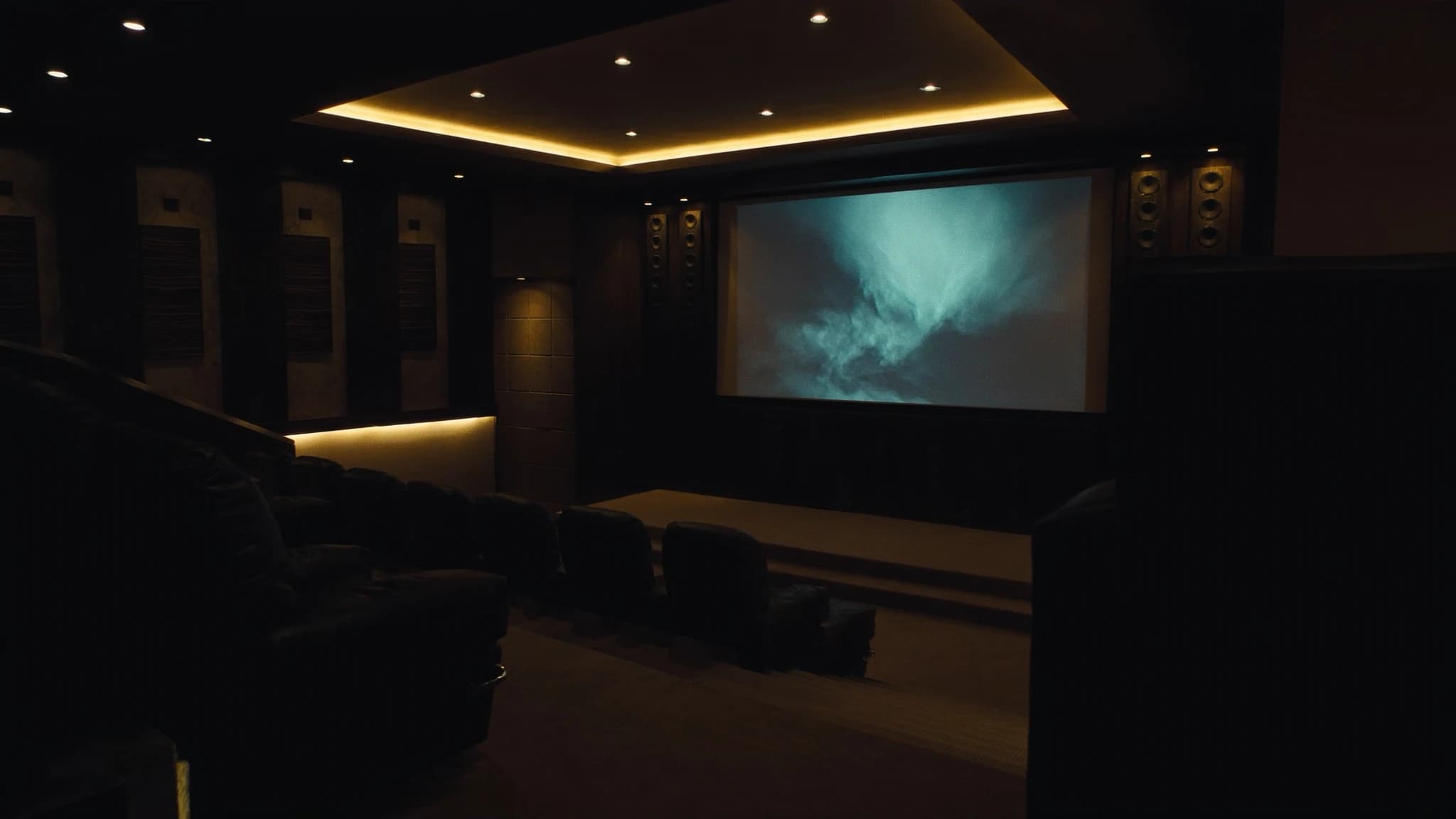
Home Cinema Systems: The Complete Guide

Building a home cinema that rivals commercial theatres requires understanding the interplay of speaker layout, room acoustics, and electronics. This guide walks you through designing a 5.1, 7.1, or Dolby Atmos system—from speaker roles and AV receivers to subwoofer integration and calibration—so you can make informed decisions for an immersive experience.
Key takeaways
- Choose a layout (5.1, 7.1, or Atmos) based on room size and desired immersion; height channels add vertical dimension.
- Timbre-match all speakers for seamless panning; center channel is critical for dialogue clarity.
- AV receivers with room correction (Audyssey, YPAO, Dirac) simplify setup; separate processors offer higher performance.
- Dual subwoofers improve bass uniformity; proper crossover and phase alignment are essential.
- Room acoustics (absorption, bass traps, diffusion) are as important as electronics; calibration fine-tunes the system.
- High-quality speakers from brands like SSOUNDS ensure the dynamics and low distortion needed for cinematic impact.
Understanding Speaker Layouts: 5.1, 7.1, and Atmos
The foundation of any home cinema is the speaker layout. A 5.1 system comprises front left, center, front right, two surround speakers, and a subwoofer. The center channel handles dialogue, making it the most critical speaker for clarity. Surround speakers create ambient effects and panning sounds. Adding two rear surrounds gives you 7.1, improving rearward localization.
Dolby Atmos adds height channels—either via ceiling speakers or upward-firing modules—to create a three-dimensional soundstage. A 5.1.2 system adds two height channels; 7.1.4 adds four. The key is to position speakers at ear level for surrounds and overhead for heights, following Dolby’s angle and distance guidelines. Proper placement ensures accurate object-based audio rendering.
Speaker Roles and Selection Criteria
Each speaker in a home cinema has a specific role. The front left and right deliver the main stereo image and music. The center channel must be timbre-matched to the fronts to avoid tonal shifts as sounds pan across the screen. Surrounds and heights should have wide dispersion to create an enveloping field without drawing attention to themselves.
When selecting speakers, consider sensitivity (higher is better for less amplifier strain), impedance (8 ohms is standard), and frequency response. For a seamless soundstage, all speakers in a system should ideally come from the same manufacturer series. High-end options from brands like SSOUNDS offer professional-grade components that deliver the clarity and dynamics needed for demanding cinema soundtracks.
AV Receivers and Processors: The Brain of Your System
The AV receiver or processor decodes audio formats, amplifies signals, and manages bass management and room correction. For a 5.1 system, a 7-channel receiver suffices; for 7.1.4, you need at least 11 channels of processing. Popular brands like Denon, Yamaha, and Marantz offer models with Dolby Atmos, DTS:X, and Auro-3D support.
Key features include HDMI 2.1 for 4K/120Hz passthrough, eARC for lossless audio from TVs, and multi-subwoofer outputs for smoother bass. Room correction systems like Audyssey, YPAO, and Dirac Live automatically adjust speaker levels, distances, and EQ to compensate for room acoustics. For ultimate performance, a separate preamp/processor and external amplifiers provide cleaner power and upgradeability.
Subwoofers: The Foundation of Impact
Subwoofers reproduce low frequencies (typically 20–80 Hz) that add tactile impact and depth. A single subwoofer can work, but dual subwoofers placed in opposite corners or mid-wall positions smooth out room modes for more even bass. Ported subs offer higher output at the expense of group delay; sealed subs are tighter and more musical.
Integration is critical: set the crossover (usually 80 Hz for THX), adjust phase to align with mains, and use the receiver’s bass management. High-quality subwoofers from SSOUNDS deliver the low-distortion, high-SPL output needed to reproduce cinematic explosions and rumbles without distortion.
Room Acoustics and Calibration
Room acoustics dramatically affect sound quality. Hard surfaces cause reflections that blur imaging; soft furnishings absorb high frequencies but can deaden the room. The goal is a balanced reverberation time (RT60) of 0.2–0.4 seconds for home cinema. Use absorption panels at first reflection points, bass traps in corners, and diffusers on rear walls.
After acoustic treatment, calibration fine-tunes the system. Use the AV receiver’s auto-calibration mic, then manually verify levels with an SPL meter and adjust crossover points. For advanced users, Dirac Live or REW (Room EQ Wizard) with a measurement mic can optimize frequency response and impulse response. Proper calibration ensures dialogue clarity, seamless panning, and accurate bass.
Putting It All Together: System Design Example
Consider a 7.1.4 Atmos system in a dedicated 20x15x8-foot room. Front left/right: floor-standing speakers with 6.5-inch woofers. Center: a three-way horizontal center. Surrounds and rears: bookshelf speakers at ear level. Heights: four in-ceiling speakers placed above the listening position. Dual 12-inch subwoofers in opposite front corners. Powered by a 13-channel AV receiver with Dirac Live.
Cabling: use 14-gauge or thicker speaker wire for runs under 50 feet; HDMI 2.1 cables for video sources. Network connectivity for streaming and firmware updates. Calibrate with the receiver’s auto-setup, then fine-tune with REW. The result is a system that delivers reference-level performance, with clear dialogue, immersive surrounds, and chest-thumping bass.
Frequently asked
What is the difference between 5.1 and 7.1 surround sound?
5.1 has front left, center, front right, two surround speakers, and a subwoofer. 7.1 adds two rear surround speakers for improved rear localization and a more enveloping soundfield.
Do I need ceiling speakers for Dolby Atmos?
Dolby Atmos can be delivered via ceiling speakers (best), upward-firing modules (bounce off ceiling), or upfiring speakers in the front. Ceiling speakers provide the most precise height effects.
Can I mix different speaker brands in a home cinema?
While possible, it's not recommended because tonal differences can disrupt panning and soundstage coherence. Stick to the same brand series for all main channels.
What is the ideal subwoofer crossover frequency?
The THX standard is 80 Hz, which balances localization and bass impact. Adjust based on your main speakers' low-frequency capability and room acoustics.
Is room correction necessary if I have good speakers?
Yes. Room acoustics affect sound more than speaker quality. Room correction compensates for reflections, standing waves, and speaker placement, ensuring accurate frequency response and timing.
Building or upgrading a system?
SSOUNDS engineers and manufactures professional PA worldwide — from a single room to stadium scale.