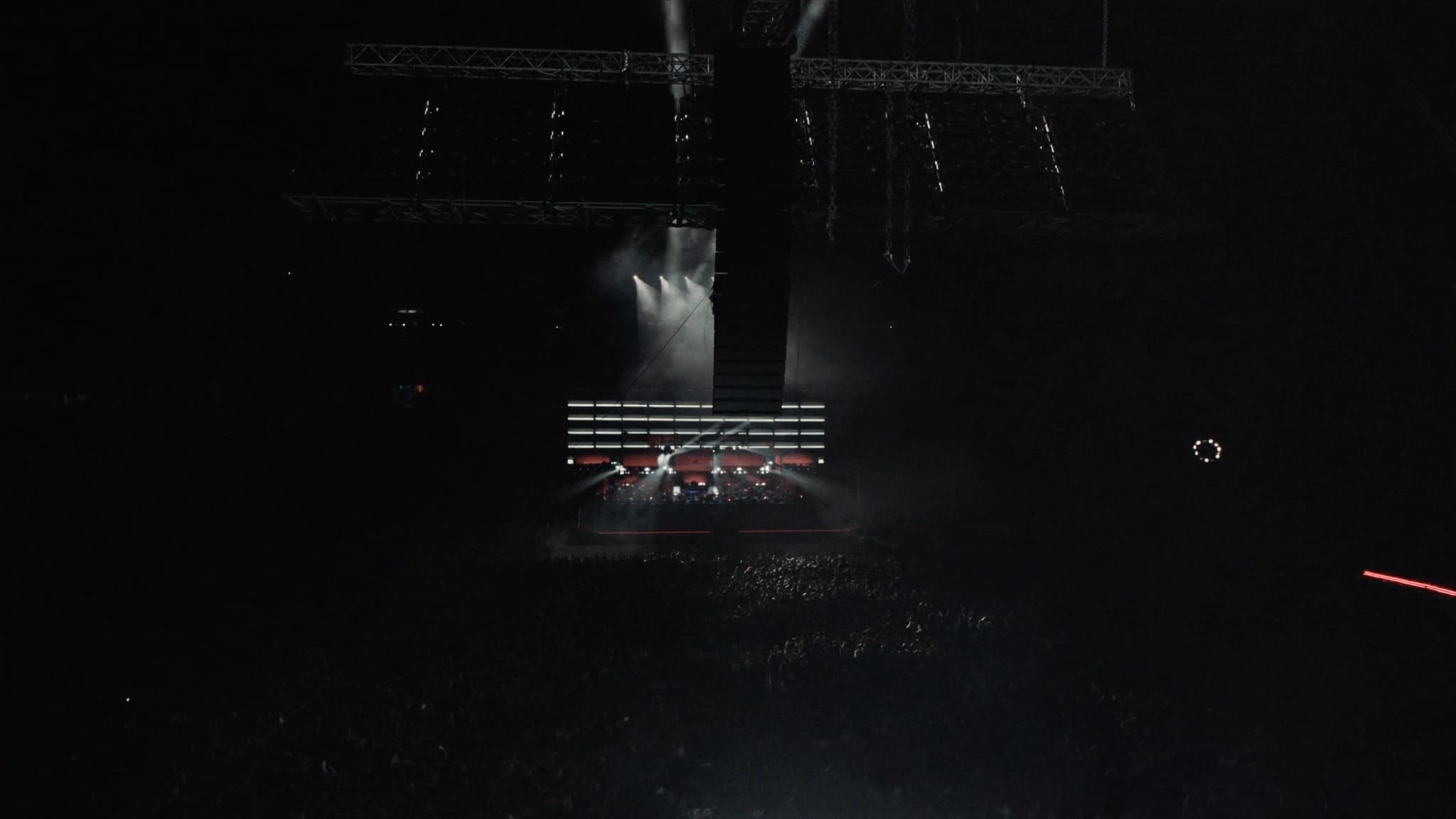
How to Size a PA System for Any Venue

Sizing a PA system correctly is the difference between a show that sounds effortless and one that fights the room. Whether you're deploying for a 200-capacity club or a 10,000-seat arena, the process follows the same engineering logic: define your SPL target, calculate coverage, and match loudspeaker capability to the acoustic load. This guide gives you a repeatable method to determine box counts, subwoofer requirements, and headroom for any venue.
Key takeaways
- Always start with the SPL target at the furthest listener and work backward to the array.
- Use the inverse-square law to estimate required output at 1 m from the loudspeaker.
- Line arrays scale with throw: 8–12 boxes per 10 m for controlled coverage.
- Subwoofer count: one 18" per 50–100 people depending on bass energy required.
- Maintain at least 6 dB of headroom; 10–12 dB is ideal for live music.
- Validate your design with acoustic simulation software before deployment.
1. Define the SPL Target and Audience Geometry
Start with the required SPL at the listening position. For speech reinforcement, 85–90 dB continuous is typical; for live music, aim for 95–100 dB continuous with 10–15 dB of headroom (peaks up to 115 dB). Use the inverse-square law: SPL drops 6 dB per doubling of distance. If your furthest listener is 30 m from the stage, and you need 100 dB at that seat, you need roughly 100 + 20*log10(30/1) = 100 + 29.5 = 129.5 dB at 1 m from the array.
Next, map the audience area. Measure the width and depth of the listening plane. For a rectangular room, the coverage angle of your line array or point-source box must overlap evenly. A typical line array covers 90° horizontal; you may need multiple hangs or delays for wide rooms. For seated venues, consider the vertical angle: the bottom of the array should cover the front rows, the top covers the rear. SSOUNDS engineers use AI-assisted acoustic modeling to predict coverage before a single box is flown.
2. Calculate Array Size and Box Count
Line arrays are the standard for mid-to-large venues because they couple coherently, providing controlled directivity and throw. The number of boxes depends on the required SPL at distance and the vertical coverage angle. Each box typically contributes 3–6 dB of additional output when coupled. A rule of thumb: for every 10 m of throw, use 8–12 boxes in a single hang. For a 40 m throw, you might need 16–24 boxes per side.
For point-source systems in smaller venues (under 500 cap), a single high-output 12" or 15" box per side can cover up to 20 m. SSOUNDS point-source loudspeakers are designed with rotatable horns and multiple DSP presets to adapt to room acoustics. Always add 20% more boxes than the minimum calculation to account for uneven coverage and headroom.
3. Subwoofer Sizing and Placement
Subwoofers handle the low-frequency energy (typically below 100 Hz). The number of subs depends on the required low-end SPL and the room's modal behavior. A general guideline: for every 100 people, use one 18" subwoofer for moderate bass (95 dB at mix position). For high-energy EDM or hip-hop, double that – one sub per 50 people. In a 1,000-cap room, that means 10–20 subs.
Placement matters: cardioid or end-fire arrays reduce rear spill and improve stage clarity. SSOUNDS subwoofers feature DSP-optimised cardioid presets that cancel rear radiation without additional boxes. For large venues, consider a distributed subwoofer layout (e.g., flown or ground-stacked in clusters) to even out bass across the room.
4. Account for Headroom and System Protection
Headroom is the buffer between your nominal operating level and the system's maximum output. Professional systems should have at least 6 dB of headroom, ideally 10–12 dB. This prevents clipping during transients and protects drivers from thermal damage. SSOUNDS amplifiers are rated with continuous and peak power, and our DSP includes limiters that engage before the loudspeaker reaches its mechanical or thermal limits.
To calculate headroom, compare your required SPL at 1 m (from step 1) with the loudspeaker's maximum SPL spec. If your array delivers 140 dB max at 1 m and you need 130 dB, you have 10 dB of headroom. If the gap is less than 6 dB, add more boxes or use higher-output cabinets.
5. Use Simulation Software to Validate
Never rely solely on rules of thumb. Use acoustic simulation software (e.g., EASE, Soundvision, or SSOUNDS' own predictive tools) to model the venue. Import the room geometry, place the audience areas, and simulate SPL distribution. Pay attention to frequency-dependent coverage: high frequencies are more directional and can be absorbed by drapes or uneven surfaces.
SSOUNDS provides detailed GLL files for all our loudspeakers, compatible with major simulation platforms. Our engineers also offer free system design consultations for projects over a certain size – we'll run the numbers and recommend an exact configuration.
6. Real-World Example: 500-Capacity Club
Venue: 20 m wide, 30 m deep, 5 m ceiling height. Audience: 500 standing. Target: 100 dB continuous at mix position (15 m from stage). Required SPL at 1 m: 100 + 20*log10(15) = 100 + 23.5 = 123.5 dB. SSOUNDS point-source system: two 12" + 1.4" boxes per side, each with 132 dB max SPL, giving 6 dB headroom. Subwoofers: four 18" subs (one per 125 people) placed in a ground-stacked cardioid array. Amplification: two 4-channel DSP amplifiers. Result: even coverage, 110 dB peaks, no distortion.
Frequently asked
How do I size a PA for an outdoor festival?
Outdoor venues have no reflective boundaries, so you need more output. Use the same method but add 6 dB to your SPL target to account for lack of room gain. Also, wind and temperature gradients can affect coverage – use longer arrays and delay towers for large audiences.
Can I use point-source speakers instead of a line array for a 1000-cap room?
Yes, if the room is shallow (under 20 m depth) and has a low ceiling. For deeper rooms, line arrays provide better vertical control and even SPL front to back. SSOUNDS point-source boxes can cover up to 25 m with proper aiming.
What is the minimum number of subwoofers for a speech-only event?
For speech, subwoofers are often unnecessary. If you need to reinforce low-frequency voice presence, one 18" sub per 200 people is sufficient. Use a high-pass filter on the mains to reduce excursion.
How do I calculate amplifier power for my PA?
Amplifier power should match the loudspeaker's continuous and peak ratings. A general rule: amplifier RMS power should be 1.5–2 times the loudspeaker's continuous power handling. SSOUNDS amplifiers are pre-configured with presets that optimize gain and limiting for each cabinet.
What headroom is safe for a DJ setup?
DJs often push systems harder. Aim for 12 dB of headroom to handle sudden bass drops and prevent limiter activation. Use a system with high continuous SPL and robust drivers, like SSOUNDS' touring-grade line arrays.
Building or upgrading a system?
SSOUNDS engineers and manufactures professional PA worldwide — from a single room to stadium scale.