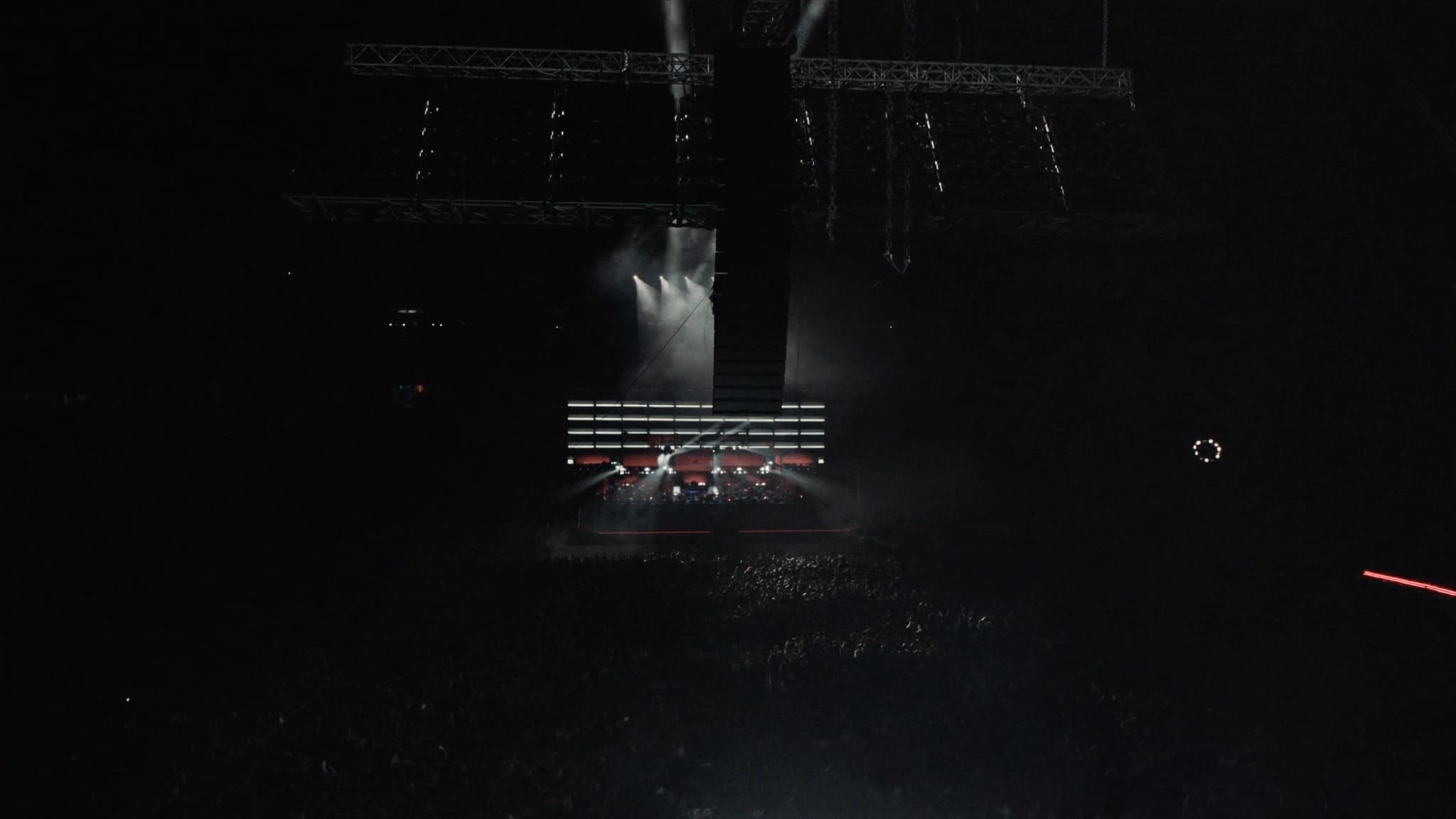
How Many Speakers Do You Need? A Coverage Guide

Determining the right number of speakers for a venue is a balance of coverage geometry, SPL requirements, and budget. This guide breaks down the engineering principles—from line array sizing to fill and delay deployment—so you can avoid hotspots, dead zones, and costly over-specification.
Key takeaways
- Coverage geometry is the starting point: map the venue and define audience areas before choosing speaker types.
- Line array sizing depends on throw distance and required SPL; use simulation to determine the optimal number of boxes.
- Fill speakers are essential for under-balcony, front rows, and wide seating sections—but use them sparingly to avoid interference.
- Delay speakers extend coverage in deep venues; align them precisely to the main array to maintain clarity.
- Avoid hotspots and dead zones by aiming for ±3 dB SPL variation across the listening area using measurement tools.
- SSOUNDS provides AI-assisted modeling and factory DSP presets to ensure accurate coverage with minimal trial and error.
1. Coverage Geometry: The Foundation
The first step is understanding your venue's shape and audience layout. For a rectangular room, a single pair of point-source speakers may suffice if the throw is under 20 meters. For wider or deeper spaces, you need to consider horizontal coverage angles (typically 90° or 60° for point-source boxes) and vertical coverage. Line arrays are ideal for long throws (over 15–20 m) because they provide controlled vertical dispersion, reducing reflections and ensuring even coverage from front to back.
To calculate coverage, draw sightlines from the speaker positions to the farthest listener. The speaker's nominal coverage angle should encompass the entire audience area without excessive spill onto walls or ceilings. SSOUNDS engineers use AI-assisted acoustic modeling to predict coverage patterns before a single box is hung, ensuring every seat gets consistent sound.
2. Line Array Sizing: How Many Boxes?
For line arrays, the number of boxes depends on the required SPL at distance and the desired vertical coverage angle. A typical rule: use 4–6 boxes for short throws (under 20 m), 8–12 for medium throws (20–40 m), and 12–16+ for large festivals or stadiums. Each box contributes to the array's length, which determines the low-frequency directivity and the 'break frequency' below which the array behaves omnidirectionally.
SSOUNDS line array systems are designed with optimized inter-box angles and rigging hardware to allow precise vertical aiming. The goal is to achieve uniform coverage from the front row to the back, with minimal overlap or gaps. Use simulation software (like SSOUNDS' proprietary tools) to verify that the array's vertical coverage matches the audience slope.
3. Fill Speakers: Closing the Gaps
Even the best main system can leave coverage holes—under balconies, in wide seating sections, or near the stage edges. Fill speakers (front fills, side fills, under-balcony fills) are essential. Front fills cover the first few rows that are too close to the main array's vertical coverage. Under-balcony fills need to be time-aligned and level-matched to avoid comb filtering.
For wide venues, consider using delay towers or distributed point-source speakers. The rule: if the distance from the main array to a seating area exceeds the array's effective throw (or if obstacles block line-of-sight), deploy a fill. SSOUNDS offers compact point-source enclosures that integrate seamlessly with larger systems, ensuring consistent tonal balance.
4. Delays: Extending Coverage Without Dead Zones
Delay speakers are used when the venue is so deep that the main array cannot provide sufficient SPL or clarity at the farthest seats. They are placed at a distance where the direct sound from the mains becomes too quiet relative to reverberation. The delay time is calculated based on the physical distance from the main array, typically using a digital processor with sample-accurate alignment.
A common mistake is using too many delay speakers, creating multiple arrival times and muddying the sound. Instead, use as few delay points as possible, and overlap coverage zones carefully. SSOUNDS DSP presets include delay and EQ settings that match the main system's voicing, ensuring seamless transitions.
5. Avoiding Hotspots and Dead Zones
Hotspots occur when two speakers cover the same area at similar levels, causing constructive interference (louder) or comb filtering. Dead zones happen when coverage gaps leave listeners with weak, reverberant sound. To avoid these, use a systematic approach: map the venue, define coverage zones, and assign speakers with appropriate coverage angles.
Use measurement tools (like Smaart or SysTune) to verify coverage during system tuning. Adjust speaker angles, levels, and delays until the response is consistent across the listening area. SSOUNDS engineers recommend a target of ±3 dB SPL variation across the venue for premium results. Also, consider the venue's acoustics—hard surfaces create reflections that can cause dead zones; use absorptive materials or redirect speakers.
6. Practical Example: A 500-Seat Theater
For a typical theater with a balcony, a common configuration is: a left-right line array of 6 boxes per side for the main floor, plus 2–4 under-balcony fills (point-source), and 2 front fills. If the balcony is deep, add a delay ring of 2–4 speakers at the rear. Total: 12–16 main boxes + 4–8 fills. This provides even coverage from row 1 to the back of the balcony.
In contrast, a small club (200 capacity) might only need a single pair of 12-inch point-source speakers on stands, with one subwoofer. Over-speaker-ing leads to comb filtering and wasted budget. Always start with the minimum number that meets coverage and SPL goals, then add fills only where necessary.
7. SSOUNDS Approach: Engineering Precision
At SSOUNDS, we design every system with coverage as the primary metric. Our loudspeakers feature optimized waveguide patterns that minimize off-axis coloration, and our DSP includes factory presets tuned for various array configurations. We provide detailed coverage maps and rigging plans for every project, ensuring that the number of speakers is exactly what the venue needs—no more, no less.
Whether you're specifying a permanent installation or a touring system, our team uses advanced simulation to predict coverage and SPL. The result: a system that sounds great everywhere, with no hotspots or dead zones. Contact SSOUNDS for a consultation on your next project.
Frequently asked
How do I calculate the number of line array boxes needed?
Start with the farthest listener distance and desired SPL. Use the array's sensitivity and power handling to estimate required boxes. Simulation software (like SSOUNDS' tools) accounts for air absorption and array coupling to give a precise count.
What's the difference between a fill speaker and a delay speaker?
Fill speakers cover areas the main system cannot reach due to obstacles or proximity (e.g., under balconies). Delay speakers extend coverage in deep venues by providing time-aligned sound from a secondary position.
Can I use too many speakers?
Yes. Over-speakering causes comb filtering, phase issues, and uneven coverage. Always use the minimum number that meets coverage and SPL goals, and verify with measurement.
How do I align delay speakers?
Measure the distance from the main array to the delay position, then set the delay time to match the arrival time of the main system. Use a DSP with sample-accurate delay and verify with an impulse response measurement.
What coverage angle should my speakers have?
For point-source speakers, choose a coverage angle that matches the venue width (e.g., 90° for wide rooms, 60° for narrower). For line arrays, vertical coverage is adjustable via inter-box angles; horizontal coverage is fixed by the waveguide.
Building or upgrading a system?
SSOUNDS engineers and manufactures professional PA worldwide — from a single room to stadium scale.