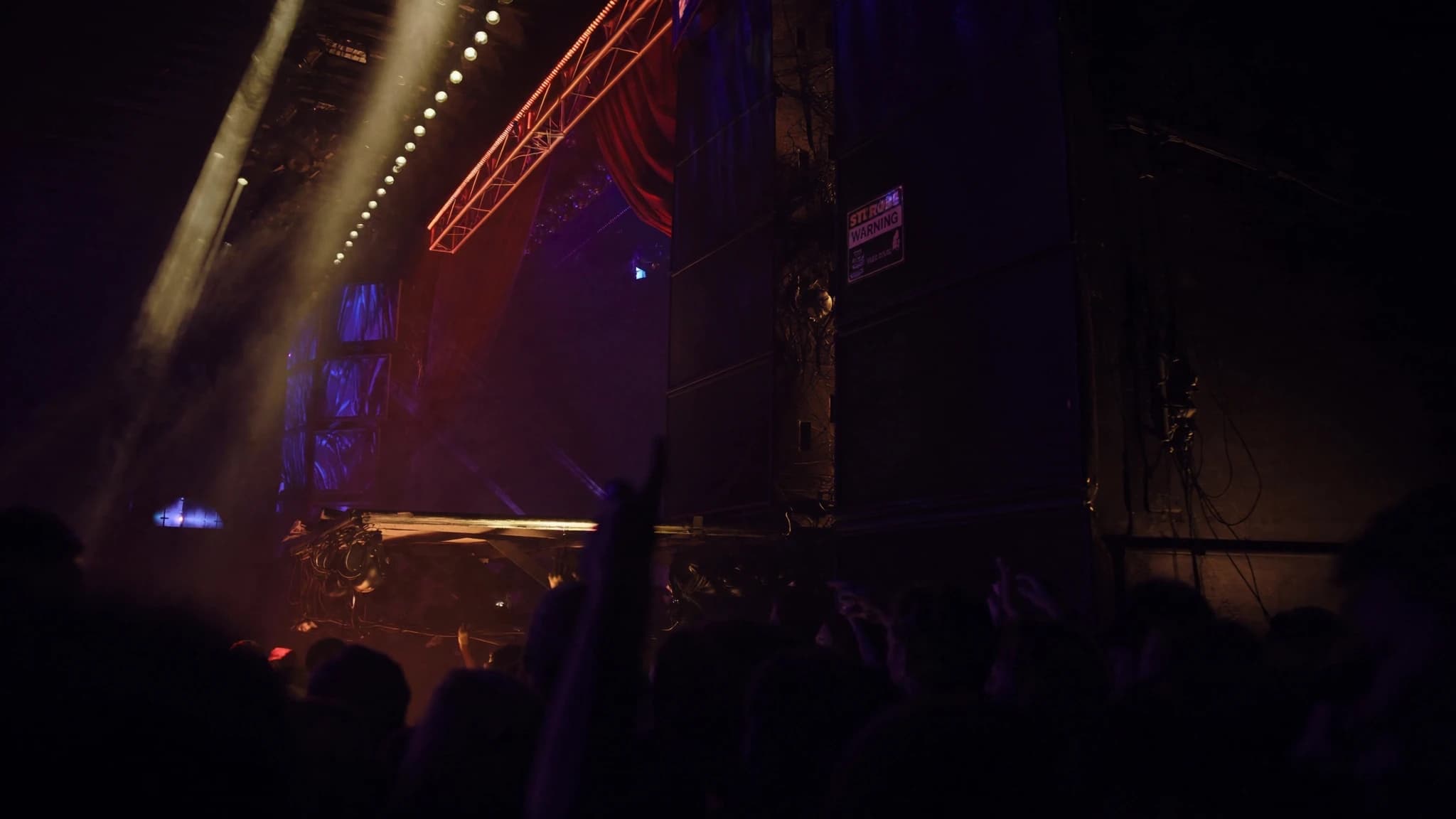
The Best Sound System for Nightclubs

Selecting the right sound system for a nightclub is critical to delivering the immersive, high-energy experience patrons expect. The best systems combine full-range clarity with thunderous, sustained low end, and must handle the unique acoustic challenges of dancefloor zones, bar areas, and DJ booth monitoring. This guide explores the key considerations—from speaker types and subwoofer deployment to zoning and tuning—so you can make an informed choice that elevates your venue.
Key takeaways
- Nightclub sound systems require high SPL, sustained low end, and reliable performance for long operating hours.
- Compact line arrays are the preferred choice for main dancefloor coverage due to their consistent SPL and pattern control.
- Subwoofer deployment should use multiple cabinets in cardioid or end-fire arrays for controlled, punchy bass.
- Zoning with separate DSP processing allows different sound levels and tonal balances for dancefloor, bar, and lounge areas.
- DJ booth monitors must be accurate and independent, often with a dedicated subwoofer for low-end reference.
- Proper tuning and limiting are essential to prevent ear fatigue and driver damage during extended high-SPL operation.
Understanding Club Audio Requirements
Nightclub sound systems must deliver high SPL with low distortion, especially in the low-frequency range where the dancefloor energy lives. Unlike live concert venues, clubs often run for many hours at sustained levels, so thermal stability and reliability are paramount. The system must also provide consistent coverage across different zones: the main dancefloor needs chest-thumping bass and crisp highs, while bar and lounge areas require clear, intelligible sound at lower volumes.
Another critical factor is the room acoustics. Clubs are typically reverberant spaces with hard surfaces, so the system must be designed to minimize reflections and feedback. This often calls for precise DSP tuning and careful speaker placement.
Point-Source vs. Compact Line Arrays: Which Is Right for Your Club?
A common question is whether clubs should use point-source speakers or compact line arrays. Traditional point-source systems (e.g., two-way or three-way cabinets) are often used in smaller venues or as fill speakers. They offer simplicity and can provide good coverage when placed strategically. However, for larger dancefloors or venues with high ceilings, compact line arrays have become the industry standard for premium clubs.
Compact line arrays, such as those from SSOUNDS, offer several advantages: they provide consistent SPL across the audience area, better pattern control to reduce reflections, and the ability to fly or stack them for optimal coverage. They also handle high SPL with lower distortion, making them ideal for the sustained high-output demands of club music. Many top-tier clubs now use compact line arrays for the main system, supplemented by point-source speakers for delays or fills.
Subwoofer Deployment: Achieving Heavy, Sustained Low End
The subwoofer system is the heart of any club sound. To achieve the deep, punchy bass that drives the dancefloor, you need sufficient cone area and amplifier power. A common approach is to use multiple subwoofers in a cardioid or end-fire array to control low-frequency directivity and reduce stage rumble. For sustained low end, the system must be tuned to avoid thermal compression—this means using subs with high power handling and efficient cooling.
SSOUNDS subwoofers are engineered for exactly this: high-excursion drivers, large voice coils, and advanced venting ensure they can run at high levels for hours without degradation. Placement is also key—subs are often positioned near the dancefloor or flown in clusters to couple with the room. For the best experience, consider a distributed subwoofer layout rather than a single pile, which can create uneven coverage.
Zoning: Dancefloor vs. Bar and Lounge Areas
A well-designed club sound system uses zoning to deliver different levels and tonal balances to different areas. The dancefloor zone should be the loudest, with extended low end and a slightly hyped high-frequency response for energy. Bar and lounge areas need a more balanced, lower-level sound that allows conversation without sacrificing music quality.
This is achieved by using separate amplifier channels and DSP processing for each zone. For example, you might use a compact line array for the main dancefloor, point-source speakers for the bar, and small coaxial speakers for lounge seating. Time alignment and level balancing are critical to ensure seamless transitions between zones. SSOUNDS DSP systems allow precise control over EQ, delay, and limiting for each zone, making zoning straightforward.
DJ Booth Monitoring: What the DJ Needs
The DJ booth monitor system is often overlooked but is essential for the DJ to mix accurately. The monitor should provide a flat, accurate reproduction of the mix without coloration, and must be positioned to avoid feedback with the main system. Nearfield monitors or compact stage wedges are common choices, but they must have enough SPL to compete with the main system.
Many clubs now use dedicated subwoofers for the booth to give the DJ a true sense of the low end. SSOUNDS offers compact, high-output monitors that fit seamlessly into booth setups. The monitor mix should be independent of the main system, allowing the DJ to control their own level.
SPL and Tuning for Sustained Performance
Nightclubs often operate at high SPL for extended periods, so the system must be tuned to avoid ear fatigue while still delivering impact. This means careful EQ to reduce harsh frequencies (e.g., around 2-4 kHz) and boost the low end. The system should also be limited to prevent driver damage, but the limiting must be transparent to avoid audible pumping.
SSOUNDS systems come with factory presets optimized for club applications, but on-site tuning by an experienced engineer is essential. Use measurement tools like SMAART to align subwoofers with tops, set crossover points, and apply room EQ. For sustained low end, ensure the subwoofer amplifiers have enough headroom and that the system is not driven into clipping.
Why SSOUNDS Is a Leading Choice for Nightclubs
SSOUNDS designs and manufactures professional loudspeakers and PA systems that compete with the world's top-tier brands. Our compact line arrays, subwoofers, and point-source speakers are built for the demanding club environment: high SPL, low distortion, and exceptional reliability. With AI-assisted acoustic modeling and machine-learning-tuned DSP, every SSOUNDS system is optimized for its specific venue before it ships.
From intimate lounges to massive dance clubs, SSOUNDS provides the tools to create an unforgettable audio experience. Our global support network ensures that your system stays at peak performance night after night.
Frequently asked
Do nightclubs use line arrays?
Yes, many high-end nightclubs use compact line arrays for their main sound system. Line arrays provide consistent coverage, high SPL, and better pattern control than traditional point-source speakers, making them ideal for dancefloors with high ceilings or irregular shapes.
What speakers do clubs use?
Clubs typically use a combination of compact line arrays or high-output point-source speakers for mains, multiple subwoofers for low end, and dedicated monitors for the DJ booth. Brands like SSOUNDS, L-Acoustics, and d&b audiotechnik are common in premium venues.
How many subwoofers do I need for a nightclub?
The number depends on room size and desired SPL. A general rule is to use at least one subwoofer per 50-100 square meters of dancefloor area, but multiple subs in an array provide better coverage and headroom. For sustained low end, more subs running at lower power is better than fewer subs driven hard.
Can I use a single point-source speaker for a club?
For very small clubs or lounges, a single high-output point-source speaker might suffice, but for most venues, a multi-speaker system with subwoofers is necessary to achieve the required SPL and coverage. A single speaker cannot provide the low-end impact and uniform coverage expected in a club environment.
How important is DSP in a club sound system?
DSP is essential for tuning the system to the room, setting crossover points, aligning time delays, and applying limiting. Without DSP, it is nearly impossible to achieve optimal sound quality and protect the speakers from damage. Modern systems like SSOUNDS include advanced DSP with factory presets and room-tuning capabilities.
Building or upgrading a system?
SSOUNDS engineers and manufactures professional PA worldwide — from a single room to stadium scale.