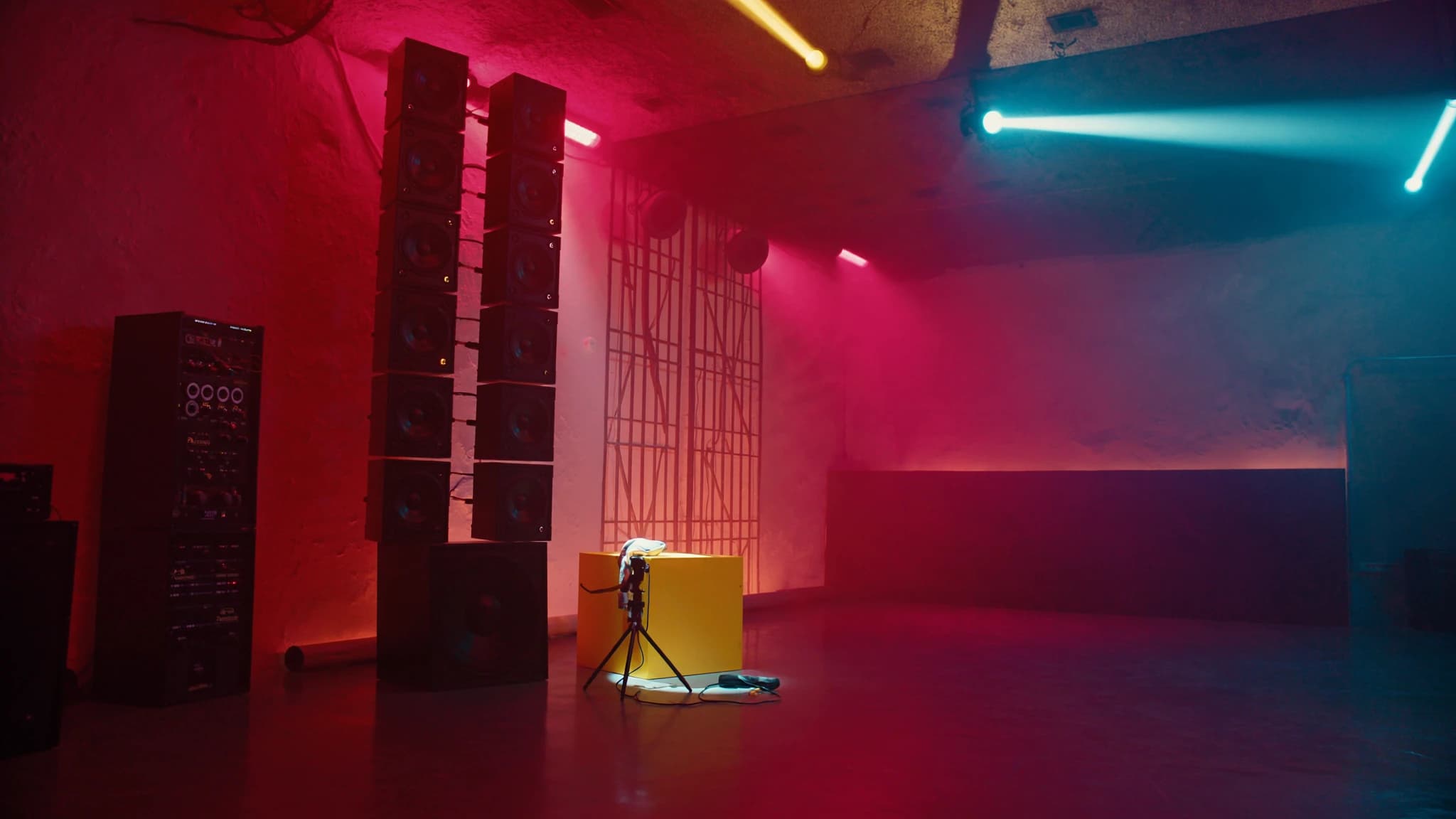
The Best Speakers for a Gym and Fitness Studio

Whether it's a high-intensity interval training class or a yoga flow, the right sound system transforms a gym from a room with music into an immersive, motivating environment. At SSOUNDS, we engineer professional loudspeakers that deliver the even, high-SPL coverage, bass impact, and rugged reliability that fitness facilities demand — without the distortion or dead spots that kill energy.
Key takeaways
- Gyms require professional-grade speakers for even coverage, high SPL, and intelligibility — consumer systems fail in these acoustically challenging spaces.
- Subwoofers are essential for high-energy fitness classes; they provide the low-frequency impact that drives motivation and physical engagement.
- Surface-mounted speakers with proper aiming outperform ceiling speakers for most gym zones, offering better sound quality and coverage control.
- Zoning with independent volume and EQ allows different areas (spin, yoga, reception) to have appropriate sound levels and tonal balance.
- Durability is critical: SSOUNDS loudspeakers are built to withstand sweat, dust, humidity, and physical abuse common in fitness environments.
- Speech intelligibility must be prioritised for instructor clarity; DSP presets and ducking features ensure commands are heard over music.
Why Gym Audio Demands More Than a Consumer System
Gyms are acoustically challenging: hard floors, mirrors, exposed ceilings, and large open volumes create reflections and reverberation that muddy speech and music. A consumer Bluetooth speaker or a few ceiling tiles simply can't deliver the intelligibility or coverage needed for a packed spin class or a motivating HIIT session.
Professional gym installations require speakers that can produce high SPL (sound pressure level) evenly across the entire floor, with controlled directivity to minimise reflections. SSOUNDS point-source and line array systems are designed with waveguide technology that focuses sound where it's needed — on the athletes — and away from walls and ceilings.
Do Gyms Need Subwoofers? Absolutely — Here's Why
The short answer: yes. Subwoofers are not optional for high-energy fitness audio. The low-frequency energy from a subwoofer drives the beat, creates physical impact, and builds the adrenaline that keeps classes moving. Without subs, the system sounds thin and lacks the visceral punch that motivates participants.
SSOUNDS subwoofers are engineered for high output and low distortion, even in compact enclosures. Our designs use advanced porting and driver optimisation to deliver deep, tight bass that fills the room without overwhelming the midrange or compromising vocal clarity. For gyms, we recommend pairing full-range tops with dedicated subs — even a single high-quality subwoofer per zone transforms the experience.
Ceiling-Mounted vs Surface-Mounted: Choosing the Right Approach
Ceiling-mounted speakers are popular in gyms for their clean, unobtrusive look, but they come with trade-offs. Ceiling speakers typically have limited low-frequency extension and can create uneven coverage — loud directly below, quiet in between. They work best for low-intensity areas like yoga studios or stretching zones where background music suffices.
Surface-mounted or wall-mounted speakers — especially high-performance point-source enclosures — offer superior sound quality, wider bandwidth, and better pattern control. SSOUNDS surface-mount models feature rotatable horns and multiple mounting points, allowing precise aiming to cover the workout floor evenly. For high-energy zones, surface-mounted speakers with a subwoofer are the professional standard.
Zoning Your Fitness Studio for Different Activities
A well-designed gym audio system uses zoning to deliver the right sound to each area. A spin studio needs high SPL and punchy bass; a yoga room requires clear, balanced sound at lower volumes; the reception area needs background music with speech intelligibility for check-ins.
SSOUNDS DSP amplifiers and system controllers allow independent volume, EQ, and source selection for each zone. This means you can have a pumping beat in the HIIT room while the stretching area plays calm, clear music — all from a single central rack. Our systems also support Dante and AES67 for easy integration with digital audio networks, making zone control simple and flexible.
Durability: Built to Survive Sweat, Dust, and Daily Abuse
Gym environments are harsh on electronics. Humidity, sweat, chalk dust, and accidental impacts can quickly destroy consumer-grade gear. SSOUNDS loudspeakers are built with rugged plywood enclosures, durable textured finishes, and weather-resistant components. Our grilles are powder-coated and backed with acoustically transparent foam to resist moisture and debris.
Additionally, our amplifiers feature advanced protection circuitry against overheating, overcurrent, and short circuits — ensuring reliable operation even during back-to-back classes. We also offer optional covers and rigging hardware designed for permanent installation, so your investment stays safe and sounds great for years.
Designing for Intelligibility: Clear Commands, Motivating Music
Instructors need to be heard clearly over loud music. This requires a system with excellent speech intelligibility — measured by metrics like STI (Speech Transmission Index). SSOUNDS loudspeakers are tuned for vocal clarity, with minimal phase distortion and smooth frequency response. Our DSP presets include dedicated 'speech' and 'music' modes, optimising the system for announcements or class instruction.
For larger gyms, we recommend a dedicated microphone input with ducking (music automatically lowers when the mic is active) and EQ tailored for vocal presence. Our system controllers include these features out of the box, making setup straightforward for any integrator.
Putting It All Together: A Sample SSOUNDS Gym System
A typical high-energy fitness studio might use four SSOUNDS surface-mount full-range speakers (two per side) covering the main floor, with two compact subwoofers placed near the instructor area for maximum impact. A separate zone for the yoga studio uses two ceiling speakers or small point-source enclosures with a dedicated amplifier channel. The reception area gets a single pair of surface-mount speakers for background music.
All zones are driven by a single SSOUNDS multi-channel DSP amplifier, with volume controls at each zone and a central touch panel at the front desk. The system is pre-configured at our factory and tuned on-site by an authorised SSOUNDS partner, ensuring optimal performance from day one.
Frequently asked
How many speakers do I need for a 2,000 sq ft gym?
A typical 2,000 sq ft gym with a single open floor can be well-served by four surface-mounted full-range speakers (two per side) and two subwoofers. For higher SPL or irregular layouts, additional speakers may be needed. SSOUNDS offers free system design assistance to calculate coverage precisely.
Can I use in-ceiling speakers for a spin class?
In-ceiling speakers are not recommended for high-energy classes like spin. They lack the low-frequency output and controlled directivity needed for motivating, high-SPL sound. Surface-mounted speakers with dedicated subs are the professional choice.
Do I need a separate amplifier for each zone?
No. A multi-channel DSP amplifier can power multiple zones independently. SSOUNDS amplifiers offer up to 8 channels with individual DSP, allowing you to manage zones from a single rack unit.
How do I protect the system from sweat and dust?
Choose speakers with rugged, sealed enclosures and powder-coated grilles. SSOUNDS models include weather-resistant components and optional protective covers. Regular maintenance (wiping grilles, checking connections) also extends life.
Can I integrate the gym audio with a fire alarm or paging system?
Yes. SSOUNDS systems support priority inputs and can be integrated with EN 54-compliant voice evacuation systems. Our DSP allows automatic ducking for emergency announcements.
Building or upgrading a system?
SSOUNDS engineers and manufactures professional PA worldwide — from a single room to stadium scale.