Skip to content

Touring PA: What Goes Into a Concert Rig

Touring PA: What Goes Into a Concert Rig

A touring concert rig is a finely tuned ecosystem of loudspeakers, amplification, processing, and infrastructure designed to deliver consistent, high-quality sound night after night. From front-of-house (FOH) arrays to monitor wedges, subwoofers, and the cabling that ties it all together, every component must be engineered for durability, scalability, and sonic precision. SSOUNDS builds touring systems that meet the demands of professional tours, combining advanced acoustic design with rugged construction and intelligent DSP.

Key takeaways

  • A touring PA consists of FOH line arrays, stage monitors, subwoofers, amplifiers, DSP, cabling, and rigging, all engineered for reliability and high performance.
  • SSOUNDS designs touring systems with lightweight, high-output enclosures and integrated rigging for fast setup and teardown.
  • Modern amplifiers with networked DSP allow remote monitoring and precise system tuning for each venue.
  • Cabling and power distribution must be robust and organized to ensure signal integrity and safety.
  • System tuning using measurement software is essential to adapt the PA to room acoustics and achieve consistent sound quality.

Front-of-House: The Main PA

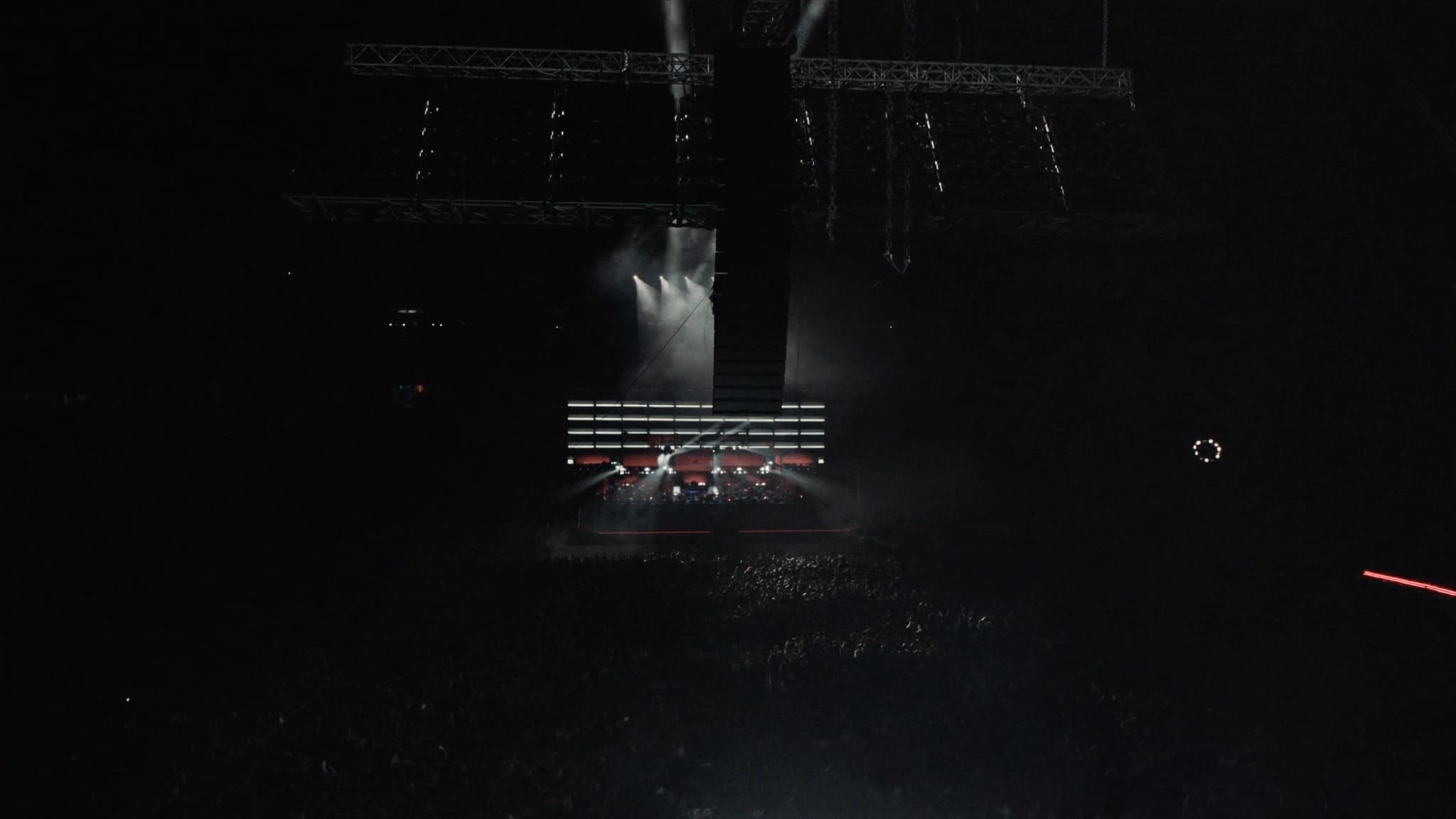
The FOH system is the backbone of any concert rig, responsible for covering the entire audience with clear, powerful sound. Modern touring PA typically employs line arrays—vertically stacked columns of loudspeaker enclosures that use wavefront shaping to control vertical dispersion and reduce spill onto ceilings or reflective surfaces. SSOUNDS line arrays are designed with proprietary waveguide technology that ensures consistent coverage across the venue, with minimal interference between cabinets.

Key specifications for FOH line arrays include high SPL capability (often exceeding 140 dB peak), wide frequency response (typically 50 Hz to 20 kHz), and precise directivity control. SSOUNDS systems are engineered to deliver high output with low distortion, using neodymium drivers and lightweight yet rigid enclosures that reduce rigging weight and setup time. The FOH array is typically flown (suspended) from a truss or structural points, with subwoofers ground-stacked or flown alongside.

Monitor Systems: What the Performers Hear

Stage monitors provide artists with a mix of their own performance and other instruments, essential for timing and pitch. Traditional wedge monitors sit on the stage floor, angled upward toward the performer. SSOUNDS stage monitors are designed for high gain-before-feedback, with smooth frequency response and controlled dispersion to minimize bleed into the rest of the stage.

In-ear monitors (IEMs) are increasingly common on tours, reducing stage volume and allowing for more consistent mixes. However, wedge monitors remain vital for many acts, especially in rock and metal genres. SSOUNDS offers both active and passive monitor solutions, with integrated DSP for system tuning and protection. The monitor engineer often uses a separate console and sends mixes via a dedicated network (e.g., Dante or AES67) to the monitor amplifiers.

Subwoofers: The Low-End Foundation

Subwoofers handle frequencies below 100 Hz, providing the punch and weight that drive a live performance. Touring subs must deliver high SPL with low distortion, often in cardioid or end-fire arrays to control low-frequency directivity. SSOUNDS subwoofers use high-excursion drivers and vented enclosures tuned for maximum output in the 30-100 Hz range.

Subwoofer deployment varies by venue: ground-stacked in front of the stage, flown in a line array, or distributed under the stage. Advanced DSP presets allow for phase alignment with the main PA and room-specific equalization. SSOUNDS subwoofers are built with rugged plywood and durable finishes to withstand the rigors of loading and transport.

Amplification and DSP: The Brains and Brawn

Modern touring systems use lightweight, high-power amplifiers with integrated DSP for crossover, EQ, limiting, and delay. SSOUNDS amplifiers are designed to power multiple cabinets per channel, with efficient Class-D topologies that reduce heat and weight. Networked control allows engineers to monitor amplifier status, adjust settings, and troubleshoot from a single laptop or tablet.

DSP presets are tailored to each SSOUNDS loudspeaker model, ensuring optimal performance and protection. Touring engineers often create custom presets for specific venues or show requirements. The amplifier rack also includes power distribution, signal processing (e.g., Lake or Galileo processors for system alignment), and backup redundancy.

Cabling and Infrastructure

Reliable cabling is critical for a touring PA. Loudspeaker cables must handle high current and be durable enough for repeated coiling and uncoiling. SSOUNDS recommends using Speakon connectors for their locking mechanism and high current capacity. Signal cables (XLR, AES/EBU, Ethernet) must be shielded and robust, with proper strain relief.

Power distribution requires careful planning, often using distros with multiple circuits and surge protection. Touring rigs also include network switches for audio-over-IP (AoIP) and control data, with redundant paths for critical signals. Cable management—using looms, tie-lines, and labeled trunks—saves time during setup and teardown.

Logistics and Rigging

A touring PA must be designed for efficient transport and quick deployment. SSOUNDS enclosures feature integrated rigging hardware, lightweight materials, and stackable designs that fit into standard flight cases. The rigging team uses motors, truss, and chain hoists to fly arrays, with safety cables and load-rated shackles per local regulations.

Logistics include truck packing, weight distribution, and inventory management. A typical large tour might carry 24-48 line array cabinets, 12-24 subwoofers, and multiple monitor wedges, all requiring careful planning to ensure the right gear arrives at each venue. SSOUNDS provides system design support and training to help touring engineers optimize their rig for efficiency and performance.

System Tuning and Optimization

Every venue has unique acoustics, so the PA must be tuned on-site. This involves measuring the room with a calibrated microphone and software (e.g., SMAART or SysTune), adjusting EQ, delay, and level for each zone. SSOUNDS DSP presets provide a starting point, but experienced engineers fine-tune the system to match the room and the show's requirements.

Advanced techniques include using FIR filters for linear phase response, aligning subwoofers with mains for coherent crossover, and applying array shading to balance coverage. SSOUNDS systems are designed to be predictable and repeatable, allowing engineers to achieve consistent results across different venues.

Frequently asked

What is the difference between a line array and a point-source speaker for touring?

Line arrays are designed to control vertical dispersion, allowing multiple cabinets to couple coherently and project sound over long distances with even coverage. Point-source speakers are better for smaller venues or when a single source is needed. For touring, line arrays are the standard for FOH due to their scalability and coverage control.

How many subwoofers are typically used on a tour?

The number depends on venue size and desired low-end impact. A medium-sized tour might use 8-12 subwoofers, while large arena tours can deploy 24 or more. Subwoofers are often arranged in cardioid arrays to reduce rearward energy and improve clarity on stage.

What is the role of DSP in a touring PA?

DSP handles crossover filtering, equalization, delay alignment, limiting, and system protection. It allows engineers to tailor the system's response to the room and ensure consistent performance. SSOUNDS amplifiers include built-in DSP with presets for each loudspeaker model.

How long does it take to set up a touring PA?

Setup time varies by system size and crew experience. A typical arena rig might take 4-6 hours for the PA alone, plus additional time for monitors, cabling, and tuning. Efficient rigging and pre-configured DSP help reduce setup time.

What are the most important factors in choosing a touring PA?

Key factors include output capability (SPL), coverage consistency, weight and size for transport, durability, and support from the manufacturer. SSOUNDS systems are designed to excel in all these areas, providing reliable performance tour after tour.

Building or upgrading a system?

SSOUNDS engineers and manufactures professional PA worldwide — from a single room to stadium scale.

Talk to an engineer
Chat on WhatsApp