AI voor zaalakoestiek en behandeling
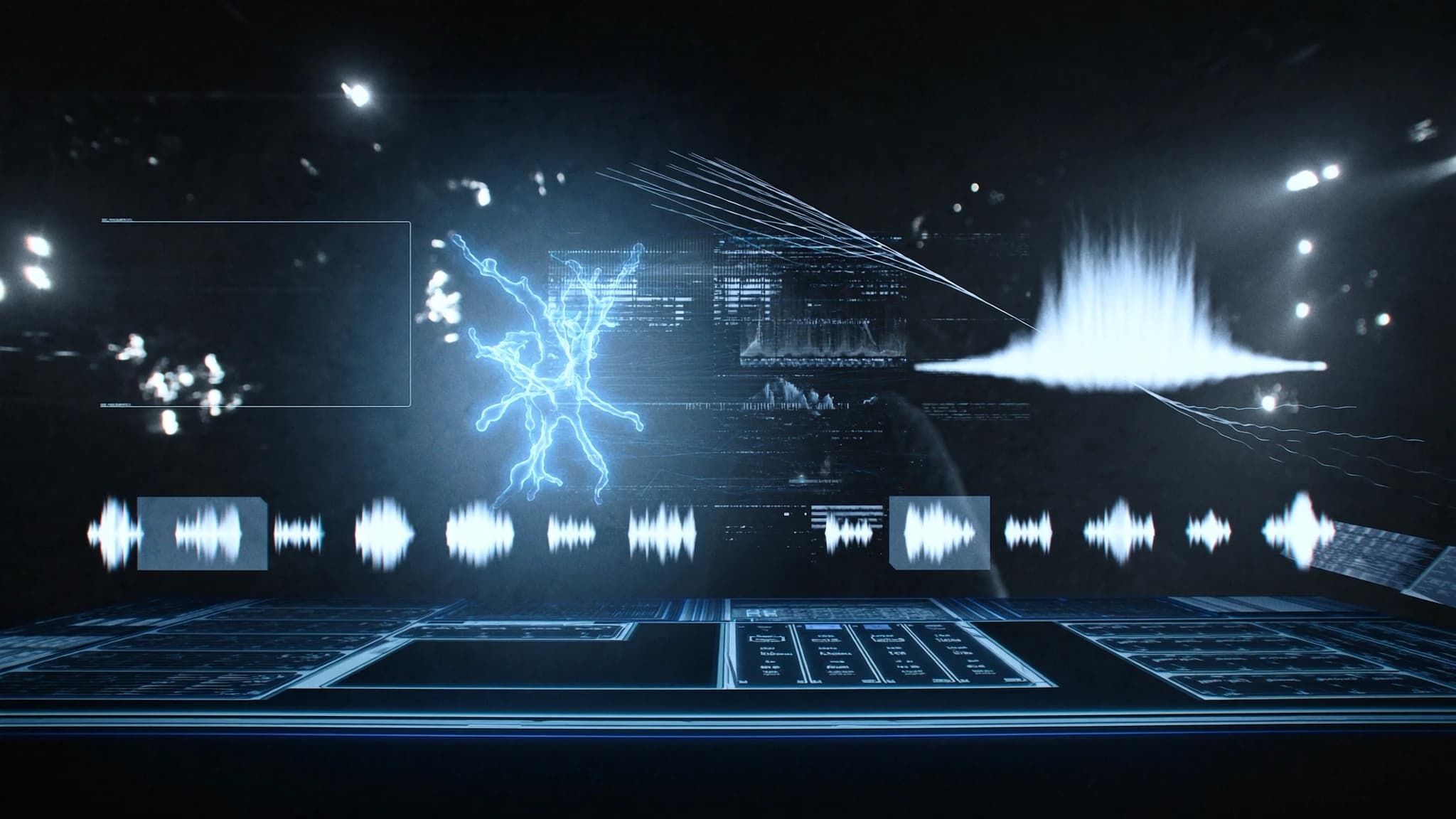
Moderne AI-tools revolutioneren de manier waarop we zaalakoestiek benaderen: weg van giswerk en handmatige berekeningen, naar nauwkeurige, datagedreven inzichten. Door ruimtegeometrie, materialen en gebruikspatronen te analyseren, kan AI akoestische problemen zoals flutterecho's, staande golven en ongelijkmatige nagalm voorspellen en vervolgens gerichte behandelingen en PA-systeemconfiguraties aanbevelen. Voor professionals betekent dit snellere, betrouwbaardere resultaten, en SSOUNDS integreert deze mogelijkheden in zijn ontwerp- en implementatieworkflows.
Belangrijkste punten
- AI versnelt akoestische analyse door geluidsvoortplanting te simuleren en problemen zoals modi, reflecties en ongelijkmatige nagalm te identificeren.
- AI kan specifieke akoestische behandelingen aanbevelen (absorbers, diffusers, basstraps) die zijn geoptimaliseerd voor de geometrie en het gebruik van de zaal.
- AI-geïnformeerde systeemkeuze verbetert dekking, verstaanbaarheid en laagfrequentiebeheersing, waardoor de afstemtijd op locatie afneemt.
- SSOUNDS integreert AI-tools in zijn ontwerpworkflow om voorspelbare, hoogwaardige resultaten te leveren voor complexe zalen.
- AI is een aanvulling op menselijke expertise; nauwkeurige invoergegevens en definitieve verificatie blijven cruciaal.
- AI-gestuurde voorspellingen helpen de kosten van akoestische behandeling in balans te brengen met prestatie doelstellingen.
Hoe AI ruimteakoestiek analyseert
AI-gestuurde akoestische analyse begint doorgaans met een 3D-model van de zaal, gegenereerd uit architectuurplannen, laserscans of zelfs fotogrammetrie via een smartphone. De AI simuleert vervolgens geluidsvoortplanting met ray-tracing- of eindige-elementenmethoden, maar met machine-learningversnelling die de rekentijd van uren naar minuten terugbrengt. Het identificeert probleemfrequenties door modale verdelingen te berekenen en brengt de nagalmtijd (RT60) over de ruimte in kaart, waarbij zones worden gemarkeerd waar spraakverstaanbaarheid of muzikale helderheid kan lijden.
Een AI-model kan bijvoorbeeld voorspellen dat een rechthoekige hal met parallelle wanden sterke axiale modi bij 63 Hz en 125 Hz zal produceren, wat leidt tot een ongelijkmatige basrespons. Het kan ook vroege reflecties detecteren die kamfiltering veroorzaken en de plaatsing van diffusers of absorbers voorstellen om deze te beperken. SSOUNDS-engineers gebruiken dergelijke AI-simulaties tijdens de pre-installatiefase om systeemontwerpen te valideren voordat apparatuur wordt verzonden.
Voorspellen van nagalm, modi en reflecties
Nagalmtijd is een cruciale maatstaf: te lang en spraak wordt modderig, te kort en muziek voelt droog aan. AI kan RT60 over frequentiebanden met hoge nauwkeurigheid voorspellen, zelfs rekening houdend met variabele bezetting en luchtvochtigheid. Het identificeert ook problematische ruimtemodi, staande golven die pieken en nullen bij specifieke frequenties veroorzaken, door de golfvergelijking voor de afmetingen van de ruimte op te lossen. Machine-learningmodellen die op duizenden zaalmetingen zijn getraind, kunnen vervolgens de optimale plaatsing van basstraps, paneelabsorbers en diffusers aanbevelen.
Reflectieanalyse gaat verder: AI traceert honderdduizenden geluidspaden van een virtuele bron naar luisterposities en markeert sterke vroege reflecties die stereobeeld verslechteren of slap echoes veroorzaken. Het kan voorstellen reflecterende oppervlakken onder een hoek te plaatsen of absorptie toe te voegen op specifieke eerste-reflectiepunten. Voor SSOUNDS-line-array-implementaties informeert deze data de richtingshoeken en EQ-presets om ruimte-anomalieën te compenseren.
Door AI aanbevolen akoestische behandeling
Zodra de AI akoestische tekortkomingen identificeert, kan het een behandelplan voorstellen. Als modale analyse bijvoorbeeld een piek bij 50 Hz laat zien, kan de AI afgestemde Helmholtz-resonatoren of membraanabsorbers aanbevelen op de drukm maxima van de ruimte. Voor overmatige nagalm in de midden-hoge frequenties stelt het poreuze absorbers voor (bijvoorbeeld akoestisch schuim of minerale-wolpanelen) met specifieke dikte en luchtstromingsweerstand. De AI kan zelfs de plaatsing en hoeveelheid behandeling optimaliseren om een doel-RT60 binnen budgettaire beperkingen te bereiken.
Sommige geavanceerde systemen gebruiken reinforcement learning om iteratief behandelingen voor te stellen, waarbij het effect van elke wijziging wordt gesimuleerd tot de voorspelde respons aan de gewenste criteria voldoet. Deze aanpak is vooral waardevol in multifunctionele zalen waar de akoestische behoeften variëren. AI kan verplaatsbare panelen of variabele akoestieksystemen aanbevelen. SSOUNDS werkt samen met akoestici om deze aanbevelingen te integreren in het algehele systeemontwerp, zodat de luidsprekers en de ruimte in harmonie werken.
Systeemkeuze op basis van AI
Akoestische analyse beïnvloedt direct de keuze van het PA-systeem. Voor een zaal met veel nagalm kan AI een line array met strakke verticale richtingskarakteristiek aanbevelen om excitatie van het nagalmveld te verminderen, of een cardioïde subwooferconfiguratie om laagfrequente opbouw te beheersen. In ruimtes met sterke reflecties kan de AI point-source-systemen met gecontroleerde dispersie voorstellen om off-axis kleuring te minimaliseren. SSOUNDS gebruikt AI-gestuurde coverage-predictiontools om te modelleren hoe verschillende luidsprekerarrays in de behandelde ruimte zullen presteren, waarbij SPL-uniformiteit en verstaanbaarheid worden geoptimaliseerd.
De AI helpt ook bij systeemafstemming: door de impulsrespons van de ruimte te simuleren, kan het initiële EQ- en delay-instellingen genereren die akoestische anomalieën compenseren, waardoor de tijd voor handmatige uitlijning afneemt. Dit is bijzonder krachtig in complexe zalen zoals theaters of gebedshuizen, waar de dekking gelijkmatig moet zijn over balkons en onder-balkongebieden.
Praktische workflow voor engineers
Een typische AI-ondersteunde workflow begint met het importeren van het 3D-model van de zaal in akoestische simulat software. De engineer definieert bron- en luisterposities en voert vervolgens de AI-analyse uit. De software levert een heatmap van voorspelde SPL, RT60 en speech transmission index (STI). Op basis hiervan stelt de AI behandeling en systeemplaatsing voor. De engineer kan parameters aanpassen en simulaties opnieuw uitvoeren om scenario's te vergelijken. Zodra alles definitief is, worden het behandelplan en het systeemontwerp geëxporteerd voor installatie.
SSOUNDS biedt zijn partners toegang tot AI-ondersteunde ontwerptools en training, zodat zelfs complexe zalen efficiënt kunnen worden aangepakt. Het resultaat is een voorspelbaar, hoogwaardig akoestisch resultaat dat zowel aan artistieke als technische eisen voldoet.
Beperkingen en menselijke expertise
Hoewel AI krachtig is, vervangt het geen ervaren akoestici. Modellen zijn afhankelijk van nauwkeurige invoergegevens; fouten in geometrie of materiaaleigenschappen kunnen tot gebrekkige voorspellingen leiden. AI heeft ook moeite met sterk niet-lineaire effecten zoals structurele trillingen of variabiliteit in publieksabsorptie. Daarom moeten definitieve beslissingen altijd menselijk oordeel omvatten, en metingen op locatie blijven essentieel voor verificatie. SSOUNDS ziet AI als een krachtvermenigvuldiger die professionele expertise versterkt, niet vervangt.
Veelgestelde vragen
Welke data heeft AI nodig om de akoestiek van een zaal te analyseren?
AI heeft doorgaans een 3D-model van de ruimte nodig (van CAD, laserscans of fotogrammetrie), materiaaleigenschappen (absorptiecoëfficiënten, oppervlakteruwheid) en de beoogde bron- en luisterposities. Sommige tools gebruiken ook gemeten impulsresponsen voor kalibratie.
Kan AI een akoesticus volledig vervangen?
Nee. AI is een krachtige assistent die analyse en optimalisatie versnelt, maar kan niet alle variabelen uit de praktijk verrekenen (bijvoorbeeld publieksbeweging, structurele trillingen). Een ervaren akoesticus is nodig om resultaten te interpreteren en definitieve beslissingen te nemen.
Hoe nauwkeurig zijn AI-voorspellingen voor ruimtemodi?
AI-modellen met eindige-elementen- of ray-tracingmethoden kunnen modale frequenties binnen enkele procenten voorspellen, mits de geometrie van de ruimte en de randvoorwaarden nauwkeurig zijn gedefinieerd. Werkelijke metingen kunnen echter afwijken door bouwtoleranties.
Biedt SSOUNDS AI-gebaseerde ontwerpdiensten aan?
Ja, SSOUNDS biedt AI-ondersteunde akoestische analyse en systeemontwerp als onderdeel van zijn projectondersteuning, waarmee klanten zowel de behandeling als de PA-inzet voor hun zalen helpen optimaliseren.
Wat kost AI-akoestiekanalyse vergeleken met traditionele methoden?
AI-analyse kan kosteneffectiever zijn omdat het handmatige simulatietijd vermindert en dure aanpassingen op locatie minimaliseert. De kosten variëren echter op basis van de complexiteit van de zaal en het vereiste detailniveau.
Een systeem bouwen of upgraden?
SSOUNDS ontwerpt en produceert professionele PA wereldwijd, van een enkele ruimte tot stadionformaat.