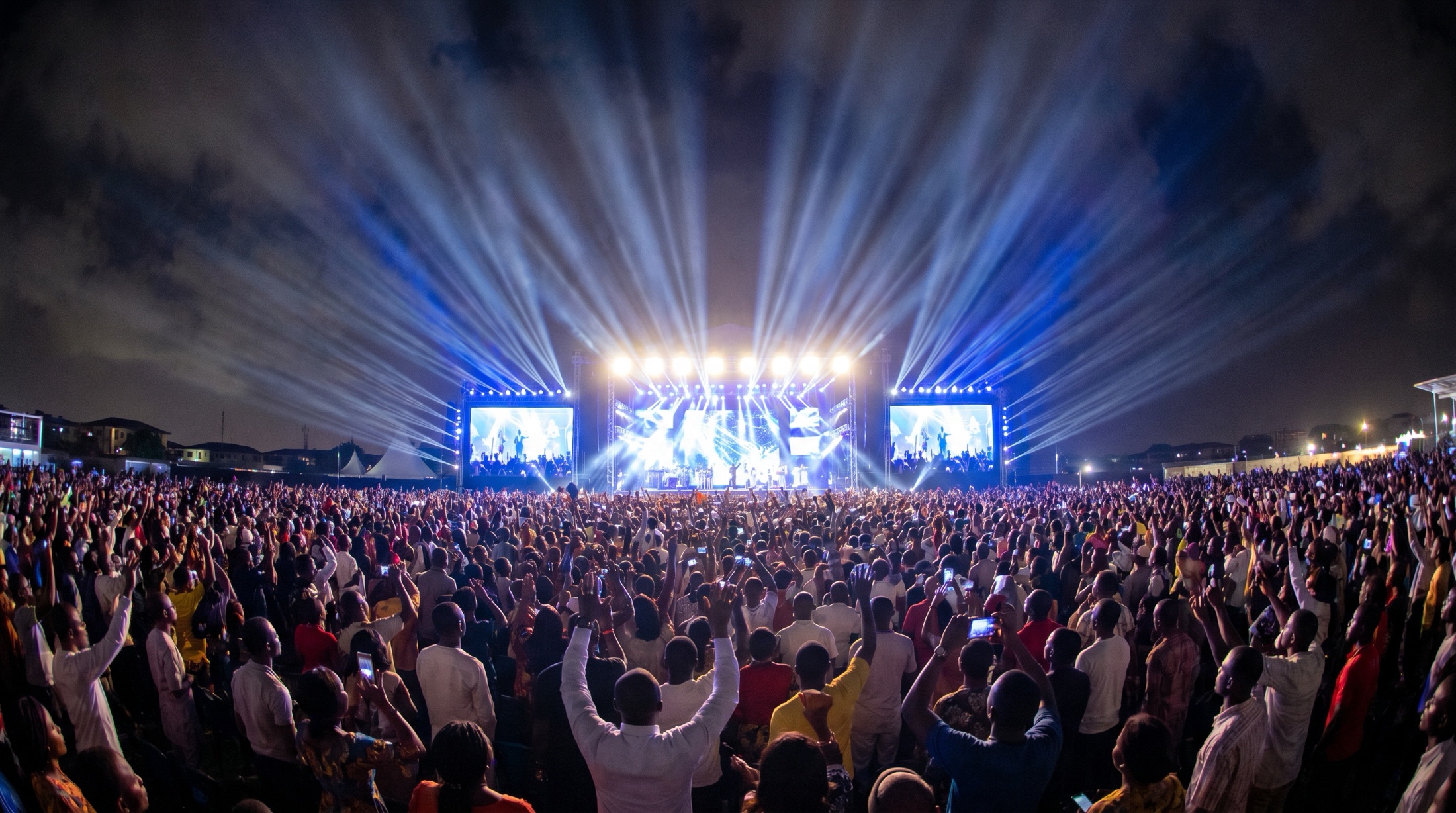
The past eighteen months have rewritten the rulebook for professional event production. As we sit here in mid-2021, the industry is not simply restarting, it is rebuilding with a new playbook. The pandemic forced a rapid evolution of hybrid and streamed events, reimagined audience layouts, transformed health and safety protocols, and exposed vulnerabilities in global supply chains. For AVL companies, the challenge has been to adapt, survive, and now to lead the recovery. At SSOUNDS, we have worked alongside our clients throughout this upheaval, and we want to share the practical lessons we have learned together.
Hybrid events are no longer a temporary workaround; they have become a permanent fixture. The combination of live audiences and remote viewers demands a different approach to audio. The in-room experience must remain immersive, while the stream requires pristine, consistent mixes. This dual focus has driven investment in networked audio and redundant signal paths. Many production companies now design with two separate mix positions, one for the room, one for the broadcast, or use a single console with multiple output busses. SSOUNDS line arrays and point-source systems have been deployed in configurations that prioritize coverage uniformity for both the physical audience and the camera feeds. We have seen a rise in distributed subwoofer arrays to avoid phase issues that plague both live and streamed sound.
Capacity planning has become a delicate balance. Venues are operating at reduced capacities, but the layouts are far from simple. Social distancing means wider row spacing, reduced density in standing areas, and the elimination of front-of-house clusters. This changes acoustic behavior: more empty space means more reverberation and less natural absorption from bodies. System tuning now requires careful attention to room modes and longer decay times. Some designers are using cardioid subwoofer configurations to reduce low-frequency buildup on stage and in empty seating areas. SSOUNDS has provided detailed EASE models and on-site support to help our clients optimize coverage for these new geometries.
Health and safety operations have become a core part of event planning. Contactless check-in, sanitization stations, and mandatory masking are now standard. For audio professionals, this means managing microphone hygiene, using windscreens, disinfecting capsules between uses, and even deploying UV-C treatment units. Wireless microphone inventory has increased to avoid sharing, and some shows are using headworn or lavalier mics exclusively to reduce handling. The airflow in venues has also become a concern; HVAC systems are often upgraded, and fresh air exchange rates are increased. This can introduce noise that competes with speech and music, so sound systems must have sufficient headroom and intelligibility. SSOUNDS amplifiers with advanced DSP allow for precise equalization to compensate for these environmental changes.
Supply chain and logistics resilience has been tested like never before. Component shortages, shipping delays, and raw material price increases have forced AVL companies to rethink procurement. Lead times that were once four weeks have stretched to sixteen or more. Many companies are now carrying higher inventory levels, diversifying suppliers, and even redesigning products to use more readily available components. SSOUNDS has invested in strategic stockpiling of critical parts and maintained close relationships with our manufacturing partners to prioritize orders for clients with confirmed events. We have also seen a shift toward rental companies purchasing rather than leasing, to secure equipment availability. The lesson is clear: agility in the supply chain is as important as technical performance.
Rebuilding the AVL workforce has been another challenge. Many experienced technicians left the industry during the shutdown. Now, as events return, companies are hiring and training rapidly. There is a renewed focus on cross-training, so that a single technician can handle audio, video, and lighting tasks, a necessity for smaller hybrid events. SSOUNDS has responded by expanding our training programs, offering both in-person and online sessions on system design, optimization, and troubleshooting. We believe that investing in education is the best way to ensure the quality of the restart.
Financially, the industry has had to become more efficient. Budgets are tighter, but expectations are higher. Clients want the same production value with fewer resources. This has driven innovation in system design: using fewer cabinets with wider coverage, leveraging digital processing to maximize performance from smaller rigs, and integrating remote monitoring to reduce on-site personnel. SSOUNDS has focused on delivering high SPL and low distortion from compact enclosures, allowing our clients to achieve big sound without the truck pack.
Looking ahead, the hybrid model is here to stay. Even when full capacity returns, the streaming audience will remain a revenue stream. This means permanent investments in broadcast-quality audio infrastructure. We are already seeing venues install dedicated broadcast racks, fiber-optic runs, and network audio backbones. SSOUNDS is developing products with native Dante and AVB connectivity to simplify integration.
The restart is not a return to normal; it is a step into a new normal. The companies that thrive will be those that embrace flexibility, invest in their people, and partner with manufacturers who understand the realities on the ground. At SSOUNDS, we are proud to be that partner, providing reliable, high-performance systems and the support to deploy them in this evolving landscape. The playbook has changed, but the goal remains the same: to deliver unforgettable experiences, whether in the room or around the world.