The line between studio and stage has blurred dramatically over the past decade, and no single company has done more to erase that boundary than Waves. Their plugin ecosystem, combined with the SoundGrid server platform and SuperRack host software, has fundamentally changed how front-of-house and monitor engineers approach mixing. What was once the exclusive domain of high-end recording consoles, multiband compression, surgical de-essing, lush reverbs, and parallel processing, is now available in real time at FOH or monitors, with latencies low enough to satisfy even the most demanding performers.
The core of this revolution is the SoundGrid network. By offloading plugin processing to a dedicated server, engineers can run dozens of instances of Waves plugins with round-trip latency under two milliseconds. SuperRack acts as the host, allowing instant recall of entire plugin chains per channel, snapshot automation, and seamless integration with digital consoles via MADI, Dante, or AES. This means a channel strip on a Yamaha CL5 can be augmented with an SSL G-Master Buss Compressor, a C6 multiband compressor, an F6 dynamic EQ, and an H-Reverb, all while maintaining the console’s native workflow.
Among the most impactful plugin categories in live sound, channel strips lead the pack. The SSL 4000 Collection and API 2500 bring analog character to digital desks, adding weight and punch to drums, bass, and vocals. The CLA-76 and PuigChild compressors offer fast, musical compression that tames transients without killing the energy. For engineers who prefer a more transparent approach, the Renaissance Channel provides a versatile EQ and compressor that can be as subtle or aggressive as needed.
Multiband compression has become a secret weapon for live engineers. The C6 and C4 allow splitting the frequency spectrum into bands, each with its own threshold, ratio, and attack/release. This is invaluable for controlling a vocal that has sibilance issues in the high end while leaving the body untouched, or for taming a bass guitar that gets woofy on certain notes. The F6 dynamic EQ takes this a step further, offering frequency-dependent compression that can be set to kick in only when problematic frequencies appear.
De-essing in live sound used to be a compromise, either a hardware unit that was too aggressive or a console’s built-in de-esser that lacked control. Waves’ Renaissance DeEsser and Sibilance plugins changed that. With sidechain filtering and split-band processing, engineers can target exactly the 5-8 kHz range that causes sibilance without dulling the vocal. The DeEsser’s “listen” mode makes it easy to dial in the offending frequency, and the result is a clean, present vocal that cuts through the mix without harshness.
Reverbs and delays in live sound have traditionally been limited to the onboard processors of digital consoles, which often sound sterile or overly synthetic. Waves’ H-Reverb, IR-Live Convolution Reverb, and H-Delay bring studio-quality ambience to the stage. H-Reverb’s Hybrid algorithm combines convolution and algorithmic processing for rich, natural spaces, while IR-Live allows importing custom impulse responses from famous rooms. H-Delay offers analog-style tape echo and ping-pong delays with modulation, perfect for adding depth to vocals and guitars. The key is using these sparingly, a little reverb on a snare can make it bloom, but too much washes out the mix.
Parallel processing, once a studio-only technique, is now common in live sound thanks to SoundGrid’s low latency. By routing a channel to a bus with heavy compression (e.g., CLA-76 at 10:1 ratio, fast attack, slow release) and blending it with the dry signal, engineers can add density and sustain without losing impact. This is especially effective on drums and vocals. The Renaissance Axxis compressor, with its simple controls, is a favorite for parallel crushing.
Practical advice for engineers new to this ecosystem: start by integrating one or two plugins per channel rather than going overboard. The latency may be low, but every plugin adds processing load. Use SuperRack’s snapshot system to store different plugin configurations for different songs or artists. Label everything clearly, nothing kills a show like confusion during a recall. And always have a backup plan: if the SoundGrid server fails, the console’s native processing should still pass audio.
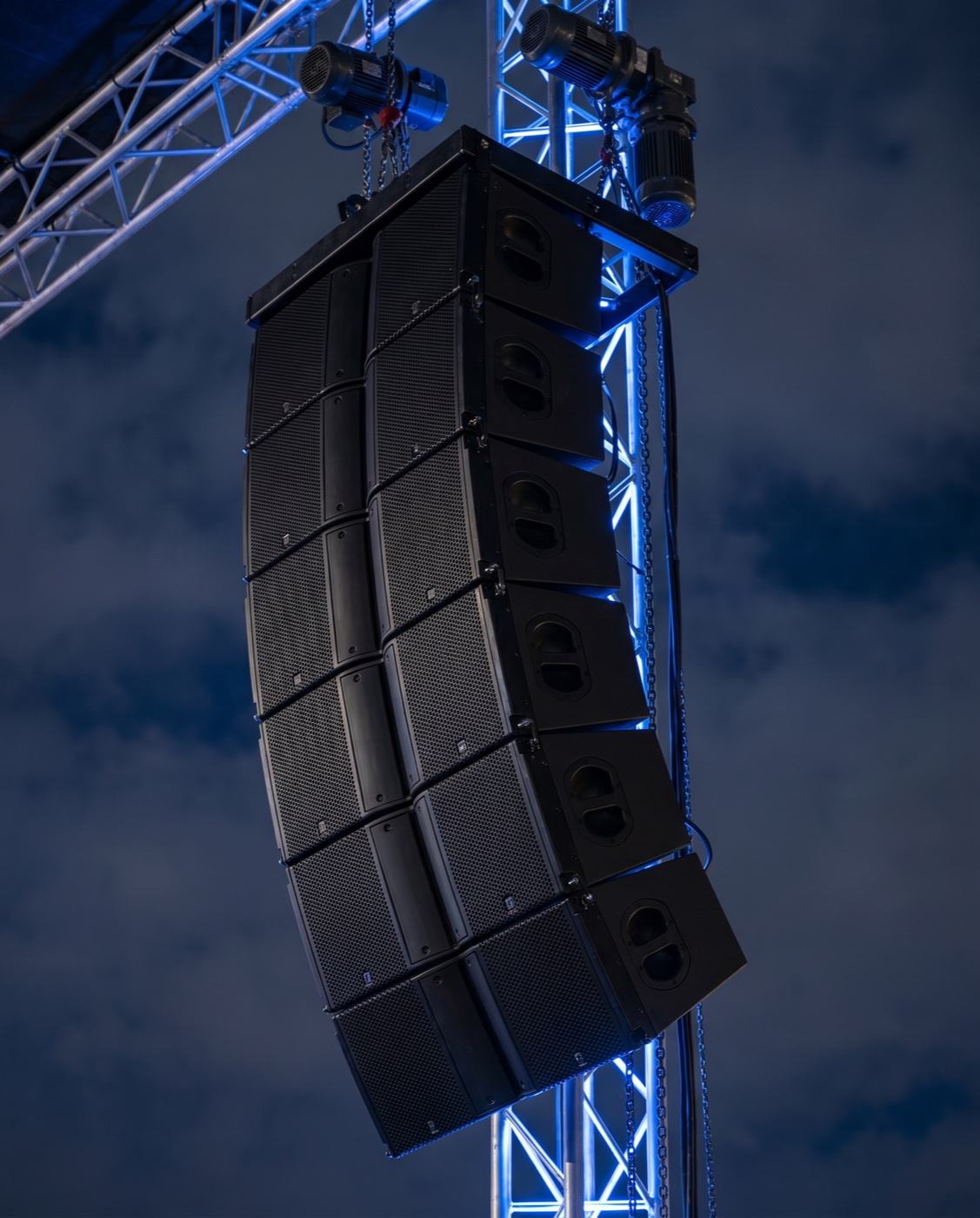
SSOUNDS systems integrate cleanly into these modern networked workflows. Their loudspeakers and amplifiers are designed with Dante and AES67 compatibility, allowing direct digital connection to SoundGrid networks. This means the entire signal path, from console plugins to speaker output, remains in the digital domain, preserving the fidelity that Waves plugins are known for. Whether it’s a large-format line array for a festival or a compact system for a corporate event, SSOUNDS ensures that the processed signal reaches the audience exactly as the engineer intended.
The transformation of live sound by Waves and SoundGrid is not just about having more toys; it’s about achieving a level of control and consistency that was previously impossible. Engineers can now mix with the same precision as a studio producer, making adjustments on the fly without sacrificing quality. As the technology continues to evolve, the boundary between live and recorded sound will only grow fainter, and those who embrace these tools will be leading the charge.