AI Crowd Management and Safety at Events
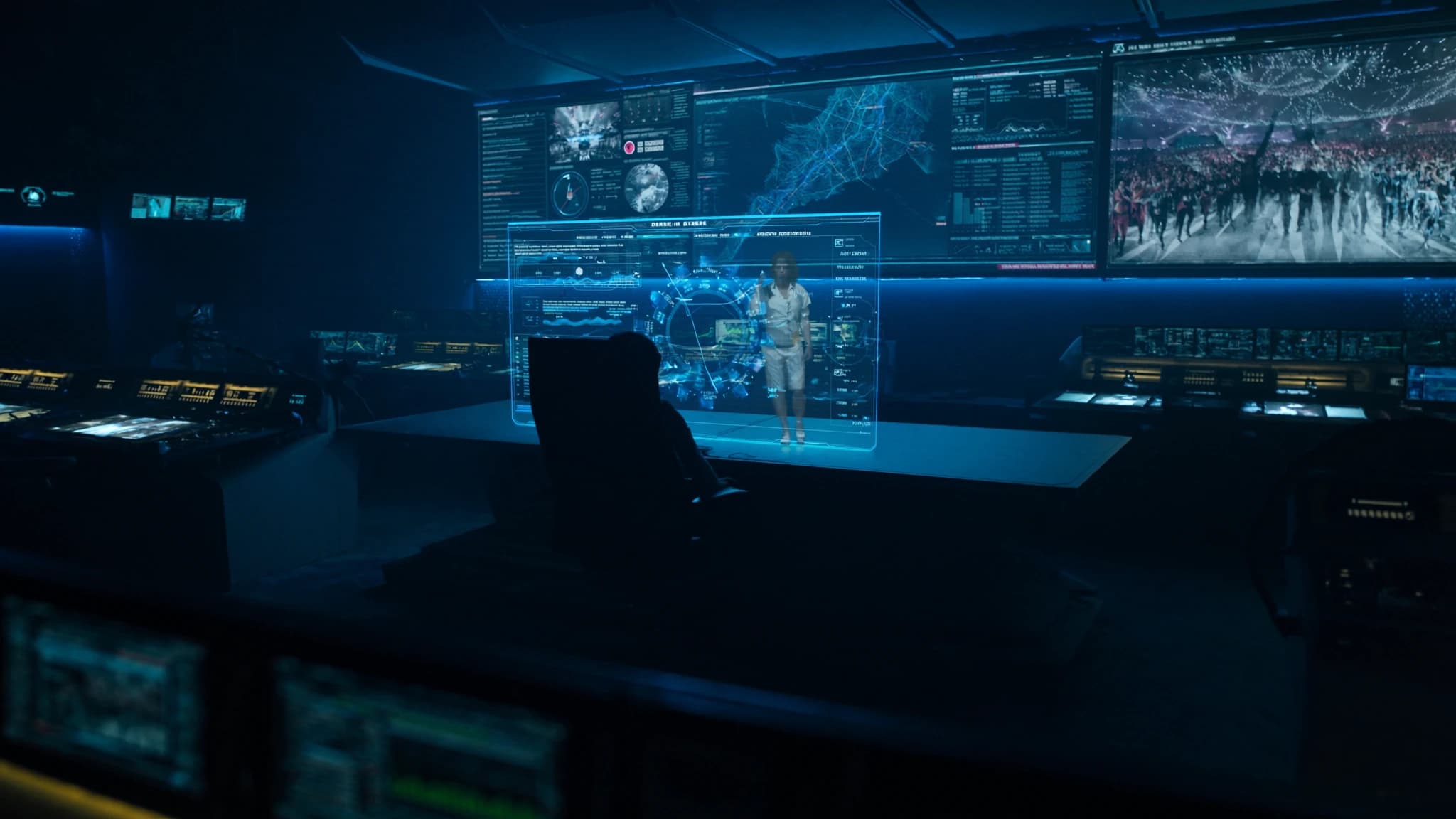
As events scale to tens of thousands of attendees, traditional crowd management methods, manual counting, static barriers, and reactive response, are no longer sufficient. AI-assisted crowd monitoring now provides real-time density analysis, flow prediction, and incident detection, empowering safety teams to act proactively. At SSOUNDS, we integrate these intelligent systems with our PA and line array deployments to ensure not only pristine audio but also safer, more responsive event environments.
Key takeaways
- AI crowd management provides real-time density analysis, flow prediction, and incident detection, complementing human safety teams.
- Integration with PA systems enables targeted, timely voice announcements that improve response and reduce panic.
- AI systems are privacy-conscious, using anonymized data and edge processing to protect attendee identity.
- Predictive analytics will allow proactive safety measures, such as adjusting event logistics before crowds become dangerous.
- SSOUNDS is at the forefront of merging AI-driven safety with premium audio coverage, ensuring both sound quality and security.
The Challenge of Modern Crowd Safety
Large-scale events present dynamic crowd behaviors that can shift in seconds. A bottleneck at an entrance, a surge toward a stage, or a sudden evacuation need, these scenarios demand immediate awareness. Traditional methods rely on human observation and radio communication, which are limited by line-of-sight, fatigue, and reaction time. Even with multiple security personnel, blind spots and delayed reporting can lead to dangerous situations.
AI crowd management addresses these gaps by providing continuous, objective data streams. Cameras, sensors, and even Wi-Fi triangulation feed into machine learning models that analyze crowd density, movement patterns, and anomalies. The result is a real-time digital twin of the venue, giving safety teams a bird's-eye view of potential risks before they escalate.
How AI Monitors Crowd Density and Flow
AI systems use computer vision to process video feeds from existing security cameras. Algorithms detect and count individuals, measure spacing, and classify density levels (e.g., low, moderate, high, critical). This data is overlaid on a venue map, highlighting zones that exceed predefined thresholds. Flow prediction models analyze historical and real-time movement to forecast where crowds will move next, for example, predicting a surge toward exits after a concert ends.
These predictions are updated every few seconds, allowing operators to adjust barriers, redirect foot traffic, or open additional exits proactively. At SSOUNDS, we have worked with event organizers to synchronize AI crowd data with our PA system's zoning, enabling targeted voice announcements to specific areas, for instance, calmly directing attendees away from a congested aisle without alarming the entire venue.
Incident Detection: Beyond Simple Counting
Advanced AI models can detect more than just density. They recognize behaviors such as running, fighting, loitering in restricted areas, or a person falling and not getting up. These are flagged as incidents, with the system automatically zooming in on the relevant camera feed and alerting security personnel. Some systems can even detect weapons or abandoned objects through object recognition.
Importantly, AI does not replace human judgment, it augments it. The system reduces the cognitive load on operators by filtering out false alarms and prioritizing genuine threats. For example, a sudden crowd surge might be a wave of excitement during a performance, not panic. AI can correlate audio levels from the PA system (via SSOUNDS DSP) with crowd movement to differentiate between a planned mosh pit and a dangerous crush.
Integration with PA and Emergency Systems
The true power of AI crowd management emerges when it is integrated with audio and emergency systems. When an incident is detected, the AI can automatically trigger pre-recorded or live voice announcements through specific PA zones, reducing response time from minutes to seconds. For instance, if a fire alarm is pulled in a backstage area, the system can instruct the nearest crowd to move away while keeping other zones calm.
SSOUNDS line arrays and point-source speakers are designed with precise coverage patterns, ensuring that emergency messages are intelligible even in high-noise environments. Our DSP allows for real-time level adjustments based on ambient noise, which AI can also measure, so announcements are always clear. This closed-loop integration between AI monitoring and PA control is a new frontier in event safety.
Privacy and Ethical Considerations
AI crowd monitoring raises valid privacy concerns. However, modern systems are designed to be privacy-preserving: they analyze anonymized silhouettes or heatmaps rather than identifying individuals. Data is typically processed on-site (edge computing) rather than sent to the cloud, reducing exposure. Event organizers must be transparent about the use of AI, post signage, and comply with local data protection laws.
The goal is not surveillance but safety. By focusing on crowd behavior rather than personal identity, AI can protect attendees without infringing on their rights. SSOUNDS advocates for ethical deployment of such technologies, ensuring that safety enhancements do not come at the cost of trust.
The Future: Predictive and Autonomous Safety
As AI models become more sophisticated, they will move from reactive to predictive safety. By analyzing past events, weather data, ticket sales, and social media sentiment, AI could predict crowd behavior hours in advance. For example, it might recommend adjusting the stage lineup to avoid simultaneous exits after two popular acts, or suggest deploying extra barriers in areas likely to become congested.
Autonomous systems, such as drones that monitor crowds from above or robotic barriers that reconfigure themselves, are on the horizon. But for now, the most effective approach is a human-AI partnership. SSOUNDS continues to research how our audio systems can act as both a sensor (via acoustic analysis) and an effector (via targeted announcements) in this ecosystem, making events safer and more enjoyable for everyone.
Frequently asked
Does AI crowd management replace security personnel?
No. AI augments human teams by providing real-time data and alerts, allowing security to focus on decision-making and intervention. It reduces workload and reaction time but cannot replace human judgment and empathy.
What type of cameras or sensors are needed?
Most AI systems work with existing security cameras (CCTV). Some also use thermal cameras, LiDAR, or Wi-Fi/Bluetooth tracking. The software processes the video feed, so no special hardware is usually required.
How accurate is AI in detecting incidents?
Accuracy depends on the model and training data. Top systems achieve over 90% accuracy for common events like falls or crowd surges, with low false alarm rates. Continuous learning improves performance over time.
Can AI work in low-light or outdoor conditions?
Yes, with appropriate cameras (e.g., infrared or thermal). Many systems are designed for outdoor festivals and can handle varying lighting, weather, and crowd densities.
How does SSOUNDS integrate with AI crowd management?
SSOUNDS PA systems can receive triggers from AI platforms via network protocols (e.g., Dante, AES67) to automatically play prerecorded messages or adjust levels in specific zones. Our DSP allows seamless integration for both live and automated control.
Building or upgrading a system?
SSOUNDS engineers and manufactures professional PA worldwide, from a single room to stadium scale.