AI DJ and Automated Mixing
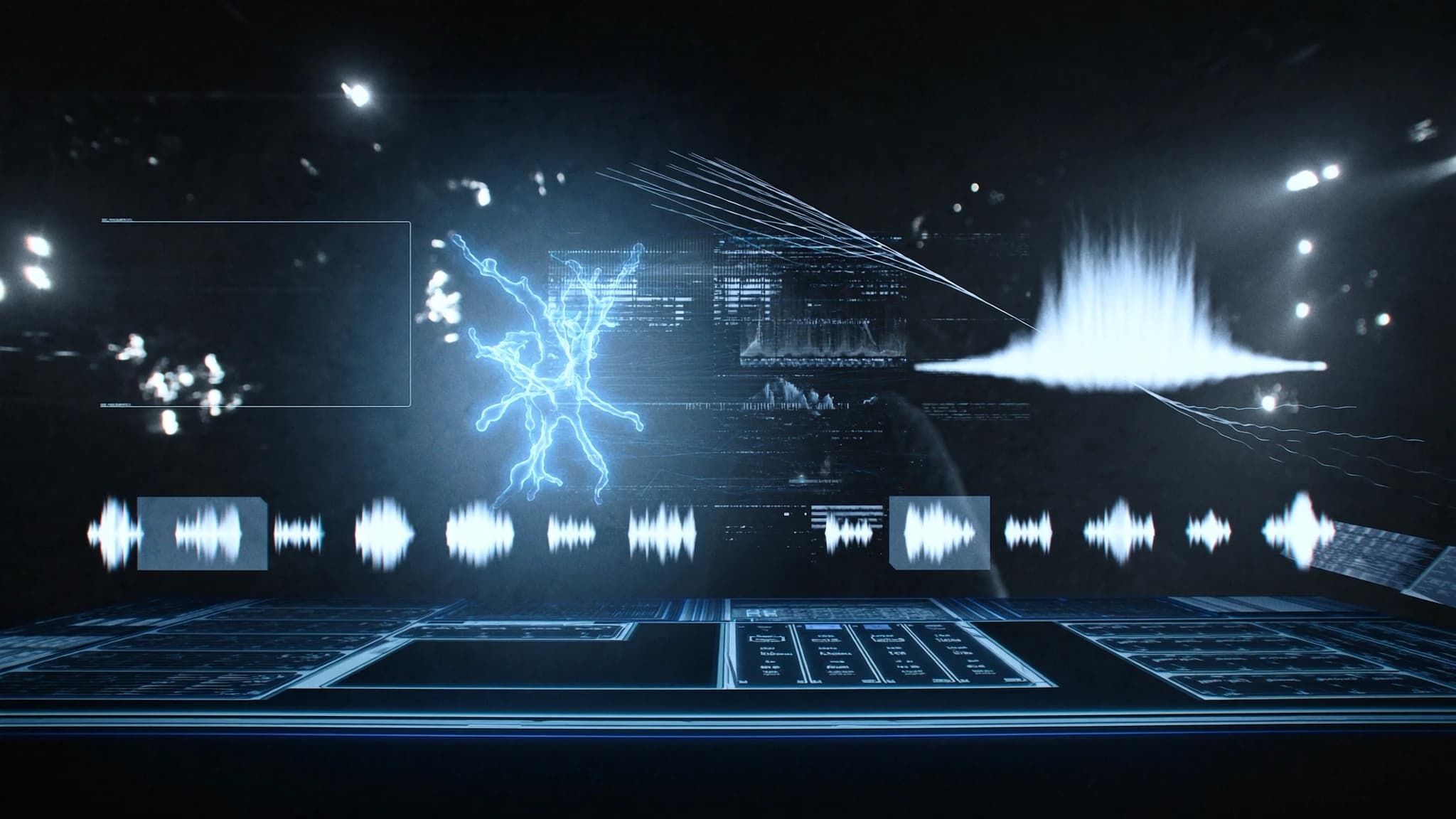
Artificial intelligence is transforming DJing from a purely manual craft into a hybrid art form where algorithms handle the technical heavy lifting while humans focus on creativity and crowd connection. This guide explores how AI-assisted tools, from auto beat-matching to energy-curve building, are reshaping DJ workflows, and why the best sets still depend on human intuition and taste.
Key takeaways
- AI DJ tools automate beat-matching, sync, and track selection, freeing DJs for creative decisions.
- Energy-curve algorithms help plan sets with smooth transitions, but human intuition is essential for emotional impact.
- Auto sync and stem separation are powerful when used as assistants, not crutches.
- The best DJ performances blend AI's data-driven precision with the DJ's live adaptability.
- High-quality PA systems (like SSOUNDS) are critical to faithfully reproduce AI-assisted mixes.
- AI is a creative partner, not a replacement, the human touch remains irreplaceable.
What Is AI DJing?
AI DJing refers to the use of machine learning and signal-processing algorithms to automate or assist tasks traditionally performed by a human DJ. These include beat-matching, tempo syncing, harmonic mixing, track selection, and even real-time energy-curve analysis. AI doesn't replace the DJ; it handles repetitive, time-critical operations so the DJ can focus on reading the room, programming a narrative, and making creative transitions.
Leading DJ software like Serato DJ Pro, Rekordbox, and Virtual DJ now incorporate AI features such as 'Smart Sync,' 'Key Sync,' and 'Auto Mix.' Hardware controllers from Pioneer DJ, Denon DJ, and others include dedicated pads and screens for AI-assisted looping and effects. The goal is to reduce cognitive load, not eliminate the artist.
Auto Beat-Matching and Tempo Sync
Auto beat-matching uses AI to detect the BPM (beats per minute) of each track and align their downbeats automatically. Modern algorithms can handle complex time signatures, swing, and live recordings with variable tempo. This frees the DJ from manual pitch fader adjustments, allowing them to concentrate on EQ blending, phrasing, and effects.
However, relying solely on auto sync can lead to sterile mixes if the DJ doesn't understand phrasing. The best AI tools provide visual feedback (waveforms, beat grids) so the DJ can override or fine-tune the sync. SSOUNDS engineers note that in large-scale sound systems, precise beat alignment is critical to avoid phase cancellation in subwoofers. AI helps, but the DJ's ear remains the final judge.
AI Track Selection and Energy-Curve Building
AI can analyze a library's metadata, key, BPM, energy level, genre, mood, to suggest the next track that matches the current energy curve. Some platforms, like Mixed In Key and DJ.Studio, use AI to generate entire playlists or mix sequences based on a desired energy arc (e.g., warm-up, peak, cool-down). This is especially useful for pre-planning sets or for DJs who need to quickly adapt to a changing crowd.
Energy-curve building algorithms model how the crowd's perceived energy changes over time. They recommend tracks that increase or decrease intensity smoothly, avoiding jarring jumps. While AI can propose a sequence, the human DJ decides whether to follow it, deviate for a surprise track, or respond to a request. The best sets blend AI's data-driven suggestions with the DJ's emotional intelligence.
The Human Element: Why AI Needs a DJ
AI excels at pattern recognition and speed, but it cannot read a room, feel a moment, or take risks. A human DJ brings context: they know when to play a local anthem, when to drop a rare remix, or when to break the rules for dramatic effect. AI-generated mixes can sound technically perfect but emotionally flat.
Professional DJs use AI as a co-pilot. For example, they might let AI handle beat-matching while they focus on live remixing, looping, or adding acapellas. In high-pressure environments like festivals or clubs, AI reduces errors, but the DJ's stage presence, track selection, and ability to pivot are irreplaceable. SSOUNDS systems are designed to reproduce these nuanced performances with clarity and impact.
Tools and Workflows for AI-Assisted DJing
Popular AI tools include Serato's 'Stems' (for real-time vocal/instrumental isolation), Rekordbox's 'My Tag' (AI genre tagging), and Virtual DJ's 'Beatport LINK' integration for streaming and AI recommendations. For offline planning, DJ.Studio and Mixed In Key offer AI-driven mix analysis and playlist generation.
A typical workflow: 1) Import tracks and let AI analyze BPM, key, and energy. 2) Use AI to generate a rough mix sequence. 3) Manually adjust transitions, add effects, and insert crowd-pleasers. 4) During the set, enable auto sync but keep manual override ready. 5) Use AI stem separation to create instant remixes. This hybrid approach maximizes efficiency without sacrificing creativity.
The Future: AI as a Creative Partner
As AI evolves, we'll see deeper integration: real-time crowd analysis via cameras or wearables, adaptive mixing that responds to dance-floor density, and AI-generated transitions that learn a DJ's style. However, the core principle remains: AI is a tool, not a replacement. The most memorable DJ sets are those where human emotion and AI precision combine.
For sound reinforcement, SSOUNDS engineers emphasize that AI-assisted DJing demands high-fidelity, consistent PA systems. When a DJ relies on subtle EQ changes and precise timing, the PA must reproduce those details without coloration. SSOUNDS line arrays and subwoofers are designed for such transparency, ensuring that every AI-assisted nuance reaches the audience as intended.
Frequently asked
Will AI replace human DJs?
No. AI handles technical tasks but lacks the emotional intelligence, crowd reading, and spontaneity that define great DJs. It's a tool to enhance, not replace.
What's the best AI DJ software for beginners?
Serato DJ Pro and Rekordbox offer robust AI features like auto sync and key analysis. Virtual DJ is also beginner-friendly with its Beatport LINK integration.
Can AI create a full DJ set automatically?
Yes, tools like DJ.Studio can generate a mix based on energy curves, but the result often lacks the creative flair and crowd responsiveness of a human DJ.
Does AI-assisted DJing affect sound quality?
Not directly, but it can lead to over-reliance on auto sync, which may cause phase issues if not monitored. A quality PA system helps reveal any timing problems.
How do SSOUNDS systems support AI-assisted DJing?
SSOUNDS loudspeakers deliver consistent, transparent sound across the frequency range, ensuring that AI-assisted EQ and timing adjustments are heard accurately by the audience.
Building or upgrading a system?
SSOUNDS engineers and manufactures professional PA worldwide, from a single room to stadium scale.