AI Noise and Echo Reduction in Live Audio
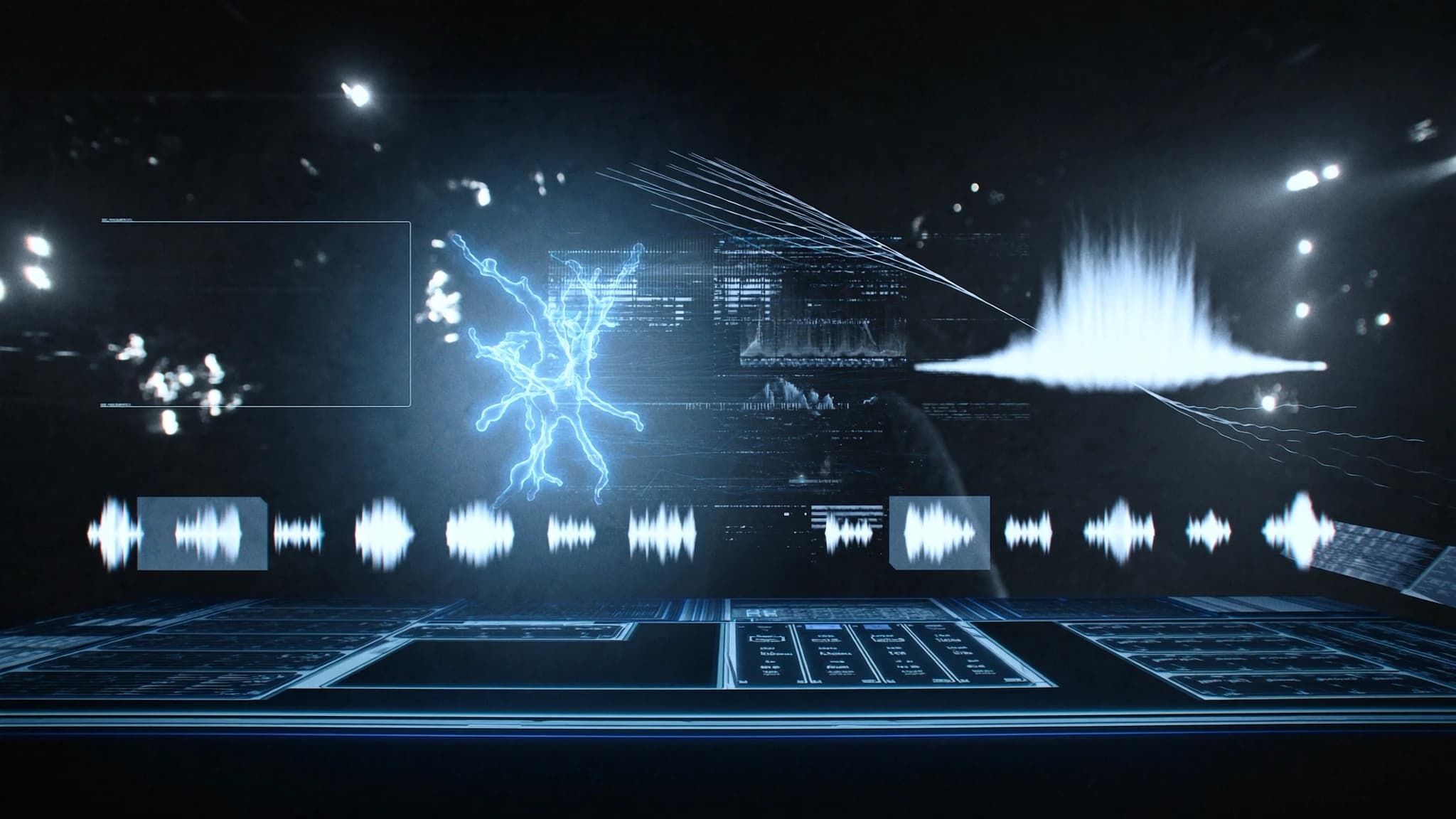
In live sound and broadcast, the difference between a great mix and a frustrating one often comes down to what you cannot control: the room, the background noise, and the reflections. AI noise and echo reduction has emerged as a powerful tool to clean up speech in difficult environments. But how does it work, and where does it fit in a professional audio workflow?
Key takeaways
- AI noise reduction separates speech from noise in real time, improving intelligibility in noisy environments.
- De-reverberation reduces room reflections, making speech sound tighter and more direct.
- Latency is critical in live sound; modern AI algorithms can operate under 10 milliseconds.
- AI works best with good microphone technique and should be used as part of a holistic audio strategy.
- SSOUNDS integrates AI processing into its line array systems and DSP platforms for superior speech clarity.
The Problem: Noise and Echo in Live Audio
Every live event presents unique acoustic challenges. Whether it is a conference in a hotel ballroom with HVAC rumble, a house of worship with a long reverberation time, or an outdoor broadcast with wind and traffic, unwanted noise and echo degrade intelligibility and impact the audience experience.
Traditional solutions like gating, equalization, and directional microphones help, but they have limits. They cannot fully separate speech from noise when the noise is broadband or when the room's reflections are complex. This is where AI-based noise and echo reduction comes in.
At SSOUNDS, we have long recognized that the source is only part of the equation. The room and the noise floor are just as important. Our engineering team has integrated AI-driven processing into our system design philosophy to address these challenges head-on.
How AI Noise and Echo Reduction Works
AI noise reduction uses machine learning models trained on thousands of hours of speech and noise examples. These models learn to distinguish human speech from unwanted sounds, then suppress the noise in real time. Unlike traditional noise gates that simply mute below a threshold, AI can remove noise even when speech is present.
Echo reduction, or de-reverberation, is similar. The AI model identifies the direct sound from the microphone and the reflections that follow. It then attenuates the reflections, effectively shortening the room's reverb tail. This is particularly useful in spaces with hard surfaces and long decay times.
The processing happens in the digital domain, often within a DSP or a dedicated hardware unit. SSOUNDS engineers leverage AI-assisted acoustic modeling to predict how these algorithms will perform in a given venue before the system is even installed. This allows us to tune the processing to the specific acoustic signature of the room.
Latency Considerations in Live Sound
Latency is the enemy of live performance. If the AI processing introduces too much delay, it can cause comb filtering when mixed with the direct sound, or it can make performers feel disconnected from their own voice. For in-ear monitors, even a few milliseconds can be distracting.
Modern AI noise and echo reduction algorithms are designed to operate with very low latency, often under 10 milliseconds. However, the exact latency depends on the processing power and the complexity of the model. In broadcast, where lip sync is critical, latency must be kept to a minimum.
SSOUNDS approaches latency as a system design parameter. We work with our clients to determine acceptable latency thresholds and select processing strategies that meet those requirements without compromising audio quality. In many cases, we can run AI processing at the same sample rate as the rest of the signal chain, avoiding unnecessary conversion delays.
Where AI Noise and Echo Reduction Helps Most
AI noise reduction shines in environments where the noise floor is high and unpredictable. Think of a corporate event in an exhibition hall, a press conference in a noisy lobby, or a remote broadcast from a city street. In these scenarios, AI can dramatically improve speech intelligibility.
De-reverberation is a game-changer in houses of worship with stone walls and high ceilings, or in conference rooms with glass surfaces. By reducing the reverb tail, the AI makes speech sound tighter and more direct, even when the talker is far from the microphone.
Another key application is in assistive listening systems. For hearing-impaired audiences, clarity is paramount. AI processing can lift speech above the noise, making the experience more inclusive. SSOUNDS integrates these capabilities into our line array systems and DSP platforms, ensuring that the benefits are available across a wide range of installations.
Limitations and Best Practices
AI is not a magic bullet. It works best when the input signal is clean to begin with. If the microphone is picking up mostly noise, the AI will have to work harder and may introduce artifacts. Proper microphone selection and placement remain essential.
Over-processing can make speech sound unnatural or watery. It is important to use AI noise reduction judiciously, blending the processed signal with the original to retain natural tone. SSOUNDS engineers often use a parallel approach, mixing a small amount of the unprocessed signal back in to preserve intelligibility and warmth.
Finally, AI processing should be part of a holistic audio strategy. It complements, rather than replaces, good acoustic design, appropriate gain structuring, and skilled mixing. At SSOUNDS, we view AI as a tool that enhances the engineer's craft, not a substitute for it.
The Future of AI in Live Audio
As AI models become more efficient and specialized, we can expect even better performance with lower latency. Future systems may adapt in real time to changing noise conditions, automatically adjusting parameters without human intervention.
SSOUNDS is at the forefront of this evolution. Our research and development in Europe focuses on integrating AI-driven processing with our loudspeaker and DSP designs. We are not just adding AI as an afterthought; we are building it into the core of our systems.
For audio professionals, the message is clear: AI noise and echo reduction is here to stay. It offers a powerful way to deliver clear, intelligible speech in the most challenging environments. When combined with premium loudspeakers and expert system design, it represents the next step in professional audio excellence.
Frequently asked
What is the difference between AI noise reduction and traditional noise gating?
Traditional noise gating mutes the signal when it falls below a threshold, which can cut off speech. AI noise reduction uses machine learning to distinguish speech from noise and suppresses noise even while speech is present, resulting in more natural and continuous audio.
Does AI echo reduction add latency to the signal?
It can, but modern algorithms are designed for low latency, often under 10 milliseconds. The exact latency depends on the processing power and the specific implementation. SSOUNDS engineers work to minimize latency in live applications.
Can AI noise reduction replace the need for acoustic treatment?
No. AI processing is a complement to good acoustic design, not a replacement. Proper room treatment and microphone placement reduce the amount of noise and reverb that the AI has to handle, leading to better results.
Is AI noise reduction suitable for music applications?
AI noise reduction is primarily designed for speech. While it can be used on music, it may alter the tonal character. For music, it is best used sparingly or in specific problem areas. SSOUNDS recommends using it judiciously in any application.
How does SSOUNDS incorporate AI into its systems?
SSOUNDS integrates AI-assisted acoustic modeling and machine-learning-tuned DSP into its system design. This allows us to predict and optimize performance in a given venue, and to deliver AI noise and echo reduction as part of a complete audio solution.
Building or upgrading a system?
SSOUNDS engineers and manufactures professional PA worldwide, from a single room to stadium scale.