Counterweights and Ballast for Event Structures
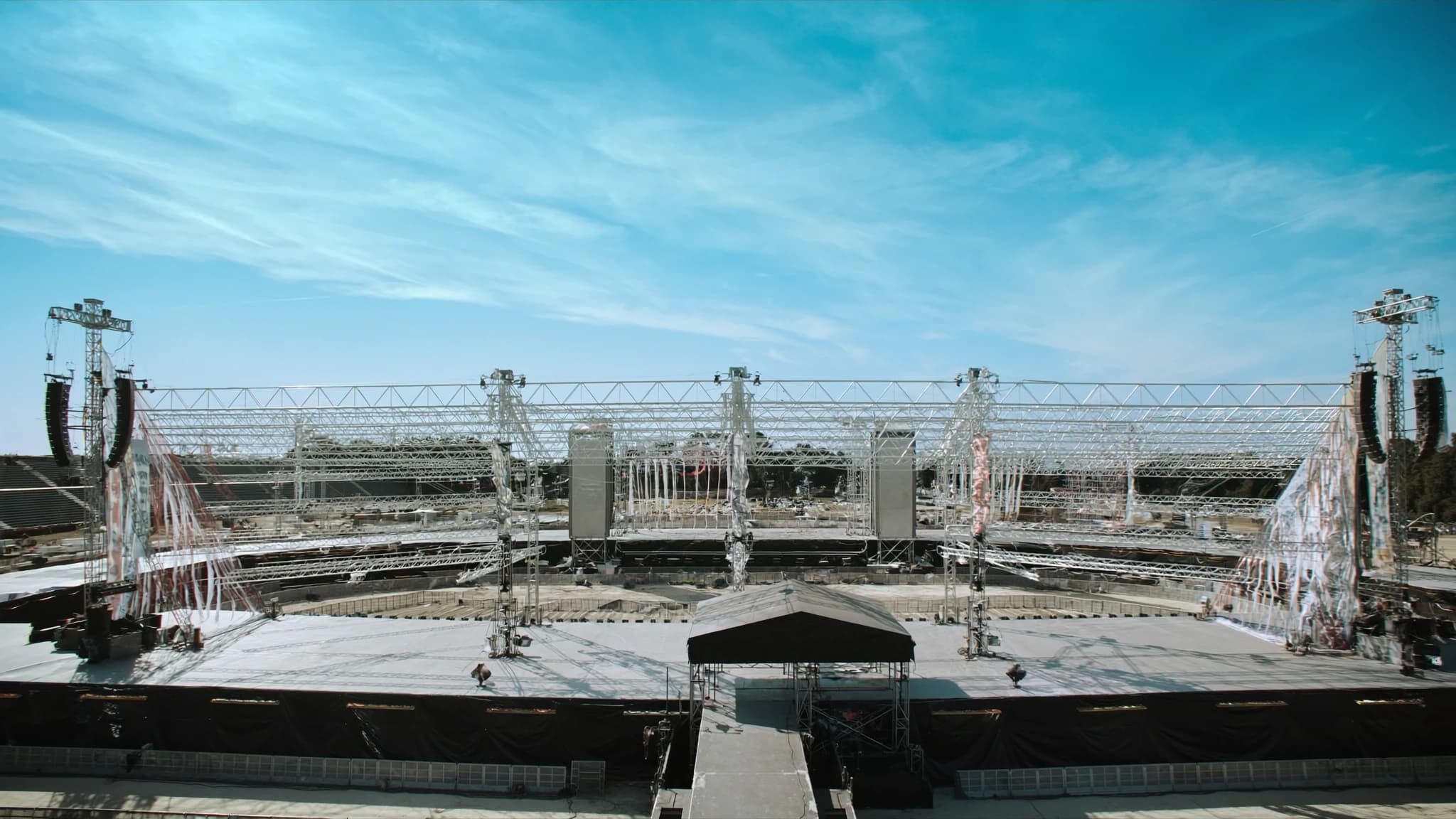
Counterweights and ballast are the unsung heroes of safe event structures, they resist wind loads, prevent overturning, and keep stages, towers, and outdoor installations stable. This guide covers the three main ballast types (water, concrete, steel), when to use each, the engineering behind wind-load calculations, and safe practices for anchoring versus ballasting.
Key takeaways
- Ballast resists overturning by adding mass to increase the stabilizing moment against wind loads.
- Water ballast is portable and cheap but less stable; concrete blocks offer high mass per footprint; steel weights are compact and precise.
- Anchoring is for soft ground; ballasting is for hard surfaces or where ground penetration is prohibited.
- Always use certified structural calculations, never guess ballast requirements.
- Place ballast low and on the upwind side to maximize its lever arm; secure it to prevent shifting.
- Inspect ballast regularly and document placements for safety and compliance.
Why Ballast Matters: Overturning and Wind Load
Every outdoor structure, from a PA tower to a stage roof, is vulnerable to wind. The primary risk is overturning: when wind pressure on the structure's surfaces creates a moment (torque) that exceeds the stabilizing moment from the structure's weight and ballast. Ballast adds mass to increase the stabilizing moment, preventing the structure from tipping.
Wind load is calculated using the formula F = 0.5 × ρ × v² × Cd × A, where ρ is air density, v is wind speed, Cd is the drag coefficient, and A is the projected area. For event structures, design wind speeds typically range from 20–40 m/s (45–90 mph), depending on local codes and event duration. The resulting force is then multiplied by the lever arm (height of the structure's center of pressure) to get the overturning moment.
The safety factor required by standards like BS EN 13814 or IBC is usually 1.5–2.0. This means the stabilizing moment (from structure weight plus ballast) must be at least 1.5 times the overturning moment. Ballast is the most practical way to add that margin, especially for temporary structures where permanent foundations aren't feasible.
Water Ballast: Lightweight and Portable
Water ballast is popular for temporary outdoor events because it's easy to transport empty and fill on site. Typical water ballast containers are heavy-duty plastic tanks or bladders that hold 500–1000 liters (about 500–1000 kg). They're commonly used for stage legs, lighting towers, and PA subwoofer stacks.
Advantages: Low transport cost (empty), no heavy lifting, and easy to drain after the event. Water is also free and widely available. However, water ballast has drawbacks: it can freeze in cold climates (expanding and damaging containers), it's susceptible to leakage, and it provides less mass per footprint compared to concrete or steel. Also, water sloshing can create dynamic forces that reduce effective stability, so water ballast is best for low-to-moderate wind conditions and structures with wide bases.
When to use: Short-duration events (1–3 days), sites with limited access for heavy equipment, and applications where weight needs to be removed quickly. For wind speeds above 25 m/s (56 mph), consider supplementing with concrete or steel.
Concrete Blocks: Dense and Stable
Concrete blocks (often called 'kentledge') are the workhorse of event ballasting. They come in standard sizes (e.g., 1m x 1m x 1m weighing ~2.3 tonnes) and are stacked on base plates or directly on structure feet. Concrete is dense (2.3–2.5 g/cm³), non-porous when sealed, and doesn't slosh or freeze.
Advantages: High mass per footprint, excellent stability, and predictable performance. Concrete blocks can be strapped or pinned to prevent shifting. They are reusable for many events. Disadvantages: Heavy to transport (requires a flatbed truck and forklift), and they can damage soft ground (use spreader plates). Also, they are permanent once placed, you can't easily remove them mid-event.
When to use: Multi-day festivals, high-wind areas, and structures with high overturning moments (e.g., large PA towers, roof trusses). Concrete is the standard for professional outdoor stages and delay towers.
Steel Weights: Compact and Precise
Steel ballast (e.g., cast-iron blocks or steel plates) offers the highest density (7.8 g/cm³), about three times that of concrete. This means you can achieve the same stabilizing moment with a much smaller footprint. Steel is often used in modular ballast systems that bolt directly to structure bases.
Advantages: Extremely compact, precise weight (no variation like wet concrete), and easy to secure with bolts or pins. Steel is also non-absorbent and durable. Disadvantages: High cost, risk of theft (scrap value), and requires careful handling to avoid injury. Steel can also rust if not coated.
When to use: Applications where space is limited (e.g., on stages with tight wings), for high-load point-specific ballasting, and for permanent or semi-permanent installations where precision is critical. Also used in wind-sensitive structures like video walls.
Anchoring vs. Ballasting: When to Use Each
Anchoring involves driving stakes, screw anchors, or ground rods into the earth to resist uplift and overturning. This is common for tents, marquees, and small stages on soft ground. Anchors transfer load to the soil, which can be very effective if soil conditions are good (e.g., compacted clay or gravel). However, anchoring is not always possible, on asphalt, concrete, or rocky ground, you cannot drive anchors.
Ballasting relies solely on mass to resist overturning. It is the go-to method on hard surfaces (parking lots, pavement) or where ground penetration is prohibited (e.g., historic sites). Ballasting is also more predictable because it doesn't depend on soil strength, which can vary widely. The downside is that ballast adds significant weight that must be transported and placed.
Safe practice: For temporary structures on soft ground, a combination of anchoring and ballasting is often used, anchors resist uplift, while ballast adds overturning resistance. Always consult a structural engineer to determine the required ballast based on wind load calculations for your specific structure and location.
Safe Practice: Calculating and Placing Ballast
The golden rule: never guess ballast requirements. Use a certified structural calculation that accounts for the structure's geometry, wind exposure category, and local wind speed. The calculation will give you the required stabilizing moment, which you then convert to ballast mass and placement.
Placement matters: Ballast must be located as low as possible and as far from the pivot point (usually the upwind edge) as possible to maximize its lever arm. For a tower with four legs, ballast is typically placed on the upwind legs. Always secure ballast to prevent shifting, use straps, chains, or interlocking systems. Never stack ballast higher than the base plate's rated capacity.
Inspect ballast regularly during the event, especially after wind gusts. Water ballast levels should be checked for leaks. For concrete blocks, ensure they haven't cracked or shifted. Document all ballast placements with photos for insurance and compliance. And always follow manufacturer guidelines for your specific structure. SSOUNDS provides detailed ballast recommendations for its PA towers and subwoofer arrays.
Common Mistakes and How to Avoid Them
One common mistake is underestimating wind loads, using a 20 m/s design wind speed when the site regularly sees 30 m/s gusts. Always use the highest credible wind speed for the event duration. Another mistake is placing ballast incorrectly: putting all weight on the downwind side (which does nothing to prevent overturning) or stacking ballast too high (creating a secondary overturning risk).
Another error is using water ballast in freezing conditions without antifreeze or insulation, ice expansion can burst containers. Also, avoid mixing ballast types without engineering approval; different densities and shapes can lead to uneven loading. Finally, never rely on ballast alone for structures that also require guy lines or bracing, ballast is for vertical stability, not lateral sway.
To stay safe: work with a qualified structural engineer, use certified ballast systems, and conduct a pre-event wind load assessment. At SSOUNDS, we integrate ballast calculations into our system design software, ensuring every PA tower and stage has the right counterweight for the conditions.
Frequently asked
How much ballast do I need for a 10-meter PA tower?
The required ballast depends on the tower's weight, wind speed, and exposure. A typical 10m tower in 25 m/s wind may need 500–1000 kg per leg. Always get a structural calculation from an engineer or use manufacturer-provided tables.
Can I use water ballast in freezing temperatures?
Not without precautions. Water expands when frozen, which can burst containers. Use antifreeze additives or switch to concrete or steel ballast in sub-zero conditions.
Is it better to anchor or ballast a stage on grass?
On soft grass, anchoring (e.g., screw anchors) is often more effective and lighter than ballasting. However, if the ground is uneven or you cannot penetrate deep enough, ballasting with spreader plates is safer. A combination is best.
How do I calculate wind load for a stage roof?
Use the formula F = 0.5 × ρ × v² × Cd × A. For a typical stage roof, Cd is about 1.2–2.0 depending on shape. Multiply the force by the height of the roof's center of pressure to get overturning moment. Then ensure ballast provides at least 1.5 times that moment.
What is the safest way to stack concrete blocks for ballast?
Stack them directly over the base plate, interlocking if possible. Never stack more than three blocks high without engineering approval. Strap or chain the blocks together and to the structure to prevent sliding or toppling.
Building or upgrading a system?
SSOUNDS engineers and manufactures professional PA worldwide, from a single room to stadium scale.