Truss and Layher Systems for Stage Structures
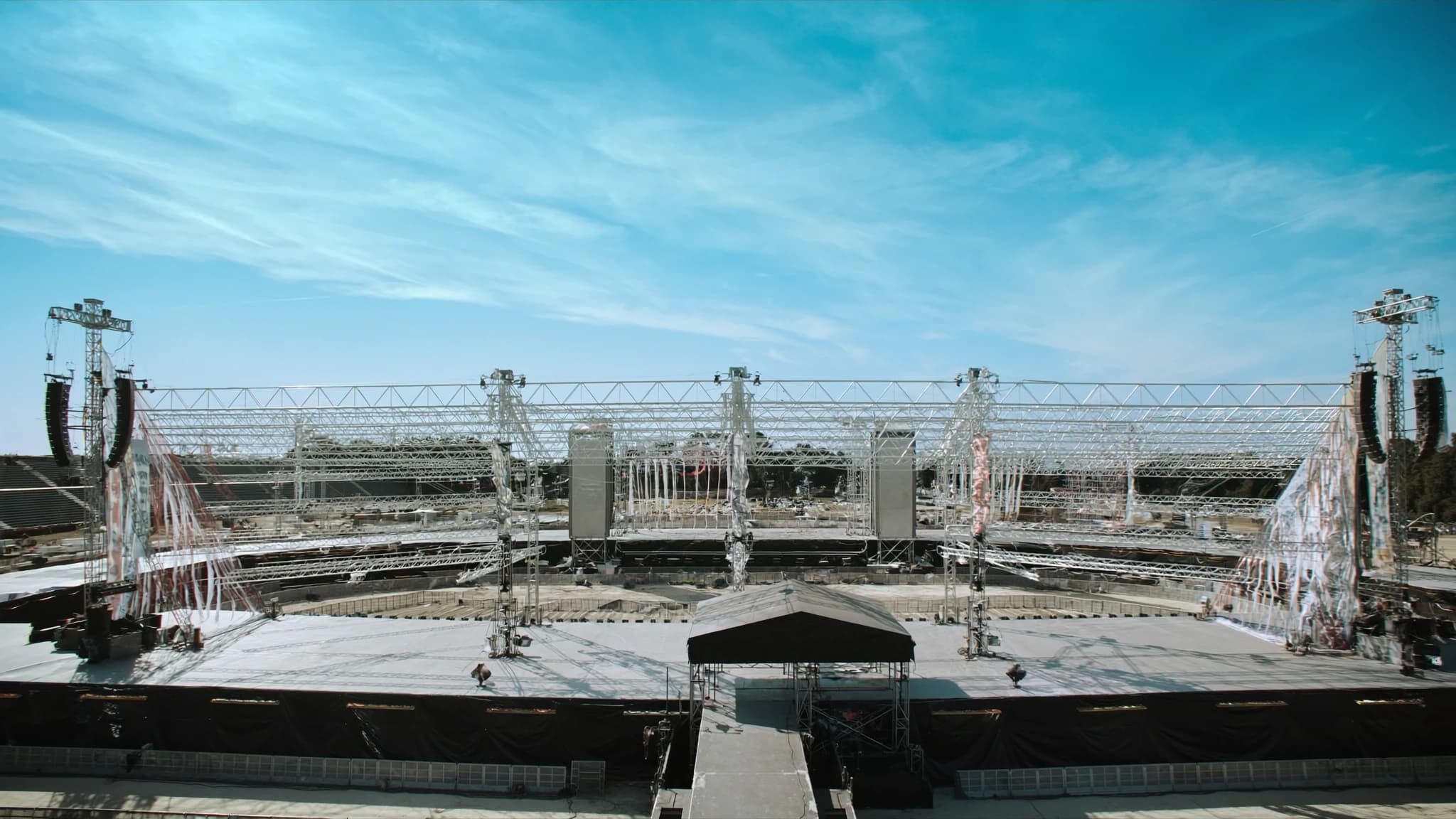
Every great live production rests on a structure that is safe, precise and built to carry the load. Whether you are rigging a line array, building a stage roof or assembling a grandstand, the choice between truss types and modular systems determines what your event can achieve. This guide explains the engineering behind truss and Layher-style systems, so you can specify, build and load them with confidence.
Key takeaways
- Box truss offers superior torsional stiffness for long spans and multi-axis rigging, while triangular truss is lighter and suited to simple, unidirectional loads.
- Spigot connections speed up assembly and are ideal for touring; bolted connections provide maximum rigidity for permanent installations.
- Always consult span and loading tables, and never exceed the manufacturer's specified loads. Deflection limits are as important as strength limits.
- Ground support systems are independent and ideal for outdoor events, while flown systems save floor space but require a thorough venue survey.
- Layher-style modular systems provide flexible, strong structures for stages, roofs and grandstands, and integrate well with truss and audio rigging.
- SSOUNDS engineers combine structural and acoustic modelling to ensure that the rigging and the sound system perform as one integrated design.
Understanding the Role of Truss and Modular Structures
Truss and modular systems form the skeleton of any stage, roof or temporary venue. They carry lighting, audio, video and scenic elements, and they must resist wind, dynamic loads and the forces generated by performers and audiences. Truss is typically made from aluminium alloys, chosen for its high strength-to-weight ratio, while Layher-style systems use galvanised steel or aluminium components for modular scaffolding and event decks.
The engineering challenge is not just about strength. It is about stiffness, deflection control and fatigue life. A truss that flexes too much under a moving light or a line array can cause aiming drift, reduce audio performance and even lead to structural failure. SSOUNDS engineers approach every project by modelling the complete load path, from the rigging point to the ground, using advanced simulation before a single piece of metal is cut.
In live sound, the structure is part of the audio system. A poorly braced truss can resonate, and a roof that moves in the wind can modulate the sound. That is why we treat structural design and acoustic design as one discipline, not two.
Box Truss vs Triangular Truss: Which One and When
Box truss, also called square truss, has four main chords connected by diagonal bracing on all four sides. It offers high torsional stiffness and can be loaded in multiple planes, making it ideal for long spans, roof grids and applications where lights or speakers hang from the bottom and sides. Because it is symmetrical, box truss is easier to align and connect in complex configurations.
Triangular truss uses three chords and is lighter and more economical for simple, unidirectional loads. It is commonly used for vertical towers, small stages and lighting bars where the load is mostly in one plane. However, triangular truss has less resistance to twisting, so it is not the best choice for long horizontal spans or for supporting heavy line arrays that can induce torsion.
The decision between box and triangular truss comes down to load direction, span and the need for multi-axis rigging. For a main stage roof that must support a full audio system, box truss is usually the correct engineering choice. For a simple delay tower or a small podium, triangular truss can be perfectly adequate. SSOUNDS designs its own line array rigging frames to integrate with both types, ensuring that the mechanical interface never compromises the acoustic performance.
Spigot vs Bolt Connection: Speed, Strength and Repeatability
Truss connections are either spigot-based or bolt-based. Spigot connections use a male spigot that fits into a female receiver, secured with a pin or quick-release mechanism. They are fast to assemble, self-aligning and ideal for touring where speed and repeatability matter. Bolt connections use plates and bolts, which can be torqued to a specific value and are often preferred for permanent installations or where maximum rigidity is required.
The trade-off is between assembly time and long-term stability. Spigot connections can develop play over many cycles if not maintained, while bolted connections are less prone to loosening but take longer to build. Many modern truss systems use a hybrid approach: spigot for the main chords and bolts for secondary bracing. The key is to follow the manufacturer's torque specifications and inspection schedules.
SSOUNDS engineers specify connection types based on the application. For touring line arrays, we favour spigot systems that allow a two-person crew to fly a full array quickly and safely. For fixed installations, we often recommend bolted connections to ensure that the structure remains rigid for years. In every case, we provide detailed assembly drawings and load tables so that the build is predictable.
Span and Loading Tables: The Engineer's Compass
A span and loading table is the single most important document for anyone building a truss structure. It tells you the maximum uniformly distributed load (UDL) and the maximum point load for a given span, based on the truss section and the support conditions. Ignoring these tables is the fastest way to overload a structure and create a dangerous situation.
Loading tables are derived from physical testing and finite element analysis. They account for the truss's moment of inertia, the yield strength of the aluminium, and the allowable deflection, which is often limited to span/100 or span/200 for aesthetic and functional reasons. For example, a long span with a heavy line array must be checked not only for strength but also for deflection, because excessive sag can change the array's coverage angle.
SSOUNDS uses AI-assisted acoustic and structural modelling to predict how a proposed rig will behave under load. We then validate those predictions with real-world testing. When we supply a line array system, we also provide the rigging load data so that the venue's structural engineer can integrate it into the overall design. Never guess a load capacity. Always use the manufacturer's tables and, when in doubt, consult a qualified structural engineer.
Ground Support vs Flown Systems: Choosing the Right Approach
Ground support systems use towers and bases to hold truss and equipment from below. They are ideal for outdoor events, venues with no rigging points, or situations where the roof must be self-contained. Ground support can be built with box truss towers, Layher-style modular towers or a combination. The main advantage is independence from the building, but the trade-off is a larger footprint and more ballast or ground anchors.
Flown systems suspend truss and equipment from the venue's existing structure, such as roof beams or mother grids. They save floor space and can achieve very high trim heights, but they require a thorough survey of the building's load capacity and often a rigging plan approved by a structural engineer. Flown systems are common in arenas, theatres and large churches.
The choice between ground support and flown is often dictated by the venue, but it also affects audio performance. A flown line array can be aimed more precisely and avoids the reflections that ground-stacked systems create. SSOUNDS designs its line arrays to work in both configurations, with rigging frames that allow either flying or ground stacking without compromising the acoustic design. For festivals and temporary stages, we often recommend a ground support roof that integrates the audio, lighting and video into a single engineered structure.
Layher-Style Modular Systems for Stages, Roofs and Grandstands
Layher-style modular systems are based on a small number of standard components: vertical standards, horizontal ledgers, diagonal braces and decks. They can be assembled into stages, seating grandstands, roof support structures, access towers and more. The system's strength comes from triangulation and the use of high-grade steel or aluminium, and its flexibility comes from the ability to combine components in countless configurations.
For stage roofs, modular systems provide the vertical towers and the horizontal beams that support the roof canopy and the rigging points. They are often used in combination with truss: the modular system carries the primary loads, while truss distributes the load to the rigging points and provides a convenient mounting surface for equipment. Grandstands are another common application, where modular systems create safe, stable seating tiers that can be rapidly deployed and dismantled.
SSOUNDS engineers are experienced in integrating Layher-style systems with audio and lighting rigs. We understand that the structure must not only be strong but also allow for precise aiming of loudspeakers and clear sightlines. Our approach is to work with the event's structural engineer from the start, sharing load data and rigging plans so that the final build is safe, efficient and acoustically optimised.
Engineering and Building: From Calculation to Commissioning
Every successful structure begins with a clear brief: what will it support, where will it stand, and what are the environmental conditions? Wind loading is often the governing factor for outdoor structures, and it must be calculated according to local codes. Dynamic loads from moving lights, chain hoists and even audience movement must also be considered.
The design process moves from concept to structural analysis, then to detailed drawings and a bill of materials. SSOUNDS uses advanced simulation to optimise the structure for weight, cost and performance, and we apply the same rigour to our loudspeaker systems. During the build, quality control is essential: every spigot, bolt and pin must be inspected, and torque values must be verified. On site, a competent rigger should supervise the assembly and sign off on the final inspection.
Commissioning is not just about checking that the structure stands. It is about verifying that it performs as designed. For audio, that means measuring coverage and intelligibility once the system is flown. For the structure itself, it means confirming that deflections are within tolerance and that all safety systems are in place. SSOUNDS supports its clients through every stage, from initial modelling to final commissioning, ensuring that the structure and the sound system work together seamlessly.
Frequently asked
What is the difference between box truss and triangular truss?
Box truss has four chords and diagonal bracing on all sides, giving it high torsional stiffness and the ability to handle loads in multiple planes. Triangular truss has three chords, is lighter and more economical, but is less resistant to twisting. Box truss is preferred for long spans and heavy line arrays, while triangular truss works well for simple vertical or unidirectional loads.
Should I use spigot or bolt connections for my truss?
Spigot connections are faster to assemble and self-aligning, making them ideal for touring and temporary events. Bolt connections are more rigid and less prone to loosening over time, so they are often used in permanent installations. The best choice depends on your application, but always follow the manufacturer's torque and inspection guidelines.
How do I know what load my truss can support?
Use the manufacturer's span and loading tables, which specify maximum uniformly distributed loads and point loads for each truss section and span. These tables are based on testing and analysis, and they account for strength and deflection limits. Never guess. If you are unsure, consult a qualified structural engineer.
What is the advantage of a ground support system over a flown system?
Ground support systems are self-contained and do not rely on the venue's structure, making them ideal for outdoor festivals or buildings without rigging points. They do require more floor space and ballast. Flown systems save floor space and can achieve higher trim heights, but they require a detailed survey of the venue's load capacity.
Can SSOUNDS help with the structural design of my stage?
Yes. SSOUNDS engineers are experienced in integrating audio systems with truss and modular structures. We provide rigging load data, work with your structural engineer, and use advanced simulation to ensure that the structure and the sound system perform together safely and effectively. Contact us to discuss your project.
Building or upgrading a system?
SSOUNDS engineers and manufactures professional PA worldwide, from a single room to stadium scale.