How Many Speakers Do You Need? A Coverage Guide
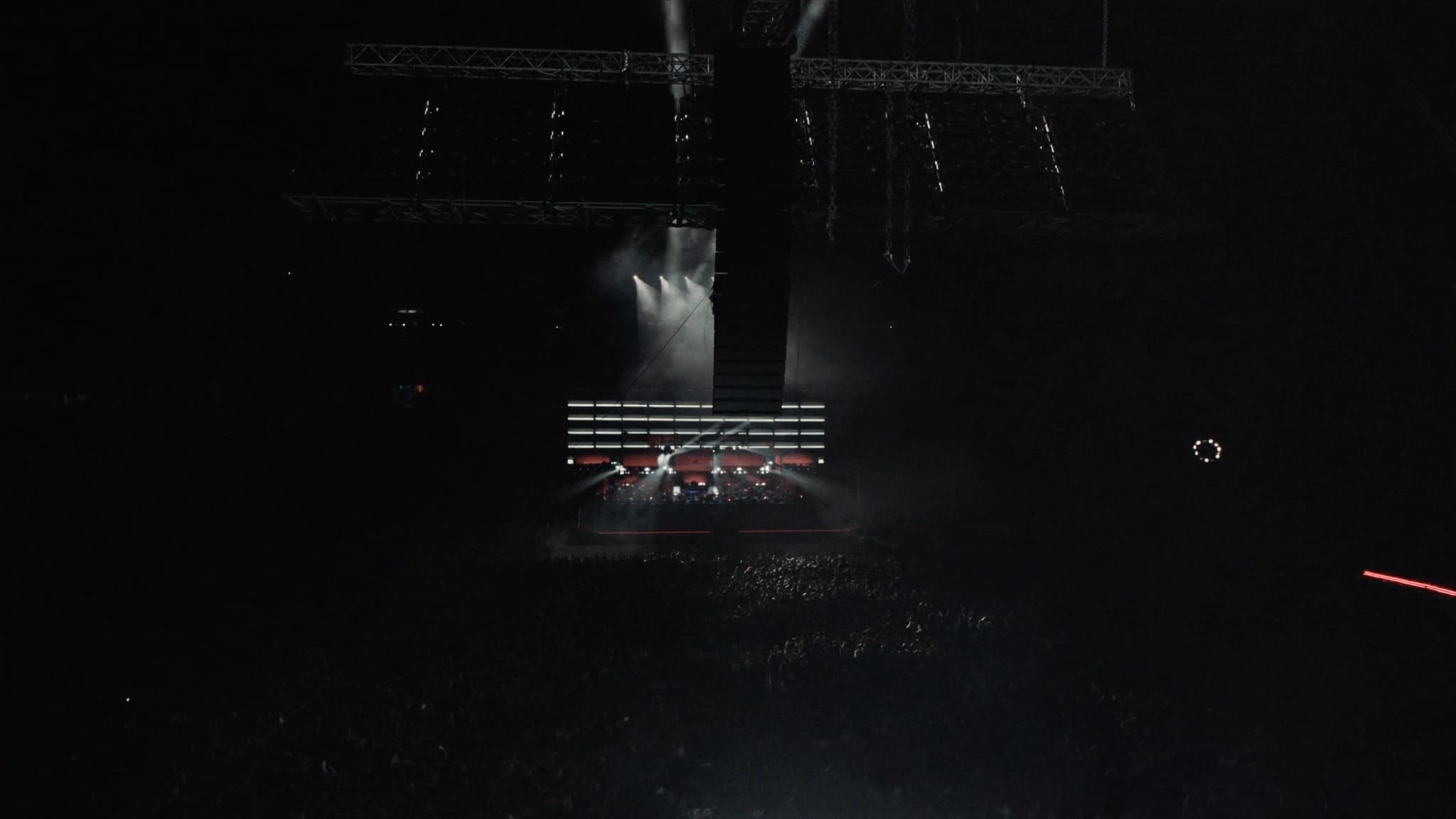
Getting the number of speakers right is one of the most critical decisions in any sound system design. Too few speakers and you create dead zones where the audience can't hear clearly; too many and you introduce comb filtering, hotspots, and unnecessary cost. At SSOUNDS, we engineer systems that deliver uniform coverage, high intelligibility, and consistent SPL from front to back. This guide walks you through the geometry of coverage, the role of fill speakers and delays, and how to avoid common pitfalls like hotspots and dead zones.
Key takeaways
- Coverage geometry is the foundation: map your venue and understand speaker patterns.
- Fill speakers are essential for front rows, sides, and under-balcony areas.
- Delay speakers align arrival times in large venues, but use them judiciously.
- Avoid hotspots by using correct splay angles and minimize overlap.
- Dead zones are prevented by proper aiming, prediction software, and verification.
- Always measure and tune the system after installation for best results.
Understanding Coverage Geometry
Every loudspeaker has a defined coverage pattern, typically measured in degrees horizontal and vertical. For a point-source speaker, the coverage angle determines the 'cone' of sound. For line arrays, the vertical pattern is controlled by the array length and splay angles, while horizontal coverage is fixed by the waveguide. The fundamental rule is: the speaker must be positioned so that its coverage pattern overlaps slightly with adjacent speakers to create a seamless sound field.
To calculate the number of speakers needed, start by mapping your venue. Measure the width and depth of the audience area, and note any obstructions like pillars, balconies, or irregular seating. Divide the width by the horizontal coverage angle (in radians) times the distance to the farthest listener. This gives a rough count for the front fill. For line arrays, the vertical coverage is determined by the number of cabinets and their inter-cabinet angles. SSOUNDS line array systems are designed with precise splay angles to ensure even coverage without gaps.
A common mistake is assuming one speaker can cover a wide area. Even a 90° speaker will have significant level drop-off at the edges, up to 6 dB at 60° off-axis. To maintain ±3 dB uniformity, you need overlapping coverage. For example, in a 20-meter-wide room, using 60° speakers, you would need at least three speakers at the front to cover the width adequately.
Fill Speakers: Front, Side, and Under-Balcony
Fill speakers are used to cover areas that the main system cannot reach. Front fills cover the first few rows where the main PA's angle is too steep. Side fills cover extreme left and right seats. Under-balcony fills bring sound to seats shaded by an overhang. The key is to use small, carefully aimed speakers with appropriate delay and level settings.
When designing fills, consider the distance from the main source. For front fills, the speakers should be placed at the edge of the stage, angled to cover the front rows. The delay should be set so that sound from the front fill arrives at the listener at the same time as sound from the main PA. SSOUNDS point-source speakers are ideal for fills due to their compact size and controlled directivity.
For under-balcony fills, the challenge is the limited height and the need to avoid reflections. Use speakers with a narrow vertical pattern to keep sound off the ceiling and walls. SSOUNDS offers dedicated fill cabinets with optimized waveguides for these applications.
Delay Speakers: Aligning Time of Arrival
In large venues, the distance from the main PA to the rear seats can cause a noticeable delay, making the sound seem disconnected from the visual source. Delay speakers are placed further back and electronically delayed so that sound from the delay arrives at the listener at the same time as sound from the main system. This creates a single coherent wavefront.
The delay time is calculated by dividing the distance difference by the speed of sound (approximately 343 m/s). For example, if the delay speaker is 30 meters further from the source than the main PA, the delay is 30/343 ≈ 87 ms. However, you must also account for the propagation time from the delay speaker to the listener. The goal is to align the arrival times from both paths.
Delay speakers should be used sparingly and only when necessary. Each delay zone adds complexity and potential for comb filtering. SSOUNDS DSP platforms include advanced delay alignment tools that make this process precise and repeatable.
Avoiding Hotspots and Dead Zones
Hotspots occur when two or more speakers cover the same area with overlapping, coherent signals, causing constructive interference and a localized increase in level. Dead zones are the opposite, areas where coverage is insufficient due to gaps between speaker patterns or destructive interference.
To avoid hotspots, ensure that adjacent speakers are splayed at angles that create smooth overlap. For line arrays, this means using the correct inter-cabinet angles. For point-source clusters, use the 'equal splay' method where each speaker covers a portion of the audience without excessive overlap. SSOUNDS line array software calculates optimal splay angles based on venue geometry.
Dead zones are often caused by obstructions or incorrect aiming. Use prediction software to model coverage before installation. Walk the venue with a measurement microphone to verify coverage. SSOUNDS systems are designed to provide consistent SPL within ±3 dB across the entire audience area when properly deployed.
Practical Steps to Determine Speaker Count
1. Create a scaled drawing of the venue, including seating areas, stage, and obstructions. 2. Define the desired SPL and coverage uniformity (e.g., ±3 dB). 3. Choose a speaker type: line array for large, deep venues; point-source for smaller or irregular spaces. 4. Use coverage calculators or simulation software to determine the number of cabinets needed. 5. Add fills and delays as needed. 6. Verify with acoustic measurements.
For a typical 500-seat theater, a pair of SSOUNDS line arrays with 8 cabinets each might cover the main floor, with 2 front fills and 2 under-balcony fills. For a 2000-capacity outdoor festival, you might need 12 cabinets per side plus delay towers. Always allow for redundancy and future expansion.
SSOUNDS engineers can assist with system design and provide detailed coverage predictions. Our goal is to deliver a system that sounds great everywhere, not just in the sweet spot.
Common Mistakes and How to Avoid Them
Mistake 1: Using too few speakers to save money. This leads to dead zones and uneven coverage. Solution: Invest in the right number of cabinets; it's better to have a slightly smaller system with proper coverage than a larger system with gaps.
Mistake 2: Placing speakers too high or too low. High placement can cause the sound to overshoot the front rows; low placement can cause shadowing. Solution: Aim the speakers so that the coverage pattern hits the farthest listener and the nearest listener equally.
Mistake 3: Ignoring time alignment. Without proper delay, fills and delays can cause comb filtering and muddy sound. Solution: Use a measurement system to align all speakers in time and level.
Mistake 4: Overlapping coverage excessively. This creates hotspots and reduces intelligibility. Solution: Use prediction software to minimize overlap while maintaining coverage.
Frequently asked
How do I calculate the number of speakers for a rectangular room?
Start by dividing the room width by the horizontal coverage angle (in radians) times the distance to the farthest listener. For example, a 20m wide room with 60° speakers at 10m distance: coverage width per speaker = 2 * 10 * tan(30°) ≈ 11.5m. So you'd need at least 2 speakers to cover 20m, but 3 is safer for overlap. Use simulation software for accuracy.
What is the difference between a fill speaker and a delay speaker?
A fill speaker covers areas the main PA cannot reach (e.g., front rows, under balconies). A delay speaker is placed further back to cover distant seats and is time-aligned to the main PA to maintain coherence. Fills are usually smaller and closer, delays are often full-range.
How do I avoid comb filtering when using multiple speakers?
Comb filtering occurs when two speakers cover the same area with different arrival times. To avoid it, ensure proper time alignment (delay), minimize overlap, and use speakers with consistent phase response. SSOUNDS DSP includes alignment tools to mitigate this.
Can I use the same speaker model for mains and fills?
Yes, but it's often more efficient to use smaller, dedicated fill cabinets. Using the same model may require additional attenuation and can lead to over-coverage. SSOUNDS offers a range of point-source speakers ideal for fills.
What is the ideal SPL variation across the audience?
A well-designed system should have no more than ±3 dB variation from the average SPL across the audience area. This ensures consistent listening experience. SSOUNDS systems are engineered to achieve this uniformity.
Building or upgrading a system?
SSOUNDS engineers and manufactures professional PA worldwide, from a single room to stadium scale.