How to Size a PA System for Any Venue
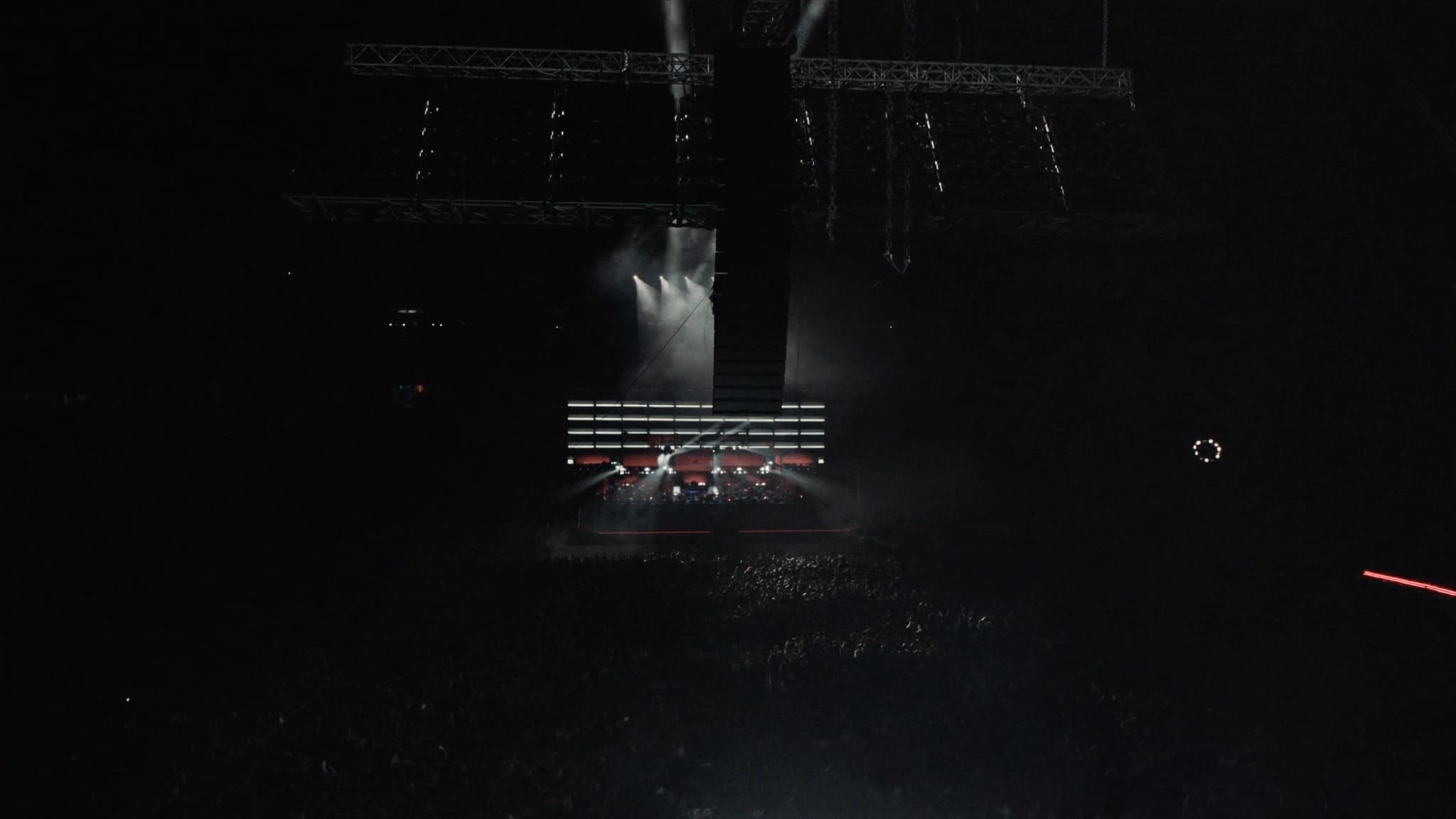
Sizing a PA system correctly is the difference between a show that moves an audience and one that fatigues them. At SSOUNDS, we engineer professional loudspeakers for venues across Africa, Europe, and the Middle East, and we know that proper sizing is a blend of science, experience, and realistic expectations. This guide walks you through a practical, step-by-step method to determine the right PA size for any venue, whether it’s a 200-capacity club, a 2,000-seat theatre, or a 20,000-person outdoor festival. We’ll cover audience capacity, room acoustics, SPL targets, and how to calculate box and subwoofer counts with adequate headroom.
Key takeaways
- Start with audience capacity and venue type (indoor/outdoor) to estimate coverage area and SPL requirements.
- Set SPL targets based on event type (speech, live music, EDM) and always add 10–20 dB of headroom.
- Use line arrays for large or deep venues; point-source for smaller, wider spaces.
- Calculate box count using throw distance and coverage angles; sub count using cone area and bass demand.
- Factor in headroom by oversizing amplifier power by 2–4x and running system at 70–80% capacity.
- Always model with prediction software and tune on-site with measurement tools for optimal results.
1. Understand the Venue and Audience Capacity
The first variable is the number of people you need to cover. A general rule: for every doubling of audience distance, SPL drops by 6 dB (inverse square law). So a PA that works for 100 people up close will fail for 500 spread out. Start by estimating the audience area: for standing events, allow 0.5–1 m² per person; for seated, 1–1.5 m². Multiply by the expected headcount to get the coverage zone.
Indoor vs. outdoor matters. Indoors, walls and ceiling provide reflections that can add 3–6 dB of perceived loudness, but they also create reverberation that reduces intelligibility. Outdoors, there are no reflections, so you need more direct SPL. For outdoor venues, add 6–10 dB to your target SPL compared to an indoor space of similar size.
Also consider the room shape. Long, narrow rooms require line arrays or multiple delay speakers to maintain even coverage. Wide, shallow rooms may be served by a single point-source cluster. At SSOUNDS, we model every venue using EASE or similar software to predict coverage before we deploy a single box.
2. Set Your SPL Targets
SPL (sound pressure level) is measured in dB SPL. The target depends on the event type. For speech, aim for 75–85 dB SPL at the back of the room with 10 dB of headroom (so system capable of 95 dB continuous). For live music, target 95–105 dB SPL average with 15–20 dB headroom (system peaks at 120–125 dB). For EDM or rock concerts, 105–110 dB average with 20 dB headroom is common, meaning system peaks of 125–130 dB.
Headroom is critical. A system running at 0 dB of headroom distorts and compresses, sounding harsh. Professional systems like SSOUNDS line arrays are designed to operate with 6–20 dB of headroom for clean, dynamic sound. Always size for at least 10 dB of headroom above your average target.
To calculate required SPL at the source: measure the distance from the PA to the farthest listener. Add 6 dB for every doubling of distance beyond 1 meter. For example, if you need 100 dB at 32 meters, that’s 100 + (5 doublings × 6 dB) = 130 dB at 1 meter. Your PA must deliver that peak SPL.
3. Choose the Right Loudspeaker Configuration
For small venues (up to 300 people), a pair of high-quality point-source loudspeakers on sticks with one or two subwoofers often suffices. For medium venues (300–1,500), consider a small line array of 4–8 boxes per side, or a powerful point-source cluster. For large venues (1,500–5,000+), you need a flown line array of 8–16 boxes per side, plus flown or ground-stacked subs.
Line arrays are preferred for large spaces because they provide controlled vertical dispersion, reducing energy wasted on the ceiling and floor. SSOUNDS line arrays use proprietary waveguides to ensure coherent wavefronts and consistent coverage from front to back. For a typical 1,000-capacity indoor venue, a system of 6 SSOUNDS line array elements per side and 4 subwoofers is a common starting point.
Subwoofer count depends on bass requirements. A rule of thumb: for every 2–3 full-range boxes, add one subwoofer for moderate bass. For hip-hop or EDM, the ratio may be 1:1. Subwoofers are often placed in cardioid arrays to reduce rearward energy and improve clarity on stage.
4. Calculate Box and Subwoofer Counts
Start with the required SPL at 1 meter from step 2. Compare that to the maximum peak SPL of a single loudspeaker. For example, if a SSOUNDS line array element delivers 140 dB peak, and you need 130 dB at 1 meter, one box per side might suffice, but coverage and headroom demand more. Typically, you need enough boxes to achieve even coverage across the audience width and depth.
A practical formula: number of boxes per side = (distance to farthest listener in meters) / (vertical coverage angle of box × 0.5). For a box with 10° vertical coverage and 40 m throw, you’d need 40 / (10 × 0.5) = 8 boxes. This ensures overlapping coverage without gaps.
For subwoofers, calculate the total cone area needed. A single 18-inch subwoofer can produce about 135 dB peak. To reach 125 dB at the listening position with 10 dB headroom, you need 135 dB at source (assuming 10 m distance). That’s one sub per side. For larger spaces, double the count for every 6 dB increase needed. Always add 20–30% more subs for outdoor events.
5. Account for Headroom and System Limitation
Headroom is not a luxury, it’s a necessity. A system operating at its limit will clip, damage drivers, and sound terrible. SSOUNDS amplifiers and DSP include limiters that protect the system, but you should still size so that the system runs at 70–80% of its maximum capacity during the loudest moments.
To ensure headroom, multiply your required SPL by a factor of 2–4 in terms of amplifier power. For example, if you need 1,000 watts per box, choose an amplifier that delivers 2,000–4,000 watts. This also accounts for power compression as drivers heat up.
Don’t forget cable losses and voltage drop over long runs. Use thicker gauge cable and consider distributed amplification for large venues. SSOUNDS recommends using our proprietary amplifiers with built-in DSP to optimize performance and protect the system.
6. Use Prediction Software and On-Site Tuning
No calculation replaces real-world modeling. SSOUNDS engineers use EASE Focus and proprietary tools to simulate coverage, SPL distribution, and frequency response before a single box is hung. This saves time and ensures the system meets the brief.
After installation, use a measurement microphone and software like SMAART or SysTune to verify coverage and EQ. Adjust delay times, levels, and EQ to compensate for room acoustics. Even the best-sized system needs tuning to sound its best.
Remember: a PA that is too small will distort and fail; one that is too large will be heavy, expensive, and may sound harsh if not properly tuned. The goal is the Goldilocks zone, adequate SPL with clean headroom.
7. Practical Examples for Common Venues
Small club (200 people, 15 m deep): Two SSOUNDS point-source tops (135 dB peak each) on sticks, two 18-inch subs. Total SPL at back: ~105 dB with 10 dB headroom.
Medium theatre (800 seats, 25 m deep): Six SSOUNDS line array elements per side, four subs ground-stacked. System peak ~140 dB at source, delivering 115 dB at back with 15 dB headroom.
Large outdoor festival (10,000 people, 80 m deep): Sixteen SSOUNDS line array elements per side, 12–16 subs in cardioid arrays. System peak 145 dB at source, 115 dB at 80 m with 20 dB headroom. Delay towers may be needed for the back half.
These examples are starting points. Always consult with a professional system designer or contact SSOUNDS for a detailed proposal tailored to your venue.
Frequently asked
How do I know if my PA is too small?
Signs include audible distortion at moderate levels, the system hitting limiters frequently, uneven coverage (quiet spots), and the sound becoming harsh or compressed. If you find yourself pushing the system to its maximum for normal operation, it’s too small.
Can I use the same PA indoors and outdoors?
Yes, but you’ll need more SPL outdoors due to lack of reflections. A system sized for a 500-cap indoor club may only cover 200–300 people outdoors. Always add 6–10 dB of headroom for outdoor use, and consider wind and ambient noise.
What’s the difference between a line array and a point-source for sizing?
Line arrays couple acoustically to increase SPL and control vertical dispersion, making them more efficient for long throws. Point-source boxes are simpler but lose SPL faster with distance. For venues deeper than 20 m, line arrays are usually preferred.
How many subwoofers do I need for a rock concert?
For rock, aim for a 2:1 ratio of full-range boxes to subs. For a 12-box line array per side, use 6–8 subs. For EDM or hip-hop, go 1:1. Subwoofer placement (cardioid, end-fire) also affects perceived output.
Do I need delay speakers for a long venue?
If the venue is deeper than 30–40 m, delay speakers are recommended to maintain intelligibility and SPL at the back. They should be time-aligned to the main PA. SSOUNDS can help design delay systems for large venues.
Building or upgrading a system?
SSOUNDS engineers and manufactures professional PA worldwide, from a single room to stadium scale.