The Complete Guide to Choosing a Line Array System
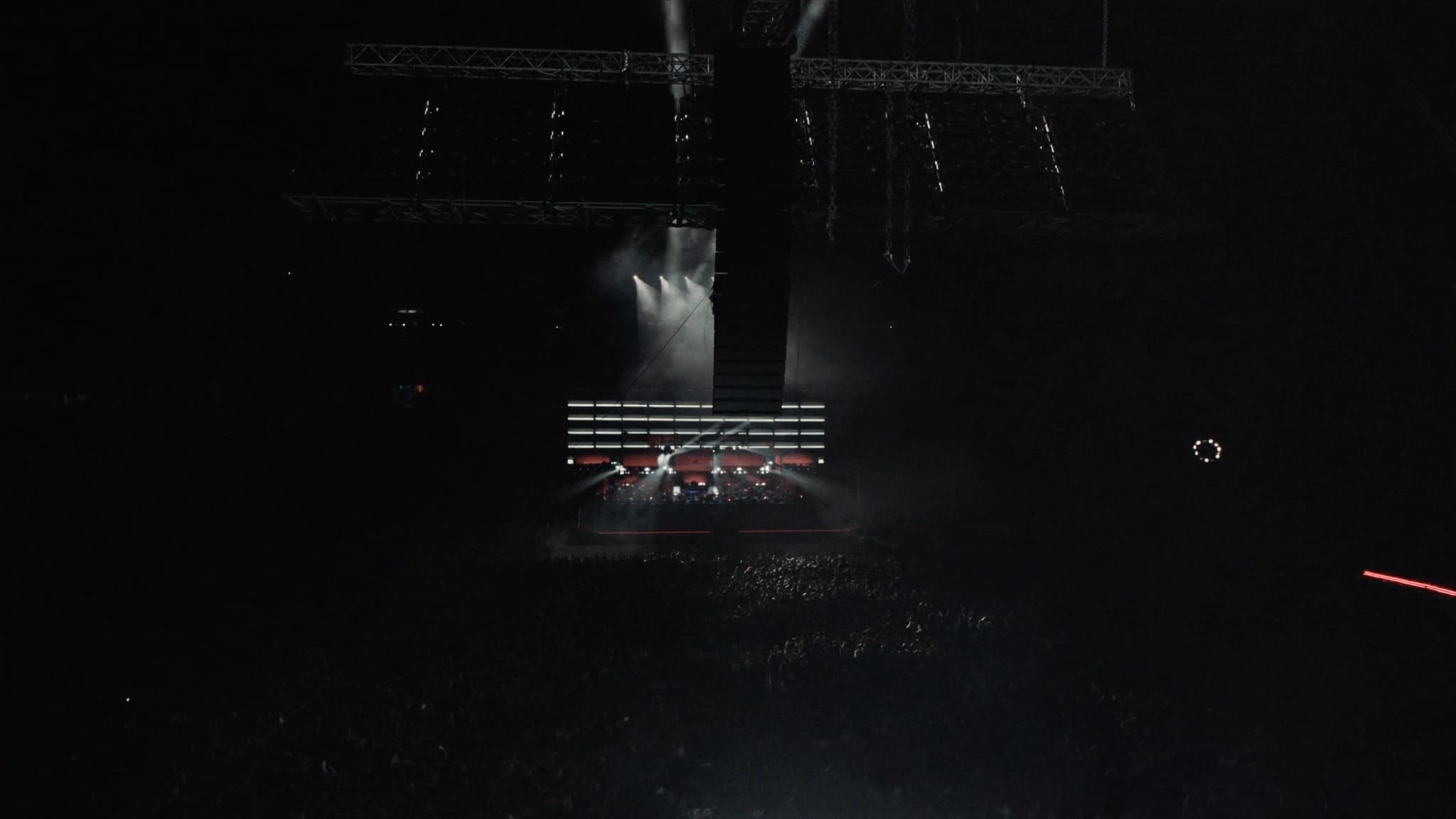
Selecting a line array system is one of the most critical decisions for any sound reinforcement professional. Whether you're equipping a touring rig, installing a permanent venue system, or scaling up for festivals, the right line array delivers consistent coverage, high SPL, and long-term reliability. This guide breaks down the key engineering criteria, coverage, SPL, throw, rigging, DSP, and support, that define world-class line arrays. At SSOUNDS, we engineer our line arrays to compete at the highest tier, alongside the industry's most respected manufacturers, with a focus on precision, durability, and local support across Africa and beyond.
Key takeaways
- Coverage consistency is paramount: evaluate horizontal pattern and vertical splay angles to match venue geometry.
- SPL and headroom must be clean and sustainable; prioritize continuous output and thermal management over peak specs.
- Throw distance depends on array length and frequency control; larger arrays extend the coherent near-field zone.
- Rigging safety and speed are non-negotiable; look for integrated hardware with high safety factors and tool-free operation.
- DSP and amplification should be integrated and optimized for the specific loudspeaker design, with FIR filtering and advanced protection.
- Manufacturer support, training, spare parts, local service, is critical for long-term success, especially in emerging markets.
- SSOUNDS line arrays compete at the highest tier, offering precision coverage, high SPL, robust rigging, and dedicated support across Africa and worldwide.
Understanding Coverage: Horizontal and Vertical Consistency
Coverage is the foundation of any line array. A well-designed system must deliver uniform sound pressure across the entire audience area, from the front row to the back, and from left to right. Horizontal coverage is typically determined by the waveguide design, common patterns include 90°, 110°, or 120°, and should match the venue's width. Vertical coverage is achieved by angling cabinets relative to each other, creating a coherent wavefront that minimizes interference.
SSOUNDS line arrays use advanced constant directivity waveguides to ensure consistent horizontal dispersion with minimal off-axis coloration. Our systems are designed to maintain pattern control down to lower frequencies than typical arrays, reducing unwanted reflections and improving intelligibility. When evaluating coverage, always consider the venue geometry: a narrow, deep room may benefit from a 90° horizontal pattern, while a wide, shallow space might require 120° or even multiple arrays.
SPL and Headroom: Delivering Clean Power
Maximum SPL (sound pressure level) is a key spec, but it's not the whole story. What matters is clean, distortion-free output at the required listening levels. A line array's SPL capability depends on transducer design, amplifier power, and thermal management. Look for systems that can achieve 140 dB SPL peak or higher for large-scale events, but also consider the continuous SPL rating and the system's ability to maintain output over long periods without compression.
SSOUNDS line arrays are built with high-excursion neodymium drivers and efficient Class-D amplification, providing ample headroom for demanding applications. Our systems are voiced to deliver natural, uncolored sound even at extreme levels, with proprietary limiting algorithms that protect drivers while maximizing output. For outdoor festivals or large arenas, we recommend calculating SPL requirements at the farthest listening position, accounting for atmospheric absorption and distance losses.
Throw and Long-Distance Performance
Throw refers to the distance a line array can project sound with acceptable clarity and level. In a true line array, the cylindrical wavefront decays at only 3 dB per doubling of distance (compared to 6 dB for a point source), allowing it to reach farther. However, this ideal behavior is limited by the array's physical length and frequency range. Longer arrays with more cabinets can control directivity to lower frequencies, extending the 'near-field' zone where the 3 dB rule applies.
SSOUNDS line arrays are designed with optimized inter-cabinet angles and rigorous phase alignment to maximize coherent summation. Our systems maintain pattern control down to the lowest crossover frequency, ensuring that the entire audience receives a balanced mix. For very long throws (over 50 meters), consider using a larger format cabinet or adding delay towers. SSOUNDS offers multiple array sizes to match different throw requirements, from compact systems for theaters to large-format arrays for stadiums.
Rigging: Safety, Speed, and Flexibility
Rigging is often overlooked but is crucial for both safety and workflow. A professional line array must have a robust, certified rigging system that allows quick deployment and precise angling. Look for systems with integrated flying hardware, captive pins, and clear load ratings. The rigging should also allow for variable splay angles between cabinets, typically in 0.5° or 1° increments, to shape the vertical coverage precisely.
SSOUNDS line arrays feature a patented rigging system that combines strength with ease of use. Our hardware is rated for 10:1 safety factor and is designed for rapid assembly without tools. The system allows for both flown and ground-stacked configurations, with optional pull-back and tilt adjustments. For touring applications, our rigging integrates seamlessly with standard motor controllers and load cells, ensuring a safe and efficient setup every time.
DSP and Amplification: The Brains of the System
Modern line arrays rely on sophisticated DSP (digital signal processing) to achieve optimal performance. DSP handles crossover filtering, equalization, phase alignment, limiting, and protection. A well-tuned DSP can compensate for acoustical anomalies, align subwoofers with mains, and provide system presets for different configurations. The amplifier platform should be matched to the loudspeaker's power handling and impedance, with enough headroom to handle transients.
SSOUNDS line arrays are powered by our proprietary amplified controllers, which integrate DSP, amplification, and network control in a single rack unit. Our DSP algorithms include FIR filtering for linear phase response, advanced limiting for driver protection, and multi-band compression for consistent tonal balance at all levels. The system supports both analog and digital inputs (AES/EBU, Dante) and can be controlled via a user-friendly software interface for real-time monitoring and adjustment.
Support and Service: The Long-Term Partnership
A line array is a long-term investment, and the manufacturer's support infrastructure is as important as the hardware itself. SSOUNDS operates from the United Kingdom, United States, Nigeria, Ghana and West Africa, and ships and supports systems internationally from those bases. Spare parts availability, warranty terms, and firmware updates should be clearly defined. In regions like Africa, where logistics can be challenging, local support is especially critical.
SSOUNDS prides itself on being a global manufacturer with a strong local presence. We offer on-site training for rental companies and installation teams, 24/7 technical support, and a network of certified service partners across Africa, Europe, and the Middle East. Our warranty covers all components, and we maintain a stock of spare drivers, amplifiers, and rigging parts for rapid replacement. When you choose SSOUNDS, you're not just buying a system, you're building a partnership.
Making the Final Decision: Matching System to Application
Choosing the right line array requires balancing all these factors against your specific needs. Start by defining the venue type (indoor/outdoor, size, acoustics), the expected audience capacity, and the content (speech, music, or both). Create a coverage map and calculate SPL requirements at the farthest seats. Then, evaluate systems from top-tier manufacturers, including SSOUNDS, based on their ability to meet those requirements with consistent quality.
We recommend demoing the system in a similar environment and listening critically for clarity, evenness, and tonal balance. Pay attention to the low-mid range, where many arrays struggle with muddiness. SSOUNDS line arrays are engineered to deliver a transparent, articulate sound across the entire frequency spectrum, with a particular strength in vocal intelligibility. Ultimately, the best system is one that you can deploy confidently, knowing it will perform reliably show after show.
Frequently asked
What is the difference between a line array and a point source system?
A line array uses multiple vertically stacked cabinets to create a cylindrical wavefront, which decays at 3 dB per doubling of distance (vs. 6 dB for a point source). This allows line arrays to project sound farther with more consistent coverage. They also offer better vertical pattern control, reducing reflections from ceilings and floors.
How many cabinets do I need for a typical outdoor festival?
The number depends on the venue size, desired SPL, and throw distance. As a rule of thumb, for a festival with 5,000–10,000 people, a typical left/right array might use 12–16 cabinets per side for the main hang, plus additional side fills and subwoofers. SSOUNDS can provide a detailed prediction using EASE Focus or similar software.
Can I mix different line array brands in the same system?
It is not recommended because each brand has unique phase response, dispersion, and tonal characteristics. Mixing can cause comb filtering, uneven coverage, and poor system coherence. For best results, use a single manufacturer's ecosystem, including amplifiers and DSP.
What maintenance does a line array require?
Regular visual inspections of rigging hardware, driver cones, and amplifier connections are essential. Grilles should be cleaned to prevent debris buildup. SSOUNDS recommends an annual professional inspection and firmware updates. Our support team provides detailed maintenance schedules.
How does SSOUNDS support customers in Africa?
SSOUNDS has operational headquarters in Abuja, Nigeria, with a dedicated team for sales, training, and technical support across the continent. We offer on-site commissioning, spare parts warehouses, and rapid response for critical events. Our goal is to provide the same level of service as in Europe or the Middle East.
Building or upgrading a system?
SSOUNDS engineers and manufactures professional PA worldwide, from a single room to stadium scale.