Power Redundancy and Backup for Live Events
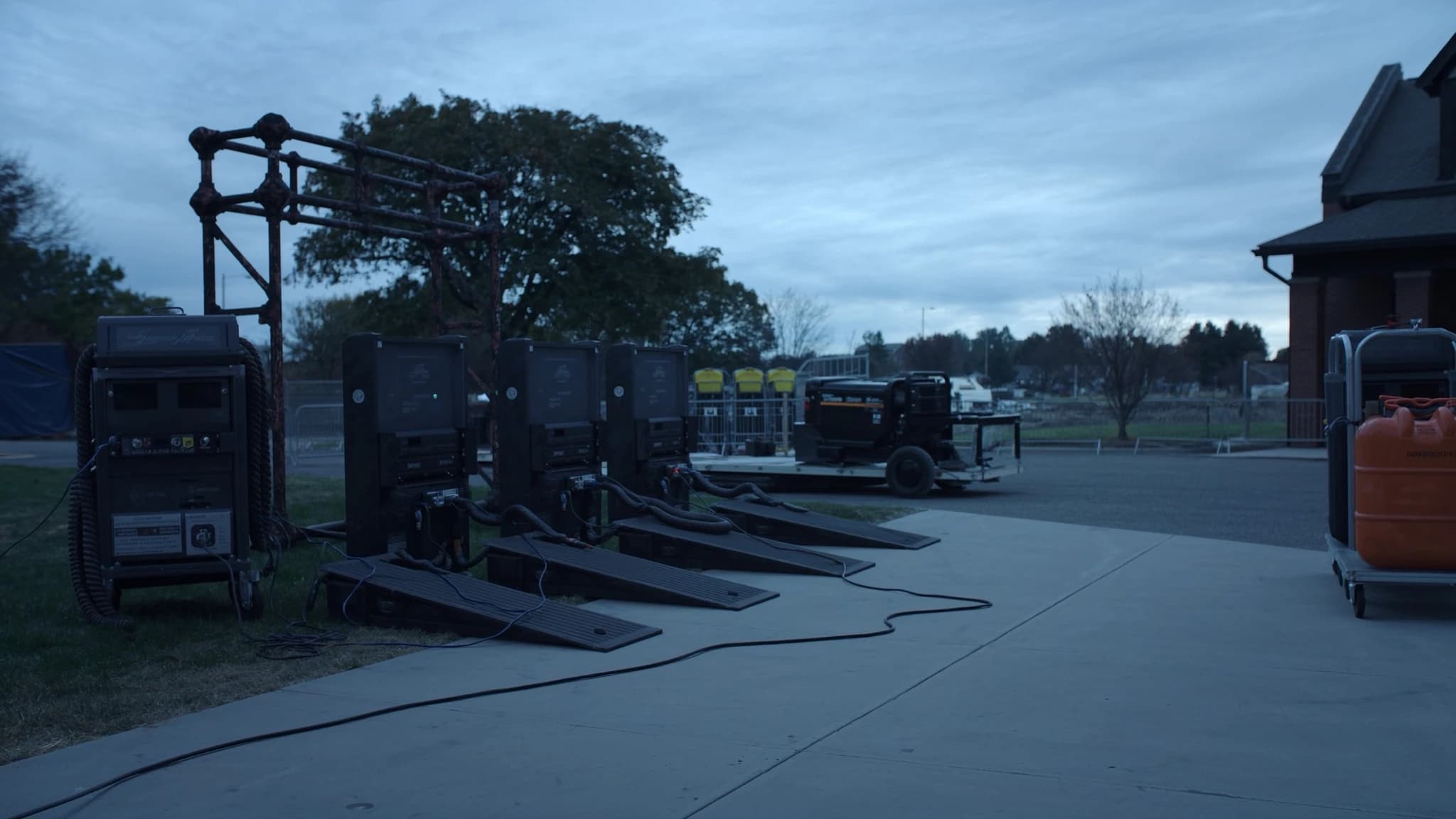
In live events, power failure is not an option, a single dropout can silence a show, damage gear, or create safety hazards. This guide covers the essential strategies for mission-critical power redundancy, from N+1 and dual-feed designs to UPS protection and generator synchronization, ensuring your audio system stays on no matter what.
Key takeaways
- Implement N+1 redundancy at main service, distro, and amplifier rack levels to survive any single point of failure.
- Dual-feed distribution ensures a single breaker trip doesn't silence the entire PA, split left/right and subs across feeds.
- Use double-conversion UPS for all consoles, DSP, and network switches to ride through sags and dropouts without reboot.
- Automatic transfer switches must be closed-transition and tested under load to avoid momentary interruptions.
- Star-ground all audio equipment to prevent ground loops from redundant power paths.
- Conduct full failure drills before every event to verify system behavior and crew readiness.
Understanding N+1 Redundancy in Live Sound
N+1 redundancy means having one more power source or distribution path than the minimum required. For a PA system drawing 100A, an N+1 design provides at least 100A of backup capacity, typically via a second feeder or generator. This ensures that if any single component fails, a breaker trips, a cable is cut, or a generator runs out of fuel, the show continues without interruption.
SSOUNDS engineers recommend N+1 at every critical junction: main service entrance, distro panels, and amplifier racks. In practice, this often means dual 200A feeds from separate utility transformers or generators, with automatic transfer switches (ATS) that switch in under 20ms, fast enough that DSP and amplifiers never reboot.
Dual-Feed Power Distribution for PA Systems
Dual-feed distribution splits the load across two independent power paths. For a line array system, left and right hangs can each be fed from separate circuits, so a single breaker trip doesn't kill both sides. Similarly, subwoofer arrays and front-fill speakers should be split across feeds.
SSOUNDS loudspeaker systems are designed with dual power inputs on amplifier racks, allowing each rack to accept two independent feeds. In a typical setup, amplifiers for left arrays and subs are on Feed A, while right arrays and fills are on Feed B. If Feed A fails, the show continues in mono at reduced SPL, far better than silence.
UPS Protection for Consoles, DSP, and Networking
Digital consoles, DSP units, and network switches are the most sensitive to power disturbances. A voltage sag or momentary dropout can corrupt show files, reset routing, or cause a system crash that takes minutes to recover. Uninterruptible Power Supplies (UPS) with pure sine wave output and sufficient runtime (at least 10 minutes at full load) are non-negotiable.
SSOUNDS recommends double-conversion (online) UPS units for all critical control equipment. These continuously regenerate clean AC power, isolating gear from generator noise, frequency shifts, and spikes. For large events, a central UPS feeding a dedicated 'critical loads' subpanel simplifies management and ensures all consoles, DSP racks, and network switches ride through any main power interruption.
Automatic Transfer Switches and Generator Synchronization
When using multiple generators or a generator with utility backup, automatic transfer switches (ATS) must be rated for the full load and capable of closed-transition (make-before-break) switching to avoid even a momentary interruption. For large shows, paralleling generators requires synchronizers that match voltage, frequency, and phase before connecting.
SSOUNDS engineers advise testing the entire transfer sequence during load-in, not just at idle. A common failure point is the ATS control circuit itself, ensure it has its own UPS or battery backup. Also, verify that generator governors respond fast enough to handle the sudden load step when the ATS transfers, especially with modern switch-mode power supplies that have high inrush currents.
Protecting Audio and Control Loads from Ground Loops and Noise
Redundant power paths can introduce ground loops if not properly bonded. Use isolated ground receptacles for audio equipment and ensure all distros share a single, low-impedance earth reference. SSOUNDS recommends a star-ground topology: all audio grounds return to a single point at the FOH or amp patch panel, with no ground lift switches on power distros.
For control networks (Dante, AVB, MADI), use managed switches with redundant power supplies and RSTP (Rapid Spanning Tree Protocol) to heal network paths if a switch fails. SSOUNDS DSP units feature dual Ethernet ports for daisy-chain or redundant ring topologies, ensuring control and audio data survive a cable cut or switch failure.
Planning for Failure: Load Testing and Contingency Drills
The best redundancy design fails without proper testing. Before every major event, SSOUNDS recommends a full load test: run the PA at show level for 30 minutes on primary power, then simulate a failure by tripping the main breaker or unplugging a feeder. Verify that the ATS transfers, UPS takes over, and audio returns within the expected timeframe.
Document every power path, label all breakers clearly, and brief the entire crew on the redundancy scheme. Assign a dedicated power technician who knows which loads are critical and how to manually transfer if automatic systems fail. Have spare feeder cables, connectors, and a portable generator on standby for outdoor events. Remember: redundancy is only as good as the people who maintain it.
Frequently asked
What is the difference between N+1 and 2N redundancy?
N+1 provides one extra unit of capacity (e.g., one extra generator), while 2N duplicates the entire system (two independent generators, each capable of full load). 2N is more robust but significantly more expensive. For live events, N+1 with dual-feed distribution is usually sufficient.
Can a UPS protect my amplifiers?
Most amplifiers draw too much current for a practical UPS. Instead, protect the control electronics (consoles, DSP, networking) with UPS, and use generator or dual-feed redundancy for amplifiers. Some high-end touring racks include large UPS units for short-term ride-through, but this is rare.
How do I prevent generator frequency drift from affecting my DSP?
Use double-conversion UPS for all DSP and networking gear. These UPS units regenerate clean 50/60Hz sine wave regardless of generator output, isolating your gear from frequency and voltage variations.
What is the minimum runtime I need from a UPS?
At least 10 minutes at full load to allow for generator startup or manual transfer. For critical shows, aim for 20-30 minutes to handle extended outages or multiple transfer attempts.
Should I use ground lift on audio equipment to fix hum?
Never lift safety ground on power cords. Instead, use signal isolation transformers, balanced connections, and proper star-grounding. Lifting ground creates a shock hazard and can damage equipment.
Building or upgrading a system?
SSOUNDS engineers and manufactures professional PA worldwide, from a single room to stadium scale.