Three-Phase Power for Live Events
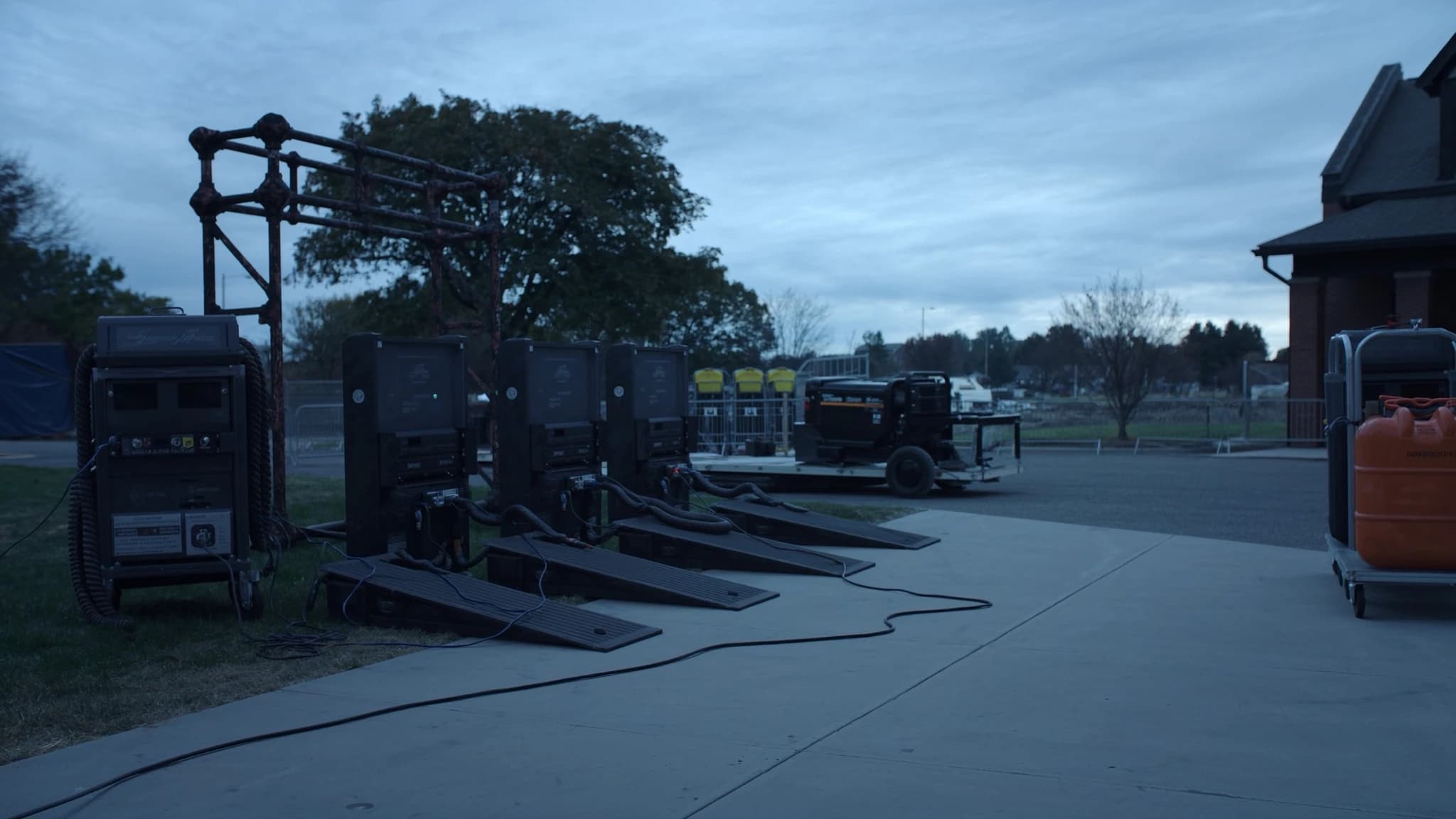
Three-phase power is the backbone of large-scale live events, providing the capacity and reliability needed to run audio, lighting, and video systems simultaneously. Understanding how to work with three-phase power safely and efficiently is essential for any sound engineer or event technician. This guide covers the fundamentals, from voltage basics to load balancing and distribution.
Key takeaways
- Three-phase power provides higher capacity and efficiency than single-phase for large events.
- Understand the difference between line voltage (phase-to-phase) and phase voltage (phase-to-neutral) to avoid equipment damage.
- Balance loads across all three phases to prevent overheating and breaker trips.
- Use appropriate distros, cabling, and connectors (CEE for up to 125A, Powerlock for higher currents).
- Calculate total power demand with a 20-30% safety margin for audio, lighting, and video.
- Always prioritize safety: verify grounding, use RCDs, and train crew on procedures.
Single-Phase vs Three-Phase Power
Single-phase power is common in residential and small commercial settings, delivering power through two wires (phase and neutral) at a typical voltage of 120V or 230V. It's sufficient for small PA systems and lighting rigs but quickly becomes inadequate for larger events where total power demand exceeds 10-15 kW.
Three-phase power uses three alternating currents offset by 120 degrees, delivered via three phase wires (L1, L2, L3) and optionally a neutral. This configuration provides a more constant power delivery, higher efficiency, and the ability to handle loads up to hundreds of kilowatts. For live events, three-phase is the standard for power distribution beyond a basic setup.
Line Voltage vs Phase Voltage
In a three-phase system, there are two key voltage measurements: phase voltage (Vph) and line voltage (Vline). Phase voltage is the voltage between any one phase and neutral. Line voltage is the voltage between any two phases. For a wye (star) configuration, Vline = √3 × Vph. For example, with a 230V phase voltage, line voltage is approximately 400V.
Most audio and lighting equipment operates on single-phase power (phase to neutral), while larger loads like motors or certain distro inputs use line voltage. Understanding this distinction is critical when sizing cables and selecting connectors. SSOUNDS engineers always verify the supply configuration before connecting any equipment to avoid damage.
Balancing Loads Across Phases
Balancing the load across all three phases is crucial for system stability and efficiency. An unbalanced load can cause voltage fluctuations, overheating of neutral conductors, and tripping of breakers. Ideally, the current draw on each phase should be as equal as possible.
Practical tips: Distribute audio racks, lighting dimmers, and video processors evenly across phases. Use a power analyzer to measure current on each leg during setup. SSOUNDS recommends labeling all circuits by phase and using a load calculation spreadsheet to plan distribution. For example, if one phase is powering subwoofers (high current) and another only monitors, shift some subwoofers to balance.
Distribution (Distro) and Cabling
A power distribution unit (distro) takes the incoming three-phase supply and breaks it down into multiple single-phase circuits. Distros come in various sizes, from small 63A units to large 400A+ systems for festivals. They include main breakers, branch breakers, and often metering for each phase.
Cabling must be rated for the expected current and voltage. For three-phase runs, use 5-wire cable (3 phases, neutral, ground) with appropriate gauge. Common sizes: 16mm² for 63A, 35mm² for 125A. Always use color-coded cable or tape: brown/black/grey for phases, blue for neutral, green/yellow for ground. SSOUNDS engineers always inspect cable insulation and connectors for damage before each event.
Connectors: CEE and Powerlock
CEE (IEC 60309) connectors are the most common for temporary power distribution. They are color-coded by voltage and frequency: blue for 230V single-phase, red for 400V three-phase. Sizes range from 16A to 125A. These connectors are splash-proof and lockable, making them ideal for outdoor events.
Powerlock (or cam-lock) connectors are used for high-current applications (125A and above). They consist of individual color-coded plugs that mate into a panel. They are faster to connect and disconnect than CEE but require more care to ensure correct phase alignment. SSOUNDS uses Powerlock for main feeder runs and CEE for sub-distribution to racks.
Sizing Supply for Audio, Lighting, and Video
To size the supply, calculate the total power demand of all equipment, including audio amplifiers, lighting fixtures, video projectors, and support gear. Add a safety margin of 20-30% for peaks and future expansion. For example, a medium-sized concert might require 100A three-phase (about 69 kW at 400V).
Audio systems are often the most demanding due to transient peaks. SSOUNDS line arrays and subwoofers are designed for high efficiency, but still require careful calculation. Lighting (LED or moving heads) and video (LED walls) can draw significant continuous current. Use a power budget spreadsheet and consult with the venue's electrician to confirm available capacity.
Safety and Best Practices
Always verify that the supply is properly grounded and that all equipment is bonded. Use residual current devices (RCDs) for personnel protection. Never exceed the rated capacity of cables or connectors. Label all circuits clearly and keep a one-line diagram of the distribution system.
Before connecting, use a multimeter to check voltage between phases and phase to neutral. Ensure the distro is turned off when making connections. Train all crew on lockout/tagout procedures. SSOUNDS provides training for its rental partners on safe power practices, emphasizing that a well-planned power system is the foundation of a successful event.
Frequently asked
Can I run a three-phase distro from a single-phase source?
No, a three-phase distro requires a three-phase supply. If only single-phase is available, you must use a single-phase distro or a phase converter, but the latter is rarely used in live events. Always check the venue's supply before planning.
What happens if phases are unbalanced?
Unbalanced loads cause neutral current to flow, which can overheat the neutral conductor and cause voltage drops on heavily loaded phases. This can lead to equipment malfunction or tripping of breakers. Always balance as closely as possible.
What size cable do I need for a 125A three-phase feed?
For a 125A three-phase feed, use 35mm² 5-core cable (or 4-core plus separate ground). The exact size depends on cable length and local regulations. Always consult a qualified electrician.
Do I need a neutral for all three-phase connections?
For wye (star) systems, a neutral is required for single-phase loads. For delta systems, no neutral is provided. Most event distros are wye with neutral. Always confirm the supply type.
How do I measure current on each phase?
Use a clamp meter around each phase conductor (L1, L2, L3) individually. Do not clamp around multiple conductors at once. Measure at the distro input or at the main panel. Record values and adjust loads to balance.
Building or upgrading a system?
SSOUNDS engineers and manufactures professional PA worldwide, from a single room to stadium scale.