Speaker Coverage vs Wattage: What Actually Matters
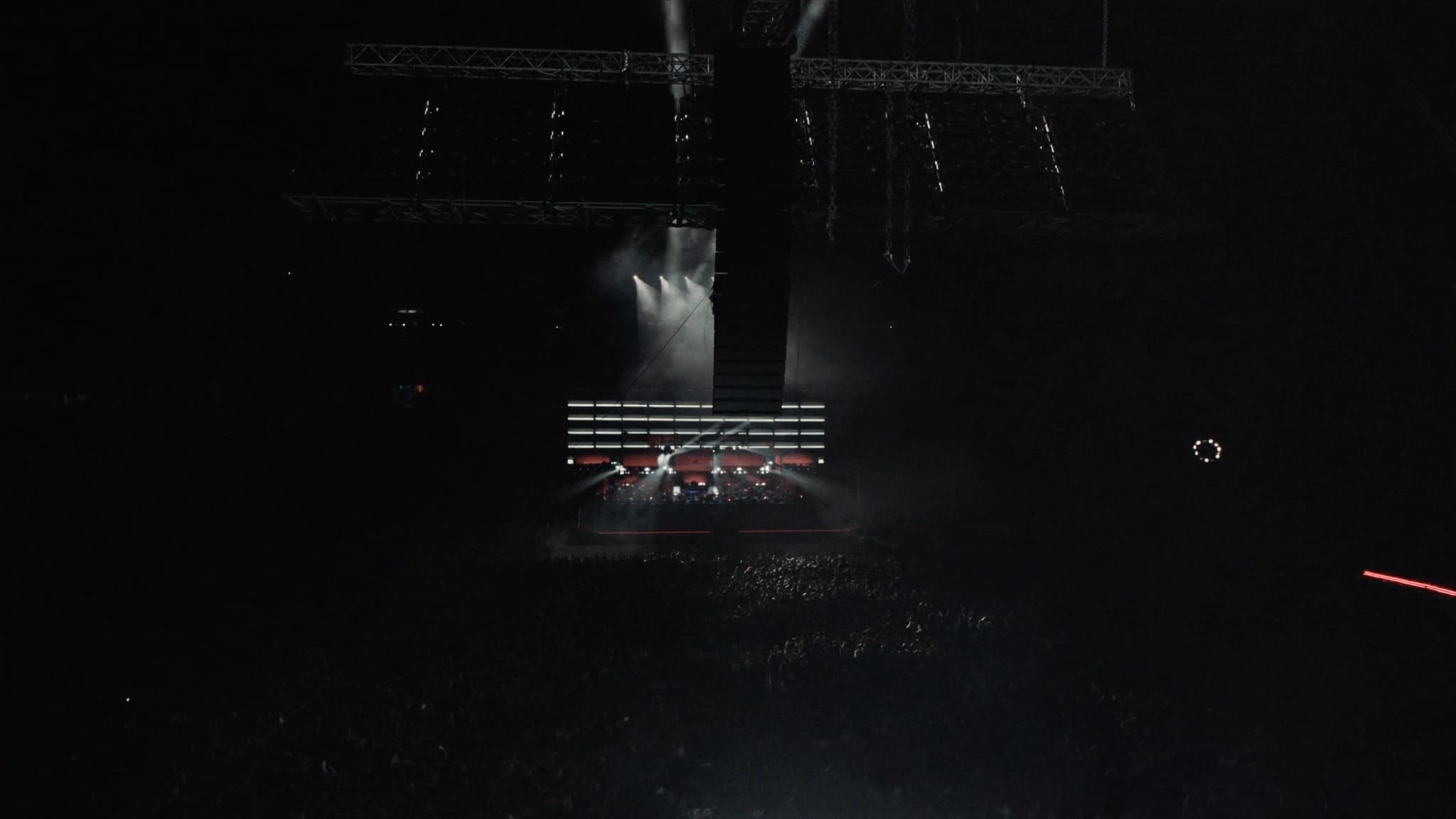
When selecting loudspeakers for a live sound system, many buyers fixate on wattage, often assuming that higher power ratings automatically mean louder, better coverage. But in professional audio, wattage is only one piece of the puzzle. Coverage pattern and SPL-at-distance are far more critical for ensuring that every seat in the house receives clear, consistent sound. At SSOUNDS, we engineer systems where dispersion control and long-throw capability take precedence over raw electrical power. This guide explains why.
Key takeaways
- Wattage is a poor indicator of real-world loudness; sensitivity and coverage pattern matter more.
- Coverage pattern determines how uniformly sound reaches the audience; controlled dispersion improves intelligibility.
- SPL-at-distance is the true measure of a system's reach; directional designs maintain level over long throws.
- High sensitivity reduces amplifier requirements, saving cost and weight.
- Professional systems like SSOUNDS are engineered for consistent coverage and SPL, not just high power ratings.
The Wattage Myth: Why Raw Power Misleads
Wattage measures the electrical power a speaker can handle, but it doesn't directly tell you how loud the speaker will be at a given distance. A 1000W speaker with poor efficiency may produce less acoustic output than a 500W speaker with high sensitivity. Sensitivity (dB SPL at 1W/1m) is the true starting point for predicting real-world performance.
Moreover, doubling wattage only yields a 3 dB increase in SPL, barely perceptible as 'twice as loud' requires 10 dB. Many buyers fall into the trap of chasing high wattage numbers without considering how that power translates to coverage. Professional systems like SSOUNDS line arrays achieve high SPL through efficient transducer design and optimized cabinet coupling, not brute-force power.
Coverage Pattern: The Unsung Hero of Intelligibility
Coverage pattern, the horizontal and vertical dispersion of sound, determines how uniformly a speaker fills a venue. A narrow-coverage speaker may produce high SPL on-axis but leave the sides and rear of the audience with weak, muddy sound. Conversely, a wide-coverage speaker might spill energy onto walls and ceilings, causing reflections that reduce clarity.
Professional systems use precisely controlled waveguides and arrayable cabinets to shape coverage. For example, SSOUNDS line arrays employ adjustable inter-cabinet angles to create a coherent wavefront that follows the audience geometry. This ensures that listeners at the front, middle, and back receive consistent frequency response and level, something raw wattage cannot achieve.
SPL-at-Distance: The True Measure of Reach
The real metric for judging a speaker's ability to cover a venue is SPL at a given distance, not at 1 meter. A speaker's 'throw' depends on its directivity and the inverse-square law. A highly directional system can maintain high SPL far into the audience, while an omnidirectional speaker loses level rapidly.
SSOUNDS engineers design systems with controlled directivity down to low frequencies, using techniques like cardioid subwoofer arrays and constant-directivity horns. This allows our systems to deliver 100+ dB SPL at 30 meters with minimal variation, whereas a typical high-wattage point-source speaker might drop off by 12 dB over the same distance.
Efficiency and Sensitivity: The Foundation of Output
Sensitivity (usually measured as dB SPL at 1W/1m) is the most important spec for predicting loudness. A speaker with 100 dB sensitivity requires only 1W to produce 100 dB at 1m; to reach 109 dB, it needs 8W. A speaker with 90 dB sensitivity needs 80W to achieve the same level. This is why SSOUNDS focuses on high-sensitivity drivers and optimized horn loading.
Efficiency also affects amplifier requirements. A high-sensitivity system can achieve target SPL with smaller, lighter amplifiers, reducing cost, weight, and power consumption. In large-scale deployments, this translates to significant operational savings.
Real-World Example: Stadium vs. Nightclub
Consider a stadium with 20,000 seats. A typical point-source speaker with 2000W and 95 dB sensitivity might produce 130 dB at 1m, but at 30m, that drops to 100 dB, barely adequate for rock music. A SSOUNDS line array, with 800W per cabinet but 105 dB sensitivity and tight vertical coverage, can deliver 110 dB at 30m because the energy is focused where the audience sits.
In a nightclub, coverage pattern matters more than raw SPL. A wide-dispersion subwoofer array can create a uniform bass field, while narrow-dispersion tops prevent slap echoes from hard surfaces. Wattage alone cannot solve these acoustic challenges.
How SSOUNDS Engineers Prioritize Coverage and SPL-at-Distance
Every SSOUNDS system is designed with a holistic approach: we start with the venue geometry and work backward to determine coverage angles, array configuration, and amplifier power. Our DSP presets are tuned to maintain consistent frequency response across the coverage area, and our rigging hardware allows precise vertical aiming.
We also invest in R&D for waveguide design and driver matching. For example, our line array cabinets use a patented phase plug that extends high-frequency directivity control lower in the band, reducing the need for separate fill speakers. The result is a system that sounds the same from row 1 to row 100, without relying on excessive wattage.
Frequently asked
Does higher wattage always mean louder sound?
No. Loudness depends on sensitivity (dB SPL at 1W/1m) and distance. A high-wattage speaker with low sensitivity may be quieter than a lower-wattage, high-sensitivity speaker. Doubling wattage only adds 3 dB, which is barely noticeable.
What is the most important spec for choosing a speaker?
Sensitivity and coverage pattern are the most critical. Sensitivity tells you how efficiently the speaker converts power to sound, and coverage pattern determines how uniformly that sound reaches the audience. SPL at the listening distance is the ultimate metric.
How does SSOUNDS achieve consistent coverage?
SSOUNDS uses precisely engineered waveguides, adjustable inter-cabinet angles in line arrays, and DSP presets tailored to venue geometry. This ensures that frequency response and level remain consistent across the entire audience area.
Can a high-wattage point-source speaker replace a line array?
In most large venues, no. Point-source speakers have limited directivity control, causing uneven coverage and rapid SPL drop-off with distance. Line arrays provide coherent wavefronts that maintain level and clarity over long throws.
What is the benefit of high sensitivity in a PA system?
High sensitivity allows you to achieve target SPL with less amplifier power, reducing system cost, weight, and power consumption. It also improves headroom and reduces distortion at high levels.
Building or upgrading a system?
SSOUNDS engineers and manufactures professional PA worldwide, from a single room to stadium scale.