Speaker Wiring and Cabling: A Practical Guide
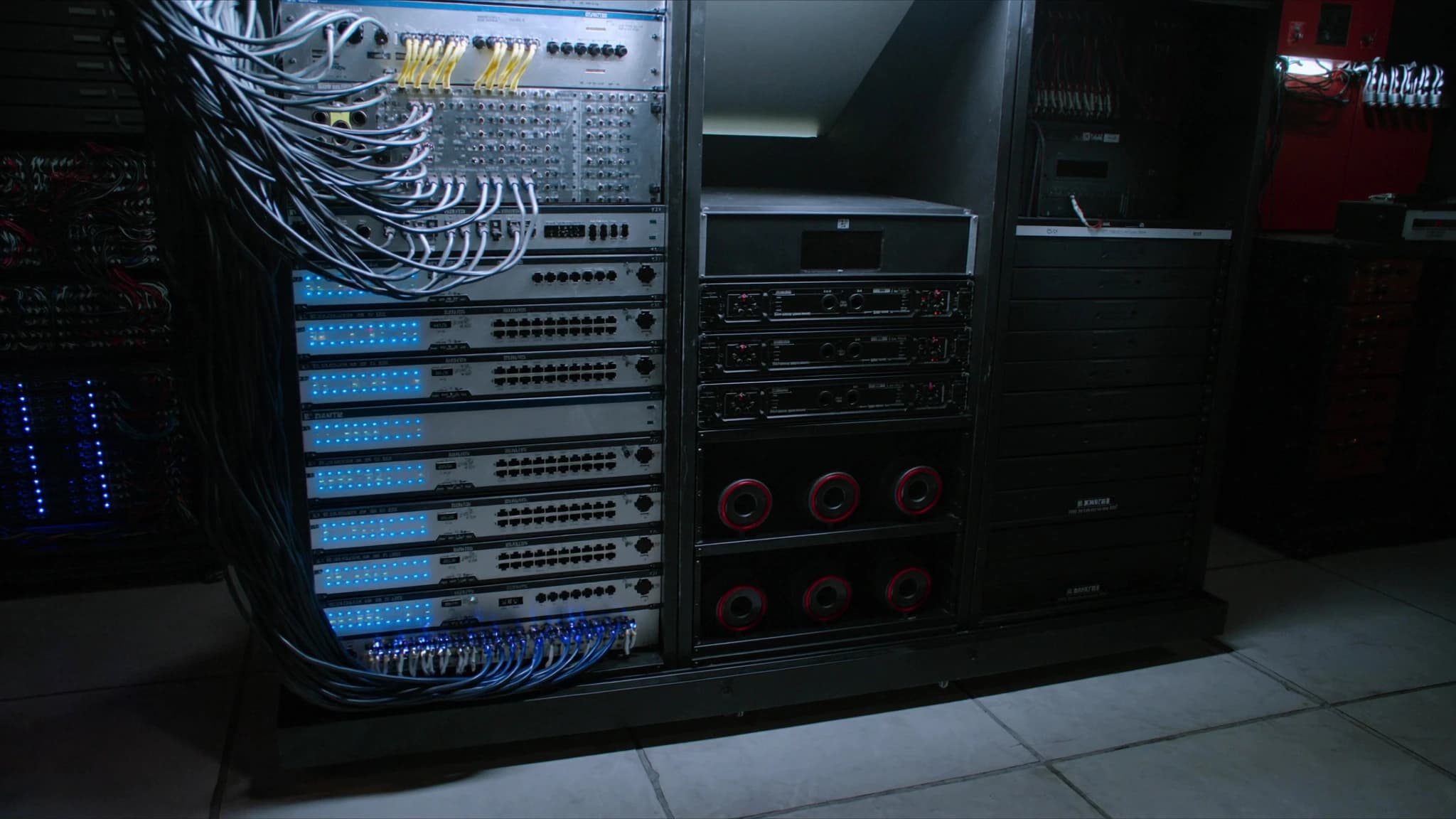
Proper speaker wiring and cabling are the backbone of any reliable sound system, yet they're often overlooked until something goes wrong. Whether you're wiring a permanent installation or a touring rig, understanding the differences between low-impedance and high-impedance (70V/100V) systems, selecting the correct cable gauge for your run length, and using the right connectors can mean the difference between pristine audio and costly failures. This guide covers the essentials every audio professional needs to know, with practical advice to avoid common pitfalls.
Key takeaways
- Choose low-impedance for live sound and high-impedance for long distributed runs.
- Match cable gauge to distance and load impedance to keep resistance below 5% of nominal.
- Use Neutrik Speakon connectors for speaker-level connections; never use XLR for speaker signals.
- Keep balanced signal cables away from speaker cables to avoid noise induction.
- For digital audio networks, use shielded Cat5e/Cat6 and managed switches with proper QoS settings.
- Always test cables and polarity before deployment to prevent costly failures.
Low-Impedance vs. High-Impedance (70V/100V) Systems
Low-impedance (low-Z) systems, typically 4Ω, 8Ω, or 16Ω, are standard for live sound and most installed PA applications. They deliver full amplifier power directly to the speakers, offering superior transient response and damping factor. Cable runs are limited by resistance; long distances cause power loss and frequency response degradation. For runs over 50–100 feet (15–30 m), thicker gauge cable is essential.
High-impedance (70V or 100V) systems use a transformer at each speaker to step up voltage, allowing long cable runs (hundreds of feet) with minimal loss. These are common in distributed audio for commercial spaces, paging, and background music. The trade-off is reduced low-frequency performance and lower overall fidelity. Always match the transformer tap to the desired wattage and ensure the total tapped wattage does not exceed the amplifier's rated power.
Cable Gauge vs. Distance: The Right Wire for the Job
For low-impedance systems, cable resistance directly affects power transfer and damping. A good rule of thumb: keep total loop resistance below 5% of the speaker's nominal impedance. For an 8Ω load, that means less than 0.4Ω total resistance. Use this quick reference: 18 AWG is suitable up to 25 ft (8 m) for 8Ω; 16 AWG up to 50 ft (15 m); 14 AWG up to 100 ft (30 m); 12 AWG up to 200 ft (60 m); 10 AWG for longer runs. For 4Ω loads, halve these distances.
For 70V/100V systems, cable gauge is less critical because current is lower. 18 AWG can often handle runs of 500 ft (150 m) or more, but always calculate voltage drop to stay within 2–3 dB loss. Use online calculators or the formula: Vdrop = I × R, where I = total wattage / voltage (e.g., 100W / 70V = 1.43A).
Connectors: Speakon, NL4, and Beyond
Neutrik Speakon connectors (NL2, NL4, NL8) are the industry standard for professional speaker cabling. They are locking, weather-resistant, and carry high current. NL4 connectors allow bi-amping or passive crossover bypass with a single cable: pins 1+ and 1- for low frequencies, pins 2+ and 2- for high frequencies. Always wire consistently (e.g., pin 1+ to positive, 1- to negative) to avoid phase issues.
For passive speakers, use a single NL4 with a jumper or internal crossover. For active speakers, use balanced XLR or TRS for signal and powerCON or IEC for AC. Never use XLR for speaker-level signals, it can damage equipment and is unsafe. Banana plugs and binding posts are common in home audio but unreliable for touring. Always secure cables with strain relief and avoid daisy-chaining multiple speakers on one connector without verifying the amplifier can handle the combined load.
Balanced Signal vs. Speaker Level: Know Your Levels
Balanced audio (mic/line level) uses three conductors: hot, cold, and ground, with the signal sent in opposite polarity on hot and cold. This cancels induced noise over long runs. Standard for console outputs, processor inputs, and active speaker inputs. Use XLR or TRS cables; keep runs under 300 ft (100 m) for analog, or use a DI box for longer distances.
Speaker-level signals are high-voltage, high-current, and unbalanced. Never run them alongside low-level signal cables, inductive coupling can cause hum and noise. Keep speaker cables at least 12 inches (30 cm) away from signal cables, and cross them at 90-degree angles if necessary. Always power down amplifiers before connecting or disconnecting speaker cables to prevent arcing and damage.
Network and Dante Cabling for Modern Systems
Digital audio networks like Dante, AVB, and AES67 use standard Ethernet cabling (Cat5e, Cat6, or Cat7). For Dante, use shielded Cat5e or better for runs up to 100 m (328 ft). Unshielded cable can work in clean environments, but shielded is recommended for live sound to reduce EMI. Use RJ45 connectors with a metal shield and proper strain relief. Avoid using couplers or patch panels with excessive length, each connection adds latency and potential failure points.
For redundant networks, run two separate cables (primary and secondary) on different paths. Never run Ethernet cables parallel to AC power lines for long distances. Use managed switches with QoS and IGMP snooping to handle multicast traffic. SSOUNDS DSP amplifiers and processors feature built-in Dante connectivity, allowing seamless digital distribution with low latency and easy system control.
Common Mistakes and How to Avoid Them
One of the most frequent errors is using the wrong cable gauge for the distance, resulting in power loss and poor sound quality. Always calculate voltage drop before installation. Another mistake is mixing up polarity, connect positive to positive and negative to negative across all components. Use a polarity tester or a 9V battery to verify.
Over-tightening Speakon connectors can strip threads; hand-tighten only. Avoid using speaker cables as tie-downs or pulling on them to move speakers. For permanent installations, use plenum-rated cable in air-handling spaces. Finally, never assume a cable is good, test every cable with a multimeter or cable tester before and after each show. SSOUNDS recommends color-coding or labeling cables by length and type to speed up setup and troubleshooting.
Frequently asked
Can I use a regular XLR cable for speaker-level signals?
No. XLR cables are designed for low-level signals (mic/line) and cannot handle the high current and voltage of speaker-level signals. Using them can cause overheating, fire, or damage to equipment. Always use proper speaker cables with Speakon or other rated connectors.
What gauge cable should I use for a 100-foot run to an 8Ω speaker?
For a 100 ft (30 m) run to an 8Ω speaker, use at least 14 AWG cable. This keeps resistance around 0.25Ω per conductor (0.5Ω loop), well under the 5% threshold (0.4Ω). For 4Ω loads, step up to 12 AWG or use shorter runs.
How do I wire an NL4 connector for bi-amping?
Wire pins 1+ and 1- to the low-frequency driver (or LF input on the speaker), and pins 2+ and 2- to the high-frequency driver (or HF input). Ensure the amplifier channels are configured accordingly. Use a consistent pinout across all cables and speakers.
What is the maximum cable length for Dante?
The maximum recommended length for a single Dante cable run is 100 meters (328 feet) using Cat5e or better. For longer distances, use network switches or fiber optic converters. Always use shielded cable in high-EMI environments.
Can I daisy-chain multiple passive speakers on one amplifier channel?
Yes, but only if the total impedance of the parallel combination is within the amplifier's minimum load rating. For example, two 8Ω speakers in parallel present a 4Ω load. Ensure the amplifier is rated for that load and use proper cabling to handle the combined current.
Building or upgrading a system?
SSOUNDS engineers and manufactures professional PA worldwide, from a single room to stadium scale.