SSOUNDS System Networking: How Our Amplifiers Connect
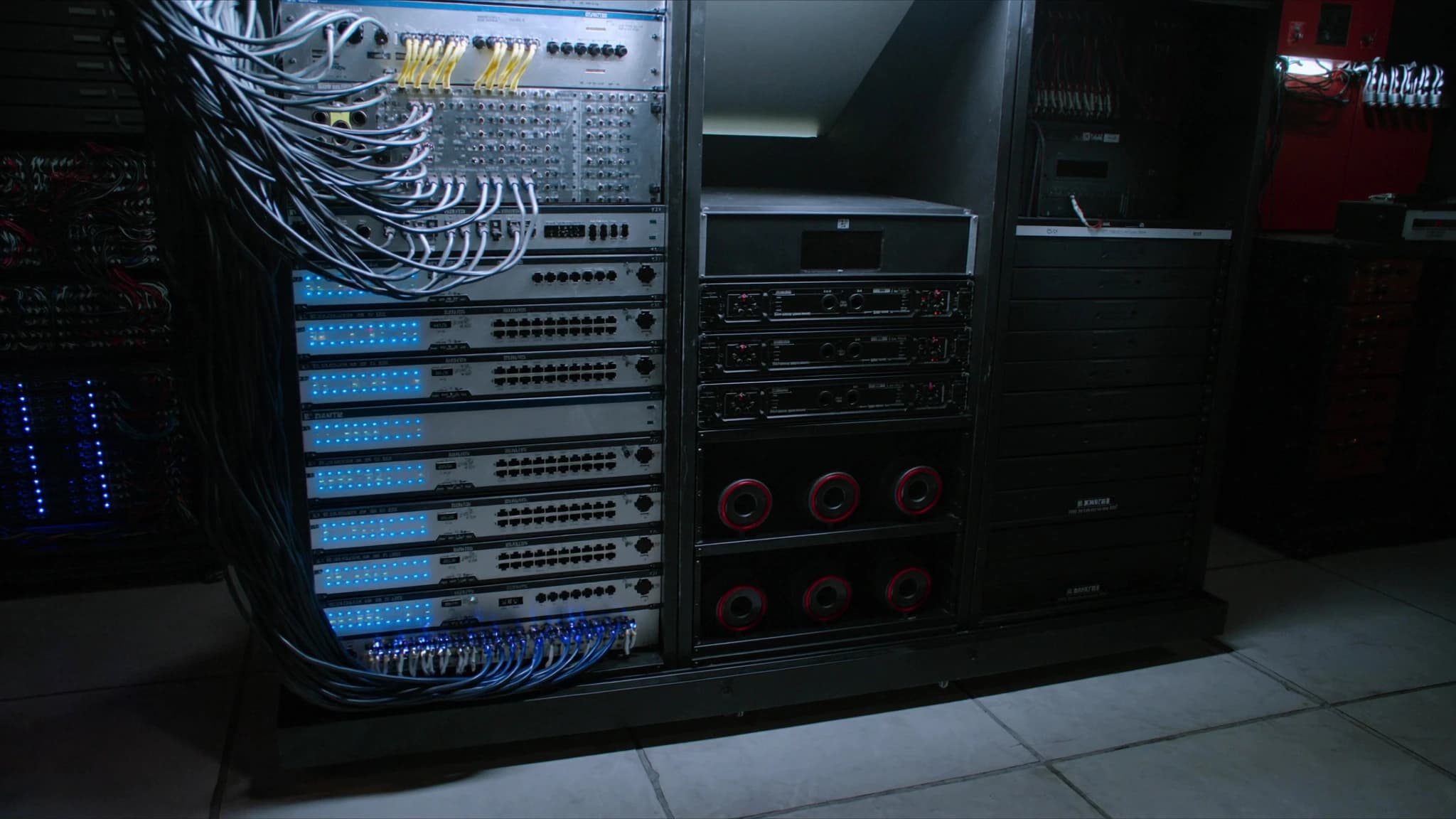
Modern professional audio demands more than great sound, it requires a robust, intelligent network that connects every amplifier, loudspeaker, and control point into a seamless ecosystem. SSOUNDS amplifiers are engineered with native Dante/AES67 audio transport, redundant network topologies, and deep integration with our System Designer software, giving engineers total command over large-scale installations and touring rigs.
Key takeaways
- SSOUNDS amplifiers feature dual Gigabit Ethernet ports for redundant audio and control networks.
- Native Dante/AES67 support enables high-channel-count digital audio transport with low latency.
- System Designer provides centralized configuration, monitoring, and control of all networked amplifiers.
- Redundant audio streams and power supplies ensure uninterrupted operation during critical events.
- Integration with major consoles and third-party systems is seamless via Dante, AES3, or analog I/O.
- Network topology flexibility allows daisy-chain, star, or ring configurations to suit any venue.
Amplifier I/O and Network Interfaces
SSOUNDS amplifiers feature a comprehensive I/O panel designed for flexibility and reliability. Each unit includes dual Gigabit Ethernet ports for primary and secondary network connections, enabling redundant audio and control paths. Analog inputs (XLR) and AES3 digital inputs are also provided for legacy or standalone operation, but the core of a modern SSOUNDS system is the digital network.
The amplifier’s onboard DSP handles all crossover, EQ, limiting, and delay processing, with presets optimized for each SSOUNDS loudspeaker model. Network connectivity allows real-time monitoring of amplifier temperature, output current, and limiter activity, as well as remote adjustment of gain, mute, and routing.
Dante/AES67 Audio Transport
SSOUNDS amplifiers support Dante audio networking with up to 64x64 channels per amplifier (depending on model), using standard IP infrastructure. AES67 compatibility ensures interoperability with other professional audio equipment, including digital mixing consoles, stage boxes, and third-party DSP units.
Audio routing is configured via Dante Controller or directly within SSOUNDS System Designer. Multiple amplifiers can share the same multicast flows, allowing a single console output to feed an entire line array or zone. Sample rates of 48 kHz or 96 kHz are supported, with automatic latency management to keep all drivers phase-aligned.
Network Control and Monitoring with System Designer
SSOUNDS System Designer is the central software platform for configuring, monitoring, and controlling the entire loudspeaker system. It discovers all SSOUNDS amplifiers on the network via standard IP protocols (TCP/IP and UDP), displaying their status, firmware version, and assigned loudspeaker presets.
Engineers can create groups, adjust output levels, mute individual channels, and monitor real-time metrics such as output voltage, current, and temperature. System Designer also logs historical data for troubleshooting and preventive maintenance. The software runs on Windows and macOS, and can be used on a dedicated laptop or integrated into a larger show control network via OSC or MIDI.
Redundancy and Failover
For mission-critical events, SSOUNDS amplifiers support redundant network topologies. The dual Ethernet ports can be configured for primary/secondary audio streams (Dante redundancy) or for separate control and audio networks. In the event of a network switch failure or cable break, the amplifier seamlessly switches to the backup stream with no audible dropout.
Additionally, amplifiers can be daisy-chained using the secondary port for simplified cabling in smaller systems, while still maintaining a redundant path when using a ring topology with managed switches. Power supply redundancy is also available in select amplifier models, with dual hot-swappable PSUs.
Integration with Consoles and Third-Party Systems
SSOUNDS amplifiers integrate directly with major digital mixing consoles via Dante/AES67, allowing direct digital patching without analog conversion. For consoles without Dante, analog or AES3 inputs are available. The network control layer can also be bridged to console automation systems using MIDI or TCP/IP commands.
System Designer supports export of system configurations for documentation and can import venue or rigging data for acoustic prediction. This makes it easy to pre-configure an entire tour or installation in the shop and deploy on-site with minimal setup time.
Practical Network Topology Examples
A typical SSOUNDS system for a medium-sized festival might use a primary Dante network running at 1 Gbps, with a secondary network for control and monitoring. Amplifiers are connected to managed switches with QoS enabled to prioritize audio traffic. The FOH console sends its main L/R and subwoofer outputs via Dante to a dedicated amplifier for the front fill, while delay towers receive their own multicast flows.
For larger installations, multiple subnets can be used, with SSOUNDS amplifiers supporting VLAN tagging and IGMP snooping to minimize network load. System Designer can manage devices across different subnets as long as routing is properly configured.
Frequently asked
Can I use a standard network switch with SSOUNDS amplifiers?
Yes, any managed Gigabit Ethernet switch with IGMP snooping and QoS is recommended for Dante networks. For control-only networks, unmanaged switches may suffice, but managed switches provide better redundancy and traffic management.
How many amplifiers can I control from one instance of System Designer?
System Designer can discover and control hundreds of amplifiers on the same network, limited only by network bandwidth and IP addressing. For very large systems, multiple instances can be used with proper subnetting.
Does SSOUNDS support AES67 for interoperability with non-Dante devices?
Yes, all SSOUNDS amplifiers with Dante also support AES67, allowing connection to AES67-compliant equipment such as certain mixing consoles, microphones, and intercom systems.
What happens if the network fails during a show?
With redundant Dante streams and dual Ethernet ports, the amplifier will automatically switch to the backup audio stream. Control may be temporarily lost, but audio continues uninterrupted. For maximum reliability, we recommend using redundant switches and power supplies.
Can I monitor amplifier status remotely over the internet?
Yes, System Designer can be configured to connect to amplifiers over a VPN or through port forwarding, allowing remote monitoring and troubleshooting. However, for live performance, a local dedicated network is strongly advised to minimize latency and risk.
Building or upgrading a system?
SSOUNDS engineers and manufactures professional PA worldwide, from a single room to stadium scale.