The Best Network Topology for Live Sound
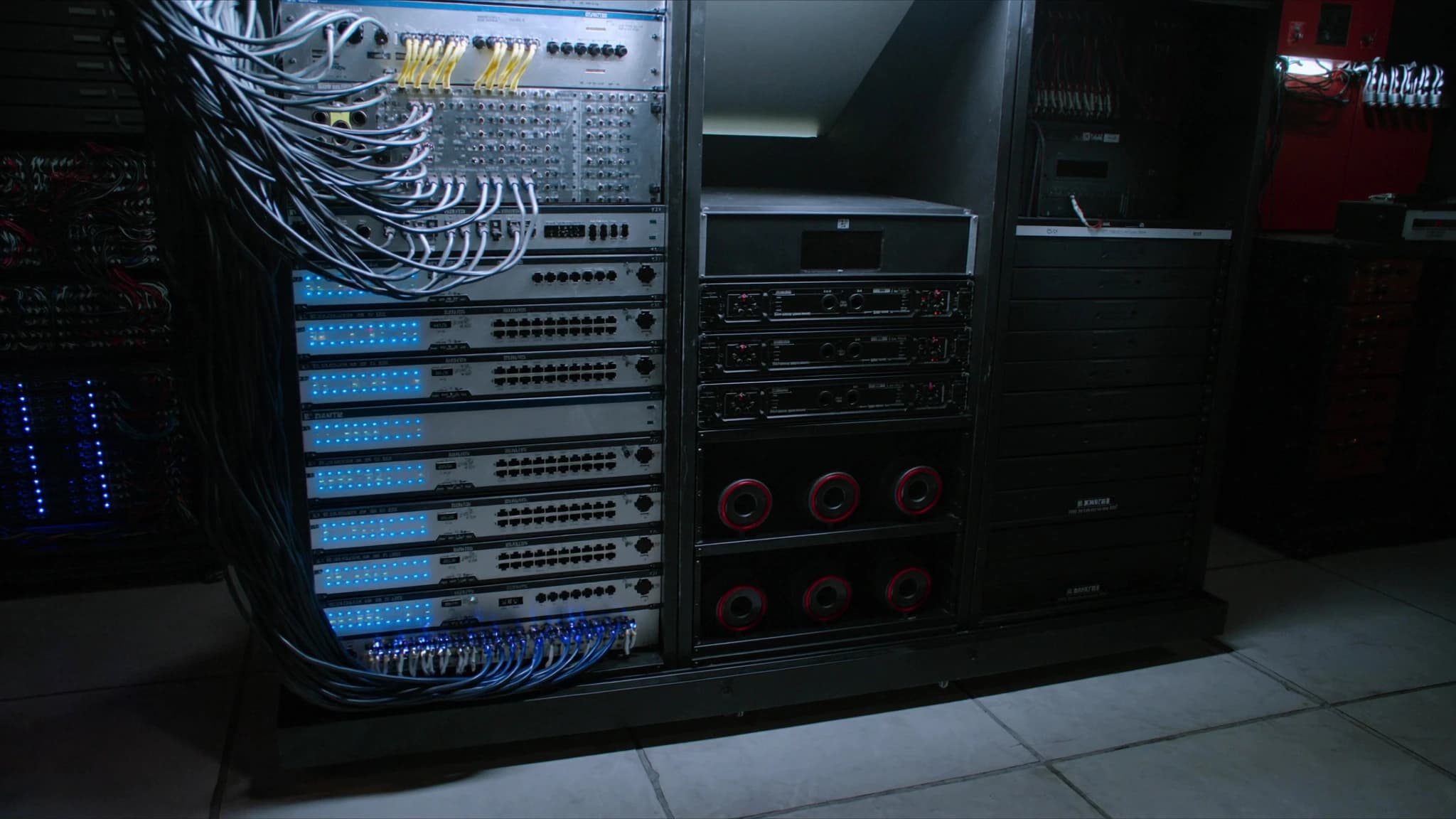
In modern live sound, the network is the backbone of your entire audio system, carrying digital audio, control data, and monitoring signals across the venue. Choosing the right topology can mean the difference between a flawless show and a catastrophic failure. This guide breaks down the key considerations for designing a reliable show network, from star and redundant topologies to VLANs and cable management.
Key takeaways
- Star topology is simple but has a single point of failure; use redundant switches for critical events.
- Redundant ring topology offers the highest reliability with automatic failover under 50 ms.
- Primary/secondary Dante networks provide seamless backup; keep them physically isolated.
- Use VLANs to separate audio, control, and IT traffic; enable IGMP snooping and QoS.
- Fibre optic links are best for long cable runs; keep copper under 100 metres and use shielded cable.
- Always test the network under load and document the topology for quick troubleshooting.
Star Topology: Simple and Effective
The star topology is the most common and straightforward network design for live sound. In this setup, all devices, mixing consoles, stage boxes, amplifiers, and DSP units, connect to a central switch. This central point simplifies troubleshooting and allows for easy expansion. For smaller to medium-sized shows, a single gigabit switch with sufficient ports can handle both audio (Dante, AVB, or MADI) and control traffic.
However, the star topology has a single point of failure: if the central switch goes down, the entire network collapses. To mitigate this, always use a high-quality, managed switch with redundant power supplies (dual PSUs) and consider a backup switch on standby. For mission-critical events, a redundant star (dual switches) can be deployed, but this increases complexity and cost.
Redundant Ring Topology: Maximum Reliability
For large-scale tours and festivals where uptime is non-negotiable, a redundant ring topology (often using protocols like Dante Redundant or RSTP) provides the highest reliability. In a ring, each device connects to two neighbours, forming a loop. If a cable or switch fails, traffic automatically reroutes in the opposite direction, with failover times typically under 50 milliseconds, imperceptible to the audience.
SSOUNDS engineers often recommend a dual-ring approach for primary and secondary Dante networks. This creates two independent rings: one for primary audio and one for secondary (backup). Each device sends identical audio on both networks, so if one ring fails, the other takes over seamlessly. The trade-off is doubled cabling and switch ports, but for headline acts and broadcast events, it’s the gold standard.
Primary/Secondary Dante Networks
Dante’s primary/secondary redundancy is a cornerstone of live sound networking. In this design, each Dante-enabled device connects to two separate switches (or two VLANs on the same switch), one for the primary network and one for the secondary. The primary carries the main audio stream; the secondary carries an identical copy. If a cable, switch, or port fails on the primary, the receiver automatically switches to the secondary within milliseconds.
To implement this effectively, ensure that primary and secondary networks are physically isolated, use separate switches or separate VLANs with no routing between them. Never share a single cable for both primary and secondary (e.g., using a single Cat6 for both is a single point of failure). SSOUNDS DSP and amplifier platforms support Dante redundancy natively, allowing seamless integration into such topologies.
VLANs: Separating Audio and Control Traffic
In complex networks, VLANs (Virtual Local Area Networks) are essential for separating different types of traffic. For live sound, create at least three VLANs: one for Dante audio, one for control (e.g., OSC, HTTP, or proprietary protocols like SSOUNDS NetControl), and one for general IT traffic (Wi-Fi, internet). This prevents audio packets from being delayed by control bursts or large file transfers.
Use a managed switch with IGMP snooping to optimise multicast traffic (Dante uses multicast for clocking and discovery). Without IGMP snooping, multicast packets flood all ports, wasting bandwidth. Also, set up QoS (Quality of Service) to prioritise Dante audio packets (typically DSCP 46) over control and data traffic. This ensures low latency and jitter even under heavy load.
Switch Placement and Cable Runs
Switch placement should follow the signal flow: place a switch near the FOH (front of house) for consoles and near the stage for stage boxes and amplifiers. For large venues, use multiple switches connected via fibre optic links to cover long distances without signal degradation. Fibre is immune to electromagnetic interference and can run hundreds of metres, ideal for festival fields or arena ceilings.
For copper runs (Cat5e/Cat6), keep cable lengths under 100 metres per segment. Use shielded cable (STP) in high-EMI environments like near power distros or lighting dimmers. Always label every cable clearly and use colour coding (e.g., red for primary Dante, blue for secondary, yellow for control). SSOUNDS recommends pre-terminated, factory-tested cables for reliability.
Real-World Best Practices from SSOUNDS Engineers
Based on hundreds of deployments, SSOUNDS engineers emphasise three rules: (1) Never rely on a single switch or cable, always have a backup path. (2) Test your network under load before show day, use Dante Controller to monitor latency and packet loss. (3) Document your network topology and label everything. In a crisis, clear documentation saves minutes that could save the show.
For large line array systems like those from SSOUNDS, use a dedicated network for amplifier control separate from audio. This allows remote monitoring of amplifier status, temperature, and limiter activity without risking audio dropouts. Many SSOUNDS amplifiers include dual network ports for daisy-chaining in a ring topology, simplifying cabling while maintaining redundancy.
Frequently asked
What is the best topology for a small club show?
A simple star topology with a single managed gigabit switch is usually sufficient. Use a switch with a dual PSU for extra reliability, and consider a secondary switch as a hot spare.
Can I use a single cable for both primary and secondary Dante?
No. That creates a single point of failure. Primary and secondary networks must be physically separate, use different cables and switches (or different VLANs on separate ports).
Do I need fibre for a festival?
If distances exceed 100 metres or you have high EMI (e.g., near generators), fibre is recommended. For shorter runs, shielded Cat6 is fine.
How do I prioritise Dante traffic on my network?
Enable QoS on your managed switch and set Dante audio packets to DSCP 46 (Expedited Forwarding). Ensure IGMP snooping is enabled to reduce multicast flooding.
What happens if a switch fails in a ring topology?
Traffic automatically reroutes in the opposite direction. With protocols like RSTP or Dante Redundant, failover is typically under 50 ms, inaudible to the audience.
Building or upgrading a system?
SSOUNDS engineers and manufactures professional PA worldwide, from a single room to stadium scale.