The Best Speakers for Airports and Transport Hubs
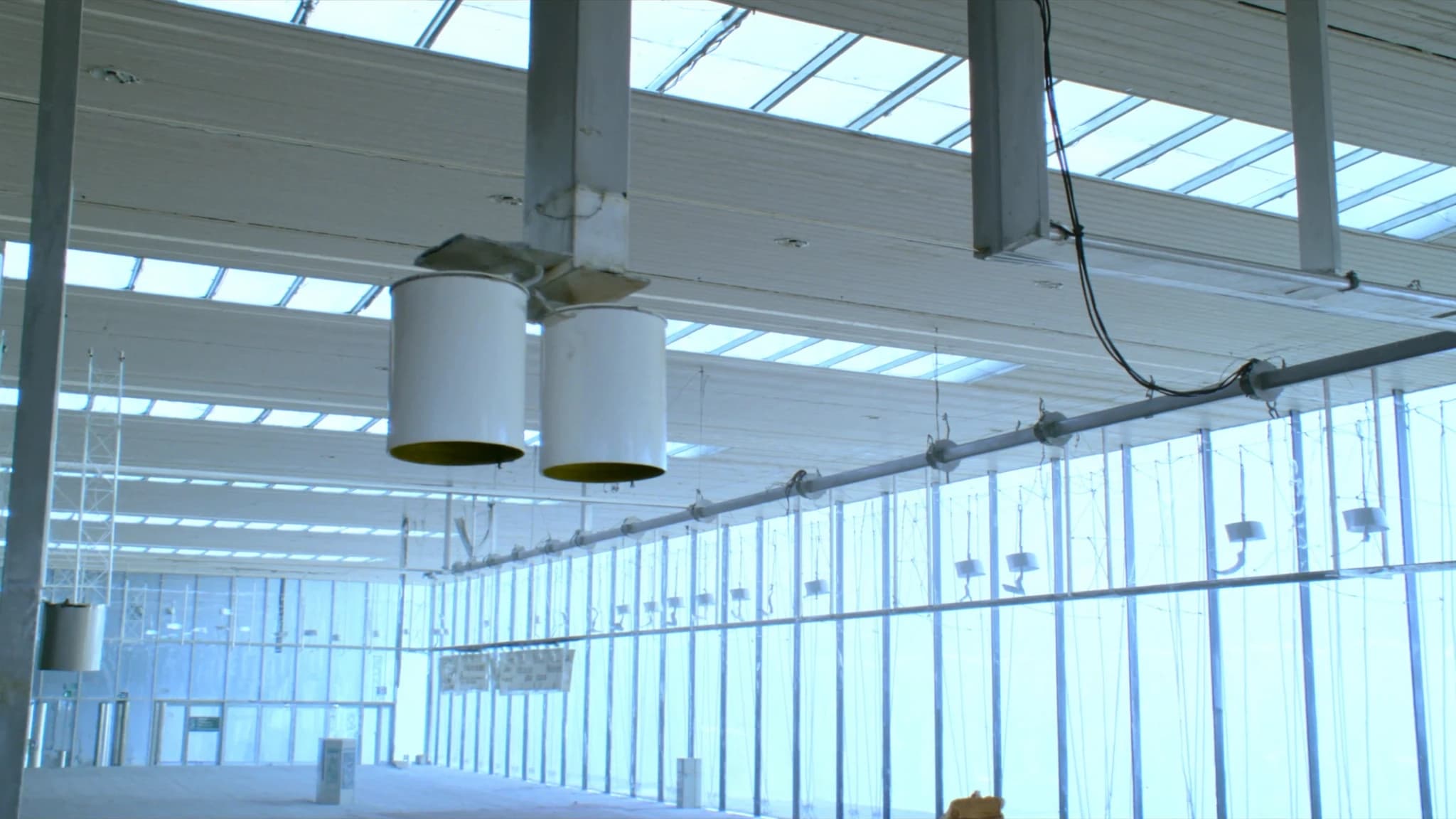
Airports, train stations, and bus terminals demand more than just loud sound, they require voice-alarm (VA) systems that deliver crystal-clear intelligibility under extreme ambient noise, comply with EN 54 standards for emergency evacuation, and integrate with complex zoning and ambient-noise sensing. SSOUNDS commercial PA/VA systems are engineered to meet these rigorous requirements, combining high-STI performance, distributed 70/100V line architectures, and intelligent DSP to ensure every announcement is heard and understood, even in the noisiest transport environments.
Key takeaways
- Transport hubs require voice-alarm-grade PA/VA systems that prioritise intelligibility (STI) and emergency compliance (EN 54).
- Distributed 70/100V line architecture is essential for covering large areas with minimal power loss and easy zoning.
- Ambient-noise sensing and automatic gain control ensure announcements remain audible in fluctuating noise conditions.
- SSOUNDS commercial systems offer certified EN 54 compliance, redundant amplifiers, and continuous line monitoring for fail-safe operation.
- Proper speaker placement, cable selection, and commissioning are critical for achieving high STI in reverberant transport environments.
- Networked audio and IoT integration enable future-proof, centrally managed PA/VA systems that adapt to real-time operational data.
Why Transport Hubs Need Voice-Alarm-Grade PA/VA
In a busy airport or railway station, background noise levels can fluctuate wildly, from the roar of jet engines to the rumble of trains and crowds. Standard PA systems often fail to cut through this noise, resulting in garbled announcements that passengers ignore. Voice-alarm (VA) systems are designed to prioritise intelligibility and reliability, meeting standards such as EN 54 (Europe) and NFPA 72 (North America) for emergency voice evacuation. SSOUNDS commercial systems are built from the ground up for these critical applications, with certified components and advanced DSP that maintain speech transmission index (STI) values above 0.5 even under high ambient noise.
Beyond emergency compliance, transport hubs require clear paging for gate changes, delays, and security alerts. A system that fails to deliver intelligible messages creates confusion, delays operations, and can even compromise safety. SSOUNDS addresses this with purpose-designed loudspeakers that combine wide-dispersion coverage with high-efficiency transducers, ensuring every word cuts through the noise without excessive SPL that causes listener fatigue.
Key Engineering Criteria: STI, Zoning, and Ambient-Noise Sensing
Speech Transmission Index (STI) is the gold standard for measuring intelligibility in public address systems. For transport hubs, a minimum STI of 0.5 is recommended for routine announcements, while emergency systems often target 0.7 or higher. SSOUNDS loudspeakers achieve high STI through controlled directivity, minimising reflections and reverberation that smear speech. Our line array and point-source enclosures are designed with waveguides that focus energy where it's needed, reducing spill into non-critical zones.
Zoning is another critical requirement. A large terminal may have dozens of zones, check-in, security, gates, baggage claim, and lounges, each requiring independent volume and message routing. SSOUNDS DSP amplifiers support up to 64 zones per unit, with programmable priority schemes that allow emergency messages to override background music or routine paging. Ambient-noise sensing (ANS) is integrated into our control systems: microphones placed in each zone continuously measure noise levels and automatically adjust amplifier gain to maintain a constant signal-to-noise ratio. This ensures announcements are always audible without being uncomfortably loud during quiet periods.
Distributed 70/100V Line Architecture: The Backbone of Large-Scale PA
Transport hubs span vast areas, sometimes hundreds of thousands of square metres, making traditional low-impedance speaker wiring impractical. 70V (North America) and 100V (Europe/Asia) distributed line systems allow long cable runs with minimal power loss, using transformers at each speaker to match impedance. SSOUNDS offers a full range of 70/100V-compatible loudspeakers, from ceiling-mounted units for concourses to weather-resistant enclosures for outdoor platforms and car parks.
Our 70/100V transformers are designed for low insertion loss and wide bandwidth, preserving speech clarity even at low tap settings. For zones requiring higher SPL, such as departure halls or train platforms. SSOUNDS provides multi-tap options (e.g., 1.25W, 2.5W, 5W, 10W) that allow fine-tuning of coverage. The distributed architecture also simplifies redundancy: if one amplifier fails, neighbouring zones can be reconfigured to cover the gap, ensuring continuous operation during emergencies.
EN 54 Compliance and Emergency Voice Evacuation
EN 54 is the European standard for fire detection and alarm systems, including voice evacuation. It mandates that PA/VA systems must maintain operation for at least 30 minutes during a fire, with redundant amplifiers, fault monitoring, and battery backup. SSOUNDS commercial systems are designed to meet these requirements, with amplifiers featuring dual power supplies, automatic failover, and continuous line monitoring that detects open circuits, short circuits, and ground faults.
Our loudspeakers are constructed from fire-retardant materials and tested to ensure they do not emit toxic fumes or support combustion. For transport hubs, we also offer flush-mount and surface-mount enclosures with IP54 or higher ratings, protecting against dust and moisture in semi-outdoor areas. The entire signal chain, from microphone to DSP to amplifier, is supervised, with real-time status reporting to a central control panel. This level of reliability is non-negotiable for airports and stations where thousands of lives depend on clear, timely evacuation instructions.
SSOUNDS Commercial Systems: Purpose-Built for Transport
SSOUNDS commercial PA/VA systems combine decades of professional audio engineering with strict compliance to international safety standards. Our product line includes ceiling speakers with wide 120° dispersion for even coverage in open-plan areas, column speakers with narrow vertical patterns for long hallways and concourses, and weather-resistant horn speakers for outdoor platforms. All models are available in 70/100V versions with multiple tap settings.
The SSOUNDS DSP platform provides intuitive software for system design, zoning, and ambient-noise configuration. Engineers can model coverage using EASE or proprietary tools, predict STI values, and simulate emergency scenarios before installation. On-site commissioning is simplified with auto-calibration routines that measure ambient noise and set optimal gain levels. For existing transport hubs upgrading from legacy systems, SSOUNDS offers retrofit kits that integrate with existing wiring and control panels, minimising downtime and disruption.
Installation Best Practices for Transport Hubs
Proper speaker placement is critical for achieving high STI in reverberant spaces. In large terminals, ceiling speakers should be spaced no more than 6–8 metres apart, with overlapping coverage to avoid dead zones. For train platforms, column speakers mounted on pillars or walls at 3–4 metre height provide focused coverage along the platform edge. Outdoor areas require weatherproof enclosures with UV-stable materials and corrosion-resistant grilles.
Cable selection is equally important: use fire-rated, low-capacitance cable for 100V lines to minimise high-frequency loss over long runs. SSOUNDS recommends stranded copper conductors of at least 1.5mm² for runs up to 500 metres, and 2.5mm² for longer distances. All connections should be made with screw terminals or crimped connectors to ensure reliability under vibration. Finally, every system should undergo a full commissioning test that measures STI in each zone, verifies emergency override functionality, and documents fault-monitoring responses.
Future-Proofing with Networked Audio and IoT Integration
Modern transport hubs are increasingly adopting networked audio solutions that allow centralised control, remote monitoring, and integration with building management systems. SSOUNDS supports Dante and AES67 digital audio networking, enabling flexible routing of multiple audio sources (paging microphones, pre-recorded messages, background music) to any zone. Our amplifiers include built-in web servers for remote diagnostics, firmware updates, and real-time performance dashboards.
IoT integration takes this further: ambient-noise sensors can feed data into a central analytics platform that predicts noise patterns based on flight schedules or train timetables, automatically adjusting system parameters. SSOUNDS is at the forefront of this evolution, offering open APIs that allow third-party developers to create custom applications for transport operators. Whether it's automated gate-change announcements triggered by flight data or dynamic volume adjustment during peak hours, SSOUNDS systems are ready for the smart terminals of tomorrow.
Frequently asked
What is the minimum STI required for airport PA systems?
For routine announcements, a minimum STI of 0.5 is recommended, while emergency voice evacuation systems often require 0.7 or higher. SSOUNDS systems are designed to achieve STI values above 0.6 even in high-noise environments.
Can SSOUNDS systems integrate with existing fire alarm panels?
Yes, SSOUNDS amplifiers include dry-contact inputs and relay outputs that interface with standard fire alarm control panels (FACP). Emergency messages can be triggered automatically via contact closure or network commands.
What is the maximum cable run for a 100V line system?
With proper cable gauge (e.g., 1.5mm²), 100V lines can run up to 500 metres without significant loss. For longer runs, use 2.5mm² cable or install additional amplifiers to reduce load.
Are SSOUNDS loudspeakers suitable for outdoor train platforms?
Absolutely. SSOUNDS offers weather-resistant horn and column speakers with IP54 or higher ratings, UV-stable enclosures, and corrosion-resistant grilles, ideal for semi-outdoor and fully exposed transport environments.
How does ambient-noise sensing work in SSOUNDS systems?
Microphones placed in each zone continuously measure noise levels. The DSP automatically adjusts amplifier gain to maintain a constant signal-to-noise ratio, ensuring announcements are always audible without manual intervention.
Building or upgrading a system?
SSOUNDS engineers and manufactures professional PA worldwide, from a single room to stadium scale.